
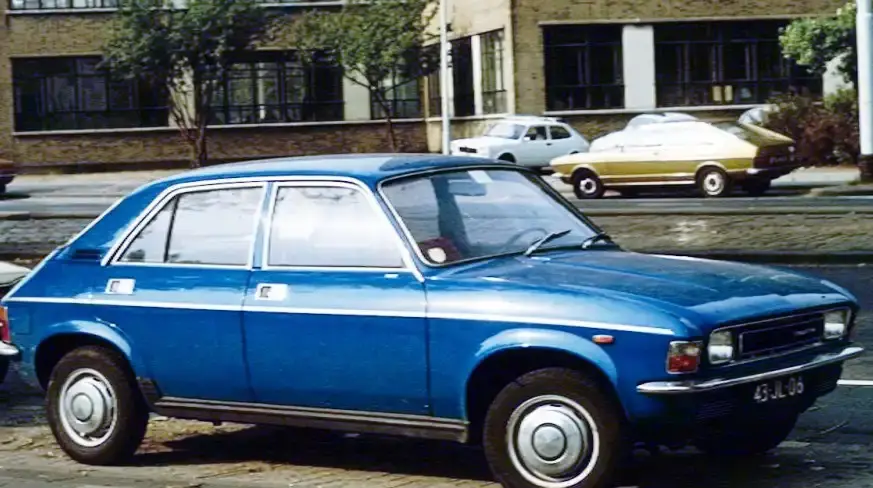
The Austin Allegro 1.0, produced between 1980 and 1983, represented the entry point into the ADO67 range, a series of small family cars designed by British Leyland as a replacement for the Austin 1100 and 1300. Positioned as the most affordable version of the Allegro, the 1.0-liter model aimed to provide economical transportation during a period of economic hardship in the United Kingdom. It was a late addition to the Allegro lineup, introduced to bolster sales and offer a lower price point. The ADO67 platform, while innovative in its design with features like a spacious interior for its size, suffered from a reputation for build quality issues, a challenge the 1.0 model shared with its siblings.
Technical Specifications
| Brand | Austin |
| Model | Allegro |
| Generation | Allegro (ADO67) |
| Type (Engine) | 1.0 (45 hp) |
| Start of Production | 1980 |
| End of Production | 1983 |
| Powertrain Architecture | Internal Combustion Engine |
| Body Type | Hatchback |
| Fuel Type | Petrol (Gasoline) |
| Power | 45 hp |
| Engine Aspiration | Naturally Aspirated |
Powertrain & Engine Architecture
The Austin Allegro 1.0 was powered by the A-Series engine, specifically the 948cc version. This engine, designated as the 1098cc unit in some documentation despite its actual displacement, was a naturally aspirated inline-four cylinder. It featured a single overhead valve (OHV) configuration with a pushrod valvetrain. The engine utilized a single Zenith 36mm carburetor for fuel delivery, a relatively simple system chosen for its reliability and cost-effectiveness. Output was rated at 45 horsepower at 5000 rpm, and 58 lb-ft of torque at 3000 rpm. The engine was mated to a four-speed manual gearbox as standard. While an automatic transmission was offered on higher-spec Allegro models, it was not available with the 1.0-liter engine due to the engine’s limited torque output. The A-Series engine, while durable, was known for requiring regular maintenance, including valve adjustments, to maintain optimal performance. The engine block was cast iron, contributing to its robustness, but also adding to the vehicle’s overall weight.
Driving Characteristics
The Allegro 1.0 offered modest performance. Acceleration was slow, with a 0-60 mph time estimated around 18-20 seconds. The four-speed manual gearbox had relatively long gearing, prioritizing fuel economy over spirited driving. The engine felt strained when climbing hills or carrying a full load of passengers. However, the light steering and relatively soft suspension made the Allegro 1.0 easy to maneuver in urban environments. The car’s handling was generally considered safe and predictable, but not particularly engaging. Compared to the 1.3L and 1.5L Allegro models, the 1.0 felt significantly underpowered. The 1.3L offered a noticeable improvement in acceleration and overall drivability, while the 1.5L provided even more performance, albeit at a higher price point. The 1.0’s strength lay in its fuel efficiency, which was a key selling point for budget-conscious buyers.
Equipment & Trim Levels
The Allegro 1.0 was deliberately stripped down to offer the lowest possible price. Standard equipment was minimal, typically including basic cloth upholstery, vinyl floor coverings, and a simple dashboard layout. The interior was functional but lacked the refinements found in higher-spec Allegro models. Features like a radio, heated rear window, and more comfortable seats were either optional extras or reserved for the higher trim levels. The exterior trim was also basic, with black plastic bumpers and minimal chrome detailing. The Allegro 1.0 was generally offered in a limited range of solid paint colors. The focus was on providing a basic, reliable, and affordable mode of transportation, rather than luxury or style.
Chassis & Braking
The Allegro 1.0 utilized a front-wheel-drive layout with an independent front suspension featuring MacPherson struts and a trailing arm rear suspension. The suspension was tuned for comfort, providing a relatively smooth ride on most road surfaces. Braking was provided by Girling disc brakes on the front wheels and drum brakes on the rear wheels. The braking system was adequate for the car’s performance, but lacked the stopping power of more modern vehicles. Steering was rack and pinion, providing light and precise control. The chassis, while structurally sound, was prone to rust, particularly in areas exposed to road salt. The relatively lightweight nature of the 1.0-liter model, compared to its larger-engined siblings, did contribute to slightly improved handling and fuel economy.
Market Reception & Comparison
The Austin Allegro 1.0 was generally viewed as a compromise. While it offered an affordable entry point into the Allegro range, it was often criticized for its lack of performance and basic equipment levels. Critics acknowledged its fuel efficiency but found the driving experience underwhelming. Compared to rivals like the Ford Fiesta and Vauxhall Nova, the Allegro 1.0 lacked the refinement and driving enjoyment offered by those models. However, it did undercut them on price. The 1.3L Allegro was a more popular choice, offering a better balance of performance, equipment, and price. The 1.5L Allegro appealed to buyers seeking more power and a more comfortable driving experience. The Allegro 1.0 primarily appealed to first-time car buyers, those on a tight budget, or those who prioritized fuel economy above all else.
Legacy
The Austin Allegro 1.0, while not a resounding success, played a role in providing affordable transportation during a challenging economic period. The A-Series engine proved to be relatively durable, and many examples of the Allegro 1.0 remain on the road today, often maintained by enthusiasts. However, the car’s reputation for rust and build quality issues has limited its collectability. In the used car market, the Allegro 1.0 is typically valued as a classic car, appealing to those seeking a nostalgic reminder of 1980s British motoring. Parts availability can be a challenge, but a dedicated network of suppliers and enthusiasts continues to support the preservation of these vehicles. The Allegro 1.0 serves as a reminder of a time when affordability and practicality were paramount in car design.
