
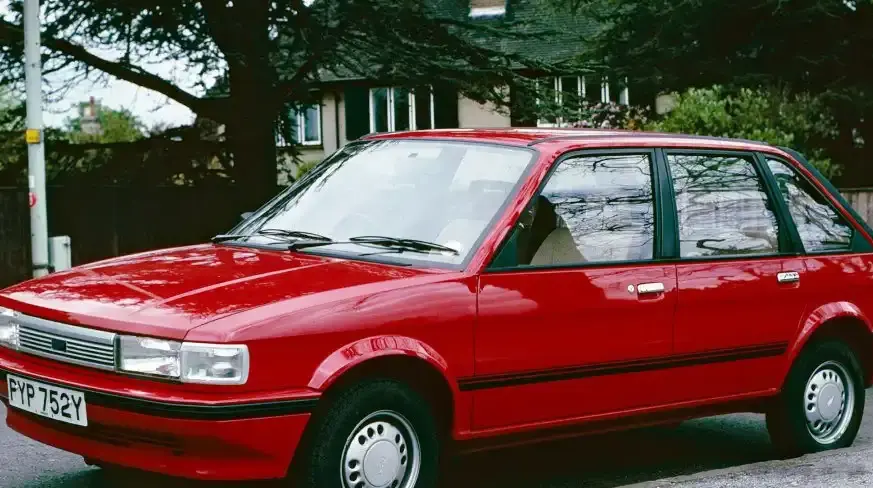
The Austin Maestro 1.6 MG, produced between 1983 and 1985, represented a significant attempt by British Leyland to modernize its small family car offerings. Part of the XC series, the Maestro aimed to replace the aging Austin Allegro and Morris Ital, offering a more contemporary design, improved practicality, and a wider range of engine options. The 1.6 MG trim, boasting 98 horsepower, positioned itself as a mid-range offering within the Maestro lineup, appealing to buyers seeking a balance between performance and affordability. It was a crucial model in British Leyland’s efforts to compete in the increasingly competitive European hatchback market.
Technical Specifications
| Brand | Austin |
| Model | Maestro |
| Generation | Maestro (XC) |
| Type (Engine) | 1.6 MG (98 Hp) |
| Start of Production | 1983 |
| End of Production | 1985 |
| Powertrain Architecture | Internal Combustion Engine |
| Body Type | Hatchback |
| Fuel Type | Petrol (Gasoline) |
| Power | 98 Hp |
| Engine Aspiration | Naturally Aspirated |
Powertrain & Engine Architecture
The Austin Maestro 1.6 MG was powered by the O-Series engine, a 1,598 cc (97.5 cubic inches) inline-four cylinder petrol engine. This engine, while a relatively conventional design, was a key component of British Leyland’s engine family and had seen various iterations over the years. The ‘MG’ designation indicated a higher state of tune compared to the standard 1.6-liter engine, achieved through a slightly modified cylinder head, increased compression ratio, and a revised carburetor. The engine featured a single overhead camshaft (SOHC) valvetrain, operating two valves per cylinder. Fuel delivery was managed by a Zenith-Stromberg 175CD carburetor, a common setup for British cars of the era. The engine produced 98 horsepower at 5,500 rpm and 107 lb-ft of torque at 3,500 rpm. The Maestro 1.6 MG was typically paired with a four-speed manual gearbox, although a three-speed automatic transmission was also available, albeit less common. The automatic transmission, a Borg-Warner unit, was known for its smooth operation but contributed to slightly reduced fuel economy and acceleration compared to the manual version.
Driving Characteristics
The driving experience of the Austin Maestro 1.6 MG was generally considered competent, though not particularly exciting. The 98 horsepower engine provided adequate performance for everyday driving, allowing for reasonably brisk acceleration and comfortable cruising speeds. The four-speed manual gearbox offered a decent shift quality, while the optional automatic transmission provided convenience at the expense of some responsiveness. The Maestro’s front-wheel-drive layout contributed to predictable handling, although the steering was often criticized for being somewhat vague and lacking in feel. Compared to the lower-powered 1.3-liter Maestro models, the 1.6 MG offered a noticeable improvement in performance, making it more suitable for longer journeys and carrying a full load of passengers. However, it didn’t possess the sporting pretensions of the later MG-badged models with larger engines. The automatic transmission, while smooth, noticeably dulled acceleration, making the manual version the preferred choice for drivers prioritizing performance. Gear ratios were fairly widely spaced, prioritizing fuel economy over outright acceleration.
Equipment & Trim Levels
The Austin Maestro 1.6 MG occupied a mid-range position in the Maestro lineup, offering a step up in equipment and comfort compared to the base models. Standard features included reclining front seats, a heated rear window, and a basic instrument panel with speedometer, fuel gauge, and temperature gauge. The ‘MG’ trim also included a more stylish interior trim, often featuring patterned cloth upholstery and a wood-effect dashboard. Optional extras available for the 1.6 MG included a sunroof, central locking, and a stereo radio. The exterior styling of the 1.6 MG was distinguished by color-coded bumpers and wheel arch extensions, giving it a slightly more upmarket appearance than the more basic models. The interior plastics, while durable, were typical of the era and lacked the refinement found in some of its European competitors.
Chassis & Braking
The Austin Maestro utilized a front-wheel-drive chassis with independent front suspension using MacPherson struts and a torsion beam rear suspension. This setup provided a reasonable ride quality, although it wasn’t particularly sophisticated. The steering was a rack-and-pinion system, but as mentioned previously, it lacked precision. Braking on the Austin Maestro 1.6 MG consisted of disc brakes on the front wheels and drum brakes on the rear wheels. The braking system was generally adequate for the car’s weight and performance, but it lacked the stopping power of more modern vehicles. Stabilizer bars were fitted to both the front and rear axles to reduce body roll during cornering. The suspension was tuned for comfort rather than outright handling, reflecting the car’s intended role as a practical family vehicle.
Market Reception & Comparison
The Austin Maestro 1.6 MG received a mixed reception from automotive critics. While praised for its spacious interior and improved practicality compared to its predecessors, it was often criticized for its bland styling, vague handling, and perceived lack of refinement. Compared to rivals such as the Ford Escort, Vauxhall Astra, and Volkswagen Golf, the Maestro was often seen as falling short in terms of overall quality and driving experience. Fuel economy for the 1.6 MG was around 35-40 mpg, depending on driving conditions. Reliability was a recurring concern with the Maestro, as with many British Leyland products of the era. The O-Series engine was generally considered durable, but other components, such as the electrical system and cooling system, were prone to issues. The automatic transmission version suffered from slightly lower fuel economy and slower acceleration, making the manual version the more popular choice among enthusiasts.
Legacy
The Austin Maestro, despite its shortcomings, played an important role in the British automotive landscape of the 1980s. It represented a significant investment by British Leyland in a new generation of small family cars. However, its relatively short production run and ongoing quality concerns ultimately limited its success. Today, the Austin Maestro 1.6 MG is a relatively rare sight on the roads, and well-maintained examples are becoming increasingly sought after by classic car enthusiasts. The O-Series engine, in its various forms, continued to be used in other British Leyland vehicles for many years, demonstrating its inherent durability. While not a groundbreaking vehicle, the Maestro 1.6 MG remains a nostalgic reminder of a bygone era in British automotive history, and a testament to the challenges faced by British Leyland in a rapidly changing automotive market. The automatic transmission variants, while less common, are particularly prized by collectors seeking a unique and representative example of 1980s British motoring.
