
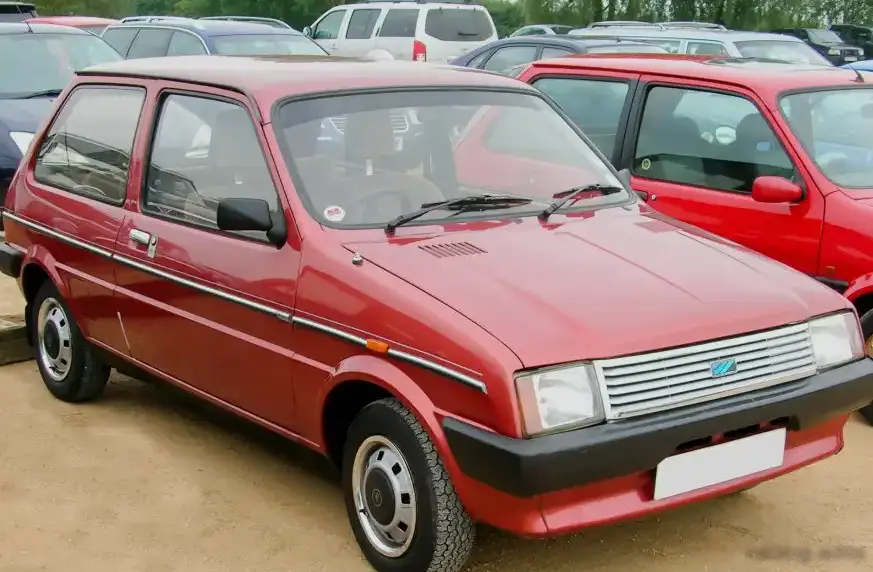
The Austin Metro 1.3 Turbo, produced between 1983 and 1990, represented a performance-oriented variant within the third generation of the Austin Metro, a supermini designed to replace the Austin Mini. This model, distinguished by its turbocharged 1.3-liter engine, aimed to offer a more spirited driving experience than the standard Metro trims while remaining an affordable and practical city car. It was a relatively short-lived but significant addition to the Metro lineup, showcasing British Leyland’s (later Rover Group) attempt to inject some excitement into its small car offerings. The 1.3 Turbo occupied a niche position, sitting above the base models in terms of performance but below any potential future high-performance iterations that never materialized.
Technical Specifications
| Brand | Austin |
| Model | Metro |
| Generation | Metro |
| Type (Engine) | 1.3 Turbo (90 Hp) |
| Start of production | 1983 |
| End of production | 1990 |
| Powertrain Architecture | Internal Combustion engine |
| Body type | Hatchback |
| Fuel Type | Petrol (Gasoline) |
| Power | 90 Hp |
| Engine aspiration | Turbocharger |
Powertrain & Engine Architecture
The heart of the Metro 1.3 Turbo was the A-Series engine, a long-running and extensively developed unit that had its origins in the late 1950s. However, the Turbo variant received significant modifications. The engine displacement was 1275cc, and the addition of a Garrett T25 turbocharger, along with a revised cylinder head, strengthened internals, and a higher compression ratio, boosted power output to 90 horsepower. Fuel delivery was handled by a single SU carburetor, modified to suit the increased airflow demands of the turbocharger. This setup, while relatively simple by modern standards, was considered advanced for a car in this segment at the time. The engine code is often referred to as ‘1275 Turbo’. The transmission was a four-speed manual gearbox, specifically reinforced to handle the increased torque. The turbocharger itself was a key component, providing a noticeable boost in power, but also introducing the potential for turbo lag – a delay between pressing the accelerator and feeling the power delivery. The engine’s valvetrain remained a traditional pushrod configuration, reflecting the A-Series’ conservative design philosophy.
Driving Characteristics
The Metro 1.3 Turbo offered a distinctly different driving experience compared to the standard Metro models. The turbocharger provided a significant increase in acceleration, making it one of the quickest small cars of its era. While the 90 horsepower output doesn’t sound impressive today, it was substantial for a car weighing around 1,600 pounds. The turbo lag was noticeable, particularly at lower engine speeds, but once the turbo ‘spooled up’, the car delivered a surprisingly brisk performance. The four-speed gearbox was well-suited to the engine’s power band, although some reviewers noted that a five-speed option would have further enhanced the driving experience. Handling was generally good, benefiting from the Metro’s relatively light weight and nimble chassis. However, the suspension was fairly basic, and the ride could be somewhat firm, especially on uneven surfaces. Compared to the standard 1.0-liter Metro, the Turbo offered a significantly more engaging and rewarding driving experience, but at the cost of some fuel economy.
Equipment & Trim Levels
The Metro 1.3 Turbo was generally equipped to a higher standard than the base Metro models. Standard features typically included upgraded interior trim, often featuring a sporty cloth upholstery, and a more comprehensive instrument panel with additional gauges, including a boost pressure gauge. Exterior features included a distinctive rear spoiler, body-colored bumpers, and unique alloy wheels. Optional extras included a sunroof, upgraded stereo system, and central locking. The interior, while functional, was still relatively basic, reflecting the car’s affordable price point. The dashboard layout was typical of early 1980s British cars, with a straightforward and easy-to-use design. The trim level was positioned as a sporty upgrade, appealing to drivers who wanted a more exciting and well-equipped small car.
Chassis & Braking
The Metro 1.3 Turbo utilized a front-wheel-drive layout with an independent front suspension and a trailing arm rear suspension. The front suspension featured MacPherson struts, while the rear suspension was a simple but effective design. Braking was initially provided by front disc brakes and rear drum brakes, although later models were upgraded to all-round disc brakes. The braking system was adequate for the car’s performance, but it lacked the sophistication of more modern systems. The chassis was reinforced in certain areas to cope with the increased power output of the turbocharged engine. Stabilizer bars were fitted to both the front and rear axles to reduce body roll during cornering. The overall chassis setup was designed to provide a balance between handling and ride comfort, although the emphasis was more on handling given the car’s sporty aspirations.
Market Reception & Comparison
The Metro 1.3 Turbo was generally well-received by automotive critics, who praised its performance and affordability. It was often compared to other hot hatchbacks of the era, such as the Volkswagen Golf GTI and the Ford Fiesta XR2, although it was generally considered to be less refined than these rivals. Fuel economy was a compromise, being lower than the standard Metro models due to the turbocharger. Reliability was also a concern for some owners, as the turbocharged engine was more complex and prone to issues than the naturally aspirated engines. However, with proper maintenance, the 1.3 Turbo proved to be a reasonably reliable car. Compared to the standard 1.0-liter Metro, the Turbo offered a significant performance upgrade, but it also came with a higher price tag and increased running costs. The 1.3 Turbo appealed to a different type of buyer – one who prioritized performance and driving enjoyment over outright economy and practicality.
Legacy
The Austin Metro 1.3 Turbo remains a fondly remembered car among enthusiasts. Its combination of affordability, performance, and distinctive styling has made it a popular choice among classic car collectors. The turbocharged A-Series engine, while not without its quirks, proved to be a durable and capable unit. Finding well-maintained examples today can be challenging, as many have been lost to rust or neglect. However, those that remain are highly sought after. The 1.3 Turbo’s legacy lies in its demonstration of what could be achieved with a relatively simple and affordable small car. It showcased British Leyland’s (and later Rover Group’s) ability to create a genuinely exciting and engaging driving experience, even within the constraints of a budget-conscious market. Parts availability can be an issue, but a dedicated network of classic car specialists and enthusiasts helps to keep these cars on the road. The Metro 1.3 Turbo represents a unique and memorable chapter in the history of British motoring.
