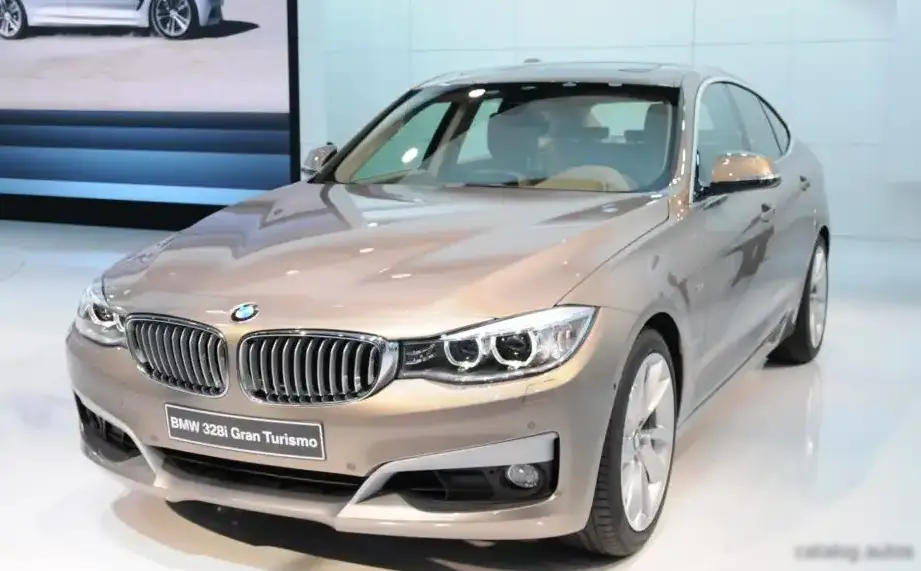
The BMW 3 Series Gran Turismo (F34) 320d Steptronic, produced from 2013 to 2015, represents BMW’s attempt to blend the practicality of a hatchback with the styling of a coupe. Positioned as a more spacious and versatile alternative to the standard 3 Series sedan and wagon, the Gran Turismo aimed to appeal to buyers seeking a premium, comfortable, and relatively fuel-efficient vehicle. This particular 320d variant, equipped with a 2.0-liter turbocharged diesel engine and an 8-speed automatic transmission, served as a mid-range offering within the F34 lineup, balancing performance with economy. It occupied a space between the base 318d models and the more powerful 330d and 335i variants.
Technical Specifications
| Brand | BMW |
| Model | 3 Series |
| Generation | 3 Series Gran Turismo (F34) |
| Type (Engine) | 320d (184 Hp) Steptronic |
| Start of production | 2013 |
| End of production | 2015 |
| Powertrain Architecture | Internal Combustion engine |
| Body type | Grand Tourer |
| Seats | 5 |
| Doors | 5 |
| Fuel consumption (urban) | 5.9 l/100 km (39.9 US mpg, 47.9 UK mpg, 16.9 km/l) |
| Fuel consumption (extra urban) | 4.4 l/100 km (53.5 US mpg, 64.2 UK mpg, 22.7 km/l) |
| Fuel consumption (combined) | 4.9 l/100 km (48 US mpg, 57.6 UK mpg, 20.4 km/l) |
| CO2 emissions | 129 g/km |
| Fuel Type | Diesel |
| Acceleration 0 – 100 km/h | 7.9 sec |
| Acceleration 0 – 62 mph | 7.9 sec |
| Acceleration 0 – 60 mph | 7.5 sec |
| Maximum speed | 226 km/h (140.43 mph) |
| Emission standard | Euro 6 |
| Weight-to-power ratio | 8.6 kg/Hp, 116.8 Hp/tonne |
| Weight-to-torque ratio | 4.1 kg/Nm, 241.3 Nm/tonne |
| Power | 184 Hp @ 4000 rpm |
| Torque | 380 Nm @ 1750-2750 rpm (280.27 lb.-ft. @ 1750-2750 rpm) |
| Engine layout | Front, Longitudinal |
| Engine Model/Code | N47D20C |
| Engine displacement | 1995 cm3 (121.74 cu. in.) |
| Number of cylinders | 4 |
| Engine configuration | Inline |
| Cylinder Bore | 84 mm (3.31 in.) |
| Piston Stroke | 90 mm (3.54 in.) |
| Compression ratio | 16.5:1 |
| Number of valves per cylinder | 4 |
| Fuel injection system | Diesel Commonrail |
| Engine aspiration | Twin-power turbo, Intercooler |
| Engine oil capacity | 5.2 l (5.49 US qt | 4.58 UK qt) |
| Coolant | 7 l (7.4 US qt | 6.16 UK qt) |
| Kerb Weight | 1575 kg (3472.28 lbs.) |
| Max. weight | 2145 kg (4728.92 lbs.) |
| Max load | 570 kg (1256.63 lbs.) |
| Trunk (boot) space – minimum | 520 l (18.36 cu. ft.) |
| Trunk (boot) space – maximum | 1600 l (56.5 cu. ft.) |
| Fuel tank capacity | 57 l (15.06 US gal | 12.54 UK gal) |
| Max. roof load | 75 kg (165.35 lbs.) |
| Permitted trailer load with brakes (12%) | 1600 kg (3527.4 lbs.) |
| Permitted trailer load without brakes | 745 kg (1642.44 lbs.) |
| Permitted towbar download | 75 kg (165.35 lbs.) |
| Length | 4824 mm (189.92 in.) |
| Width | 1828 mm (71.97 in.) |
| Height | 1508 mm (59.37 in.) |
| Wheelbase | 2920 mm (114.96 in.) |
| Front track | 1541 mm (60.67 in.) |
| Rear (Back) track | 1586 mm (62.44 in.) |
| Ride height (ground clearance) | 165 mm (6.5 in.) |
| Drag coefficient (Cd) | 0.28 |
| Minimum turning circle (turning diameter) | 11.8 m (38.71 ft.) |
| Drivetrain Architecture | Rear wheel drive |
| Number of gears and type of gearbox | 8 gears, automatic transmission |
| Front suspension | Independent coil spring |
| Rear suspension | Independent multi-link suspension |
| Front brakes | Ventilated discs |
| Rear brakes | Ventilated discs |
| Assisting systems | ABS (Anti-lock braking system) |
| Steering type | Steering rack and pinion |
| Power steering | Electric Steering |
| Tires size | 225/55 R17 97V |
| Wheel rims size | 8 J x 17 |
INTRODUCTION
The BMW 3 Series Gran Turismo (F34) 320d Steptronic, launched in 2013, was a unique offering within the 3 Series range. Built on the F30 3 Series platform, the Gran Turismo (GT) aimed to provide a more comfortable and practical experience than the standard sedan, while retaining BMW’s core driving dynamics. The 320d variant, powered by a 2.0-liter four-cylinder diesel engine, was a popular choice for European buyers prioritizing fuel efficiency and reasonable performance. It was positioned as an entry-level GT option, offering a balance between cost and capability. Production of this specific configuration ended in 2015 with the mid-cycle refresh of the F34.
Powertrain & Engine Architecture
The heart of the 320d GT is the N47D20C engine, a 2.0-liter inline-four cylinder diesel. This engine is a member of BMW’s highly regarded N47 family, known for its efficiency and refinement. It utilizes a second-generation common rail direct injection system, delivering fuel at pressures up to 1800 bar for optimized combustion. The engine is turbocharged with a twin-scroll turbocharger, enhancing responsiveness and minimizing turbo lag. The N47D20C also features variable valve timing (Double-VANOS) and variable turbine geometry (VTG) on the turbocharger to further improve performance and efficiency across a wide range of engine speeds. The 8-speed Steptronic automatic transmission, a ZF-sourced unit, is a key component of the powertrain. This transmission offers smooth and quick shifts, contributing to both fuel economy and driving comfort. It features adaptive shift programs that adjust to the driver’s style and road conditions. The transmission’s wide gear ratio spread allows the engine to operate efficiently at both highway speeds and during city driving.
Driving Characteristics
The 320d Steptronic Gran Turismo delivers a comfortable and refined driving experience. While not overtly sporty, the engine provides adequate power for everyday driving and highway cruising. The 380 Nm (280 lb-ft) of torque, available from 1750-2750 rpm, provides strong mid-range acceleration, making overtaking maneuvers relatively effortless. The 8-speed automatic transmission contributes to a smooth and seamless driving experience, with well-chosen gear ratios. Compared to the manual transmission versions of the 320d, the Steptronic offers greater convenience, particularly in urban environments. However, it does slightly diminish the sense of driver engagement. Compared to the more powerful 330d and 335i GT models, the 320d feels less urgent in its acceleration. The Gran Turismo’s longer wheelbase and softer suspension setup prioritize ride comfort over outright handling precision, making it a more relaxed cruiser than the standard 3 Series.
Equipment & Trim Levels
The 320d Steptronic Gran Turismo typically came equipped with a generous level of standard features. These included automatic climate control, power windows and mirrors, a multi-function steering wheel, and a BMW Professional radio system. Upholstery was typically cloth, with leather options available as an upgrade. Common optional extras included a navigation system, a panoramic sunroof, heated seats, and a premium sound system. The Gran Turismo also featured a uniquely designed interior with a higher seating position than the standard 3 Series, providing improved visibility. The rear seats offered ample legroom and headroom, enhancing passenger comfort. The powered tailgate, a hallmark of the Gran Turismo, provided convenient access to the spacious cargo area.
Chassis & Braking
The F34 320d GT utilizes a MacPherson strut front suspension and a multi-link rear suspension. This setup provides a good balance between ride comfort and handling. The suspension is tuned to prioritize comfort, resulting in a smoother ride than the standard 3 Series. Braking duties are handled by ventilated disc brakes on all four wheels. Anti-lock Braking System (ABS), Dynamic Stability Control (DSC), and Brake Assist are standard safety features. The Gran Turismo’s increased weight compared to the standard 3 Series necessitates a slightly more robust braking system. The steering is electrically assisted, providing precise and responsive control.
Market Reception & Comparison
The BMW 3 Series Gran Turismo, including the 320d Steptronic variant, received mixed reviews from automotive critics. While praised for its spaciousness, comfort, and fuel efficiency, it was often criticized for its styling, which some found awkward. Compared to other trims in the 3 Series GT lineup, the 320d offered the best fuel economy, making it an attractive option for buyers prioritizing running costs. However, its performance was noticeably less spirited than the 330d and 335i models. In terms of reliability, the N47 engine has been known to experience issues with timing chain wear, particularly in earlier iterations. However, later revisions of the engine, including those found in the 2013-2015 models, are generally considered more reliable.
Legacy
The BMW 3 Series Gran Turismo, while not a mainstream success, carved out a niche for itself as a practical and comfortable premium hatchback. The 320d Steptronic variant remains a relatively common sight on the used car market. Its fuel efficiency, combined with BMW’s reputation for build quality, makes it an appealing option for buyers seeking a reliable and economical long-distance cruiser. The N47 engine, despite its potential timing chain issues, is generally considered durable and relatively inexpensive to maintain. The F34 Gran Turismo represents an interesting experiment in BMW’s model range, blending the attributes of different vehicle segments to create a unique and versatile offering.