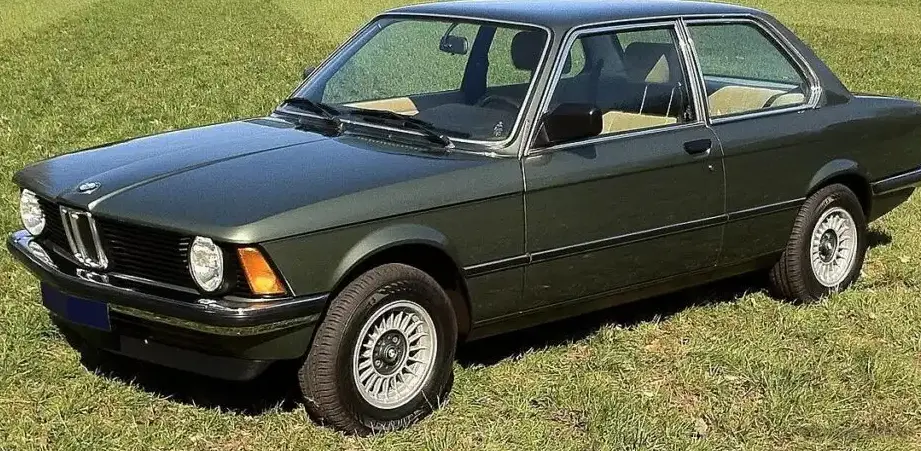
The BMW 3 Series Gran Turismo (F34) 335i, produced from 2013 to 2016, represents BMW’s attempt to blend the practicality of a hatchback with the driving dynamics expected of the 3 Series. Positioned as a more spacious and versatile alternative to the standard 3 Series sedan and wagon, the Gran Turismo aimed to appeal to buyers needing extra cargo capacity and rear passenger room without sacrificing the BMW driving experience. The 335i variant, equipped with the N55 inline-six engine, served as the performance-oriented trim within the Gran Turismo lineup, offering a significant step up in power compared to the 328i models. It occupied a space between the more economical four-cylinder options and the higher-performance M3, catering to drivers seeking a balance of luxury, performance, and practicality.
Technical Specifications
| Brand | BMW |
| Model | 3 Series |
| Generation | 3 Series Gran Turismo (F34) |
| Type (Engine) | 335i (306 Hp) |
| Start of production | 2013 |
| End of production | 2016 |
| Powertrain Architecture | Internal Combustion engine |
| Body type | Grand Tourer |
| Seats | 5 |
| Doors | 5 |
| Fuel consumption (economy) – urban | 11.3 l/100 km (20.8 US mpg, 25 UK mpg, 8.8 km/l) |
| Fuel consumption (economy) – extra urban | 6.2 l/100 km (37.9 US mpg, 45.6 UK mpg, 16.1 km/l) |
| Fuel consumption (economy) – combined | 8.1 l/100 km (29 US mpg, 34.9 UK mpg, 12.3 km/l) |
| CO2 emissions | 188 g/km |
| Fuel Type | Petrol (Gasoline) |
| Acceleration 0 – 100 km/h | 5.7 sec |
| Acceleration 0 – 62 mph | 5.7 sec |
| Acceleration 0 – 60 mph | 5.4 sec |
| Maximum speed | 250 km/h (155.34 mph) |
| Emission standard | Euro 5 |
| Weight-to-power ratio | 5.4 kg/Hp, 186.6 Hp/tonne |
| Weight-to-torque ratio | 4.1 kg/Nm, 243.9 Nm/tonne |
| Power | 306 Hp @ 5800 rpm |
| Power per litre | 102.7 Hp/l |
| Torque | 400 Nm @ 1200-5000 rpm (295.02 lb.-ft. @ 1200-5000 rpm) |
| Engine layout | Front, Longitudinal |
| Engine Model/Code | N55B30 |
| Engine displacement | 2979 cm3 (181.79 cu. in.) |
| Number of cylinders | 6 |
| Engine configuration | Inline |
| Cylinder Bore | 84 mm (3.31 in.) |
| Piston Stroke | 89.6 mm (3.53 in.) |
| Compression ratio | 10.2:1 |
| Number of valves per cylinder | 4 |
| Fuel injection system | Direct injection |
| Engine aspiration | Twin-power turbo, Intercooler |
| Engine oil capacity | 6.5 l (6.87 US qt | 5.72 UK qt) |
| Coolant | 6.7 l (7.08 US qt | 5.9 UK qt) |
| Kerb Weight | 1640 kg (3615.58 lbs.) |
| Max. weight | 2210 kg (4872.22 lbs.) |
| Max load | 570 kg (1256.63 lbs.) |
| Trunk (boot) space – minimum | 520 l (18.36 cu. ft.) |
| Trunk (boot) space – maximum | 1600 l (56.5 cu. ft.) |
| Fuel tank capacity | 60 l (15.85 US gal | 13.2 UK gal) |
| Max. roof load | 75 kg (165.35 lbs.) |
| Permitted trailer load with brakes (12%) | 1700 kg (3747.86 lbs.) |
| Permitted trailer load without brakes | 750 kg (1653.47 lbs.) |
| Permitted towbar download | 75 kg (165.35 lbs.) |
| Length | 4824 mm (189.92 in.) |
| Width | 1828 mm (71.97 in.) |
| Height | 1508 mm (59.37 in.) |
| Wheelbase | 2920 mm (114.96 in.) |
| Front track | 1541 mm (60.67 in.) |
| Rear (Back) track | 1586 mm (62.44 in.) |
| Ride height (ground clearance) | 165 mm (6.5 in.) |
| Drag coefficient (Cd) | 0.30 |
| Minimum turning circle (turning diameter) | 11.8 m (38.71 ft.) |
| Drivetrain Architecture | The Internal combustion engine (ICE) drives the rear wheels of the vehicle. |
| Drive wheel | Rear wheel drive |
| Number of gears and type of gearbox | 6 gears, manual transmission |
| Front suspension | Independent coil spring |
| Rear suspension | Independent multi-link suspension |
| Front brakes | Ventilated discs |
| Rear brakes | Ventilated discs |
| Assisting systems | ABS (Anti-lock braking system) |
| Steering type | Steering rack and pinion |
| Power steering | Electric Steering |
| Tires size | 225/55 R17 97W |
| Wheel rims size | 8J x 17 |
Powertrain & Engine Architecture
The heart of the 335i Gran Turismo is the N55B30, a 3.0-liter inline-six engine. This engine, a staple of BMW performance models during the early 2010s, utilizes direct fuel injection, a twin-scroll turbocharger, and variable valve timing (VANOS) and valve lift (Valvetronic) systems. These technologies work in concert to deliver a broad torque curve and responsive power delivery. The N55 is known for its robust construction and ability to handle moderate performance modifications. The 335i Gran Turismo came standard with a six-speed manual transmission, but an eight-speed automatic transmission was also available. The automatic transmission, known for its smooth shifts and efficiency, featured steering wheel-mounted paddle shifters for manual control.
Driving Characteristics
The 335i Gran Turismo offered a compelling driving experience, balancing performance with comfort. The N55 engine provided ample power for both highway cruising and spirited driving, with its 400 Nm of torque available from as low as 1200 rpm. This resulted in strong acceleration and effortless overtaking. While not as sharp or focused as the standard 3 Series sedan, the Gran Turismo’s longer wheelbase and softer suspension tuning provided a more comfortable ride, particularly on rough roads. The automatic transmission, when equipped, contributed to a relaxed driving experience, while the manual transmission offered greater driver engagement. Compared to the 328i Gran Turismo, the 335i provided a noticeable performance advantage, while the 335d (diesel) offered comparable torque but a different power delivery character.
Equipment & Trim Levels
The 335i Gran Turismo came well-equipped as standard, including features such as leather upholstery, power-adjustable front seats, a premium sound system, and automatic climate control. Optional extras included a navigation system, a head-up display, adaptive cruise control, and a panoramic sunroof. Interior trim options ranged from wood veneers to aluminum accents, allowing buyers to personalize the cabin to their preferences. The Gran Turismo’s rear seats offered generous legroom and headroom, making it a comfortable choice for passengers. The powered tailgate and folding rear seats further enhanced the vehicle’s practicality.
Chassis & Braking
The F34 Gran Turismo utilized a modified version of the 3 Series chassis, with a longer wheelbase and a wider track. The suspension consisted of independent coil springs at the front and an independent multi-link setup at the rear. The 335i models typically featured stiffer springs and dampers compared to the lower-trim models, providing improved handling. Braking duties were handled by ventilated disc brakes on all four wheels, with ABS and electronic stability control as standard features. The Gran Turismo’s steering was precise and well-weighted, offering a good balance of feedback and assistance.
Market Reception & Comparison
The BMW 3 Series Gran Turismo received mixed reviews from automotive critics. While praised for its spacious interior and comfortable ride, some critics found its styling unconventional and its handling less engaging than the standard 3 Series. The 335i variant was generally well-received for its strong performance and refined engine. Compared to its rivals, such as the Audi A5 Sportback and the Volkswagen Passat CC, the Gran Turismo offered a unique combination of practicality and luxury. Fuel economy was respectable for a performance-oriented vehicle, but not class-leading. Reliability was generally good, although some owners reported minor issues with the electronic systems.
Legacy
The BMW 3 Series Gran Turismo, while not a mainstream success, carved out a niche for itself as a versatile and stylish alternative to traditional sedans and wagons. The N55 engine, in particular, has proven to be a durable and reliable powerplant, and remains highly regarded by BMW enthusiasts. Today, used 335i Gran Turismo models offer a compelling value proposition, providing a blend of performance, luxury, and practicality at an affordable price point. The F34 Gran Turismo represents an interesting chapter in BMW’s history, showcasing the brand’s willingness to experiment with new body styles and technologies.