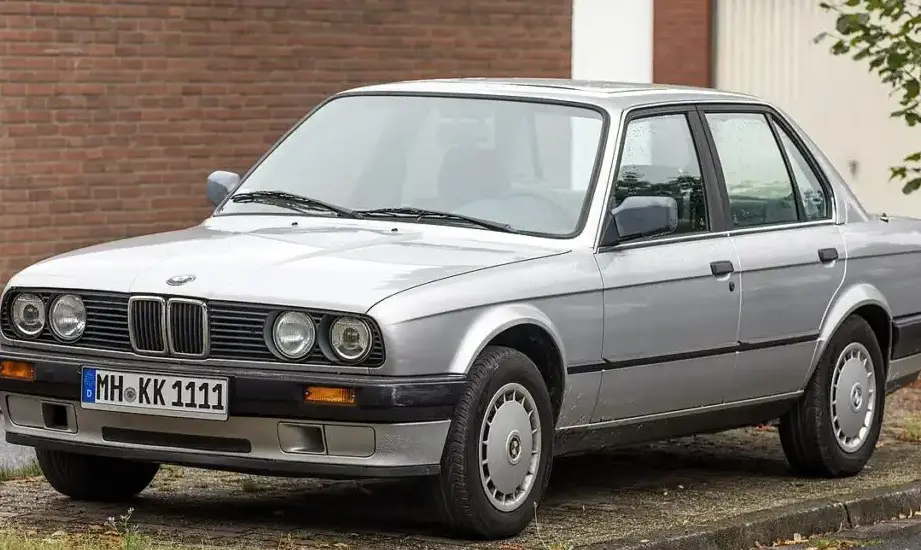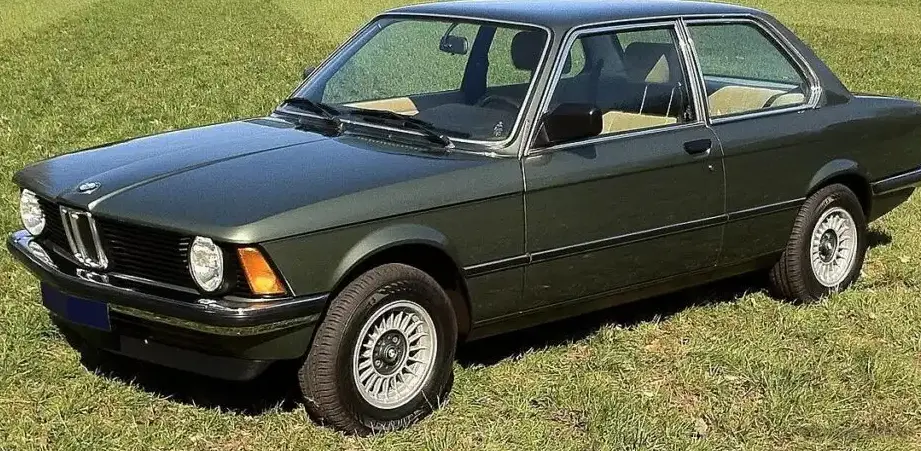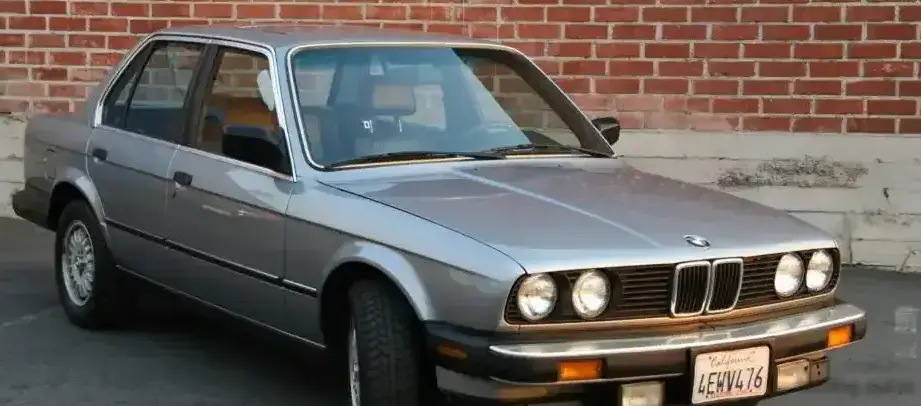
The BMW 3 Series Sedan (E30) 316, equipped with an 89 horsepower engine and automatic transmission, represented an entry point into the iconic E30 generation. Produced from 1983 to 1987, this variant played a crucial role in establishing the 3 Series as a popular choice for buyers seeking a blend of practicality, German engineering, and a relatively affordable price point. The E30, internally designated as the 1HX0, was BMW’s replacement for the New Class sedans and coupes, and quickly became a benchmark for compact executive cars. The 316 automatic offered a more relaxed driving experience compared to its manual counterparts, appealing to a broader demographic, particularly in markets where automatic transmissions were favored.
Technical Specifications
| Brand | BMW |
| Model | 3 Series |
| Generation | 3 Series Sedan (E30) |
| Type (Engine) | 316 (89 Hp) Automatic |
| Start of production | 1983 |
| End of production | 1987 |
| Powertrain Architecture | Internal Combustion engine |
| Body type | Sedan |
| Seats | 5 |
| Doors | 4 |
| Fuel consumption (economy) – urban | 10.3 l/100 km (22.8 US mpg) |
| Fuel consumption (economy) – extra urban | 7.2 l/100 km (32.7 US mpg) |
| Fuel Type | Petrol (Gasoline) |
| Acceleration 0 – 100 km/h | 14.2 sec |
| Acceleration 0 – 62 mph | 14.2 sec |
| Acceleration 0 – 60 mph | 13.5 sec |
| Maximum speed | 171 km/h (106.25 mph) |
| Weight-to-power ratio | 11.6 kg/Hp |
| Weight-to-torque ratio | 7.4 kg/Nm |
| Power | 89 Hp @ 5500 rpm |
| Torque | 140 Nm @ 4000 rpm (103.26 lb.-ft. @ 4000 rpm) |
| Engine layout | Front, Longitudinal |
| Engine Model/Code | M10B18 |
| Engine displacement | 1766 cm3 (107.77 cu. in.) |
| Number of cylinders | 4 |
| Engine configuration | Inline |
| Cylinder Bore | 89 mm (3.5 in.) |
| Piston Stroke | 71 mm (2.8 in.) |
| Compression ratio | 9.5:1 |
| Number of valves per cylinder | 2 |
| Fuel injection system | Carburettor |
| Engine aspiration | Naturally aspirated engine |
| Valvetrain | SOHC |
| Engine oil capacity | 4 l (4.23 US qt | 3.52 UK qt) |
| Coolant | 6 l (6.34 US qt | 5.28 UK qt) |
| Kerb Weight | 1030 kg (2270.76 lbs.) |
| Max. weight | 1490 kg (3284.89 lbs.) |
| Max load | 460 kg (1014.13 lbs.) |
| Trunk (boot) space – minimum | 404 l (14.27 cu. ft.) |
| Fuel tank capacity | 55 l (14.53 US gal | 12.1 UK gal) |
| Max. roof load | 75 kg (165.35 lbs.) |
| Permitted trailer load with brakes (12%) | 1200 kg (2645.55 lbs.) |
| Permitted trailer load without brakes | 500 kg (1102.31 lbs.) |
| Length | 4325 mm (170.28 in.) |
| Width | 1645 mm (64.76 in.) |
| Height | 1380 mm (54.33 in.) |
| Wheelbase | 2570 mm (101.18 in.) |
| Front track | 1407 mm (55.39 in.) |
| Rear (Back) track | 1415 mm (55.71 in.) |
| Front overhang | 761 mm (29.96 in.) |
| Rear overhang | 994 mm (39.13 in.) |
| Ride height (ground clearance) | 140 mm (5.51 in.) |
| Drag coefficient (Cd) | 0.35 |
| Drivetrain Architecture | Rear wheel drive |
| Number of gears and type of gearbox | 4 gears, automatic transmission |
| Front brakes | Disc |
| Rear brakes | Drum |
| Steering type | Steering rack and pinion |
| Tires size | 175/70 R14 |
| Wheel rims size | 14 |
Powertrain & Engine Architecture
The heart of the 316 Automatic was the M10B18 engine, a 1.8-liter inline-four cylinder unit. This engine, a descendant of BMW’s long-running M10 family, featured a single overhead camshaft (SOHC) valvetrain and utilized a carburetor for fuel delivery. While relatively simple by modern standards, the M10B18 was known for its durability and smooth power delivery. The 89 horsepower output was achieved at 5500 rpm, with peak torque of 140 Nm (103 lb-ft) arriving at 4000 rpm. The automatic transmission was a four-speed unit, providing a comfortable and convenient driving experience. It wasn’t a particularly sophisticated transmission, but it was reliable and well-suited to the engine’s characteristics.
Driving Characteristics
The 316 Automatic offered a distinctly different driving experience compared to the 316 with a manual transmission, or the more powerful 320i and 325i models. Acceleration was leisurely, taking around 14.2 seconds to reach 62 mph. The automatic transmission, while smooth, did sap some power from the engine, resulting in a less responsive feel. However, the automatic’s gear ratios were optimized for comfortable cruising, making it a good choice for long journeys. Compared to the manual version, the automatic traded outright performance for ease of use. The 316 Automatic wasn’t a sports car, but it provided a refined and comfortable ride, typical of BMW’s engineering philosophy.
Equipment & Trim Levels
The 316 Automatic typically came with a fairly basic level of equipment, positioning it as the entry-level model in the E30 range. Standard features included cloth upholstery, a basic stereo system, and manual windows and door locks. Optional extras, such as power windows, central locking, a sunroof, and upgraded audio systems, were available, allowing buyers to customize their vehicles. Interior trim was generally functional and durable, reflecting the car’s overall focus on practicality. The dashboard layout was typical of the era, with clearly marked gauges and a straightforward control layout.
Chassis & Braking
The E30 316 Automatic utilized a MacPherson strut front suspension and a semi-trailing arm rear suspension. The rear brakes were typically drum brakes, while the front brakes were discs. This configuration was adequate for the car’s weight and power output, but it wasn’t as sophisticated as the setups found on the higher-performance 3 Series models. Stabilizer bars were fitted to both the front and rear axles to reduce body roll during cornering. The steering was a rack-and-pinion system, providing precise and responsive handling.
Market Reception & Comparison
The 316 Automatic was generally well-received by critics as a comfortable and practical entry-level luxury sedan. However, its performance was often criticized as being underwhelming, particularly when compared to the more powerful 320i and 325i models. Fuel economy was reasonable for the time, but not exceptional. The 316 Automatic appealed to buyers who prioritized comfort and convenience over outright performance. It offered a more affordable entry point into the BMW brand, making it accessible to a wider range of customers. Compared to rivals like the Mercedes-Benz 190E, the 316 Automatic offered a more engaging driving experience, albeit with slightly less refinement.
Legacy
The E30 316 Automatic, while not the most sought-after variant of the E30 generation, has developed a loyal following among enthusiasts. The M10B18 engine is known for its durability and relative simplicity, making it a relatively easy engine to maintain. However, finding parts can sometimes be a challenge, as the car is now over three decades old. Today, well-maintained examples of the 316 Automatic are becoming increasingly collectible, representing a piece of BMW’s rich history. The car’s enduring appeal lies in its combination of classic BMW styling, comfortable ride, and relatively affordable price point.