Technical Specifications
| Brand | BMW |
| Model | 3 Series |
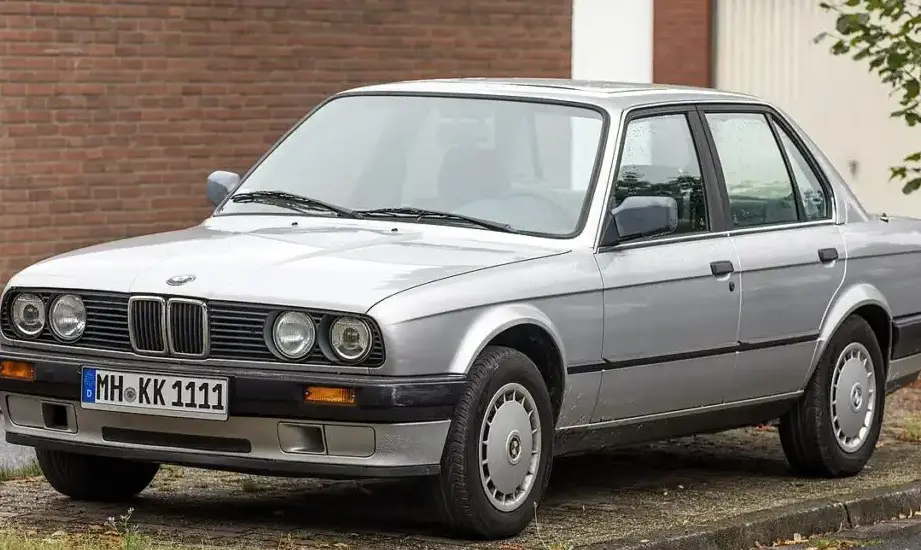
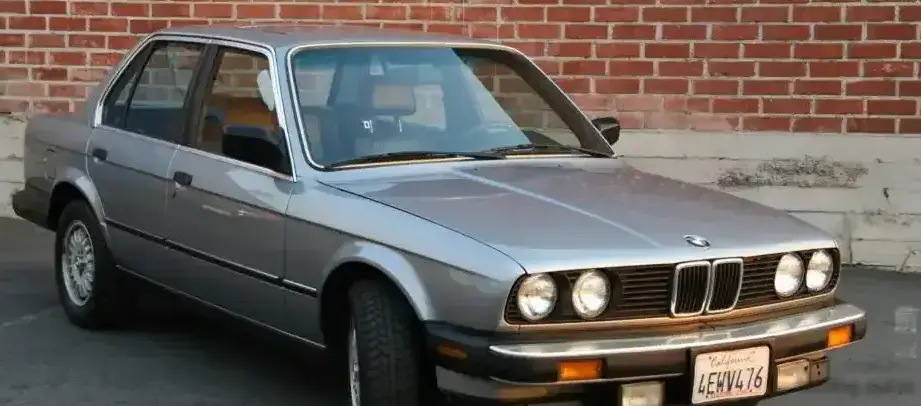
| Generation | 3 Series Sedan (E30) |
| Type (Engine) | 320i (125 Hp) |
| Start of production | 1982 |
| End of production | 1985 |
| Powertrain Architecture | Internal Combustion engine |
| Body type | Sedan |
| Seats | 5 |
| Doors | 4 |
| Fuel consumption (economy) – urban | 11.9 l/100 km (19.8 US mpg) |
| Fuel consumption (economy) – extra urban | 6.2 l/100 km (37.9 US mpg) |
| Fuel Type | Petrol (Gasoline) |
| Acceleration 0 – 100 km/h | 10.4 sec |
| Acceleration 0 – 62 mph | 10.4 sec |
| Acceleration 0 – 60 mph | 9.9 sec |
| Maximum speed | 196 km/h (121.79 mph) |
| Weight-to-power ratio | 8.6 kg/Hp |
| Weight-to-torque ratio | 6.4 kg/Nm |
| Power | 125 Hp @ 5800 rpm |
| Power per litre | 62.8 Hp/l |
| Torque | 170 Nm @ 4000 rpm (125.39 lb.-ft. @ 4000 rpm) |
| Engine layout | Front, Longitudinal |
| Engine Model/Code | M20B20 |
| Engine displacement | 1990 cm3 (121.44 cu. in.) |
| Number of cylinders | 6 |
| Engine configuration | Inline |
| Cylinder Bore | 71 mm (2.8 in.) |
| Piston Stroke | 84 mm (3.31 in.) |
| Compression ratio | 9.8:1 |
| Number of valves per cylinder | 2 |
| Fuel injection system | Multi-port manifold injection |
| Engine aspiration | Naturally aspirated engine |
| Valvetrain | SOHC |
| Engine oil capacity | 4.25 l (4.49 US qt | 3.74 UK qt) |
| Coolant | 10.5 l (11.1 US qt | 9.24 UK qt) |
| Kerb Weight | 1080 kg (2380.99 lbs.) |
| Max. weight | 1540 kg (3395.12 lbs.) |
| Max load | 460 kg (1014.13 lbs.) |
| Trunk (boot) space – minimum | 404 l (14.27 cu. ft.) |
| Fuel tank capacity | 55 l (14.53 US gal | 12.1 UK gal) |
| Max. roof load | 75 kg (165.35 lbs.) |
| Permitted trailer load with brakes (12%) | 1200 kg (2645.55 lbs.) |
| Permitted trailer load without brakes | 500 kg (1102.31 lbs.) |
| Length | 4325 mm (170.28 in.) |
| Width | 1645 mm (64.76 in.) |
| Height | 1380 mm (54.33 in.) |
| Wheelbase | 2570 mm (101.18 in.) |
| Front track | 1407 mm (55.39 in.) |
| Rear (Back) track | 1415 mm (55.71 in.) |
| Front overhang | 761 mm (29.96 in.) |
| Rear overhang | 994 mm (39.13 in.) |
| Ride height (ground clearance) | 125 mm (4.92 in.) |
| Drag coefficient (Cd) | 0.35 |
| Drivetrain Architecture | Rear wheel drive |
| Drive wheel | Rear wheel drive |
| Number of gears and type of gearbox | 5 gears, manual transmission |
| Front brakes | Disc |
| Rear brakes | Drum |
| Steering type | Steering rack and pinion |
| Tires size | 195/60 R14 |
| Wheel rims size | 14 |
The BMW 3 Series Sedan (E30) 320i, produced from 1982 to 1985, marked a significant step in the evolution of the compact executive car. Positioned as an accessible entry point into the 3 Series range, the 320i blended BMW’s renowned driving dynamics with relative affordability. It was a crucial model within the E30 generation (chassis code E30), establishing the 3 Series as a benchmark for handling and build quality. This variant primarily served the European and North American markets, offering a balance between performance and fuel efficiency that appealed to a wide customer base.
Powertrain & Engine Architecture
The heart of the 320i was the M20B20 engine, a 1.99-liter (2.0L) inline-six cylinder powerplant. This engine represented a departure from the four-cylinder engines found in some other 3 Series models. The M20 featured a single overhead camshaft (SOHC) valvetrain operating two valves per cylinder. Fuel delivery was managed by Bosch’s K-Jetronic multi-port fuel injection system, a sophisticated system for its time that improved fuel efficiency and reduced emissions. The engine’s longitudinal mounting and rear-wheel drive configuration were hallmarks of BMW’s engineering philosophy, prioritizing balanced handling. A 5-speed manual transmission was standard, providing precise gear changes and enhancing the driving experience.
Driving Characteristics
The 320i offered a distinctly engaging driving experience. While not as powerful as the later 325i or M3 variants, the 125 horsepower and 125 lb-ft of torque provided ample performance for everyday driving and spirited backroad excursions. The relatively light weight of the E30 chassis (around 2381 lbs) contributed to a nimble feel. The manual transmission’s gear ratios were well-matched to the engine’s powerband, allowing for responsive acceleration. Compared to the 325i, the 320i felt less urgent in its acceleration, but its lighter weight and balanced chassis made it a rewarding car to drive, particularly for those prioritizing handling over outright speed.
Equipment & Trim Levels
The 320i typically came equipped with a relatively basic, yet functional, interior. Standard features included cloth upholstery, a simple dashboard layout, and manual windows and locks. Air conditioning, a sunroof, and upgraded audio systems were available as optional extras. The trim level was generally consistent across the 320i models, with variations primarily stemming from the addition of optional packages. The focus was on providing a durable and practical interior, rather than luxurious appointments.
Chassis & Braking
The E30 chassis was renowned for its robust construction and well-engineered suspension. The 320i utilized MacPherson strut front suspension and a semi-trailing arm rear suspension. Rear brakes were typically drum brakes, a cost-saving measure compared to the disc brakes found on higher-spec models. The steering was a rack-and-pinion system, providing precise and responsive steering feel. Stabilizer bars were fitted front and rear, helping to reduce body roll during cornering. The suspension tuning was geared towards providing a comfortable ride while maintaining excellent handling characteristics.
Market Reception & Comparison
The 320i was generally well-received by automotive critics. It was praised for its handling, build quality, and relatively affordable price point. Compared to the 325i, the 320i offered a more economical option, with slightly better fuel economy. However, the 325i’s higher output and more comprehensive equipment list made it the more desirable choice for performance enthusiasts. The 320i’s reliability was generally good, although the K-Jetronic fuel injection system could require specialized maintenance.
Legacy
The E30 320i has become a highly sought-after classic car. Its combination of BMW’s engineering prowess, timeless design, and relative affordability has made it a popular choice among enthusiasts. The M20 engine is known for its durability, although regular maintenance is essential to keep it running smoothly. Today, well-maintained examples of the 320i command respectable prices in the used car market, and the car continues to be celebrated as a benchmark for compact executive car design and driving dynamics. The E30 platform, and the 320i in particular, laid the foundation for the continued success of the BMW 3 Series.