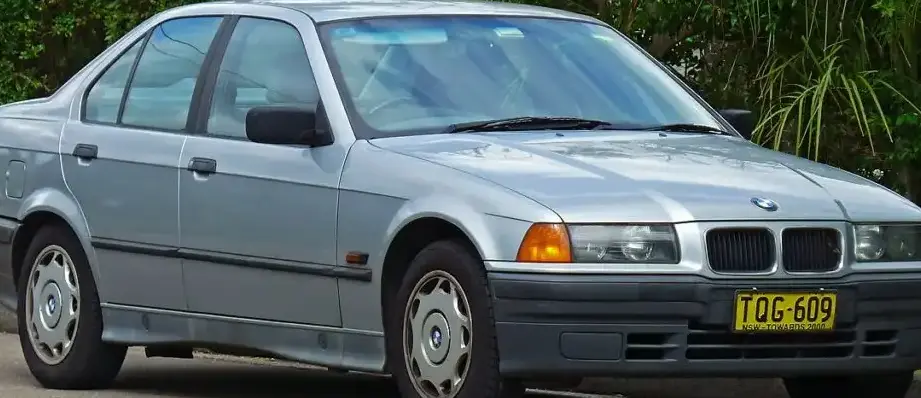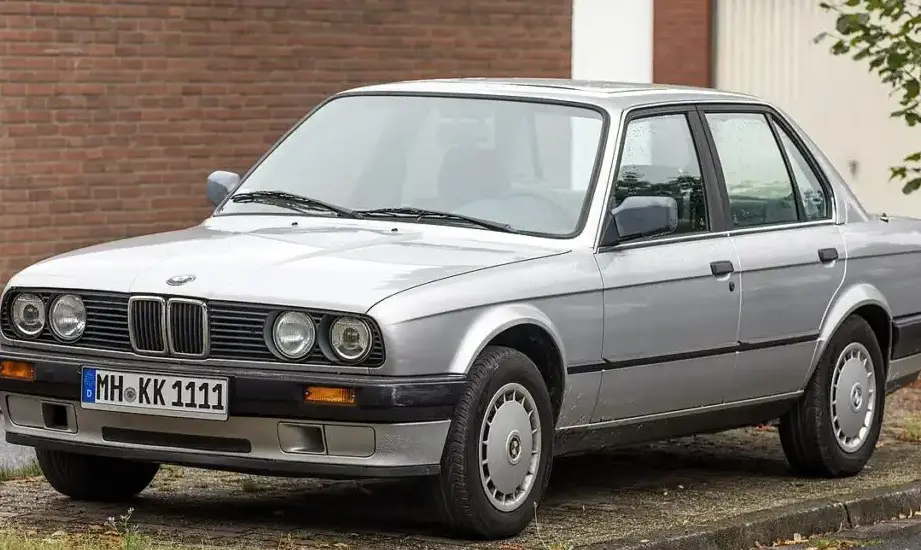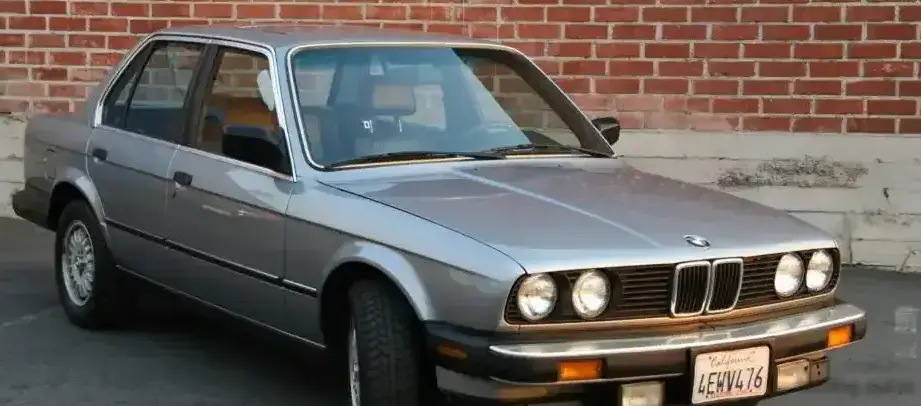
The BMW 3 Series Sedan (E30) 323i, produced between 1983 and 1987, represents a pivotal point in the evolution of BMW’s iconic 3 Series. Positioned as a step up from the base 318i and a more accessible alternative to the high-performance M3, the 323i offered a compelling blend of sporting dynamics and everyday usability. It was a key model within the E30 generation (chassis code E30), which established the 3 Series as a benchmark for compact executive cars. The 323i was primarily marketed in Europe and North America, becoming a popular choice for enthusiasts seeking a driver-focused sedan.
Technical Specifications
| Brand | BMW |
| Model | 3 Series |
| Generation | 3 Series Sedan (E30) |
| Type (Engine) | 323i (150 Hp) |
| Start of production | 1983 |
| End of production | 1987 |
| Powertrain Architecture | Internal Combustion engine |
| Body type | Sedan |
| Seats | 5 |
| Doors | 4 |
| Fuel consumption (combined) | 8.9 l/100 km |
| Fuel consumption (US mpg) | 26.4 US mpg |
| Fuel consumption (UK mpg) | 31.7 UK mpg |
| Fuel consumption (km/l) | 11.2 km/l |
| Fuel Type | Petrol (Gasoline) |
| Acceleration 0 – 100 km/h | 9 sec |
| Acceleration 0 – 62 mph | 9 sec |
| Acceleration 0 – 60 mph | 8.6 sec |
| Maximum speed | 204 km/h (126.76 mph) |
| Weight-to-power ratio | 7.5 kg/Hp |
| Weight-to-torque ratio | 5.5 kg/Nm |
| Power | 150 Hp @ 6000 rpm |
| Power per litre | 64.8 Hp/l |
| Torque | 205 Nm @ 4000 rpm (151.2 lb.-ft. @ 4000 rpm) |
| Engine layout | Front, Longitudinal |
| Engine Model/Code | M20B23 |
| Engine displacement | 2316 cm3 (141.33 cu. in.) |
| Number of cylinders | 6 |
| Engine configuration | Inline |
| Compression ratio | 9.8:1 |
| Number of valves per cylinder | 2 |
| Fuel injection system | Multi-port manifold injection |
| Engine aspiration | Naturally aspirated |
| Engine oil capacity | 4.25 l (4.49 US qt | 3.74 UK qt) |
| Coolant capacity | 10.5 l (11.1 US qt | 9.24 UK qt) |
| Kerb Weight | 1130 kg (2491.22 lbs) |
| Max. weight | 1570 kg (3461.26 lbs) |
| Max load | 440 kg (970.03 lbs) |
| Trunk (boot) space – minimum | 425 l (15.01 cu. ft.) |
| Fuel tank capacity | 55 l (14.53 US gal | 12.1 UK gal) |
| Length | 4325 mm (170.28 in) |
| Width | 1645 mm (64.76 in) |
| Height | 1380 mm (54.33 in) |
| Wheelbase | 2570 mm (101.18 in) |
| Front track | 1410 mm (55.51 in) |
| Rear track | 1420 mm (55.91 in) |
| Front overhang | 761 mm (29.96 in) |
| Rear overhang | 994 mm (39.13 in) |
| Ride height (ground clearance) | 125 mm (4.92 in) |
| Drag coefficient (Cd) | 0.35 |
| Drivetrain Architecture | Rear wheel drive |
| Number of gears | 5 gears, manual transmission |
| Front brakes | Disc |
| Rear brakes | Drum |
| Tires size | 195/60 R14 |
| Wheel rims size | 14 |
Powertrain & Engine Architecture
The heart of the 323i is the M20B23 engine, a 2.3-liter inline-six cylinder powerplant. This engine, a descendant of BMW’s long-standing six-cylinder tradition, featured a cast iron block and an aluminum cylinder head. It utilized Bosch Motronic fuel injection, a sophisticated system for its time, which precisely controlled fuel delivery for optimal performance and efficiency. The M20B23 employed a single overhead camshaft (SOHC) design with two valves per cylinder. This configuration, while not as technologically advanced as dual overhead cam designs, proved remarkably durable and offered a broad, usable powerband. The five-speed manual transmission (Getrag 265) was standard, providing precise shifts and contributing to the car’s engaging driving experience. The engine’s longitudinal mounting and rear-wheel drive layout were hallmarks of BMW’s engineering philosophy, prioritizing balance and handling.
Driving Characteristics
The 323i’s 150 horsepower and 151.2 lb-ft of torque delivered a spirited driving experience. While not brutally fast by modern standards, the car felt responsive and agile. Acceleration from 0-60 mph took around 8.6 seconds, and top speed was approximately 127 mph. The five-speed manual transmission’s gear ratios were well-matched to the engine’s powerband, allowing for strong acceleration in each gear. Compared to the 318i, the 323i offered noticeably more power and torque, resulting in improved performance in all situations. It also felt more refined and capable on the highway. Compared to later, more powerful 3 Series variants like the 325i or M3, the 323i prioritized a more balanced and accessible driving experience, making it a comfortable daily driver while still offering plenty of fun for enthusiasts.
Equipment & Trim Levels
The 323i typically came equipped with a relatively generous level of standard features for its era. These included power windows, central locking, and a basic stereo system. Interior upholstery was typically cloth, although leather was available as an option. Dashboard configuration was straightforward and functional, with clearly marked gauges and controls. Optional extras included a sunroof, air conditioning, and upgraded sound systems. The 323i was often specified with sport suspension and limited-slip differentials, further enhancing its handling capabilities. Trim levels were relatively simple, with most variations stemming from the addition of optional packages.
Chassis & Braking
The E30 3 Series chassis was renowned for its robust construction and well-tuned suspension. The 323i featured MacPherson strut front suspension and a semi-trailing arm rear suspension. Stabilizer bars were fitted front and rear to reduce body roll during cornering. Braking was accomplished via disc brakes at the front and drum brakes at the rear. While the drum brakes at the rear were a cost-saving measure, they provided adequate stopping power for most driving situations. The 323i’s relatively light weight (around 2491 lbs) contributed to its agile handling characteristics.
Market Reception & Comparison
The 323i was generally well-received by automotive critics. It was praised for its balanced handling, responsive engine, and overall refinement. Compared to the base 318i, the 323i offered a significant performance upgrade without the higher price tag of the 325i or M3. Fuel economy was respectable for the time, averaging around 26.4 mpg in combined driving. Reliability was generally good, although regular maintenance was essential to keep the M20 engine running smoothly. The 323i offered a compelling alternative to rivals such as the Mercedes-Benz 190E and the Audi 80.
Legacy
The E30 323i has become a highly sought-after classic car among BMW enthusiasts. The M20 engine is known for its durability and relatively simple maintenance requirements, although age-related issues such as oil leaks and corrosion can be common. Well-maintained examples command strong prices in the used car market. The 323i’s combination of sporting dynamics, everyday usability, and classic BMW styling has cemented its place as a beloved and iconic model in the brand’s history. It represents a sweet spot in the E30 lineup, offering a rewarding driving experience without the extreme performance or complexity of the M3.