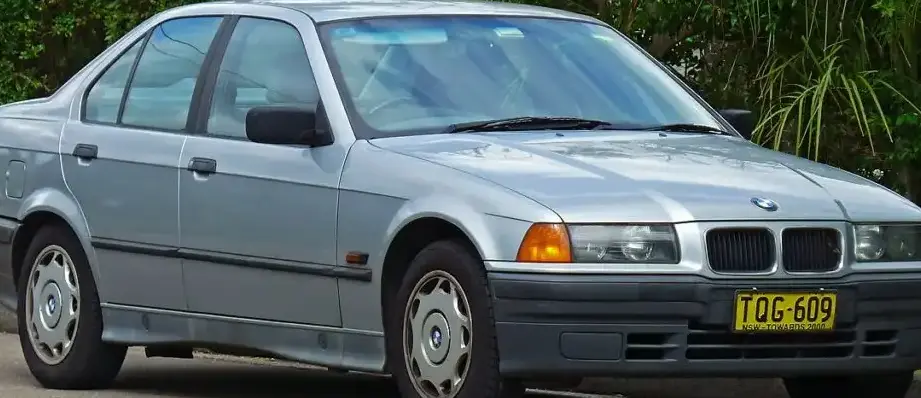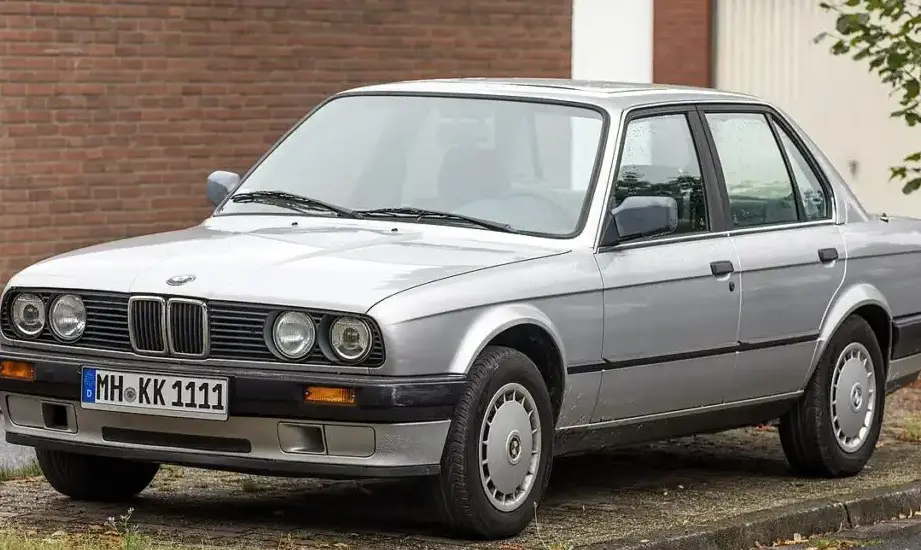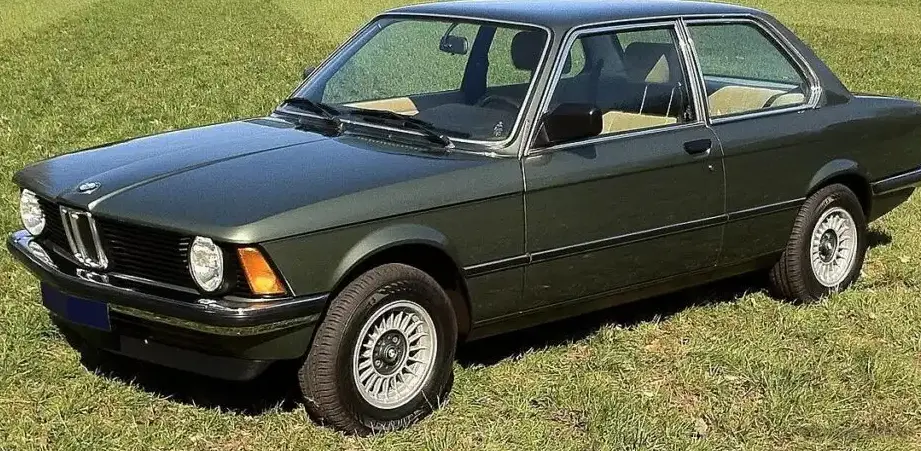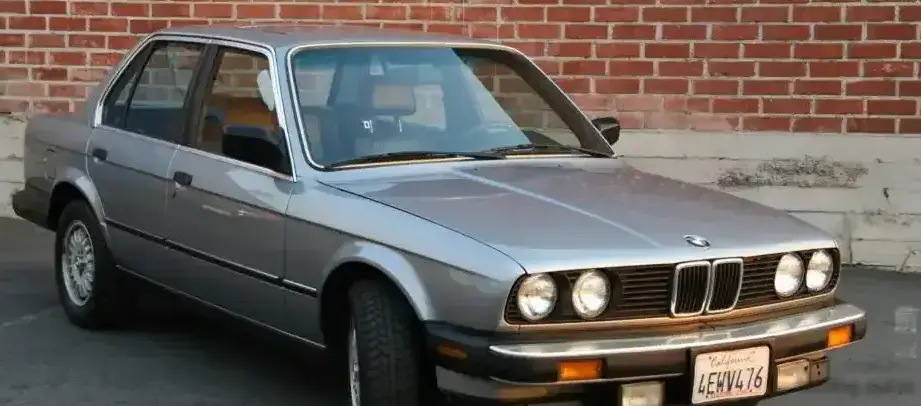
The BMW 3 Series Sedan (E30) 325e, produced from 1983 to 1987, represented a significant step in BMW’s evolution of the compact executive car. Positioned as a ‘fuel-efficient’ variant within the E30 lineup, the 325e was primarily aimed at the North American market, where emissions regulations and a preference for smoother power delivery dictated its design. It served as a bridge between the performance-oriented 325i and the more economical 325es models, offering a blend of both worlds. The “e” designation signified its specific engine tuning and emissions control systems, tailored for the US market.
Technical Specifications
| Brand | BMW |
| Model | 3 Series |
| Generation | 3 Series Sedan (E30) |
| Type (Engine) | 325e (122 Hp) |
| Start of production | 1983 |
| End of production | 1987 |
| Powertrain Architecture | Internal Combustion engine |
| Body type | Sedan |
| Seats | 5 |
| Doors | 4 |
| Fuel consumption (economy) – urban | 11.4 l/100 km (20.6 US mpg, 24.8 UK mpg, 8.8 km/l) |
| Fuel consumption (economy) – extra urban | 5.9 l/100 km (39.9 US mpg, 47.9 UK mpg, 16.9 km/l) |
| Fuel consumption (economy) – combined | 7.8 l/100 km (30.2 US mpg, 36.2 UK mpg, 12.8 km/l) |
| Fuel Type | Petrol (Gasoline) |
| Acceleration 0 – 100 km/h | 10.1 sec |
| Acceleration 0 – 62 mph | 10.1 sec |
| Acceleration 0 – 60 mph | 9.6 sec |
| Maximum speed | 193 km/h (119.92 mph) |
| Weight-to-power ratio | 9.5 kg/Hp, 105.2 Hp/tonne |
| Weight-to-torque ratio | 5 kg/Nm, 198.3 Nm/tonne |
| Power | 122 Hp @ 4250 rpm |
| Power per litre | 45.3 Hp/l |
| Torque | 230 Nm @ 3250 rpm (169.64 lb.-ft. @ 3250 rpm) |
| Engine layout | Front, Longitudinal |
| Engine Model/Code | M20B27 |
| Engine displacement | 2693 cm3 (164.34 cu. in.) |
| Number of cylinders | 6 |
| Engine configuration | Inline |
| Cylinder Bore | 84 mm (3.31 in.) |
| Piston Stroke | 81 mm (3.19 in.) |
| Compression ratio | 9:1 |
| Number of valves per cylinder | 2 |
| Fuel injection system | Carburettor |
| Engine aspiration | Naturally aspirated engine |
| Valvetrain | SOHC |
| Engine oil capacity | 4.25 l (4.49 US qt | 3.74 UK qt) |
| Coolant | 10.5 l (11.1 US qt | 9.24 UK qt) |
| Kerb Weight | 1160 kg (2557.36 lbs.) |
| Max. weight | 1720 kg (3791.95 lbs.) |
| Max load | 560 kg (1234.59 lbs.) |
| Trunk (boot) space – minimum | 404 l (14.27 cu. ft.) |
| Fuel tank capacity | 55 l (14.53 US gal | 12.1 UK gal) |
| Max. roof load | 75 kg (165.35 lbs.) |
| Permitted trailer load with brakes (12%) | 1200 kg (2645.55 lbs.) |
| Permitted trailer load without brakes | 500 kg (1102.31 lbs.) |
| Length | 4325 mm (170.28 in.) |
| Width | 1645 mm (64.76 in.) |
| Height | 1380 mm (54.33 in.) |
| Wheelbase | 2570 mm (101.18 in.) |
| Front track | 1407 mm (55.39 in.) |
| Rear (Back) track | 1415 mm (55.71 in.) |
| Front overhang | 761 mm (29.96 in.) |
| Rear overhang | 994 mm (39.13 in.) |
| Ride height (ground clearance) | 140 mm (5.51 in.) |
| Drag coefficient (Cd) | 0.35 |
| Drivetrain Architecture | The Internal combustion engine (ICE) drives the rear wheels of the vehicle. |
| Drive wheel | Rear wheel drive |
| Number of gears and type of gearbox | 5 gears, manual transmission |
| Front suspension | Independent type McPherson |
| Rear suspension | Wishbone |
| Front brakes | Disc |
| Rear brakes | Drum |
| Tires size | 195/65 R14 |
| Wheel rims size | 14 |
Powertrain & Engine Architecture
The heart of the 325e is the M20B27 engine, a 2.7-liter inline-six cylinder powerplant. Unlike the higher-output 325i, which featured Bosch Motronic fuel injection, the 325e utilized a K-Jetronic fuel injection system, designed for lower emissions and improved fuel economy. This system, while effective, resulted in a noticeable difference in throttle response and overall performance compared to the Motronic-equipped models. The engine produced 122 horsepower at 4250 rpm and 169.64 lb-ft of torque at 3250 rpm. The single overhead camshaft (SOHC) design and 9:1 compression ratio further contributed to its focus on efficiency. The 325e was exclusively offered with a 5-speed manual transmission in the US market, designed to complement the engine’s torque curve and provide reasonable acceleration.
Driving Characteristics
The 325e offered a distinctly different driving experience compared to its 325i sibling. The lower compression ratio and K-Jetronic fuel injection resulted in a smoother, more relaxed power delivery. While the 325i was known for its eagerness to rev, the 325e prioritized low-end torque, making it more suitable for everyday driving. Acceleration from 0-60 mph took approximately 9.6 seconds, slightly slower than the 325i. The 5-speed manual transmission featured relatively long gear ratios, further emphasizing fuel economy over outright performance. The car felt comfortable on the highway, but lacked the sporty responsiveness of the 325i when pushed hard.
Equipment & Trim Levels
The 325e typically came standard with features like power steering, air conditioning, and a basic stereo system. Interior upholstery was usually cloth, with options for leather available at an extra cost. Trim levels were relatively simple, with most variations coming down to optional extras. Common options included a sunroof, upgraded sound system, and alloy wheels. The dashboard layout was typical of the E30, with a straightforward design and easy-to-read gauges. The 325e aimed for a balance between comfort and affordability, offering a reasonably well-equipped vehicle without the premium price tag of the 325i.
Chassis & Braking
The 325e shared the E30’s MacPherson strut front suspension and semi-trailing arm rear suspension. However, the 325e often featured slightly softer spring rates and dampers to enhance ride comfort. Braking was accomplished via disc brakes on the front wheels and drum brakes on the rear. While adequate for normal driving, the rear drum brakes were a point of criticism, particularly when compared to the four-wheel disc brakes available on the 325i. The car’s relatively light weight (around 2557 lbs) helped to offset the limitations of the braking system.
Market Reception & Comparison
The 325e was initially well-received in the US market, particularly by buyers who prioritized fuel economy and a comfortable ride. However, it also faced criticism for its lack of performance compared to the 325i. Automotive journalists often noted the sluggish throttle response and the engine’s reluctance to rev. Compared to the 325i, the 325e offered better fuel economy (around 30.2 US mpg combined) but significantly less power and excitement. The 325es, another US-market variant, offered even greater fuel efficiency but with even less performance, positioning the 325e as a middle ground.
Legacy
The BMW 325e, while not as celebrated as its 325i counterpart, holds a unique place in E30 history. Its focus on fuel efficiency and emissions control reflected the changing automotive landscape of the 1980s. Today, the 325e is a relatively affordable entry point into E30 ownership. The M20B27 engine is generally considered reliable, although the K-Jetronic fuel injection system can require specialized knowledge for maintenance and repair. Well-maintained examples are becoming increasingly sought after by enthusiasts who appreciate the E30’s classic styling and driving dynamics, even in its more subdued form. Parts availability remains good, ensuring that these cars can be kept on the road for years to come.