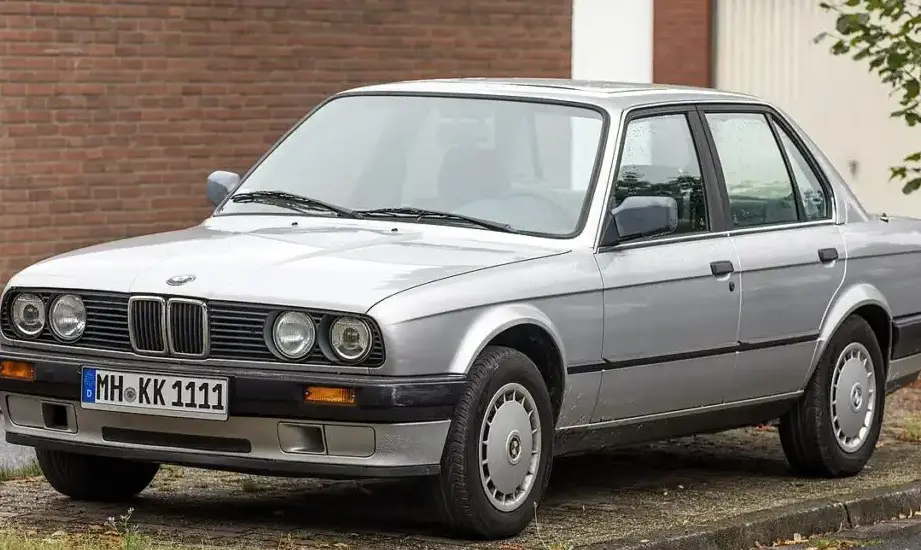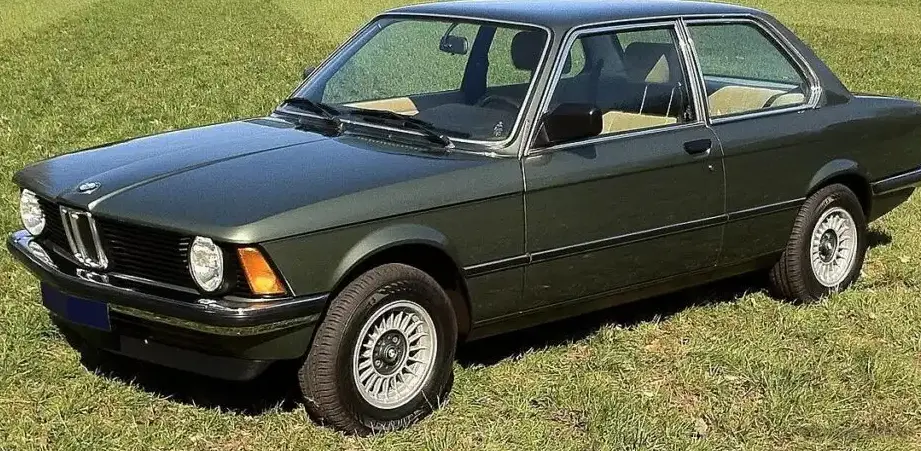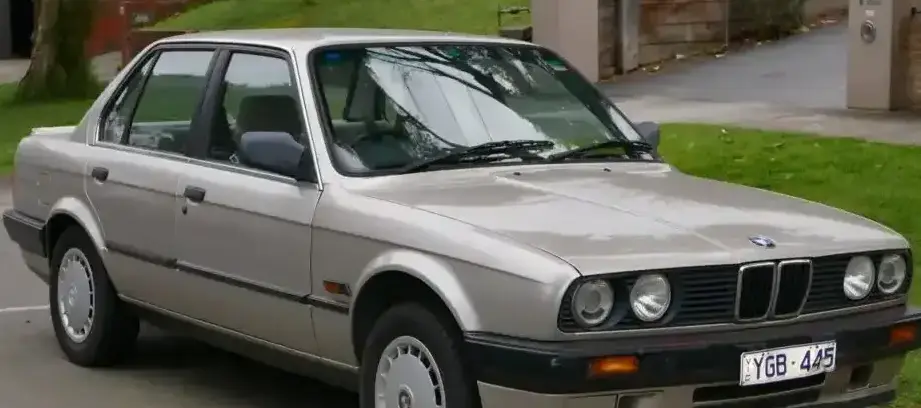
The BMW 3 Series Sedan (E30) 316i, produced from 1987 to 1991, represented the entry point into the iconic E30 generation. Following the facelift introduced in 1987 (often referred to as the 2.3-liter models, despite engine displacement), the 316i served as a more accessible and fuel-efficient alternative to its higher-powered siblings, the 325i and 318i. Positioned as the base model, it appealed to buyers prioritizing practicality, reliability, and the BMW driving experience at a lower price point. The 316i played a significant role in solidifying the E30’s reputation as a well-rounded and desirable compact executive car, particularly in European markets.
Technical Specifications
| Brand | BMW |
| Model | 3 Series |
| Generation | 3 Series Sedan (E30, facelift 1987) |
| Type (Engine) | 316i (100 Hp) |
| Start of production | 1987 |
| End of production | 1991 |
| Powertrain Architecture | Internal Combustion engine |
| Body type | Sedan |
| Seats | 5 |
| Doors | 4 |
| Fuel consumption (economy) – urban | 10.3 l/100 km (22.8 US mpg, 27.4 UK mpg, 9.7 km/l) |
| Fuel consumption (economy) – extra urban | 6.7 l/100 km (35.1 US mpg, 42.2 UK mpg, 14.9 km/l) |
| Fuel consumption (economy) – combined | 8.6 l/100 km (27.4 US mpg, 32.8 UK mpg, 11.6 km/l) |
| Fuel Type | Petrol (Gasoline) |
| Acceleration 0 – 100 km/h | 12.1 sec |
| Acceleration 0 – 62 mph | 12.1 sec |
| Acceleration 0 – 60 mph | 11.5 sec |
| Maximum speed | 182 km/h (113.09 mph) |
| Weight-to-power ratio | 10.8 kg/Hp, 92.6 Hp/tonne |
| Weight-to-torque ratio | 7.7 kg/Nm, 130.6 Nm/tonne |
| Power | 100 Hp @ 5500 rpm |
| Power per litre | 62.7 Hp/l |
| Torque | 141 Nm @ 4250 rpm (104 lb.-ft. @ 4250 rpm) |
| Engine layout | Front, Longitudinal |
| Engine Model/Code | M40B16 |
| Engine displacement | 1596 cm3 (97.39 cu. in.) |
| Number of cylinders | 4 |
| Engine configuration | Inline |
| Cylinder Bore | 84 mm (3.31 in.) |
| Piston Stroke | 72 mm (2.83 in.) |
| Compression ratio | 9.1:1 |
| Number of valves per cylinder | 2 |
| Fuel injection system | Multi-port manifold injection |
| Engine aspiration | Naturally aspirated engine |
| Valvetrain | OHC |
| Engine oil capacity | 4 l (4.23 US qt | 3.52 UK qt) |
| Coolant | 6 l (6.34 US qt | 5.28 UK qt) |
| Kerb Weight | 1080 kg (2380.99 lbs.) |
| Max. weight | 1540 kg (3395.12 lbs.) |
| Max load | 460 kg (1014.13 lbs.) |
| Trunk (boot) space – minimum | 425 l (15.01 cu. ft.) |
| Fuel tank capacity | 55 l (14.53 US gal | 12.1 UK gal) |
| Length | 4325 mm (170.28 in.) |
| Width | 1645 mm (64.76 in.) |
| Height | 1380 mm (54.33 in.) |
| Wheelbase | 2570 mm (101.18 in.) |
| Front track | 1405 mm (55.31 in.) |
| Rear (Back) track | 1415 mm (55.71 in.) |
| Drivetrain Architecture | The Internal combustion engine (ICE) drives the rear wheels of the vehicle. |
| Drive wheel | Rear wheel drive |
| Number of gears and type of gearbox | 5 gears, manual transmission |
| Front suspension | Coil spring |
| Rear suspension | Coil spring |
| Front brakes | Disc |
| Rear brakes | Drum |
| Assisting systems | ABS (Anti-lock braking system) |
| Power steering | Hydraulic Steering |
| Tires size | 175/70 R14 |
| Wheel rims size | 14 |
Powertrain & Engine Architecture
The 316i was powered by the M40B16, a 1.6-liter inline-four cylinder engine. This engine featured a single overhead camshaft (OHC) design and multi-port fuel injection, a significant advancement over earlier carbureted BMW engines. The M40B16 produced 100 horsepower at 5500 rpm and 104 lb-ft of torque at 4250 rpm. The engine’s relatively modest output was a deliberate choice, aimed at providing adequate performance while maximizing fuel efficiency. The engine was mounted longitudinally in the front of the vehicle, driving the rear wheels. The standard transmission was a five-speed manual, but a four-speed automatic transmission was also available, and is the focus of this article. This automatic, a common BMW unit of the era, offered smooth shifts but at the expense of some performance and fuel economy.
Driving Characteristics
The 316i with the automatic transmission offered a comfortable and relaxed driving experience. Acceleration was noticeably slower than the manual transmission or higher-powered 325i models. The 0-60 mph time was around 11.5 seconds, and top speed was approximately 113 mph. The automatic transmission’s gear ratios were optimized for fuel economy and smooth cruising, rather than outright performance. While not a sports car in this configuration, the 316i still retained the BMW hallmarks of balanced handling and a responsive steering feel. The automatic transmission did diminish the driver engagement somewhat, but it made the car more accessible to a wider range of drivers, particularly those who preferred the convenience of an automatic.
Equipment & Trim Levels
The 316i typically came with a fairly basic level of equipment, reflecting its position as the entry-level model. Standard features included cloth upholstery, manual windows and door locks, and a basic stereo system. Optional extras included power windows, central locking, a sunroof, and upgraded audio systems. Interior trim was generally functional and durable, with a focus on practicality rather than luxury. The dashboard layout was typical of the E30, with clearly marked gauges and a straightforward control layout. The 316i often served as a blank canvas for buyers who wanted to add options to personalize their vehicle.
Chassis & Braking
The E30 316i utilized a MacPherson strut front suspension and a semi-trailing arm rear suspension. This setup provided a good balance of ride comfort and handling precision. The 316i typically featured disc brakes on the front wheels and drum brakes on the rear. ABS (Anti-lock Braking System) was available as an option, enhancing braking performance and safety. The car’s relatively light weight (around 2381 lbs) helped to offset the lower engine output, contributing to its nimble handling characteristics. Stabilizer bars were fitted front and rear, further improving cornering stability.
Market Reception & Comparison
The 316i was generally well-received by automotive critics as a sensible and affordable entry into the BMW range. It was praised for its fuel efficiency, reliability, and comfortable ride. However, some critics noted its lack of outright performance compared to the 325i. Compared to the 325i, the 316i offered significantly better fuel economy and lower running costs, but at the expense of around 30-40 horsepower. The 318i, introduced later in the E30 lifecycle, offered a middle ground between the two, providing a bit more power than the 316i without the higher price tag of the 325i. The 316i appealed to buyers who prioritized practicality and economy over performance.
Legacy
The E30 316i, particularly the automatic transmission variant, has proven to be a relatively reliable and durable vehicle. The M40B16 engine is known for its longevity, and the automatic transmission, while not as sporty as a manual, is generally robust. Today, the E30 316i is a popular choice among classic BMW enthusiasts, offering an affordable entry point into the world of vintage BMW ownership. While not as highly sought after as the 325i, well-maintained 316i models are appreciating in value, and parts availability remains good. The 316i represents a significant chapter in BMW’s history, embodying the brand’s commitment to building well-engineered and enjoyable driving machines.