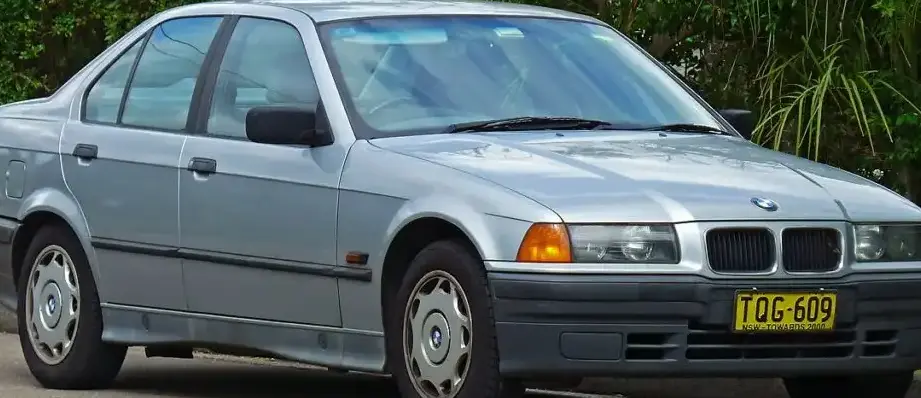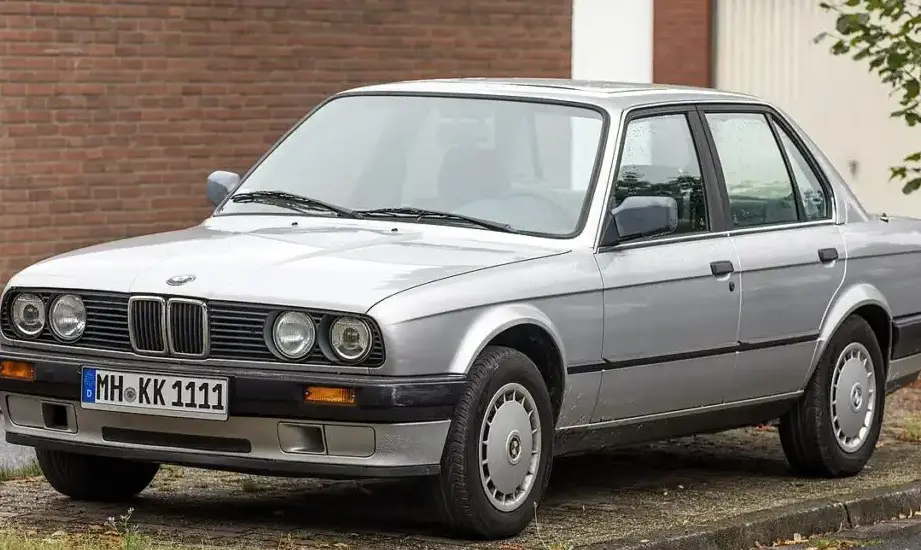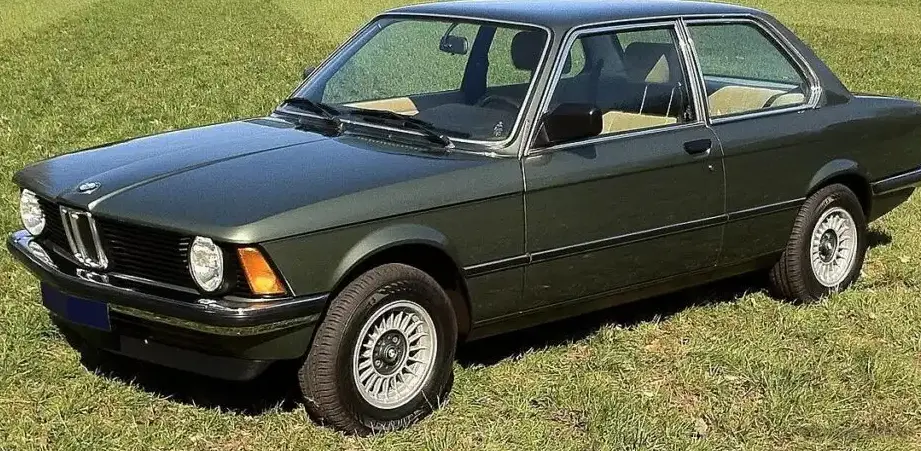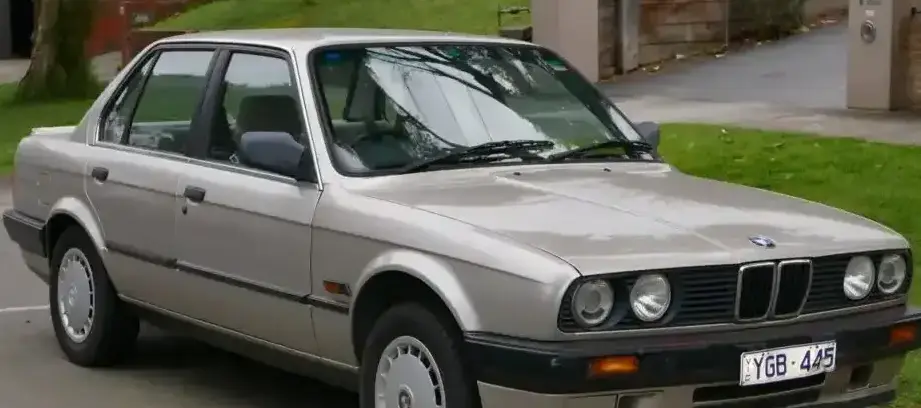
The BMW 3 Series Sedan (E30) 316i, produced from 1988 to 1991, represented the entry point into the iconic E30 generation. Positioned below the 318i and 325i models, the 316i offered a more economical and accessible option for buyers seeking the renowned BMW driving experience. This variant was primarily sold in Europe and other markets where smaller displacement engines were favored due to taxation and fuel economy considerations. While not initially available in the North American market, the E30 316i became a popular choice for those seeking a balance of performance, practicality, and the classic BMW aesthetic.
Technical Specifications
| Brand | BMW |
| Model | 3 Series |
| Generation | 3 Series Sedan (E30, facelift 1987) |
| Type (Engine) | 316i (99 Hp) |
| Start of production | 1988 |
| End of production | 1991 |
| Powertrain Architecture | Internal Combustion engine |
| Body type | Sedan |
| Seats | 5 |
| Doors | 4 |
| Fuel Type | Petrol (Gasoline) |
| Weight-to-power ratio | 12.1 kg/Hp, 82.8 Hp/tonne |
| Weight-to-torque ratio | 8.5 kg/Nm, 118 Nm/tonne |
| Power | 99 Hp @ 5500 rpm |
| Power per litre | 62 Hp/l |
| Torque | 141 Nm @ 4250 rpm (104 lb.-ft. @ 4250 rpm) |
| Engine layout | Front, Longitudinal |
| Engine Model/Code | M40B16 |
| Engine displacement | 1596 cm3 (97.39 cu. in.) |
| Number of cylinders | 4 |
| Engine configuration | Inline |
| Cylinder Bore | 84 mm (3.31 in.) |
| Piston Stroke | 72 mm (2.83 in.) |
| Compression ratio | 9.7:1 |
| Number of valves per cylinder | 2 |
| Fuel injection system | Carburettor |
| Engine aspiration | Naturally aspirated engine |
| Engine oil capacity | 4 l (4.23 US qt | 3.52 UK qt) |
| Coolant | 6 l (6.34 US qt | 5.28 UK qt) |
| Kerb Weight | 1195 kg (2634.52 lbs) |
| Max. weight | 1655 kg (3648.65 lbs) |
| Max load | 460 kg (1014.13 lbs) |
| Trunk (boot) space – minimum | 425 l (15.01 cu. ft.) |
| Fuel tank capacity | 55 l (14.53 US gal | 12.1 UK gal) |
| Length | 4321 mm (170.12 in.) |
| Width | 1641 mm (64.61 in.) |
| Height | 1379 mm (54.29 in.) |
| Wheelbase | 2570 mm (101.18 in.) |
| Front track | 1410 mm (55.51 in.) |
| Rear (Back) track | 1420 mm (55.91 in.) |
| Ride height (ground clearance) | 140 mm (5.51 in.) |
| Drivetrain Architecture | The Internal combustion engine (ICE) drives the rear wheels of the vehicle. |
| Drive wheel | Rear wheel drive |
| Number of gears and type of gearbox | 5 gears, manual transmission |
| Front brakes | Disc |
| Rear brakes | Drum |
Powertrain & Engine Architecture
The heart of the E30 316i is the M40B16 engine, a 1.6-liter inline-four cylinder unit. This engine, unlike the later fuel-injected versions, utilized a single carburetor for fuel delivery, a design choice reflecting the period and market demands. The M40B16 features a single overhead camshaft (SOHC) valvetrain with two valves per cylinder. The engine’s relatively low compression ratio of 9.7:1 contributed to its ability to run on lower octane fuel, common in many European markets. The engine’s longitudinal mounting and rear-wheel drive configuration were hallmarks of BMW engineering at the time, providing a balanced weight distribution and engaging driving dynamics. The 5-speed manual transmission was standard, offering precise gear changes and contributing to the car’s overall responsiveness.
Driving Characteristics
The 316i, with its 99 horsepower and 104 lb-ft of torque, offered a more modest performance experience compared to its higher-powered siblings. Acceleration was adequate for everyday driving, but it lacked the punch of the 318i or 325i. The carburetor setup resulted in a slightly less refined throttle response compared to fuel-injected engines. However, the 316i’s lighter weight (approximately 2635 lbs) helped to mitigate the power deficit, making it feel nimble and engaging on winding roads. The 5-speed manual transmission provided a good level of control, allowing drivers to keep the engine in its optimal power band. The rear-wheel drive layout ensured predictable handling and a balanced feel, characteristic of BMWs of this era.
Equipment & Trim Levels
The 316i typically came with a relatively basic level of equipment, reflecting its position as the entry-level model. Standard features included cloth upholstery, manual windows and door locks, and a simple instrument cluster. Optional extras, such as power windows, central locking, a sunroof, and upgraded audio systems, were available to enhance comfort and convenience. Interior trim options were limited, typically featuring durable and practical materials. The exterior styling was consistent with other E30 models, featuring the iconic kidney grille and distinctive BMW proportions.
Chassis & Braking
The E30 316i utilized a MacPherson strut front suspension and a semi-trailing arm rear suspension. This setup provided a good balance of ride comfort and handling precision. The front brakes were ventilated discs, while the rear brakes were drums. This configuration was typical for vehicles in this weight class during the late 1980s and early 1990s. Stabilizer bars were fitted to both the front and rear axles, helping to reduce body roll during cornering. The steering was unassisted, providing a direct and communicative feel.
Market Reception & Comparison
The E30 316i was generally well-received by automotive critics as a practical and affordable entry point into the BMW brand. It was praised for its handling, build quality, and overall driving experience. However, some critics noted the engine’s lack of power compared to its siblings. Compared to the 318i, the 316i offered lower running costs and a more accessible price point, but at the expense of performance. The 316i also offered better fuel economy than the larger-engined models. Its reliability was generally good, although the carburetor required periodic maintenance.
Legacy
The E30 316i has become a sought-after classic car among BMW enthusiasts. Its relative affordability and simple mechanical design make it an attractive option for those looking to experience the E30 platform without the higher price tag of the more powerful models. The M40B16 engine, while not the most powerful, is known for its durability and relative ease of maintenance. Today, well-maintained examples of the E30 316i command a respectable price in the used car market, and the model continues to be celebrated for its timeless design and engaging driving dynamics. The carburetor can present challenges for modern mechanics unfamiliar with the technology, but parts availability remains reasonably good.