Technical Specifications
| Brand | BMW |
| Model | 3 Series |
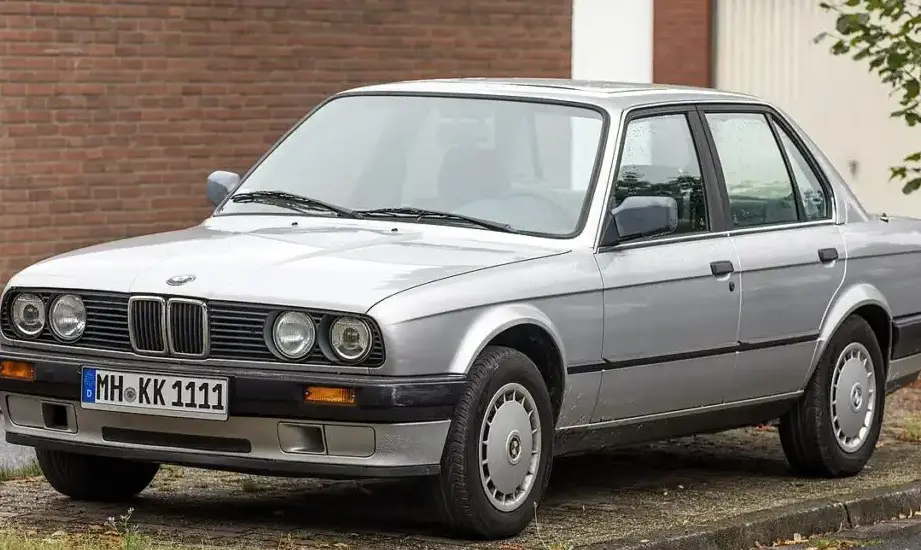
| Generation | 3 Series Sedan (E30, facelift 1987) |
| Type (Engine) | 318i (113 Hp) |
| Start of production | 1987 |
| End of production | 1991 |
| Powertrain Architecture | Internal Combustion engine |
| Body type | Sedan |
| Seats | 5 |
| Doors | 4 |
| Fuel consumption (urban) | 10.3 l/100 km (22.8 US mpg, 27.4 UK mpg, 9.7 km/l) |
| Fuel consumption (extra urban) | 6.7 l/100 km (35.1 US mpg, 42.2 UK mpg, 14.9 km/l) |
| Fuel consumption (combined) | 8.6 l/100 km (27.4 US mpg, 32.8 UK mpg, 11.6 km/l) |
| Fuel Type | Petrol (Gasoline) |
| Acceleration 0 – 100 km/h | 10.8 sec |
| Acceleration 0 – 62 mph | 10.8 sec |
| Acceleration 0 – 60 mph | 10.3 sec |
| Maximum speed | 187 km/h (116.2 mph) |
| Weight-to-power ratio | 9.6 kg/Hp, 103.7 Hp/tonne |
| Weight-to-torque ratio | 6.7 kg/Nm, 148.6 Nm/tonne |
| Power | 113 Hp @ 5500 rpm |
| Power per litre | 62.9 Hp/l |
| Torque | 162 Nm @ 4250 rpm (119.49 lb.-ft. @ 4250 rpm) |
| Engine layout | Front, Longitudinal |
| Engine Model/Code | M40B18 |
| Engine displacement | 1796 cm3 (109.6 cu. in.) |
| Number of cylinders | 4 |
| Engine configuration | Inline |
| Cylinder Bore | 84 mm (3.31 in.) |
| Piston Stroke | 81 mm (3.19 in.) |
| Compression ratio | 8.8:1 |
| Number of valves per cylinder | 2 |
| Fuel injection system | Multi-port manifold injection |
| Engine aspiration | Naturally aspirated engine |
| Engine oil capacity | 4 l (4.23 US qt | 3.52 UK qt) |
| Coolant capacity | 6 l (6.34 US qt | 5.28 UK qt) |
| Kerb Weight | 1090 kg (2403.04 lbs.) |
| Max. weight | 1550 kg (3417.17 lbs.) |
| Max load | 460 kg (1014.13 lbs.) |
| Trunk (boot) space – minimum | 425 l (15.01 cu. ft.) |
| Fuel tank capacity | 55 l (14.53 US gal | 12.1 UK gal) |
| Length | 4325 mm (170.28 in.) |
| Width | 1645 mm (64.76 in.) |
| Height | 1380 mm (54.33 in.) |
| Wheelbase | 2570 mm (101.18 in.) |
| Front track | 1405 mm (55.31 in.) |
| Rear (Back) track | 1415 mm (55.71 in.) |
| Drivetrain Architecture | The Internal combustion engine (ICE) drives the rear wheels of the vehicle. |
| Drive wheel | Rear wheel drive |
| Number of gears and type of gearbox | 5 gears, manual transmission |
| Front suspension | Coil spring |
| Rear suspension | Coil spring |
| Front brakes | Disc |
| Rear brakes | Drum |
| Assisting systems | ABS (Anti-lock braking system) |
| Power steering | Hydraulic Steering |
| Tires size | 195/65 R14 |
| Wheel rims size | 14 |
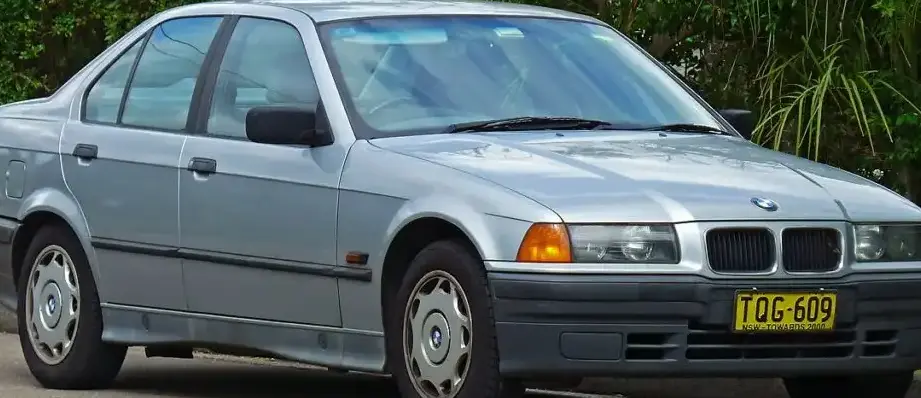
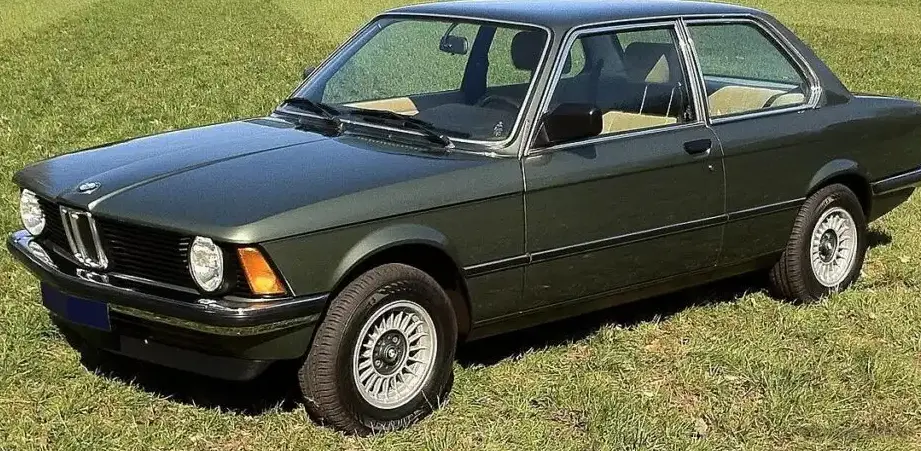
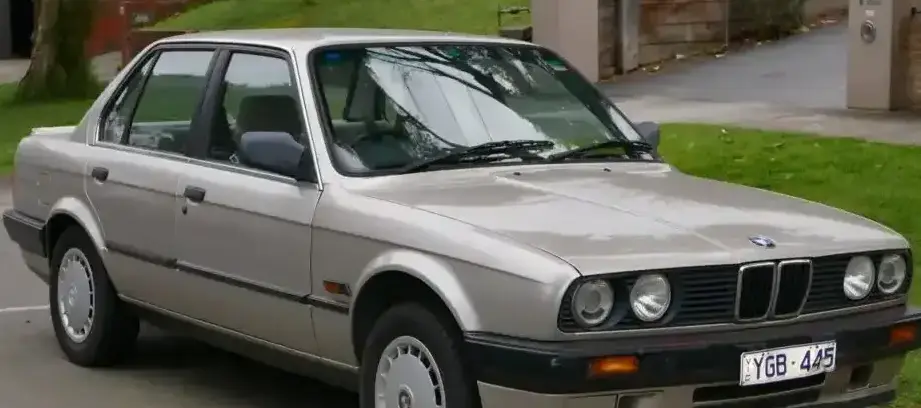
The E30 318i, produced from 1987-1991, was a facelifted version of the original E30 3 Series, benefitting from subtle but important improvements to styling, trim, and mechanical components. It occupied a middle ground in the E30 lineup, bridging the gap between the more economical 316i and the performance-oriented 325i models. The facelift, often referred to as the “2.5” E30, included changes like a revised front fascia with integrated fog lights, updated interior trim, and improved engine management systems. This variant was particularly popular in Europe and North America, offering a balance of practicality, driving enjoyment, and BMW’s established brand prestige.
Powertrain & Engine Architecture
The heart of the 318i was the M40B18 engine, a 1.8-liter inline-four cylinder powerplant. This engine replaced the earlier M10-based engines, offering improved performance and refinement. The M40B18 featured multi-port fuel injection, a significant upgrade over earlier carbureted or single-point injection systems. This system, coupled with a relatively high compression ratio of 8.8:1, allowed for efficient combustion and a respectable power output of 113 horsepower at 5500 rpm and 162 Nm (119.49 lb-ft) of torque at 4250 rpm. The engine’s valvetrain consisted of two valves per cylinder, operated by a single overhead camshaft. The 318i was typically paired with a 5-speed manual transmission, but a 4-speed automatic transmission was also available, and this is the configuration we are focusing on. The automatic transmission, while offering convenience, did impact acceleration and fuel economy compared to the manual version.
Driving Characteristics
The 318i automatic offered a comfortable and relatively relaxed driving experience. While not as sporty as the manual transmission or the higher-output 325i models, it provided adequate performance for everyday driving. The automatic transmission’s gear ratios were optimized for fuel efficiency and smooth cruising, rather than outright acceleration. The 0-60 mph time of around 10.3 seconds reflects this focus. The engine felt responsive enough for merging onto highways and overtaking, but lacked the urgency of the more powerful engines. The rear-wheel-drive layout, a hallmark of BMWs at the time, contributed to balanced handling, although the automatic transmission did slightly diminish the feeling of driver control. Compared to the manual version, the automatic 318i felt less engaging, but more accessible to a wider range of drivers.
Equipment & Trim Levels
The 318i typically came standard with features like power steering, central locking, and a basic stereo system. Interior upholstery was usually cloth, with options for leather available at an extra cost. The dashboard layout was functional and straightforward, with clearly marked gauges and controls. Optional extras included a sunroof, air conditioning, and upgraded sound systems. Higher trim levels offered additional features like alloy wheels, a trip computer, and more luxurious interior appointments. The automatic transmission models often included features geared towards comfort, such as cruise control, as standard or optional equipment.
Chassis & Braking
The E30 318i utilized a MacPherson strut front suspension and a semi-trailing arm rear suspension, providing a good balance of ride comfort and handling precision. The chassis was relatively lightweight, contributing to the car’s nimble feel. Braking duties were handled by disc brakes at the front and drum brakes at the rear. ABS (Anti-lock Braking System) was available as an option, enhancing safety and control during hard braking. The suspension was tuned to provide a comfortable ride, but also allowed for confident cornering. Stabilizer bars were fitted front and rear to reduce body roll.
Market Reception & Comparison
The 318i automatic was generally well-received by automotive critics as a practical and comfortable entry-level BMW. It was praised for its build quality, handling, and fuel efficiency. However, some reviewers noted that the automatic transmission diminished the driving experience compared to the manual version. Compared to the 325i, the 318i offered a more affordable price point, but at the expense of performance. The 316i, while even more affordable, lacked the 318i’s extra power and refinement. Fuel economy was competitive for its time, averaging around 27.4 US mpg in combined driving. Reliability was generally good, although regular maintenance was essential to prevent issues with the fuel injection system and cooling system.
Legacy
The E30 318i, particularly the automatic version, has become a popular choice among classic BMW enthusiasts. The M40B18 engine is known for its durability and relative simplicity, making it easier to maintain than some of the more complex engines of the era. While not as highly sought after as the 325i, the 318i offers a more affordable entry point into E30 ownership. Well-maintained examples are becoming increasingly rare and valuable, and are often appreciated for their blend of classic BMW styling, driving dynamics, and practicality. The automatic transmission, while not preferred by purists, makes these cars more accessible to a wider range of drivers and collectors.