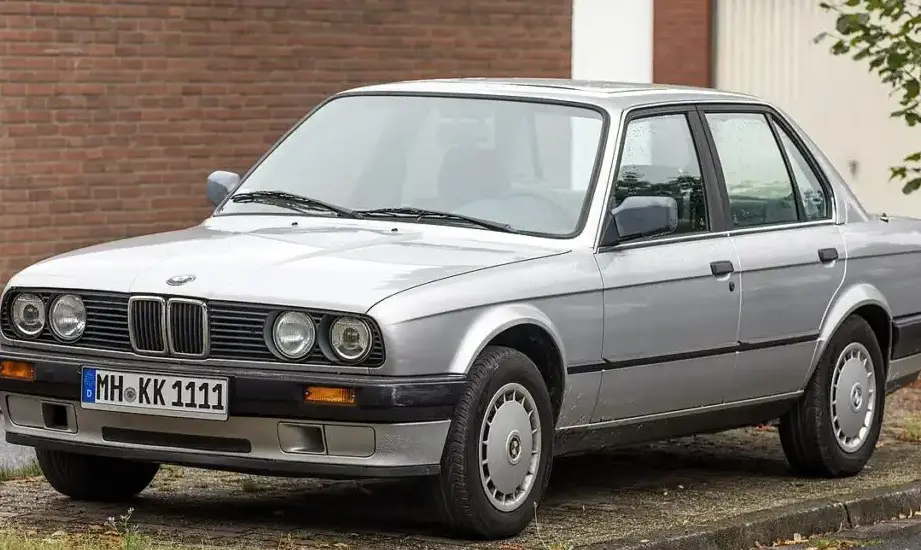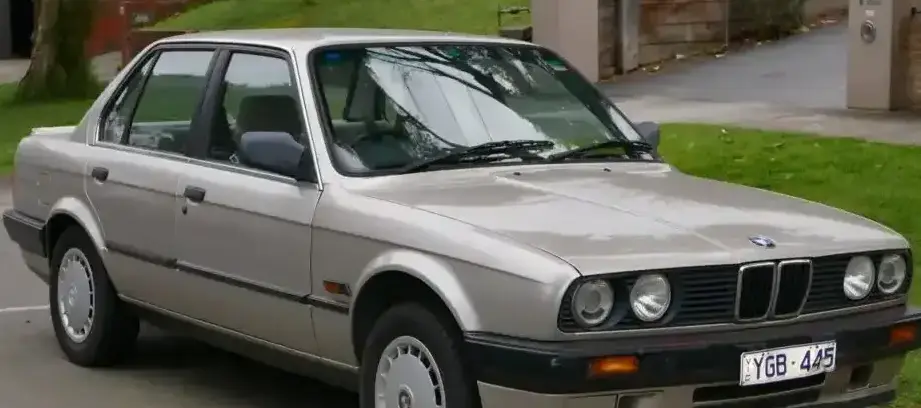
The BMW 3 Series Sedan (E30), particularly the 324d variant produced from 1987 to 1991, represents a unique chapter in the lineage of BMW’s iconic compact executive car. Introduced as part of the facelifted E30 range (often referred to as the 2.5 model), the 324d was primarily aimed at European markets seeking a fuel-efficient and durable sedan. It distinguished itself from other E30 models through its diesel engine, offering a different driving experience and appealing to a specific segment of buyers. This variant occupied a more economical position within the E30 lineup, sitting below the more performance-oriented 325i and 325es models.
Technical Specifications
| Brand | BMW |
| Model | 3 Series |
| Generation | 3 Series Sedan (E30, facelift 1987) |
| Type (Engine) | 324d (86 Hp) |
| Start of production | 1987 |
| End of production | 1991 |
| Powertrain Architecture | Internal Combustion engine |
| Body type | Sedan |
| Seats | 5 |
| Doors | 4 |
| Fuel consumption (urban) | 8 l/100 km (29.4 US mpg, 35.3 UK mpg, 12.5 km/l) |
| Fuel consumption (extra urban) | 5.3 l/100 km (44.4 US mpg, 53.3 UK mpg, 18.9 km/l) |
| Fuel consumption (combined) | 7.3 l/100 km (32.2 US mpg, 38.7 UK mpg, 13.7 km/l) |
| Fuel Type | Diesel |
| Acceleration 0 – 100 km/h | 16.1 sec |
| Acceleration 0 – 62 mph | 16.1 sec |
| Acceleration 0 – 60 mph | 15.3 sec |
| Maximum speed | 165 km/h (102.53 mph) |
| Weight-to-power ratio | 13.9 kg/Hp, 72 Hp/tonne |
| Weight-to-torque ratio | 7.8 kg/Nm, 128 Nm/tonne |
| Power | 86 Hp @ 4600 rpm |
| Power per litre | 35.2 Hp/l |
| Torque | 153 Nm @ 2500 rpm (112.85 lb.-ft. @ 2500 rpm) |
| Engine layout | Front, Longitudinal |
| Engine Model/Code | M21D24 |
| Engine displacement | 2443 cm3 (149.08 cu. in.) |
| Number of cylinders | 6 |
| Engine configuration | Inline |
| Cylinder Bore | 80 mm (3.15 in.) |
| Piston Stroke | 81 mm (3.19 in.) |
| Compression ratio | 22:1 |
| Number of valves per cylinder | 2 |
| Fuel injection system | Precombustion chamber injection |
| Engine aspiration | Naturally aspirated |
| Engine oil capacity | 5.3 l (5.6 US qt | 4.66 UK qt) |
| Coolant capacity | 12 l (12.68 US qt | 10.56 UK qt) |
| Kerb Weight | 1195 kg (2634.52 lbs.) |
| Max. weight | 1655 kg (3648.65 lbs.) |
| Max load | 460 kg (1014.13 lbs.) |
| Trunk (boot) space – minimum | 425 l (15.01 cu. ft.) |
| Fuel tank capacity | 55 l (14.53 US gal | 12.1 UK gal) |
| Length | 4325 mm (170.28 in.) |
| Width | 1645 mm (64.76 in.) |
| Height | 1380 mm (54.33 in.) |
| Wheelbase | 2570 mm (101.18 in.) |
| Front track | 1405 mm (55.31 in.) |
| Rear (Back) track | 1415 mm (55.71 in.) |
| Drivetrain Architecture | Rear wheel drive |
| Number of gears and type of gearbox | 5 gears, manual transmission |
| Front suspension | Coil spring |
| Rear suspension | Coil spring |
| Front brakes | Ventilated discs |
| Rear brakes | Drum |
| Assisting systems | ABS (Anti-lock braking system) |
| Power steering | Hydraulic Steering |
| Tires size | 195/65 R14 |
| Wheel rims size | 14 |
Powertrain & Engine Architecture
The heart of the 324d is the M21D24, a 2.4-liter inline-six diesel engine. This engine utilized precombustion chamber injection, a common diesel technology of the era. This system involved injecting fuel into a small pre-chamber within the cylinder head, where it ignited and then ignited the main charge in the cylinder. The M21D24 featured a robust cast iron block and a relatively simple valvetrain with two valves per cylinder. The engine produced 86 horsepower at 4600 rpm and 153 Nm (113 lb-ft) of torque at 2500 rpm. The five-speed manual transmission was the standard offering, providing a relatively long-geared setup optimized for fuel economy rather than outright acceleration. The engine’s longitudinal mounting and rear-wheel-drive configuration were typical for BMW sedans of the time.
Driving Characteristics
The 324d offered a distinctly different driving experience compared to its gasoline-powered siblings. While lacking the brisk acceleration of the 325i, the 324d provided ample low-end torque, making it surprisingly capable in everyday driving situations. The long gearing of the five-speed manual transmission emphasized fuel efficiency, but also meant that frequent downshifts were necessary for overtaking or climbing hills. The diesel engine’s characteristic clatter was noticeable, but generally well-contained. Handling was typical of the E30, with responsive steering and a well-balanced chassis, although the added weight of the diesel engine and its components did slightly impact agility compared to lighter models.
Equipment & Trim Levels
The 324d was generally equipped with a fairly basic level of trim, reflecting its position as the entry-level diesel offering. Standard features typically included cloth upholstery, manual windows and door locks, and a relatively simple dashboard layout. Options such as power windows, central locking, and a sunroof were available, but often added to the vehicle’s cost. Interior color schemes were typically conservative, with shades of gray and blue being common. The exterior trim was generally understated, with minimal badging to distinguish it from other E30 models.
Chassis & Braking
The 324d utilized the E30’s proven chassis design, featuring independent suspension at all four wheels. The front suspension employed coil springs and MacPherson struts, while the rear suspension utilized a semi-trailing arm design with coil springs. Braking was accomplished via ventilated discs at the front and drum brakes at the rear. ABS (Anti-lock Braking System) was available as an option, enhancing safety and control during hard braking. The 324d’s suspension was tuned for a balance of comfort and handling, providing a reasonably compliant ride without sacrificing too much responsiveness.
Market Reception & Comparison
The 324d was well-received in European markets, where diesel engines were becoming increasingly popular due to their fuel efficiency and lower running costs. Critics praised the car’s durability and practicality, but noted its lack of outright performance compared to the gasoline-powered models. Compared to the 325i, the 324d offered significantly lower fuel consumption but considerably slower acceleration. Against other diesel-powered competitors, the 324d stood out for its refined engine and BMW’s reputation for build quality and driving dynamics. Reliability was generally good, although the diesel injection system required periodic maintenance.
Legacy
The E30 324d holds a respectable position among E30 enthusiasts today. While not as sought-after as the performance-oriented 325i models, the 324d is appreciated for its durability, fuel efficiency, and unique character. Well-maintained examples are becoming increasingly rare, and values have been steadily rising in recent years. The M21D24 engine is known for its longevity, and many examples are still on the road today, testament to BMW’s engineering prowess. The 324d represents a significant milestone in BMW’s history, demonstrating the company’s willingness to embrace diesel technology and cater to a wider range of customer needs.