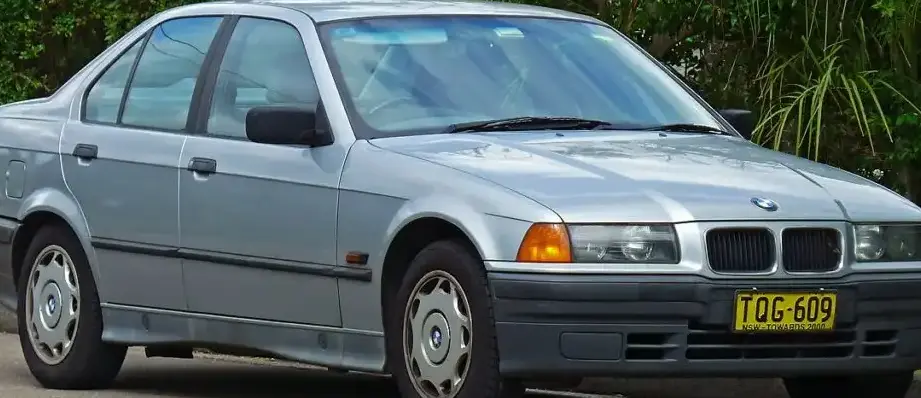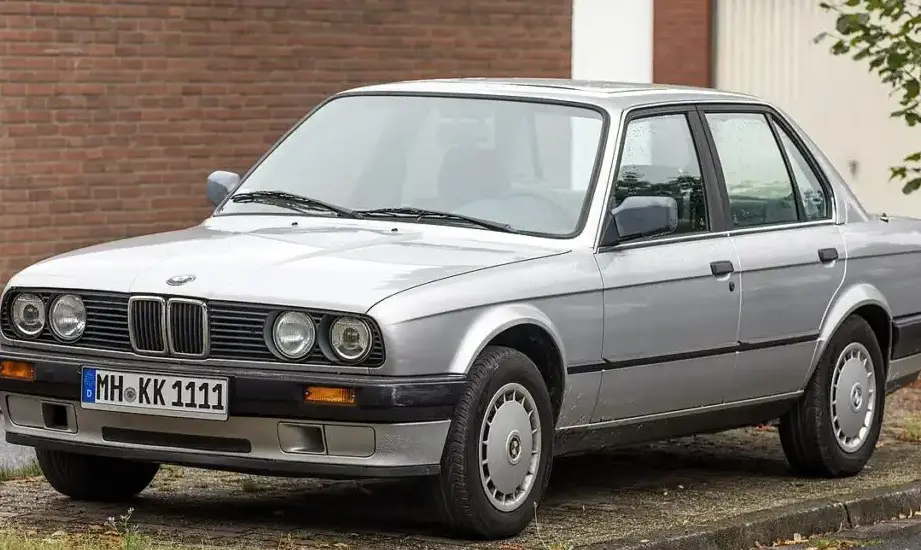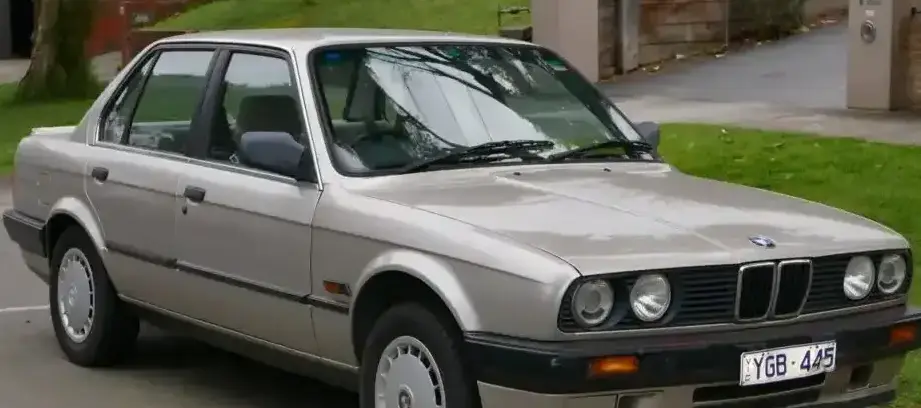
The BMW 3 Series Sedan (E30) 324td, produced between 1987 and 1991, represents a distinctive iteration of BMW’s celebrated compact executive car. Introduced as part of the E30’s mid-cycle refresh, the 324td combined the platform’s renowned handling with a turbocharged diesel engine focused on fuel efficiency. Primarily targeted at the European market – where diesel was gaining traction due to its economy and suitability for long journeys – the 324td occupied a unique niche within the E30 range, offering a blend of performance and practicality absent in the gasoline models or naturally aspirated diesel variants. It was positioned as a more economical and practical alternative to the sportier 325i, while offering a significant performance upgrade over the base 324d.
Technical Specifications
| Brand | BMW |
| Model | 3 Series |
| Generation | 3 Series Sedan (E30, facelift 1987) |
| Type (Engine) | 324td (115 Hp) |
| Start of production | 1987 |
| End of production | 1991 |
| Powertrain Architecture | Internal Combustion engine |
| Body type | Sedan |
| Seats | 5 |
| Doors | 4 |
| Fuel consumption (urban) | 8.9 l/100 km (26.4 US mpg, 31.7 UK mpg, 11.2 km/l) |
| Fuel consumption (extra urban) | 5.2 l/100 km (45.2 US mpg, 54.3 UK mpg, 19.2 km/l) |
| Fuel consumption (combined) | 6.9 l/100 km (34.1 US mpg, 40.9 UK mpg, 14.5 km/l) |
| Fuel Type | Diesel |
| Acceleration 0 – 100 km/h | 11.9 sec |
| Acceleration 0 – 62 mph | 11.9 sec |
| Acceleration 0 – 60 mph | 11.3 sec |
| Maximum speed | 187 km/h (116.2 mph) |
| Weight-to-power ratio | 11 kg/Hp, 91.3 Hp/tonne |
| Weight-to-torque ratio | 5.7 kg/Nm, 176.2 Nm/tonne |
| Power | 115 Hp @ 4800 rpm |
| Power per litre | 47.1 Hp/l |
| Torque | 222 Nm @ 2400 rpm (163.74 lb.-ft. @ 2400 rpm) |
| Engine layout | Front, Longitudinal |
| Engine Model/Code | M21D24 |
| Engine displacement | 2443 cm3 (149.08 cu. in.) |
| Number of cylinders | 6 |
| Engine configuration | Inline |
| Cylinder Bore | 80 mm (3.15 in.) |
| Piston Stroke | 81 mm (3.19 in.) |
| Compression ratio | 22:1 |
| Number of valves per cylinder | 2 |
| Fuel injection system | Precombustion chamber injection |
| Engine aspiration | Turbocharger |
| Engine oil capacity | 5.5 l (5.81 US qt | 4.84 UK qt) |
| Coolant | 12 l (12.68 US qt | 10.56 UK qt) |
| Kerb Weight | 1260 kg (2777.82 lbs.) |
| Max. weight | 1720 kg (3791.95 lbs.) |
| Max load | 460 kg (1014.13 lbs.) |
| Trunk (boot) space – minimum | 425 l (15.01 cu. ft.) |
| Fuel tank capacity | 55 l (14.53 US gal | 12.1 UK gal) |
| Length | 4325 mm (170.28 in.) |
| Width | 1645 mm (64.76 in.) |
| Height | 1380 mm (54.33 in.) |
| Wheelbase | 2570 mm (101.18 in.) |
| Front track | 1405 mm (55.31 in.) |
| Rear (Back) track | 1415 mm (55.71 in.) |
| Drivetrain Architecture | The Internal combustion engine (ICE) drives the rear wheels of the vehicle. |
| Drive wheel | Rear wheel drive |
| Number of gears and type of gearbox | 5 gears, manual transmission |
| Front suspension | Coil spring |
| Rear suspension | Coil spring |
| Front brakes | Ventilated discs |
| Rear brakes | Drum |
| Assisting systems | ABS (Anti-lock braking system) |
| Power steering | Hydraulic Steering |
| Tires size | 195/65 R14 |
| Wheel rims size | 14 |
Powertrain & Engine Architecture
The 324td’s engine is the M21D24, a 2.4-liter inline-six diesel. This engine utilizes indirect injection, employing precombustion chambers to enhance combustion. A Garrett turbocharger boosts output to 115 horsepower and 222 Nm (163.74 lb-ft) of torque. The M21 family is known for its robustness, but the turbocharger adds stress to components. Crucially, the 324td was exclusively offered with a five-speed manual transmission, selected to manage the engine’s torque and provide a more driver-focused experience. The transmission’s gear ratios were carefully chosen to balance fuel economy with acceptable acceleration. The fuel injection system, while effective for its time, is a mechanical system requiring periodic maintenance to ensure proper operation and prevent issues with fuel delivery.
Driving Characteristics
The 324td delivered a distinct driving experience compared to its gasoline counterparts. While not as quick as the 325i, it offered substantial low-end torque, making it suitable for daily driving and overtaking. The turbocharger provided a noticeable power boost, though turbo lag was present, demanding anticipatory driving. The rear-wheel-drive layout and well-tuned suspension maintained the E30’s renowned handling balance. However, the diesel engine and turbocharger added weight, slightly reducing agility compared to lighter models. The manual transmission offered precise control, though the shift linkage could feel somewhat imprecise by modern standards. The overall driving experience was characterized by relaxed cruising and respectable performance, prioritizing efficiency over outright speed.
Equipment & Trim Levels
The 324td generally featured a relatively basic equipment level, reflecting its position as a practical and economical option. Standard features included cloth upholstery, manual windows and locks, and a basic stereo. Optional extras included power windows, central locking, a sunroof, and upgraded audio systems. Interior trim was functional and durable, emphasizing practicality over luxury. Exterior styling mirrored other E30 sedans, with minor trim details identifying it as the diesel model. The focus was on providing a comfortable and reliable driving experience without unnecessary frills.
Chassis & Braking
The 324td utilized the E30’s established chassis design, with independent suspension all around. The front employed coil springs and MacPherson struts, while the rear used a semi-trailing arm setup with coil springs. The braking system featured ventilated disc brakes at the front and drum brakes at the rear. ABS was an optional extra, improving safety and control. The suspension was tuned for a comfortable ride while maintaining good handling. Stabilizer bars on both axles minimized body roll during cornering. The chassis design, while aging, remained effective in providing a balanced and predictable driving experience.
Market Reception & Comparison
The 324td was well-received in Europe, particularly by drivers prioritizing fuel economy and long-distance comfort. Critics praised the engine’s torque and efficiency, but noted the turbo lag and slightly heavier feel compared to gasoline E30s. Compared to the 325i, the 324td offered significantly lower running costs but less performance. Against the naturally aspirated 324d, the 324td provided a substantial power increase thanks to the turbocharger. It was viewed as a sensible and practical choice for those valuing economy and reliability over sporty performance. It filled a niche for drivers needing a capable and efficient vehicle for covering long distances.
Legacy
The BMW 324td has cultivated a dedicated following among E30 enthusiasts. The M21D24 engine is known for its durability, and well-maintained examples can still provide reliable service. However, the turbocharger and indirect injection system require regular maintenance. Parts availability can be challenging due to its relatively low production volume. In the used car market, the 324td typically commands a lower price than gasoline E30s, but its unique character and fuel efficiency make it an appealing option. The 324td represents a compelling combination of BMW engineering and the growing demand for diesel vehicles in the late 1980s, offering a unique and rewarding driving experience for those seeking a classic BMW with a difference.