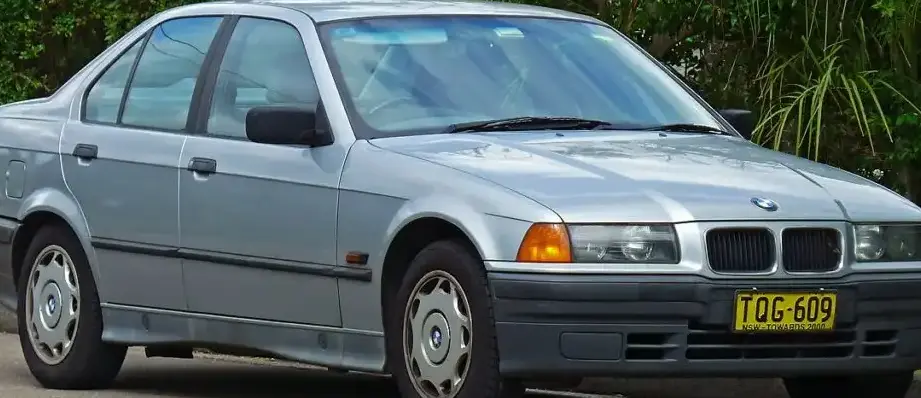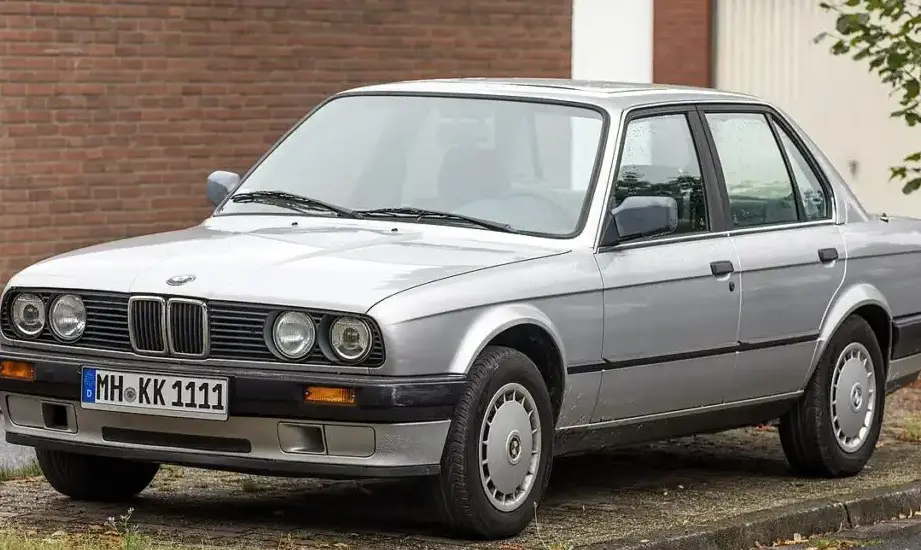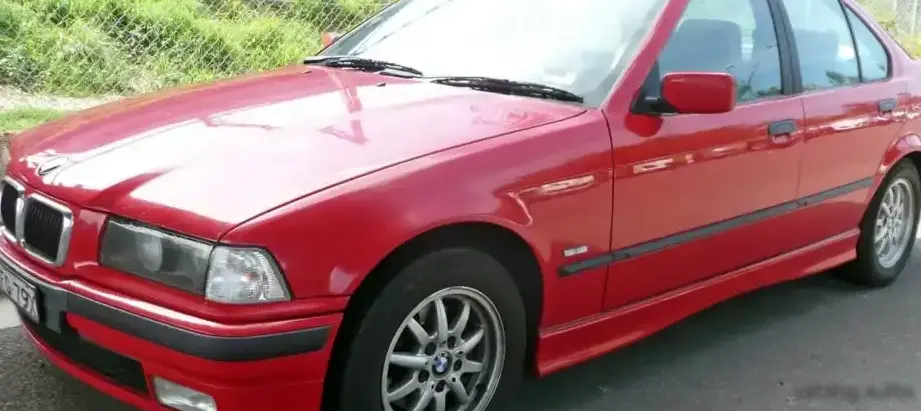
The BMW 3 Series Sedan (E36) 318i Automatic, produced between 1993 and 1999, represented the entry point into the highly successful E36 generation of BMW’s iconic 3 Series. Positioned as a comfortable and relatively affordable option, the 318i Automatic catered to buyers prioritizing ease of use and fuel efficiency over outright performance. It served as a crucial volume seller for BMW, particularly in markets where manual transmissions were less popular. This variant utilized the M43B18 engine paired with a four-speed automatic transmission, offering a distinct driving experience compared to its more powerful 320i and 328i siblings, as well as the manual transmission equipped 318i models.
Technical Specifications
| Brand | BMW |
| Model | 3 Series |
| Generation | 3 Series Sedan (E36) |
| Type (Engine) | 318i (115 Hp) Automatic |
| Start of production | 1993 |
| End of production | 1999 |
| Powertrain Architecture | Internal Combustion engine |
| Body type | Sedan |
| Seats | 5 |
| Doors | 4 |
| Fuel consumption (combined) | 7.6 l/100 km |
| Fuel consumption (US mpg) | 30.9 US mpg |
| Fuel consumption (UK mpg) | 37.2 UK mpg |
| Fuel consumption (km/l) | 13.2 km/l |
| Fuel Type | Petrol (Gasoline) |
| Acceleration 0 – 100 km/h | 11.3 sec |
| Acceleration 0 – 62 mph | 11.3 sec |
| Acceleration 0 – 60 mph | 10.7 sec |
| Maximum speed | 201 km/h (124.9 mph) |
| Weight-to-power ratio | 10.5 kg/Hp |
| Power per tonne | 95.4 Hp/tonne |
| Weight-to-torque ratio | 7.2 kg/Nm |
| Torque per tonne | 139.4 Nm/tonne |
| Power | 115 Hp @ 5500 rpm |
| Power per litre | 64 Hp/l |
| Torque | 168 Nm @ 3900 rpm (123.91 lb.-ft. @ 3900 rpm) |
| Engine layout | Front, Longitudinal |
| Engine Model/Code | M43B18 |
| Engine displacement | 1796 cm3 (109.6 cu. in.) |
| Number of cylinders | 4 |
| Engine configuration | Inline |
| Cylinder Bore | 84 mm (3.31 in.) |
| Piston Stroke | 81 mm (3.19 in.) |
| Compression ratio | 9.7:1 |
| Number of valves per cylinder | 2 |
| Fuel injection system | Multi-port manifold injection |
| Engine aspiration | Naturally aspirated engine |
| Valvetrain | OHC |
| Engine oil capacity | 4 l (4.23 US qt | 3.52 UK qt) |
| Coolant capacity | 6.5 l (6.87 US qt | 5.72 UK qt) |
| Kerb Weight | 1205 kg (2656.57 lbs.) |
| Max. weight | 1665 kg (3670.7 lbs.) |
| Max load | 460 kg (1014.13 lbs.) |
| Trunk (boot) space – minimum | 435 l (15.36 cu. ft.) |
| Fuel tank capacity | 65 l (17.17 US gal | 14.3 UK gal) |
| Length | 4433 mm (174.53 in.) |
| Width | 1698 mm (66.85 in.) |
| Height | 1393 mm (54.84 in.) |
| Wheelbase | 2700 mm (106.3 in.) |
| Front track | 1418 mm (55.83 in.) |
| Rear (Back) track | 1431 mm (56.34 in.) |
| Ride height (ground clearance) | 110 mm (4.33 in.) |
| Drivetrain Architecture | Rear wheel drive |
| Number of gears | 4 |
| Gearbox type | Automatic transmission |
| Front suspension | Wishbone |
| Rear suspension | Coil spring |
| Front brakes | Ventilated discs |
| Rear brakes | Drum |
| Assisting systems | ABS (Anti-lock braking system) |
| Steering type | Steering rack and pinion |
| Power steering | Hydraulic Steering |
| Tires size | 185/65 R15 |
| Wheel rims size | 15 |
INTRODUCTION
The E36 3 Series, launched in 1990, represented a significant leap forward for BMW, introducing a more modern and refined driving experience. The 318i Automatic, introduced as part of the facelift in 1993, was a key component of this success. It was designed to appeal to a broader audience, offering a blend of BMW’s renowned handling characteristics with the convenience of an automatic transmission. The 318i Automatic occupied the entry-level position in the E36 lineup, below the 320i and the performance-oriented 328i. It was aimed at buyers who valued comfort, fuel economy, and the BMW badge, rather than outright speed.
Powertrain & Engine Architecture
At the heart of the 318i Automatic lay the M43B18 engine, a 1.8-liter inline-four cylinder powerplant. This engine was a significant departure from the older M40 series, featuring a more efficient combustion chamber design and improved engine management. The M43B18 utilized a single overhead camshaft (OHC) design, operating two valves per cylinder. Fuel delivery was handled by a Bosch Motronic multi-port fuel injection system, optimizing fuel efficiency and emissions. The engine produced 115 horsepower at 5500 rpm and 168 Nm (123.91 lb-ft) of torque at 3900 rpm. Paired with the engine was a four-speed automatic transmission (typically the GM 4L30-E), chosen for its smoothness and reliability. This transmission featured electronic control, adapting shift points based on throttle position and vehicle speed. While not known for its sportiness, the automatic transmission provided a comfortable and effortless driving experience.
Driving Characteristics
The 318i Automatic offered a distinctly different driving experience compared to its manual counterparts or the higher-powered models. The four-speed automatic transmission, while smooth, resulted in slightly slower acceleration – 0 to 60 mph in approximately 10.7 seconds. The gear ratios were optimized for fuel efficiency and comfortable cruising, rather than aggressive acceleration. The automatic transmission tended to hunt for gears under hard acceleration, and lacked the direct feel of a manual gearbox. However, in everyday driving conditions, the 318i Automatic proved to be a capable and comfortable cruiser. The rear-wheel-drive layout and well-tuned suspension provided a balanced and predictable handling experience, characteristic of BMWs of the era. Compared to the 320i and 328i, the 318i Automatic felt noticeably less powerful, particularly at higher speeds.
Equipment & Trim Levels
The 318i Automatic typically came standard with a respectable level of equipment. Interior features included cloth upholstery, manual air conditioning, and a basic stereo system. Power windows and locks were often standard, though some base models might have lacked these features. Optional extras included leather upholstery, a sunroof, upgraded stereo systems, and heated front seats. Trim levels varied depending on the market, but generally, the 318i Automatic was positioned as a well-equipped but not overly luxurious model. The dashboard layout was typical of the E36, with a driver-focused design and intuitive controls.
Chassis & Braking
The E36 3 Series featured a robust chassis with independent suspension at all four wheels. The front suspension utilized a MacPherson strut design, while the rear employed a semi-trailing arm setup. The 318i Automatic’s suspension was tuned for comfort, providing a relatively smooth ride. Braking duties were handled by ventilated discs at the front and drum brakes at the rear. Anti-lock braking system (ABS) was standard, enhancing safety and stability. The 318i Automatic’s weight of around 1205 kg (2656.57 lbs) was relatively light for its class, contributing to its balanced handling characteristics. Stabilizer bars were fitted front and rear, further reducing body roll during cornering.
Market Reception & Comparison
The 318i Automatic was generally well-received by automotive critics as a practical and comfortable entry-level luxury sedan. While its performance wasn’t considered thrilling, its fuel efficiency and ease of use were praised. Compared to the manual transmission 318i, the automatic version offered greater convenience, but at the expense of some performance and driver engagement. The 320i and 328i models offered significantly more power and a sportier driving experience, but came at a higher price point. Fuel economy was a strong point for the 318i Automatic, achieving around 30.9 US mpg in combined driving. Reliability was generally good, although the automatic transmission could be prone to issues if not properly maintained.
Legacy
The E36 318i Automatic has become a popular choice among enthusiasts and used car buyers. Its relatively affordable price, combined with BMW’s reputation for reliability and driving enjoyment, makes it an attractive option. The M43B18 engine is known for its durability, and with proper maintenance, can provide many years of reliable service. However, like any older vehicle, the 318i Automatic requires regular maintenance to prevent issues. Common problem areas include cooling system components, suspension bushings, and the automatic transmission. Today, well-maintained examples of the E36 318i Automatic are increasingly sought after by collectors and enthusiasts, representing a classic era of BMW engineering.