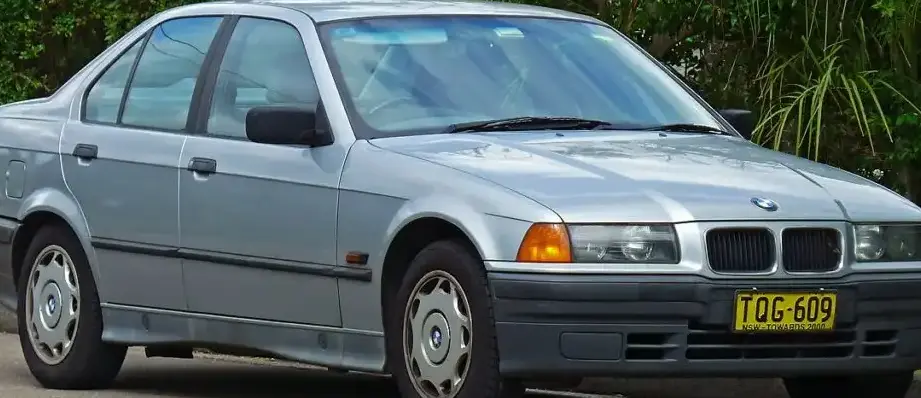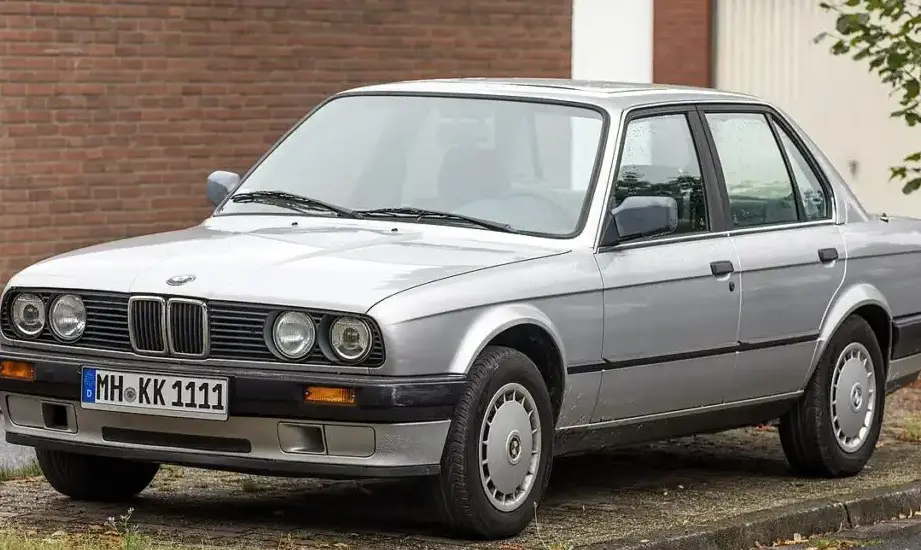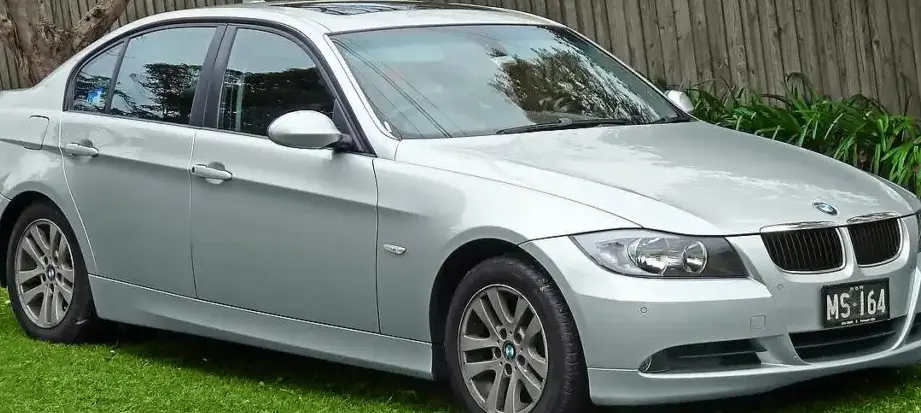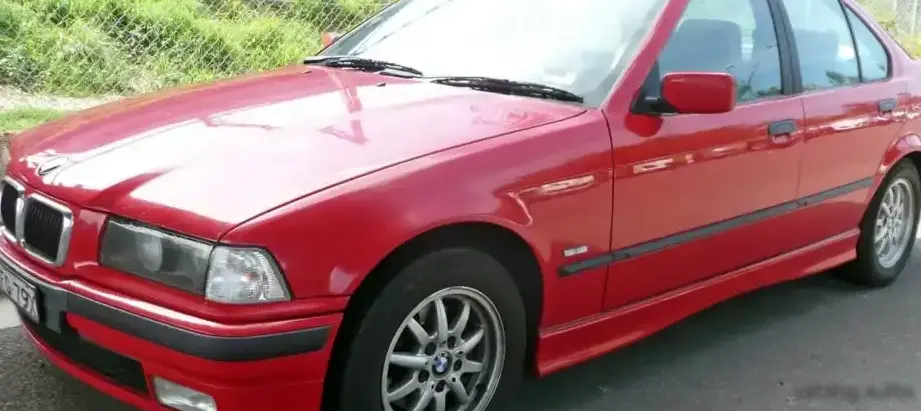
The BMW 3 Series Sedan (E36) 325i, produced from 1990 to 1995, represented a significant evolution in BMW’s compact executive car lineage. Positioned as a mid-range offering within the E36 generation, which spanned from 1990-1998, the 325i aimed to balance performance and refinement for the discerning driver. It served as a step up from the base 318i models, offering a more potent engine and enhanced features, while remaining more accessible than the high-performance M3. The E36 platform itself was a departure from its predecessor, the E30, featuring increased dimensions, improved aerodynamics, and a more modern interior.
Technical Specifications
| Brand | BMW |
| Model | 3 Series |
| Generation | 3 Series Sedan (E36) |
| Type (Engine) | 325i (192 Hp) |
| Start of production | 1990 |
| End of production | 1995 |
| Powertrain Architecture | Internal Combustion engine |
| Body type | Sedan |
| Seats | 5 |
| Doors | 4 |
| Fuel consumption (economy) – urban | 11.9 l/100 km (19.8 US mpg, 23.7 UK mpg, 8.4 km/l) |
| Fuel consumption (economy) – extra urban | 6.6 l/100 km (35.6 US mpg, 42.8 UK mpg, 15.2 km/l) |
| Fuel consumption (economy) – combined | 8.8 l/100 km (26.7 US mpg, 32.1 UK mpg, 11.4 km/l) |
| Fuel Type | Petrol (Gasoline) |
| Acceleration 0 – 100 km/h | 8 sec |
| Acceleration 0 – 62 mph | 8 sec |
| Acceleration 0 – 60 mph | 7.6 sec |
| Maximum speed | 233 km/h (144.78 mph) |
| Weight-to-power ratio | 6.9 kg/Hp, 144.4 Hp/tonne |
| Weight-to-torque ratio | 5.4 kg/Nm, 184.2 Nm/tonne |
| Power | 192 Hp @ 5900 rpm |
| Power per litre | 77 Hp/l |
| Torque | 245 Nm @ 4200 rpm (180.7 lb.-ft. @ 4200 rpm) |
| Engine layout | Front, Longitudinal |
| Engine Model/Code | M50B25 |
| Engine displacement | 2494 cm3 (152.19 cu. in.) |
| Number of cylinders | 6 |
| Engine configuration | Inline |
| Cylinder Bore | 84 mm (3.31 in.) |
| Piston Stroke | 75 mm (2.95 in.) |
| Compression ratio | 10.5:1 |
| Number of valves per cylinder | 4 |
| Fuel injection system | Multi-port manifold injection |
| Engine aspiration | Naturally aspirated engine |
| Valvetrain | DOHC |
| Engine oil capacity | 6.5 l (6.87 US qt | 5.72 UK qt) |
| Coolant | 10.5 l (11.1 US qt | 9.24 UK qt) |
| Kerb Weight | 1330 kg (2932.15 lbs.) |
| Max. weight | 1790 kg (3946.27 lbs.) |
| Max load | 460 kg (1014.13 lbs.) |
| Trunk (boot) space – minimum | 435 l (15.36 cu. ft.) |
| Fuel tank capacity | 65 l (17.17 US gal | 14.3 UK gal) |
| Length | 4433 mm (174.53 in.) |
| Width | 1698 mm (66.85 in.) |
| Height | 1393 mm (54.84 in.) |
| Wheelbase | 2700 mm (106.3 in.) |
| Front track | 1408 mm (55.43 in.) |
| Rear (Back) track | 1421 mm (55.94 in.) |
| Ride height (ground clearance) | 130 mm (5.12 in.) |
| Drivetrain Architecture | The Internal combustion engine (ICE) drives the rear wheels of the vehicle. |
| Drive wheel | Rear wheel drive |
| Number of gears and type of gearbox | 5 gears, manual transmission |
| Front suspension | Wishbone |
| Rear suspension | Coil spring |
| Front brakes | Ventilated discs |
| Rear brakes | Disc |
| Assisting systems | ABS (Anti-lock braking system) |
| Steering type | Steering rack and pinion |
| Power steering | Hydraulic Steering |
| Tires size | 205/60 R15 |
| Wheel rims size | 15 |
Powertrain & Engine Architecture
The heart of the 325i was the M50B25, a 2.5-liter inline-six engine. This engine was a significant upgrade over the 318i’s four-cylinder, offering a smoother power delivery and a more refined driving experience. The M50 featured a cast iron block with an aluminum cylinder head, incorporating dual overhead camshafts (DOHC) and four valves per cylinder. Fuel delivery was managed by a Bosch Motronic 1.7 multi-port fuel injection system, optimizing air-fuel mixture for both performance and efficiency. The engine produced 192 horsepower at 5900 rpm and 245 Nm (180.7 lb-ft) of torque at 4200 rpm. The standard transmission for the 325i was a five-speed manual gearbox, providing precise control and engaging shifts. A four-speed automatic transmission was also available, though it slightly impacted acceleration and fuel economy.
Driving Characteristics
The 325i with the manual transmission offered a balanced and engaging driving experience. Acceleration from 0 to 60 mph took approximately 7.6 seconds, and it could reach a top speed of 144.78 mph. The inline-six engine provided a linear power delivery, making it easy to modulate throttle and maintain control. The automatic transmission, while offering convenience, resulted in slightly slower acceleration times. The E36’s chassis was well-tuned, providing a comfortable ride without sacrificing handling prowess. The rear-wheel-drive layout contributed to a balanced feel, and the car responded well to driver inputs. Compared to the 318i, the 325i felt noticeably more powerful and capable, while the M3 offered a significantly more aggressive and track-focused experience.
Equipment & Trim Levels
The 325i typically came standard with features such as power windows, power locks, and air conditioning. Interior upholstery was usually cloth, though leather options were available. Dashboard configuration was relatively straightforward, with clearly marked gauges and intuitive controls. Optional extras included a sunroof, upgraded sound system, sport seats, and automatic climate control. The “Sport” package added features like sport suspension, a limited-slip differential, and more aggressive styling cues. Trim levels varied slightly depending on the market, but generally, the 325i offered a good level of standard equipment for its price point.
Chassis & Braking
The E36 325i utilized a MacPherson strut front suspension and a semi-trailing arm rear suspension. This setup provided a good balance of ride comfort and handling precision. Brakes were ventilated discs at the front and solid discs at the rear. Anti-lock braking system (ABS) was standard, enhancing safety and control during hard braking. The steering was a rack-and-pinion system with hydraulic power assistance, providing precise and responsive steering feel. The 325i’s weight distribution was well-balanced, contributing to its neutral handling characteristics.
Market Reception & Comparison
The E36 325i was generally well-received by automotive critics. It was praised for its refined engine, balanced handling, and comfortable ride. Compared to the 318i, the 325i offered a significant performance upgrade, making it a more appealing choice for drivers who prioritized driving enjoyment. Fuel economy was respectable for its class, averaging around 26.7 US mpg in combined driving. Reliability was generally good, although some owners reported issues with cooling system components and electrical systems. The 325i represented a sweet spot in the E36 lineup, offering a compelling combination of performance, refinement, and value.
Legacy
The E36 325i remains a popular choice among BMW enthusiasts today. The M50B25 engine is known for its durability and relatively simple maintenance requirements. Well-maintained examples can still provide years of reliable service. The E36 generation as a whole is considered a classic by many, and the 325i is often sought after for its balanced driving dynamics and timeless design. In the used car market, prices for E36 325i models vary depending on condition, mileage, and options, but they generally remain affordable, making them an accessible entry point into BMW ownership.