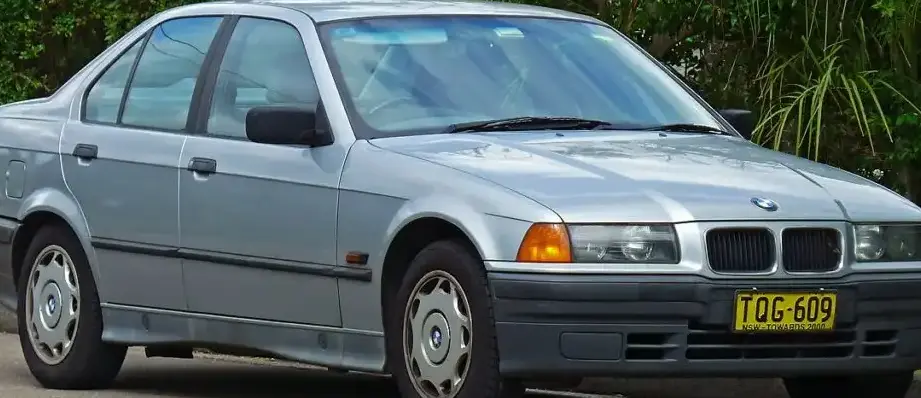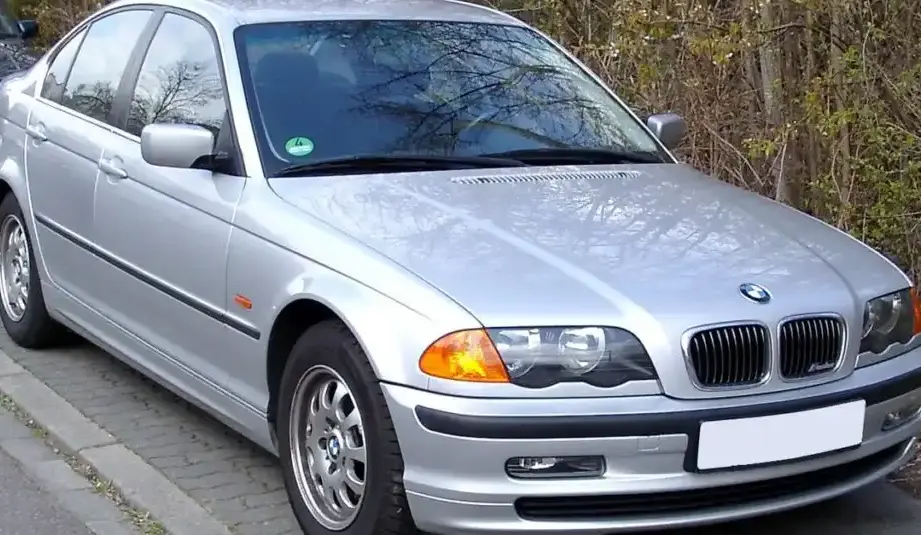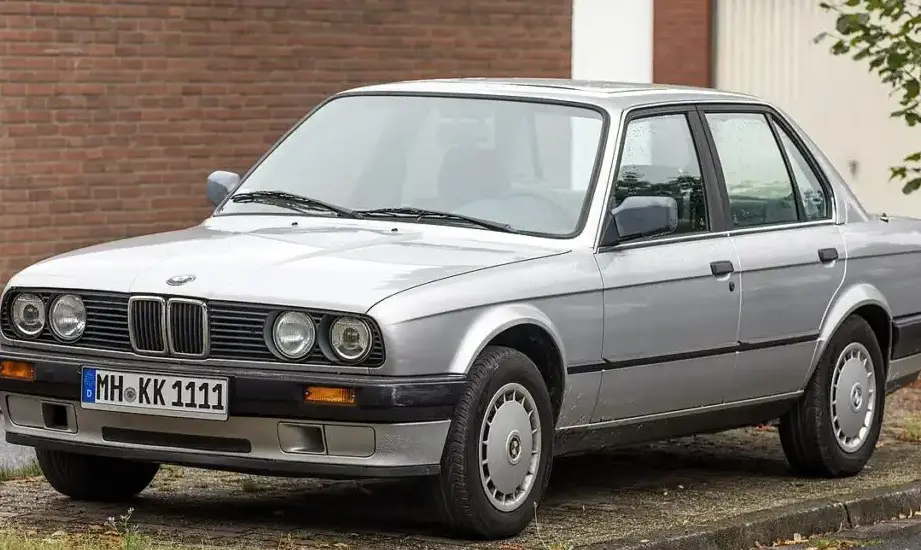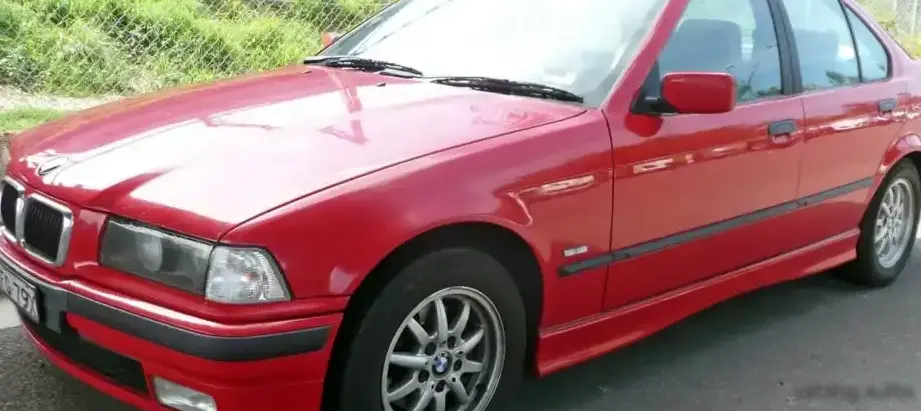
The BMW 3 Series Sedan (E36) 325td, produced from 1991 to 1998, represented a significant offering in BMW’s lineup, particularly in European markets. This variant, powered by a 2.5-liter turbocharged diesel engine, aimed to provide a blend of efficiency and respectable performance within the popular E36 chassis. It occupied a middle ground in the 3 Series range, positioned as a more economical alternative to the gasoline-powered 325i and 328i models, while offering more power and refinement than the base 318d. The 325td was never officially sold in the North American market, making it a relatively rare sight in the United States.
Technical Specifications
| Brand | BMW |
| Model | 3 Series |
| Generation | 3 Series Sedan (E36) |
| Type (Engine) | 325td (115 Hp) |
| Start of production | 1991 |
| End of production | 1998 |
| Powertrain Architecture | Internal Combustion engine |
| Body type | Sedan |
| Seats | 5 |
| Doors | 4 |
| Fuel consumption (urban) | 10 l/100 km (23.5 US mpg) |
| Fuel consumption (extra urban) | 5.7 l/100 km (41.3 US mpg) |
| Fuel consumption (combined) | 7.4 l/100 km (31.8 US mpg) |
| Fuel Type | Diesel |
| Acceleration 0 – 100 km/h | 12 sec |
| Acceleration 0 – 62 mph | 12 sec |
| Acceleration 0 – 60 mph | 11.4 sec |
| Maximum speed | 198 km/h (123.03 mph) |
| Weight-to-power ratio | 12.3 kg/Hp |
| Weight-to-torque ratio | 6.4 kg/Nm |
| Power | 115 Hp @ 4800 rpm |
| Power per litre | 46 Hp/l |
| Torque | 222 Nm @ 1900 rpm (163.74 lb.-ft. @ 1900 rpm) |
| Engine layout | Front, Longitudinal |
| Engine Model/Code | M51D25 |
| Engine displacement | 2498 cm3 (152.44 cu. in.) |
| Number of cylinders | 6 |
| Engine configuration | Inline |
| Cylinder Bore | 80 mm (3.15 in.) |
| Piston Stroke | 82.8 mm (3.26 in.) |
| Compression ratio | 22:1 |
| Number of valves per cylinder | 2 |
| Fuel injection system | Precombustion chamber injection |
| Engine aspiration | Turbocharger, Intercooler |
| Valvetrain | OHC |
| Engine oil capacity | 6.5 l (6.87 US qt | 5.72 UK qt) |
| Coolant | 8.8 l (9.3 US qt | 7.74 UK qt) |
| Kerb Weight | 1410 kg (3108.52 lbs.) |
| Max. weight | 1795 kg (3957.3 lbs.) |
| Max load | 385 kg (848.78 lbs.) |
| Trunk (boot) space – minimum | 435 l (15.36 cu. ft.) |
| Fuel tank capacity | 65 l (17.17 US gal | 14.3 UK gal) |
| Length | 4433 mm (174.53 in.) |
| Width | 1698 mm (66.85 in.) |
| Height | 1393 mm (54.84 in.) |
| Wheelbase | 2700 mm (106.3 in.) |
| Front track | 1418 mm (55.83 in.) |
| Rear (Back) track | 1431 mm (56.34 in.) |
| Ride height (ground clearance) | 130 mm (5.12 in.) |
| Drivetrain Architecture | Rear wheel drive |
| Drive wheel | Rear wheel drive |
| Number of gears and type of gearbox | 5 gears, manual transmission |
| Front suspension | Wishbone |
| Rear suspension | Coil spring |
| Front brakes | Ventilated discs |
| Rear brakes | Disc |
| Assisting systems | ABS (Anti-lock braking system) |
| Steering type | Steering rack and pinion |
| Power steering | Hydraulic Steering |
| Tires size | 185/65 R15 |
| Wheel rims size | 15 |
Powertrain & Engine Architecture
The heart of the 325td is the M51D25 engine, a 2.5-liter inline-six cylinder diesel. This engine utilized a precombustion chamber injection system, a common technology for diesel engines of the era, designed to improve combustion efficiency and reduce noise. A turbocharger with an intercooler was employed to boost power output to 115 horsepower and 222 Nm (163.74 lb-ft) of torque. The M51 engine family was known for its durability and relatively simple mechanical design. The 325td was typically equipped with a 5-speed manual transmission, although automatic options were available in some markets. The engine is longitudinally mounted, driving the rear wheels, a classic BMW configuration.
Driving Characteristics
The 325td offered a different driving experience compared to its gasoline counterparts. While lacking the outright acceleration of the 325i or 328i, the 325td provided strong low-end torque, making it a capable cruiser and comfortable for everyday driving. The turbocharger provided a noticeable boost in power, but turbo lag was present, requiring drivers to downshift for quicker acceleration. The manual transmission offered precise shifts, while the automatic, though convenient, slightly diminished the overall driving engagement. Fuel economy was a major strength, significantly better than the gasoline models.
Equipment & Trim Levels
The 325td typically came with a reasonable level of standard equipment, including power windows, central locking, and an anti-lock braking system (ABS). Interior upholstery was usually cloth, with leather options available as an upgrade. Trim levels varied by market, but generally, the 325td offered a more refined interior than the base 318d models. Optional extras included a sunroof, air conditioning, and upgraded audio systems. The dashboard layout was typical of the E36 generation, with a driver-focused design and clear instrumentation.
Chassis & Braking
The 325td utilized the E36’s well-regarded chassis, featuring a MacPherson strut front suspension and a semi-trailing arm rear suspension. The suspension was tuned to provide a balance between comfort and handling. Braking duties were handled by ventilated discs at the front and solid discs at the rear. The ABS system helped to maintain stability during hard braking. Due to the diesel engine’s added weight, the 325td’s suspension was often slightly stiffer than that of the lighter gasoline models.
Market Reception & Comparison
The 325td was well-received in Europe as a practical and economical alternative to the gasoline-powered 3 Series models. Critics praised its fuel efficiency, strong torque, and comfortable ride. However, some noted the engine’s relative lack of refinement compared to the gasoline engines and the presence of turbo lag. Compared to the 318d, the 325td offered a significant performance upgrade, while the 325i and 328i provided more exhilarating acceleration but at the cost of fuel economy. The 325td often represented a sweet spot for drivers prioritizing efficiency and usability.
Legacy
The M51D25 engine proved to be remarkably durable, and well-maintained 325td models can still be found on the road today. The engine’s robust construction and relatively simple design contribute to its longevity. In the used car market, the 325td is often sought after by enthusiasts looking for a unique and economical classic BMW. While parts availability can be a concern, the M51 engine shares components with other BMW diesel models, making maintenance relatively straightforward. The 325td remains a testament to BMW’s engineering prowess and a popular choice for those seeking a blend of practicality, performance, and classic styling.