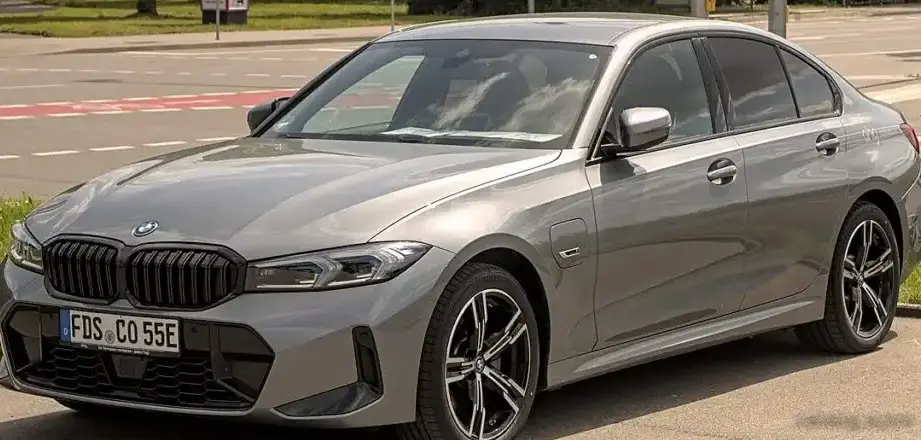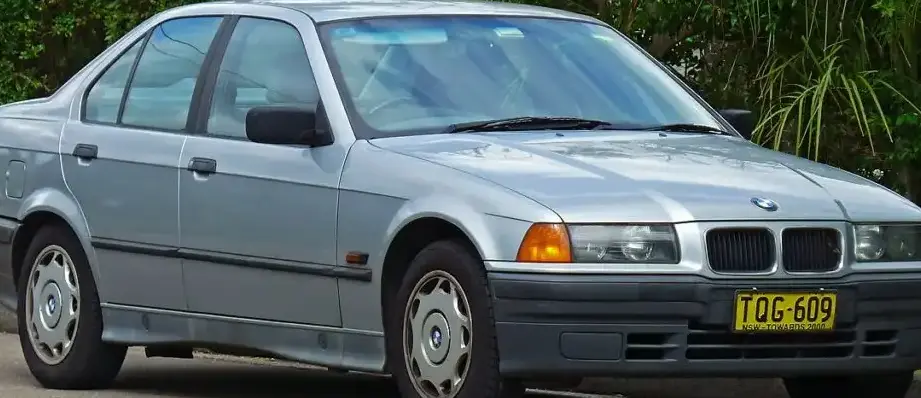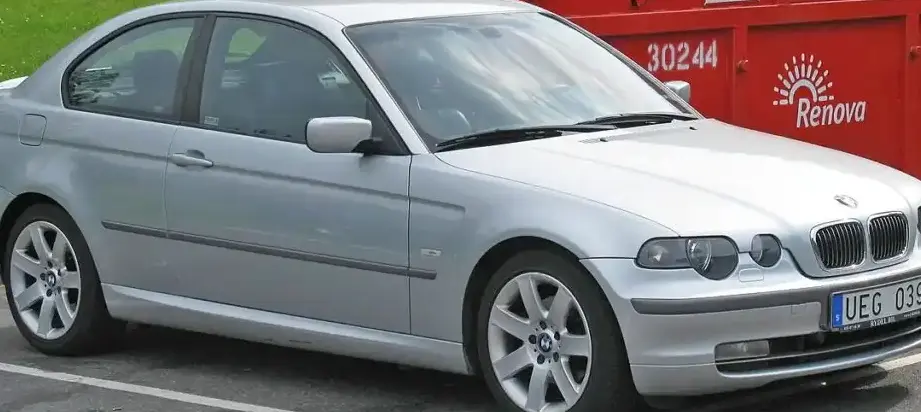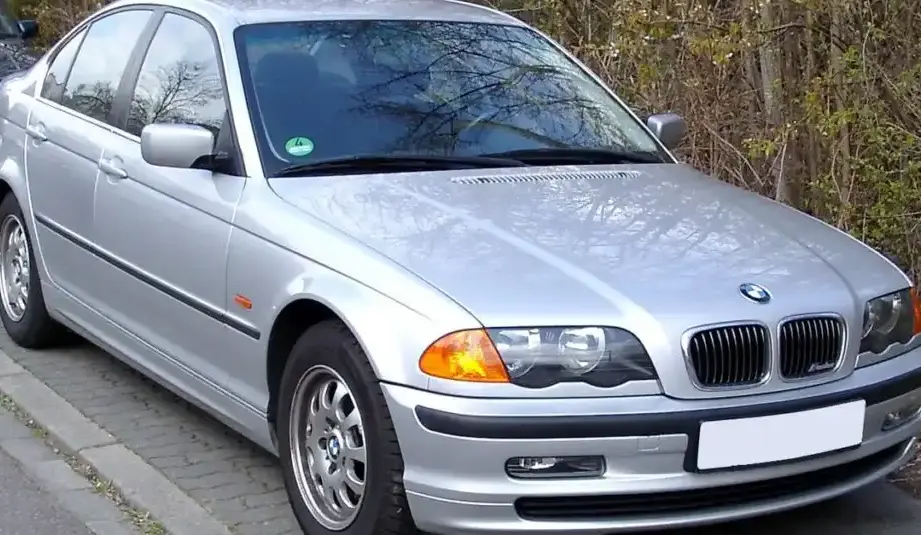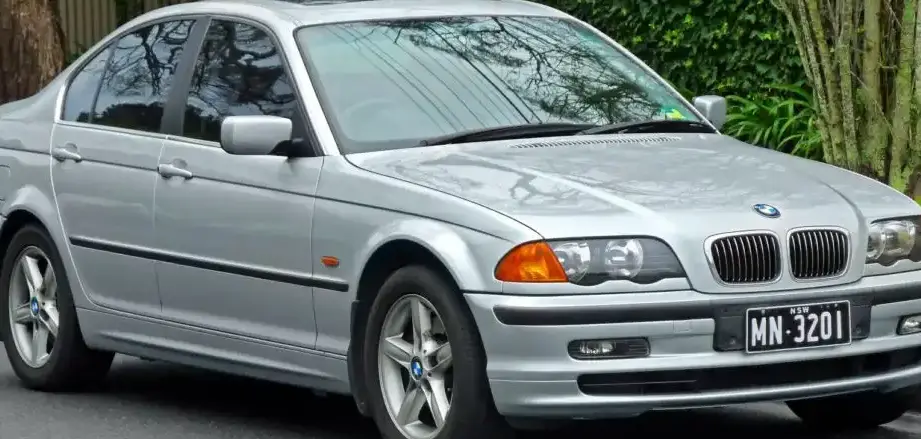
The BMW 3 Series Sedan (E46) 320d, producing 136 horsepower, was a key variant in the E46 generation, produced from 1998 to 2001. It represented BMW’s entry into the increasingly popular compact executive diesel market, particularly in Europe, offering a blend of performance and fuel efficiency. This model occupied a crucial position in the 3 Series lineup, serving as the more economical alternative to the gasoline-powered 320i and 323i, and a more accessible option compared to the higher-performance 330d. The 320d was designed to appeal to drivers seeking a refined driving experience with lower running costs, and it quickly became a popular choice for fleet buyers and private owners alike.
Technical Specifications
| Brand | BMW |
| Model | 3 Series |
| Generation | 3 Series Sedan (E46) |
| Type (Engine) | 320d (136 Hp) |
| Start of production | 1998 |
| End of production | 2001 |
| Powertrain Architecture | Internal Combustion engine |
| Body type | Sedan |
| Seats | 5 |
| Doors | 4 |
| Fuel consumption (urban) | 7.8 l/100 km (30.2 US mpg, 36.2 UK mpg, 12.8 km/l) |
| Fuel consumption (extra urban) | 4.7 l/100 km (50 US mpg, 60.1 UK mpg, 21.3 km/l) |
| Fuel consumption (combined) | 5.6 l/100 km (42 US mpg, 50.4 UK mpg, 17.9 km/l) |
| Fuel Type | Diesel |
| Acceleration 0 – 100 km/h | 9.8 sec |
| Acceleration 0 – 62 mph | 9.8 sec |
| Acceleration 0 – 60 mph | 9.3 sec |
| Maximum speed | 207 km/h (128.62 mph) |
| Weight-to-power ratio | 10.1 kg/Hp, 98.9 Hp/tonne |
| Weight-to-torque ratio | 4.9 kg/Nm, 203.6 Nm/tonne |
| Power | 136 Hp @ 4000 rpm |
| Power per litre | 69.7 Hp/l |
| Torque | 280 Nm @ 1750 rpm (206.52 lb.-ft. @ 1750 rpm) |
| Engine layout | Front, Longitudinal |
| Engine Model/Code | M47D20 |
| Engine displacement | 1951 cm3 (119.06 cu. in.) |
| Number of cylinders | 4 |
| Engine configuration | Inline |
| Cylinder Bore | 84 mm (3.31 in.) |
| Piston Stroke | 88 mm (3.46 in.) |
| Compression ratio | 19:1 |
| Number of valves per cylinder | 4 |
| Fuel injection system | Diesel Commonrail |
| Engine aspiration | Turbocharger, Intercooler |
| Valvetrain | OHC |
| Engine oil capacity | 5 l (5.28 US qt | 4.4 UK qt) |
| Coolant capacity | 7 l (7.4 US qt | 6.16 UK qt) |
| Kerb Weight | 1375 kg (3031.36 lbs.) |
| Max. weight | 1875 kg (4133.67 lbs.) |
| Max load | 500 kg (1102.31 lbs.) |
| Trunk (boot) space – minimum | 400 l (14.13 cu. ft.) |
| Fuel tank capacity | 64 l (16.91 US gal | 14.08 UK gal) |
| Length | 4471 mm (176.02 in.) |
| Width | 1739 mm (68.46 in.) |
| Height | 1415 mm (55.71 in.) |
| Wheelbase | 2725 mm (107.28 in.) |
| Front track | 1481 mm (58.31 in.) |
| Rear track | 1488 mm (58.58 in.) |
| Drivetrain Architecture | Rear wheel drive |
| Drive wheel | Rear wheel drive |
| Number of gears | 5 |
| Gearbox type | Manual transmission |
| Front suspension | Spring Strut |
| Rear suspension | Coil spring |
| Front brakes | Ventilated discs |
| Rear brakes | Disc |
| Assisting systems | ABS (Anti-lock braking system) |
| Steering type | Steering rack and pinion |
| Power steering | Hydraulic Steering |
| Tires size | 195/65 R15 |
| Wheel rims size | 15 |
Powertrain & Engine Architecture
The heart of the E46 320d was the M47D20, a 2.0-liter inline-four cylinder diesel engine. This engine was a significant step forward for BMW, utilizing common rail direct injection technology. The common rail system, supplied by Bosch, allowed for precise control of fuel delivery, resulting in improved combustion efficiency, reduced noise, and increased power output compared to earlier diesel engines. The M47D20 featured a single overhead camshaft (OHC) design with four valves per cylinder, and was equipped with a turbocharger and intercooler to boost power and torque. The turbocharger provided increased air intake, while the intercooler cooled the compressed air, further enhancing performance. The engine produced 136 horsepower at 4000 rpm and a substantial 280 Nm (206.52 lb-ft) of torque at a low 1750 rpm. This torque delivery was a key characteristic of the engine, providing strong pulling power from low engine speeds. The 5-speed manual transmission was the standard offering, providing a direct and engaging driving experience.
Driving Characteristics
The 320d, with its 136 hp and manual transmission, offered a surprisingly engaging driving experience. While not as quick as the gasoline-powered 320i or 323i, the 320d’s abundant low-end torque made it feel responsive in everyday driving situations. The gear ratios were well-matched to the engine’s characteristics, allowing for effortless cruising and confident overtaking. Compared to the higher-output 330d, the 320d felt less urgent, but it offered a more balanced and economical driving experience. The manual transmission provided precise gear changes and allowed the driver to fully exploit the engine’s torque. The suspension, typical of BMW, provided a comfortable yet controlled ride, with good body control and accurate steering.
Equipment & Trim Levels
The 320d typically came with a respectable level of standard equipment. Interior features included cloth upholstery, manual air conditioning, and a basic stereo system. Power windows and central locking were also standard. Optional extras included leather upholstery, automatic climate control, a sunroof, and upgraded audio systems. The trim level could vary depending on the market, but generally, the 320d was positioned as a mid-range offering, providing a good balance of features and affordability. Sport packages were available, adding features such as sport seats, a sport suspension, and alloy wheels.
Chassis & Braking
The E46 320d utilized a MacPherson strut front suspension and a multi-link rear suspension, providing a comfortable and controlled ride. The chassis was designed to be rigid and responsive, contributing to the car’s handling characteristics. Braking duties were handled by ventilated discs at the front and solid discs at the rear. Anti-lock braking system (ABS) was standard, enhancing safety and stability during braking. The steering was a rack-and-pinion system with hydraulic power assistance, providing precise and responsive steering feel.
Market Reception & Comparison
The E46 320d was well-received by critics and buyers alike. It was praised for its fuel efficiency, strong torque, and refined driving experience. Compared to the gasoline-powered 320i, the 320d offered significantly better fuel economy, making it a more economical choice for high-mileage drivers. Compared to the 330d, the 320d was more affordable and offered a more balanced driving experience, although it lacked the higher-performance engine. Reliability was generally good, although some owners reported issues with the common rail injection system and turbocharger.
Legacy
The E46 320d has proven to be a durable and reliable vehicle, and it remains a popular choice in the used car market today. The M47D20 engine, while not without its potential issues, is generally considered to be a robust and long-lasting unit. The E46 320d represents a significant milestone in BMW’s diesel engine development, and it helped to establish the brand as a leader in the compact executive diesel segment. Well-maintained examples of the E46 320d are still sought after by enthusiasts and drivers looking for a fuel-efficient, reliable, and enjoyable driving experience.