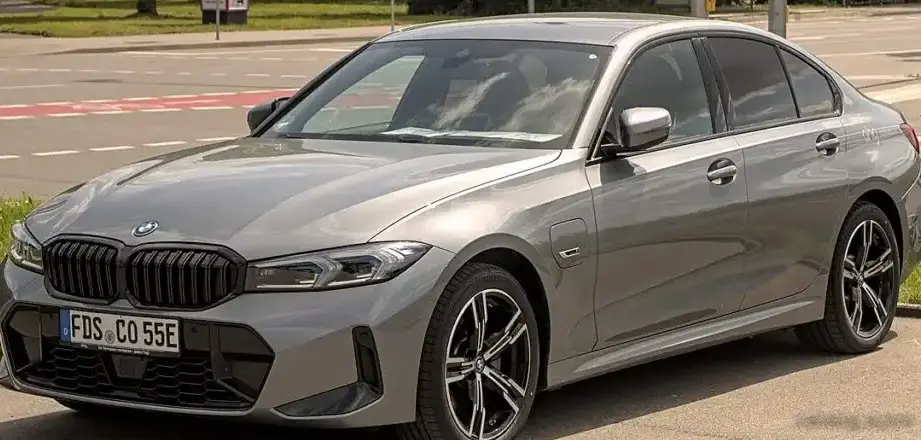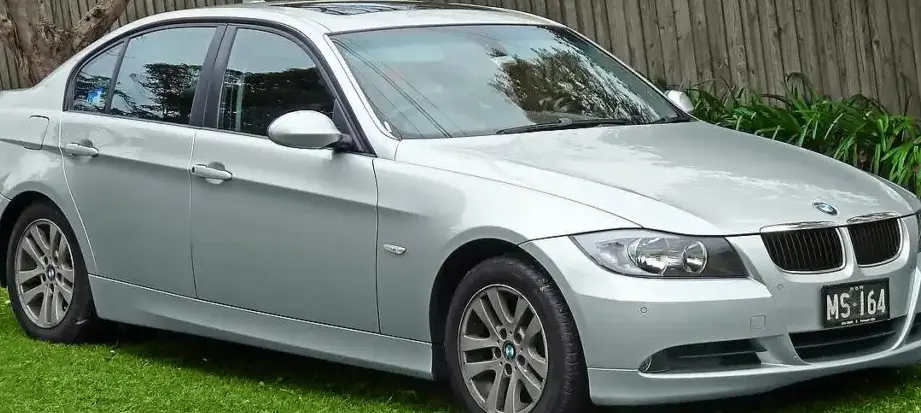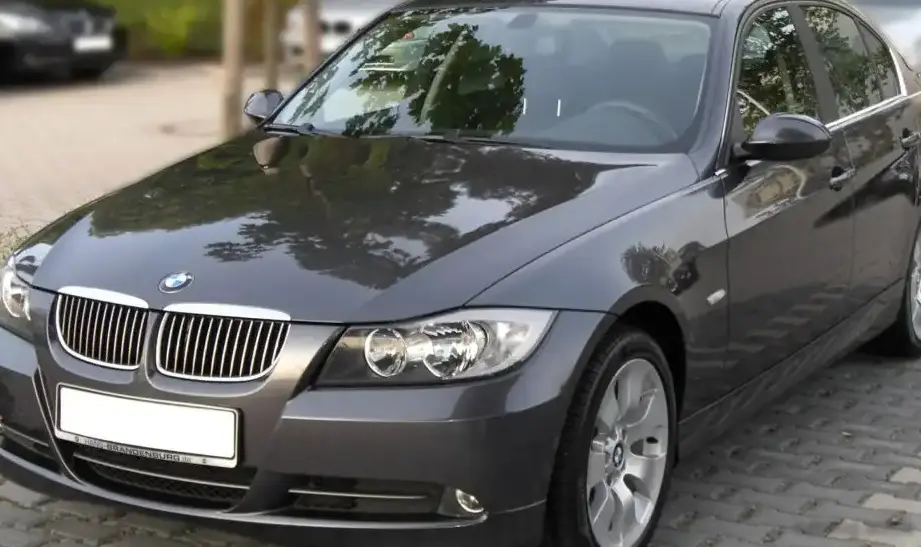
The BMW 3 Series Sedan (E90) 320d, producing 163 horsepower, was a key variant in the popular E90 generation, manufactured from 2005 to 2007. Positioned as an entry-level diesel offering within the 3 Series range, it aimed to provide a balance of fuel efficiency, respectable performance, and BMW’s signature driving dynamics. This model played a significant role in establishing the 3 Series as a dominant force in the compact executive car segment, particularly in European markets where diesel engines were – and continue to be – highly favored. The 320d represented a more economical alternative to the gasoline-powered 320i and the higher-performance 330i models.
Technical Specifications
| Brand | BMW |
| Model | 3 Series |
| Generation | 3 Series Sedan (E90) |
| Type (Engine) | 320d (163 Hp) |
| Start of production | 2005 |
| End of production | 2007 |
| Powertrain Architecture | Internal Combustion engine |
| Body type | Sedan |
| Seats | 5 |
| Doors | 4 |
| Fuel consumption (urban) | 6.5 l/100 km (36.2 US mpg) |
| Fuel consumption (extra urban) | 4.5 l/100 km (52.3 US mpg) |
| Fuel consumption (combined) | 5.3 l/100 km (44.4 US mpg) |
| Fuel Type | Diesel |
| Acceleration 0 – 100 km/h | 8.3 sec |
| Acceleration 0 – 62 mph | 8.3 sec |
| Acceleration 0 – 60 mph | 7.9 sec |
| Maximum speed | 225 km/h (139.81 mph) |
| Weight-to-power ratio | 8.8 kg/Hp |
| Weight-to-torque ratio | 4.2 kg/Nm |
| Power | 163 Hp @ 4000 rpm |
| Power per litre | 81.7 Hp/l |
| Torque | 340 Nm @ 2000 rpm (250.77 lb.-ft. @ 2000 rpm) |
| Engine layout | Front, Longitudinal |
| Engine Model/Code | M47D20TU2 |
| Engine displacement | 1995 cm3 (121.74 cu. in.) |
| Number of cylinders | 4 |
| Engine configuration | Inline |
| Cylinder Bore | 84 mm (3.31 in.) |
| Piston Stroke | 90 mm (3.54 in.) |
| Compression ratio | 17:1 |
| Number of valves per cylinder | 4 |
| Fuel injection system | Diesel Commonrail |
| Engine aspiration | Turbocharger, Intercooler |
| Engine oil capacity | 5.2 l (5.49 US qt | 4.58 UK qt) |
| Coolant | 7.5 l (7.93 US qt | 6.6 UK qt) |
| Kerb Weight | 1435 kg (3163.63 lbs.) |
| Max. weight | 1950 kg (4299.01 lbs.) |
| Max load | 515 kg (1135.38 lbs.) |
| Trunk (boot) space – maximum | 460 l (16.24 cu. ft.) |
| Fuel tank capacity | 61 l (16.11 US gal | 13.42 UK gal) |
| Length | 4520 mm (177.95 in.) |
| Width | 1817 mm (71.54 in.) |
| Height | 1421 mm (55.94 in.) |
| Wheelbase | 2760 mm (108.66 in.) |
| Front track | 1500 mm (59.06 in.) |
| Rear (Back) track | 1513 mm (59.57 in.) |
| Drivetrain Architecture | Rear wheel drive |
| Number of gears and type of gearbox | 6 gears, manual transmission |
| Front suspension | Independent, type McPherson with coil spring and anti-roll bar |
| Rear suspension | Coil spring |
| Front brakes | Disc |
| Rear brakes | Disc |
| Assisting systems | ABS (Anti-lock braking system) |
| Tires size | 205/55 R16 |
| Wheel rims size | 16 |
Powertrain & Engine Architecture
The heart of the E90 320d was the M47D20TU2, a 2.0-liter inline-four diesel engine. This engine was a significant evolution of BMW’s diesel technology, featuring common rail direct injection and a variable geometry turbocharger. The common rail system, operating at extremely high pressures, allowed for precise fuel metering and optimized combustion, contributing to both power and efficiency. The turbocharger, with its adjustable vanes, minimized turbo lag and broadened the engine’s torque curve. The engine produced 163 hp at 4,000 rpm and a substantial 340 Nm (250.77 lb-ft) of torque at just 2,000 rpm. This torque output was a key characteristic of the 320d, providing strong pulling power from low engine speeds. The engine’s architecture was longitudinally mounted, driving the rear wheels – a traditional BMW configuration. The 6-speed manual transmission was standard, offering precise shifts and a direct connection to the engine.
Driving Characteristics
The 320d with the manual transmission offered a surprisingly engaging driving experience. While not as overtly sporty as the 320i or 330i, the abundant low-end torque made it feel responsive in everyday driving situations. The gear ratios were well-chosen, allowing the engine to remain in its optimal torque band during most driving scenarios. Acceleration from 0-60 mph took around 7.9 seconds, which was respectable for a diesel-powered sedan of that era. Compared to the higher-output gasoline engines, the 320d prioritized fuel economy and effortless cruising over outright speed. The manual transmission provided a greater sense of control and driver involvement than the optional automatic, which, while smooth, could feel somewhat hesitant in its shifts.
Equipment & Trim Levels
The 320d typically came standard with features such as air conditioning, power windows, power mirrors, and a basic audio system. Upholstery was usually cloth, although leather was available as an option. Higher trim levels, such as the Sport package, added features like sport seats, a sport suspension, and unique exterior styling cues. Optional extras included a sunroof, navigation system, premium audio, and parking sensors. The interior design of the E90 was generally considered to be modern and functional, with a driver-focused layout and high-quality materials.
Chassis & Braking
The E90 320d utilized a MacPherson strut front suspension and a multi-link rear suspension, providing a good balance of ride comfort and handling precision. The suspension was tuned to be slightly softer than that of the higher-performance models, prioritizing comfort over outright sportiness. Brakes were disc brakes all around, providing ample stopping power. ABS (Anti-lock Braking System) was standard. The 320d’s weight of approximately 1435 kg (3163.63 lbs) was relatively moderate, contributing to its agile handling characteristics.
Market Reception & Comparison
The E90 320d was generally well-received by automotive critics. It was praised for its fuel efficiency, strong torque, and comfortable ride. However, some critics noted that the engine could be somewhat noisy compared to gasoline engines, and that the performance, while adequate, wasn’t as exhilarating as that of the 320i or 330i. In terms of fuel economy, the 320d significantly outperformed its gasoline counterparts, making it a popular choice for drivers who prioritized efficiency. Reliability was generally good, although some owners reported issues with the diesel particulate filter (DPF) and the glow plugs.
Legacy
The E90 320d has proven to be a durable and reliable vehicle, and well-maintained examples are still relatively common on the used car market today. The M47D20TU2 engine, while not without its quirks, is generally considered to be a robust and long-lasting unit. The 320d’s combination of fuel efficiency, practicality, and BMW’s driving dynamics has ensured its continued popularity among enthusiasts and everyday drivers alike. It represents a significant step forward in diesel engine technology and helped to solidify the 3 Series’ reputation as a benchmark in the compact executive car segment.