Technical Specifications
| Brand | BMW |
| Model | 3 Series |
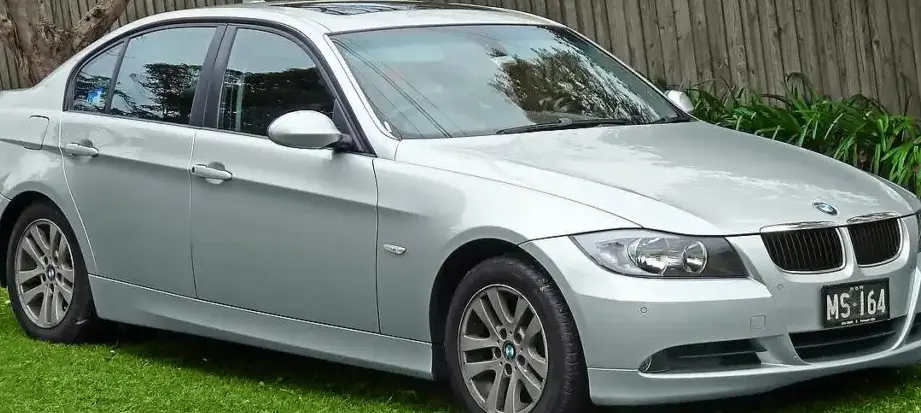
| Generation | 3 Series Sedan (E90 LCI, facelift 2008) |
| Type (Engine) | 316d (115 Hp) |
| Start of production | 2009 |
| End of production | 2011 |
| Powertrain Architecture | Internal Combustion engine |
| Body type | Sedan |
| Seats | 5 |
| Doors | 4 |
| Fuel consumption (urban) | 5.4 l/100 km (43.6 US mpg, 52.3 UK mpg, 18.5 km/l) |
| Fuel consumption (extra urban) | 4 l/100 km (58.8 US mpg, 70.6 UK mpg, 25 km/l) |
| Fuel consumption (combined) | 4.5 l/100 km (52.3 US mpg, 62.8 UK mpg, 22.2 km/l) |
| CO2 emissions | 118 g/km |
| Fuel Type | Diesel |
| Acceleration 0 – 100 km/h | 10.9 sec |
| Acceleration 0 – 62 mph | 10.9 sec |
| Acceleration 0 – 60 mph | 10.4 sec |
| Maximum speed | 202 km/h (125.52 mph) |
| Emission standard | Euro 5 |
| Weight-to-power ratio | 12.2 kg/Hp, 82.1 Hp/tonne |
| Weight-to-torque ratio | 5.4 kg/Nm, 185.7 Nm/tonne |
| Power | 115 Hp @ 4000 rpm |
| Power per litre | 57.6 Hp/l |
| Torque | 260 Nm @ 1750-2500 rpm (191.77 lb.-ft. @ 1750-2500 rpm) |
| Engine layout | Front, Longitudinal |
| Engine Model/Code | N47D20C |
| Engine displacement | 1995 cm3 (121.74 cu. in.) |
| Number of cylinders | 4 |
| Engine configuration | Inline |
| Cylinder Bore | 84 mm (3.31 in.) |
| Piston Stroke | 90 mm (3.54 in.) |
| Compression ratio | 16.5:1 |
| Number of valves per cylinder | 4 |
| Fuel injection system | Diesel Commonrail |
| Engine aspiration | Turbocharger, Intercooler |
| Engine oil capacity | 5.2 l (5.49 US qt | 4.58 UK qt) |
| Coolant | 7.5 l (7.93 US qt | 6.6 UK qt) |
| Kerb Weight | 1400 kg (3086.47 lbs.) |
| Max. weight | 1920 kg (4232.88 lbs.) |
| Max load | 520 kg (1146.4 lbs.) |
| Trunk (boot) space – minimum | 460 l (16.24 cu. ft.) |
| Fuel tank capacity | 61 l (16.11 US gal | 13.42 UK gal) |
| Max. roof load | 75 kg (165.35 lbs.) |
| Permitted trailer load with brakes (12%) | 1600 kg (3527.4 lbs.) |
| Permitted trailer load without brakes | 695 kg (1532.21 lbs.) |
| Permitted towbar download | 75 kg (165.35 lbs.) |
| Length | 4531 mm (178.39 in.) |
| Width | 1817 mm (71.54 in.) |
| Width including mirrors | 1989 mm (78.31 in.) |
| Height | 1421 mm (55.94 in.) |
| Wheelbase | 2760 mm (108.66 in.) |
| Front track | 1506 mm (59.29 in.) |
| Rear (Back) track | 1535 mm (60.43 in.) |
| Ride height (ground clearance) | 144 mm (5.67 in.) |
| Drag coefficient (Cd) | 0.27 |
| Minimum turning circle (turning diameter) | 11.0 m (36.09 ft.) |
| Drivetrain Architecture | The Internal combustion engine (ICE) drives the rear wheels of the vehicle. |
| Drive wheel | Rear wheel drive |
| Number of gears and type of gearbox | 6 gears, manual transmission |
| Front suspension | Independent coil spring |
| Rear suspension | Independent multi-link suspension |
| Front brakes | Ventilated discs |
| Rear brakes | Ventilated discs |
| Assisting systems | ABS (Anti-lock braking system) |
| Steering type | Steering rack and pinion |
| Power steering | Electric Steering |
| Tires size | 205/55 R16 91H |
| Wheel rims size | 7J x 16 |
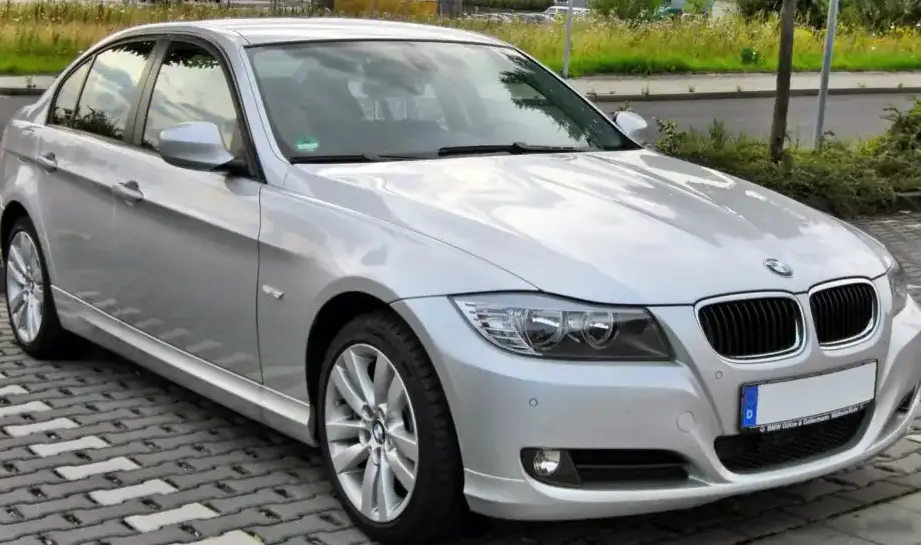
The BMW 3 Series Sedan (E90 LCI) 316d, producing 115 horsepower, was a significant model in BMW’s European lineup from 2009 to 2011. This version represents the facelift (LCI – Lebenszyklus Impuls) of the E90 generation, bringing with it styling refinements and technological upgrades. Positioned as an entry-level offering within the 3 Series range, the 316d aimed to deliver a balance of fuel efficiency, practicality, and the core BMW driving experience at a more accessible price point. It was primarily marketed in Europe, where diesel engines were – and remain – popular due to favorable fuel economy and tax regulations.
Powertrain & Engine Architecture
At the heart of the 316d lies the N47D20C, a 2.0-liter inline-four diesel engine. This engine was a key component of BMW’s EfficientDynamics strategy, designed to maximize fuel economy and minimize emissions. The N47 series, first introduced in 2007, was distinguished by its second-generation common rail direct injection system, capable of operating at pressures up to 1,600 bar. This high-pressure injection, coupled with a variable geometry turbocharger and intercooler, enabled efficient combustion and a broad, usable torque curve. The engine also incorporated four valves per cylinder and a timing chain, contributing to its overall durability. The standard transmission for the 316d was a six-speed manual, sending power to the rear wheels. While an automatic transmission was offered as an option, the manual gearbox was often preferred by driving enthusiasts for its more direct and engaging feel.
Driving Characteristics
The 316d, with its 115 horsepower and 260 Nm (192 lb-ft) of torque, wasn’t designed for blistering acceleration. Zero to 62 mph took approximately 10.9 seconds, and the top speed was electronically limited to 125 mph. However, the engine’s robust low-end torque made it surprisingly adept in everyday driving scenarios. The manual transmission provided precise and satisfying gear changes, and the rear-wheel-drive configuration contributed to a balanced and engaging driving experience. Compared to the more potent 320d or 335i models, the 316d felt less urgent, but it excelled in fuel efficiency, achieving combined fuel economy figures around 52.3 US mpg. The gear ratios were optimized for economy, sometimes requiring the driver to rev the engine slightly to access its full power potential.
Equipment & Trim Levels
The 316d typically came standard with a reasonable array of features, including air conditioning, power windows, central locking, and a basic audio system. Higher trim levels, such as Sport and Luxury, added enhancements like sport seats, upgraded interior trim materials, and alloy wheels. A range of optional extras were available, including navigation systems, leather upholstery, parking sensors, and a sunroof. The interior design adhered to the classic BMW aesthetic of the period, featuring a driver-focused cockpit and generally high-quality materials. The LCI facelift brought subtle interior updates, including revised switchgear and improved infotainment system options.
Chassis & Braking
The E90 3 Series boasted a sophisticated chassis design, featuring independent suspension on all four wheels. The front suspension utilized MacPherson struts, while the rear employed a multi-link setup. This configuration struck a good balance between ride comfort and handling precision. The 316d was typically equipped with ventilated disc brakes on all four wheels, providing adequate stopping power. ABS (Anti-lock Braking System) was standard equipment, enhancing safety. The suspension tuning was generally geared towards comfort, but the car still offered a reasonably sporty driving experience.
Market Reception & Comparison
The 316d was generally well-received by automotive critics as a sensible and economical choice within the 3 Series lineup. It was praised for its fuel efficiency and comfortable ride quality, although some reviewers noted its relative lack of performance compared to its more powerful counterparts. In comparison to the 320d, the 316d offered lower running costs but sacrificed some performance. The 316d also provided a more affordable entry point into the BMW brand, appealing to buyers who prioritized economy and practicality over outright speed and acceleration.
Legacy
The N47 engine, while generally reliable, did experience some issues with timing chain wear, particularly in earlier production years. Consistent oil changes and preventative maintenance are crucial for ensuring the long-term health of this engine. Today, the E90 316d represents an affordable way to experience BMW ownership. Well-maintained examples can still provide years of dependable service, offering a blend of practicality, efficiency, and the signature BMW driving experience. The car’s relatively straightforward mechanicals and the widespread availability of spare parts make it a popular choice among enthusiasts and budget-conscious buyers.