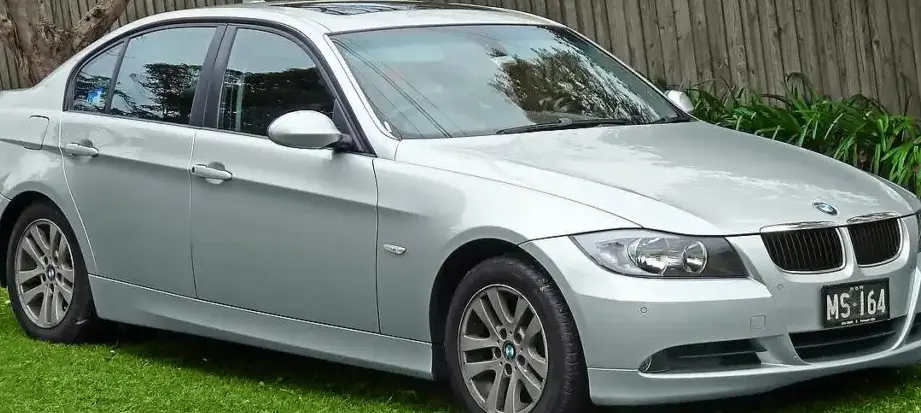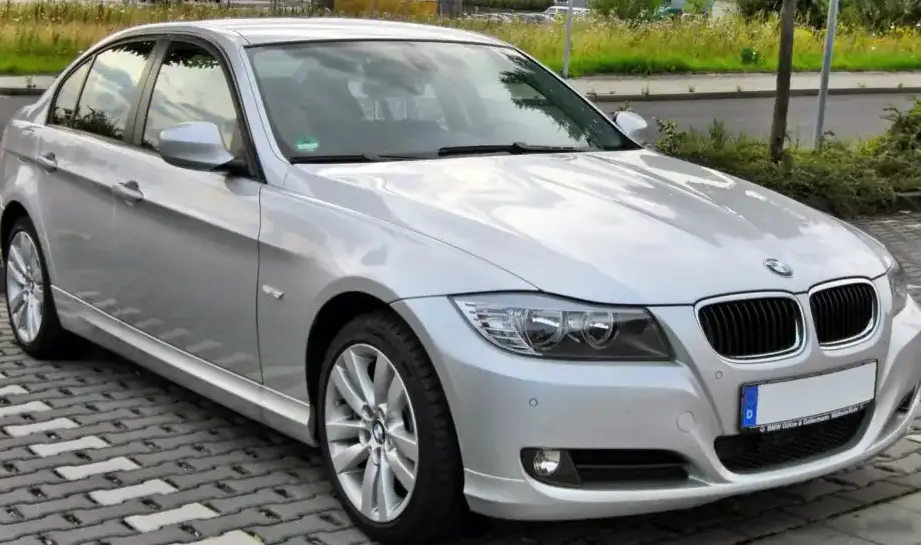
The BMW 3 Series Sedan (E90 LCI), specifically the 318d variant producing 143 horsepower, was a key model in BMW’s lineup from 2009 to 2010. This iteration represents the facelift (LCI – Lebenszyklus Impuls) of the E90 generation, introducing styling and technological updates. Positioned as the entry-level diesel offering in many European markets, the 318d aimed to provide a balance of fuel efficiency, reasonable performance, and BMW’s signature driving experience. It served as an alternative to the more powerful 320d and 330d models, appealing to buyers prioritizing economy and lower running costs. While not officially sold in the US market during this generation, the E90 3 Series was a popular choice globally, and the 318d played a significant role in its success.
Technical Specifications
| Brand | BMW |
| Model | 3 Series |
| Generation | 3 Series Sedan (E90 LCI, facelift 2008) |
| Type (Engine) | 318d (143 Hp) |
| Start of production | 2009 |
| End of production | 2010 |
| Powertrain Architecture | Internal Combustion engine |
| Body type | Sedan |
| Seats | 5 |
| Doors | 4 |
| Fuel consumption (urban) | 5.7 l/100 km (41.3 US mpg, 49.6 UK mpg, 17.5 km/l) |
| Fuel consumption (extra urban) | 4.1 l/100 km (57.4 US mpg, 68.9 UK mpg, 24.4 km/l) |
| Fuel consumption (combined) | 4.7 l/100 km (50 US mpg, 60.1 UK mpg, 21.3 km/l) |
| CO2 emissions | 123 g/km |
| Fuel Type | Diesel |
| Acceleration 0 – 100 km/h | 9.3 sec |
| Acceleration 0 – 62 mph | 9.3 sec |
| Acceleration 0 – 60 mph | 8.8 sec |
| Maximum speed | 210 km/h (130.49 mph) |
| Emission standard | Euro 5 |
| Weight-to-power ratio | 10 kg/Hp, 100 Hp/tonne |
| Weight-to-torque ratio | 4.8 kg/Nm, 209.8 Nm/tonne |
| Power | 143 Hp @ 4000 rpm |
| Power per litre | 71.7 Hp/l |
| Torque | 300 Nm @ 1750-2500 rpm (221.27 lb.-ft. @ 1750-2500 rpm) |
| Engine layout | Front, Longitudinal |
| Engine Model/Code | N47D20C |
| Engine displacement | 1995 cm3 (121.74 cu. in.) |
| Number of cylinders | 4 |
| Engine configuration | Inline |
| Cylinder Bore | 84 mm (3.31 in.) |
| Piston Stroke | 90 mm (3.54 in.) |
| Compression ratio | 16.5:1 |
| Number of valves per cylinder | 4 |
| Fuel injection system | Diesel Commonrail |
| Engine aspiration | Turbocharger, Intercooler |
| Engine oil capacity | 5.2 l (5.49 US qt | 4.58 UK qt) |
| Coolant | 7.5 l (7.93 US qt | 6.6 UK qt) |
| Kerb Weight | 1430 kg (3152.61 lbs.) |
| Max. weight | 1950 kg (4299.01 lbs.) |
| Max load | 520 kg (1146.4 lbs.) |
| Trunk (boot) space – minimum | 460 l (16.24 cu. ft.) |
| Fuel tank capacity | 61 l (16.11 US gal | 13.42 UK gal) |
| Max. roof load | 75 kg (165.35 lbs.) |
| Permitted trailer load with brakes (12%) | 1600 kg (3527.4 lbs.) |
| Permitted trailer load without brakes | 745 kg (1642.44 lbs.) |
| Permitted towbar download | 75 kg (165.35 lbs.) |
| Length | 4531 mm (178.39 in.) |
| Width | 1817 mm (71.54 in.) |
| Width including mirrors | 1989 mm (78.31 in.) |
| Height | 1421 mm (55.94 in.) |
| Wheelbase | 2760 mm (108.66 in.) |
| Front track | 1506 mm (59.29 in.) |
| Rear (Back) track | 1535 mm (60.43 in.) |
| Ride height (ground clearance) | 144 mm (5.67 in.) |
| Drag coefficient (Cd) | 0.27 |
| Minimum turning circle (turning diameter) | 11.0 m (36.09 ft.) |
| Drivetrain Architecture | The Internal combustion engine (ICE) drives the rear wheels of the vehicle. |
| Drive wheel | Rear wheel drive |
| Number of gears and type of gearbox | 6 gears, manual transmission |
| Front suspension | Independent coil spring |
| Rear suspension | Independent multi-link suspension |
| Front brakes | Ventilated discs |
| Rear brakes | Ventilated discs |
| Assisting systems | ABS (Anti-lock braking system) |
| Steering type | Steering rack and pinion |
| Power steering | Electric Steering |
| Tires size | 205/55 R16 91H |
| Wheel rims size | 7J x 16 |
Powertrain & Engine Architecture
The heart of the 318d LCI is the N47D20C, a 2.0-liter inline-four diesel engine. This engine represented a significant advancement in BMW’s diesel technology. It featured second-generation common rail direct injection, operating at a very high 1600 bar, for improved combustion efficiency and reduced emissions. The N47 engine family was known for its relatively lightweight aluminum block and head. A single turbocharger with variable geometry turbine (VGT) technology provided boost, contributing to the engine’s 300 Nm (221 lb-ft) of torque available from 1750-2500 rpm. The engine also incorporated an intercooler to further enhance performance. The 6-speed manual transmission was standard, offering precise shifts and contributing to the car’s overall driving dynamics. While an automatic transmission was available as an option, the manual was favored by enthusiasts for its engagement.
Driving Characteristics
The 318d, with its 143 hp and 300 Nm of torque, offered a respectable, though not exhilarating, driving experience. Acceleration from 0-100 km/h (0-62 mph) took around 9.3 seconds. The engine’s strength lay in its mid-range torque, making it well-suited for everyday driving and overtaking maneuvers. Compared to the more powerful 320d, the 318d felt noticeably less responsive, particularly at higher engine speeds. The manual transmission’s gear ratios were well-matched to the engine’s characteristics, providing adequate power in most situations. The rear-wheel-drive layout contributed to the BMW’s balanced handling, although the relatively narrow tires (typically 205/55 R16) limited grip compared to higher-spec models.
Equipment & Trim Levels
The 318d LCI typically came with a reasonable level of standard equipment. This included features like air conditioning, power windows, central locking, and an audio system. Interior upholstery was usually cloth, although leather options were available. The dashboard layout was typical of the E90 generation, with a driver-focused design and intuitive controls. Optional extras included features like a sunroof, navigation system, upgraded audio, and sport seats. Trim levels varied depending on the market, but generally, the 318d was positioned as the entry point to the 3 Series range, offering a good balance of features and affordability.
Chassis & Braking
The E90 3 Series featured a sophisticated chassis design. The front suspension utilized independent coil springs and struts, while the rear employed an independent multi-link setup. This configuration provided a comfortable ride and precise handling. The 318d typically came equipped with ventilated disc brakes on all four wheels, providing adequate stopping power. ABS (Anti-lock Braking System) was standard. Stabilizer bars were fitted front and rear to reduce body roll during cornering. The suspension tuning was generally geared towards comfort, but the car still offered a sporty driving experience.
Market Reception & Comparison
The 318d LCI was generally well-received by automotive critics as a fuel-efficient and practical option within the 3 Series range. It was praised for its economy, comfortable ride, and BMW’s signature driving dynamics. However, some critics noted that the engine lacked the outright performance of the 320d and 330d models. Compared to the 320d, the 318d offered significantly better fuel economy but at the expense of performance. The 318d was often seen as a sensible choice for buyers prioritizing running costs and practicality over outright speed.
Legacy
The N47 engine family, including the N47D20C found in the 318d, proved to be relatively reliable, although early versions were known to experience timing chain issues. Regular maintenance and oil changes are crucial for long-term reliability. Today, the E90 318d represents an affordable entry point into BMW ownership. Well-maintained examples can still provide years of reliable service. The car’s combination of fuel efficiency, practicality, and BMW’s driving dynamics continues to appeal to a wide range of buyers in the used car market. Its status as a relatively economical and well-rounded option ensures its continued presence on roads today.