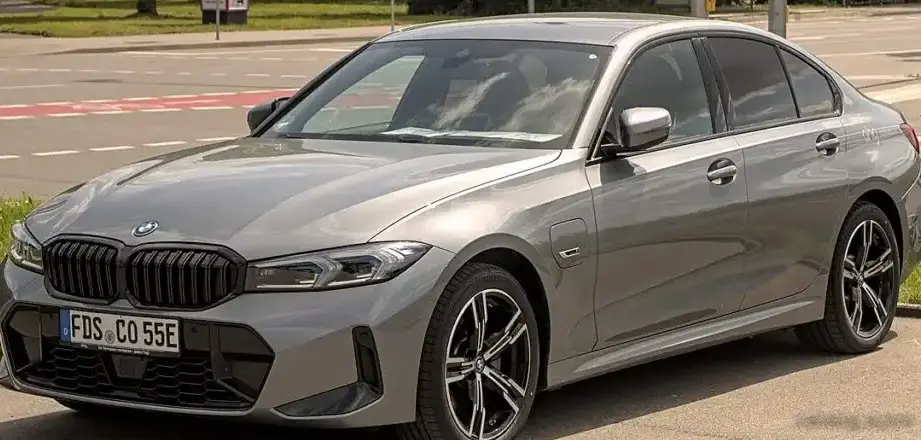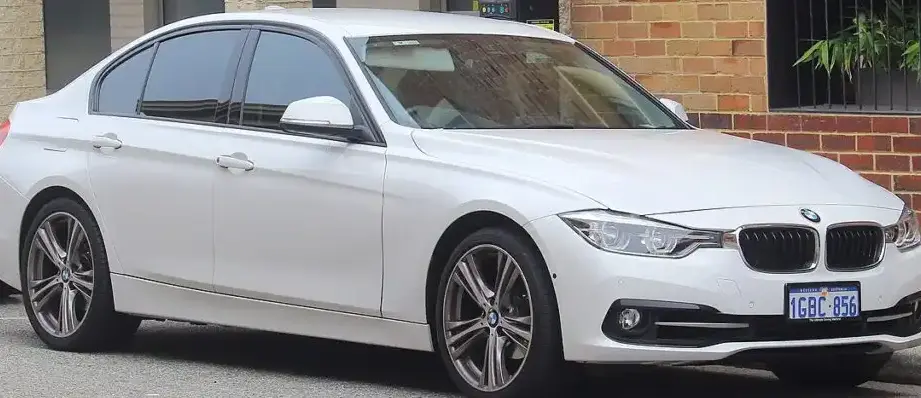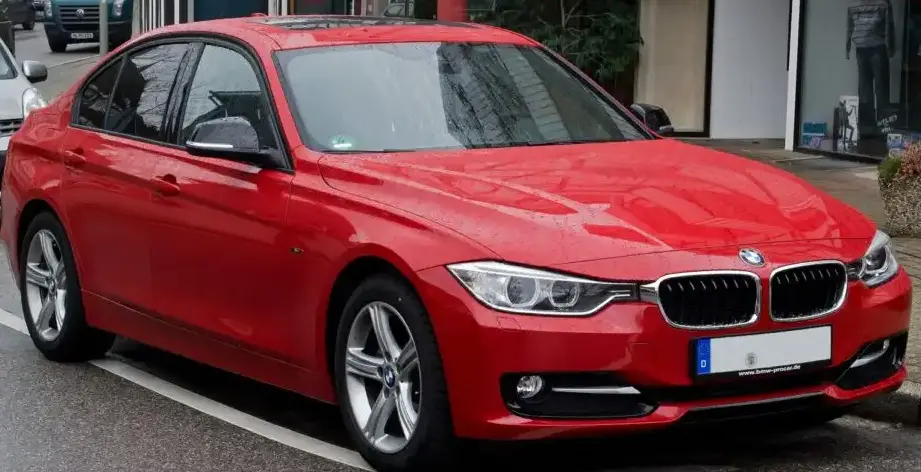
The BMW 3 Series Sedan (F30) 320d xDrive Steptronic, produced from 2012 to 2015, represents a significant iteration of BMW’s iconic sports sedan. Positioned as a mid-range offering within the F30 generation, this variant combined a fuel-efficient diesel engine with the added security and performance benefits of BMW’s xDrive all-wheel-drive system and a smooth-shifting eight-speed automatic transmission. It aimed to balance practicality, economy, and the engaging driving experience BMW is known for, appealing to a broad customer base seeking a premium compact executive car.
Technical Specifications
| Brand | BMW |
| Model | 3 Series |
| Generation | 3 Series Sedan (F30) |
| Type (Engine) | 320d (184 Hp) xDrive Steptronic |
| Start of production | 2012 |
| End of production | 2015 |
| Powertrain Architecture | Internal Combustion engine |
| Body type | Sedan |
| Seats | 5 |
| Doors | 4 |
| Fuel consumption (urban) | 5.7-5.8 l/100 km (41.3 – 40.6 US mpg, 49.6 – 48.7 UK mpg, 17.5 – 17.2 km/l) |
| Fuel consumption (extra urban) | 4.1-4.2 l/100 km (57.4 – 56 US mpg, 68.9 – 67.3 UK mpg, 24.4 – 23.8 km/l) |
| Fuel consumption (combined) | 4.7-4.8 l/100 km (50 – 49 US mpg, 60.1 – 58.9 UK mpg, 21.3 – 20.8 km/l) |
| CO2 emissions | 124-125 g/km |
| Fuel Type | Diesel |
| Acceleration 0 – 100 km/h | 7.4 sec |
| Acceleration 0 – 62 mph | 7.4 sec |
| Acceleration 0 – 60 mph | 7 sec |
| Maximum speed | 228 km/h (141.67 mph) |
| Emission standard | Euro 5 |
| Weight-to-power ratio | 8.6 kg/Hp, 116.1 Hp/tonne |
| Weight-to-torque ratio | 4.2 kg/Nm, 239.7 Nm/tonne |
| Power | 184 Hp @ 4000 rpm |
| Torque | 380 Nm @ 1750-2750 rpm (280.27 lb.-ft. @ 1750-2750 rpm) |
| Engine layout | Front, Longitudinal |
| Engine Model/Code | N47D20C |
| Engine displacement | 1995 cm3 (121.74 cu. in.) |
| Number of cylinders | 4 |
| Engine configuration | Inline |
| Cylinder Bore | 84 mm (3.31 in.) |
| Piston Stroke | 90 mm (3.54 in.) |
| Compression ratio | 16.5:1 |
| Number of valves per cylinder | 4 |
| Fuel injection system | Diesel Commonrail |
| Engine aspiration | Twin-power turbo, Intercooler |
| Engine oil capacity | 5.2 l (5.49 US qt | 4.58 UK qt) |
| Coolant | 7 l (7.4 US qt | 6.16 UK qt) |
| Kerb Weight | 1585 kg (3494.33 lbs.) |
| Max. weight | 2060 kg (4541.52 lbs.) |
| Max load | 475 kg (1047.2 lbs.) |
| Trunk (boot) space – minimum | 480 l (16.95 cu. ft.) |
| Fuel tank capacity | 57 l (15.06 US gal | 12.54 UK gal) |
| Max. roof load | 75 kg (165.35 lbs.) |
| Permitted trailer load with brakes (12%) | 1600 kg (3527.4 lbs.) |
| Permitted trailer load without brakes | 750 kg (1653.47 lbs.) |
| Permitted towbar download | 75 kg (165.35 lbs.) |
| Length | 4624 mm (182.05 in.) |
| Width | 1811 mm (71.3 in.) |
| Height | 1434 mm (56.46 in.) |
| Wheelbase | 2810 mm (110.63 in.) |
| Front track | 1543 mm (60.75 in.) |
| Rear (Back) track | 1582 mm (62.28 in.) |
| Ride height (ground clearance) | 145 mm (5.71 in.) |
| Drag coefficient (Cd) | 0.28 |
| Minimum turning circle (turning diameter) | 11.7 m (38.39 ft.) |
| Drive wheel | All wheel drive (4×4) |
| Number of gears and type of gearbox | 8 gears, automatic transmission |
| Front suspension | Independent coil spring |
| Rear suspension | Independent multi-link suspension |
| Front brakes | Ventilated discs |
| Rear brakes | Ventilated discs |
| Assisting systems | ABS (Anti-lock braking system) |
| Steering type | Steering rack and pinion |
| Power steering | Electric Steering |
| Tires size | 205/60 R16 92V; 225/55 R16; 225/50 R17; 255/45 R17; 225/45 R18; 255/40 R18; 225/40 R19; 255/35 R19 |
| Wheel rims size | 7J x 16; 7.5J x 16; 7.5J x 17; 8.5J x 17; 8J x 18; 8.5J x 18; 8J x 19; 8.5J x 19 |
INTRODUCTION
The F30 320d xDrive Steptronic, launched in 2012, was a key component of BMW’s sixth-generation 3 Series. Built on the 1HX0 platform, it represented a move towards greater efficiency and technological sophistication. The “d” designation signified a diesel engine, and the “xDrive” indicated BMW’s intelligent all-wheel-drive system. This particular variant aimed to provide a premium driving experience with reduced fuel consumption, making it a popular choice in European markets and gaining traction in North America as diesel acceptance grew. It sat in the middle of the 320d range, offering a balance between performance and economy.
Powertrain & Engine Architecture
At the heart of the 320d xDrive Steptronic lies the N47D20C 2.0-liter inline-four diesel engine. This engine is a turbocharged common-rail direct injection diesel, known for its efficiency and relatively quiet operation. The N47 engine family was a significant development for BMW, incorporating features like a variable geometry turbocharger (VGT) and a sophisticated common rail injection system capable of multiple injections per combustion cycle. The N47D20C specifically produced 184 horsepower at 4,000 rpm and 380 Nm (280 lb-ft) of torque between 1,750 and 2,750 rpm. This torque curve provided strong low-end and mid-range acceleration. The engine also featured a particulate filter to reduce emissions, meeting Euro 5 standards. Paired with the engine was BMW’s ZF 8HP eight-speed automatic transmission. This transmission is renowned for its smooth and quick shifts, contributing to both performance and fuel economy. The xDrive all-wheel-drive system utilizes a multi-plate clutch to distribute torque between the front and rear axles, providing enhanced traction in various conditions.
Driving Characteristics
The 320d xDrive Steptronic offered a refined and comfortable driving experience. While not as overtly sporty as the higher-powered 335i models, the 320d provided ample power for everyday driving and highway cruising. The eight-speed automatic transmission was well-tuned, offering seamless gear changes and contributing to a relaxed driving experience. The xDrive system provided excellent grip, particularly in inclement weather, enhancing stability and confidence. Compared to the six-speed manual version of the 320d, the automatic offered greater convenience and slightly improved fuel economy, though some enthusiasts preferred the more engaging feel of the manual gearbox. The gear ratios were optimized for both fuel efficiency and responsive acceleration, with a relatively tall final drive to maximize mileage.
Equipment & Trim Levels
The 320d xDrive Steptronic came standard with a comprehensive list of features, including automatic climate control, power windows and locks, a multi-function steering wheel, and BMW’s iDrive infotainment system. Interior upholstery was typically cloth, with leather options available as an upgrade. Optional extras included navigation, premium sound systems, heated seats, and a sunroof. Trim levels varied depending on the market, but generally included Sport Line, Luxury Line, and Modern Line packages, each offering unique styling cues and additional features. The Sport Line added more aggressive exterior styling and sport seats, while the Luxury Line focused on a more elegant and refined interior. The Modern Line offered a contemporary and stylish aesthetic.
Chassis & Braking
The F30 3 Series featured a sophisticated chassis design, utilizing a MacPherson strut front suspension and a multi-link rear suspension. This setup provided a good balance between ride comfort and handling precision. The 320d xDrive Steptronic was equipped with ventilated disc brakes on all four wheels, providing ample stopping power. ABS (Anti-lock Braking System) was standard, along with electronic stability control and traction control. The xDrive system also played a role in braking, selectively braking individual wheels to enhance stability during cornering and emergency maneuvers. Stabilizer bars were fitted front and rear to reduce body roll.
Market Reception & Comparison
The F30 320d xDrive Steptronic was generally well-received by automotive critics. It was praised for its fuel efficiency, comfortable ride, and refined driving experience. Compared to the more powerful 335i models, the 320d offered a more economical option without sacrificing too much in terms of driving enjoyment. The xDrive system was also a significant selling point, particularly in regions with harsh winters. Fuel economy was a key strength, consistently achieving around 45-50 mpg in real-world driving. Reliability was generally good, although some owners reported issues with the timing chain on earlier N47 engines. Compared to the 320i gasoline variant, the 320d offered significantly better fuel economy and more low-end torque, but at the cost of slightly higher maintenance costs due to the diesel particulate filter and more complex fuel injection system.
Legacy
The F30 320d xDrive Steptronic remains a popular choice in the used car market. Its combination of fuel efficiency, practicality, and BMW’s renowned driving dynamics continues to appeal to buyers. The N47 engine, while initially prone to timing chain issues, has proven to be relatively durable with proper maintenance. The eight-speed automatic transmission is also known for its reliability. Today, these cars offer a compelling value proposition, providing a premium driving experience at a relatively affordable price point. The F30 generation, and the 320d xDrive Steptronic in particular, helped solidify BMW’s position as a leader in the compact executive car segment.