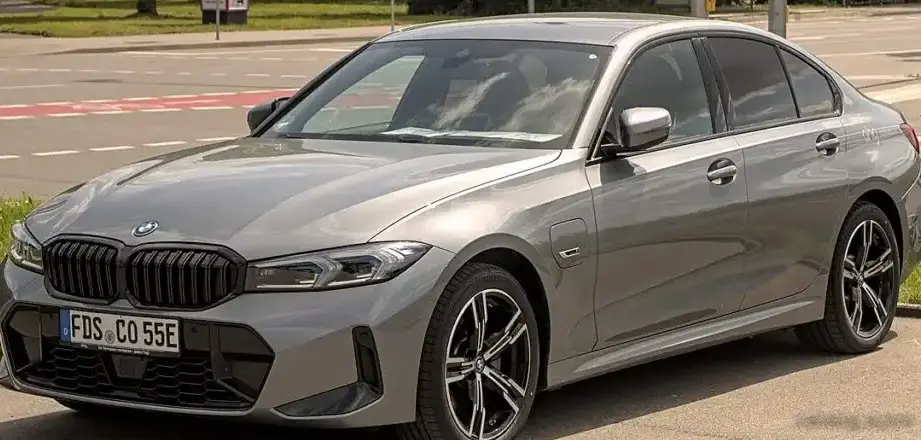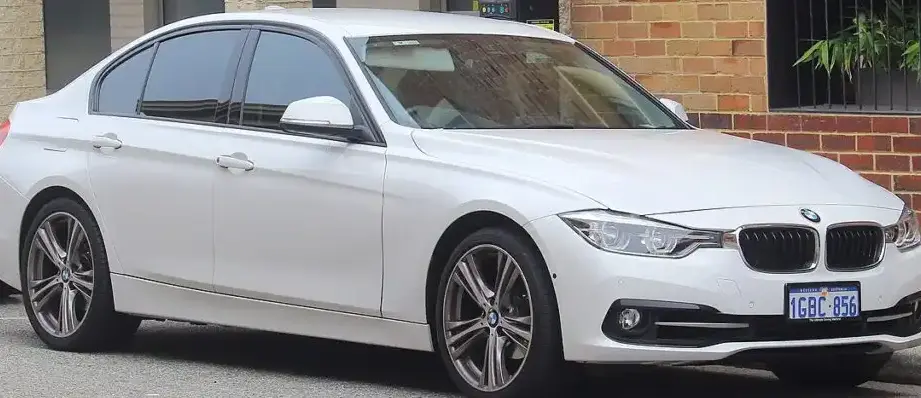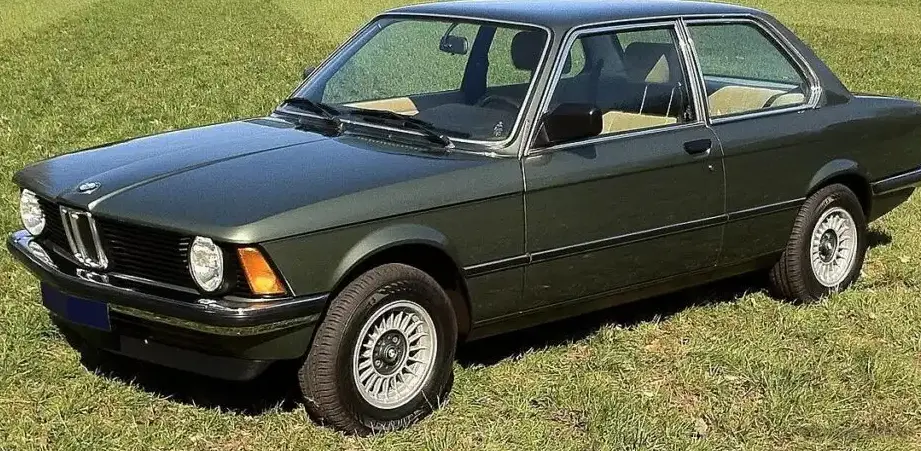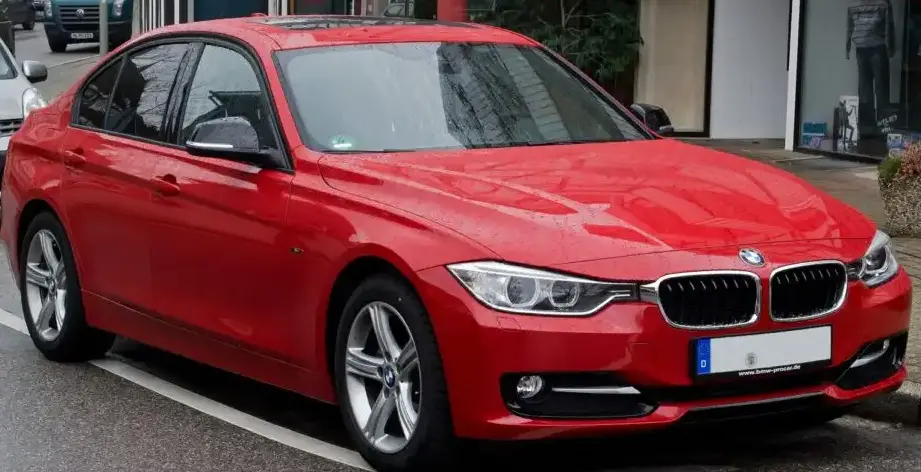
The BMW 3 Series Sedan (F30) 328i, produced from 2011 to 2015, represented a significant evolution in BMW’s long-running and highly successful 3 Series lineage. Positioned as a mid-range offering within the F30 generation, which spanned from entry-level 320i models to the performance-oriented 335i and M3, the 328i struck a balance between performance, luxury, and fuel efficiency. It served as a popular choice for buyers seeking a sporty and refined sedan without the higher price tag of its more powerful siblings. The F30 generation itself was a pivotal model, introducing BMW’s new modular platform strategy and a new generation of engines.
Technical Specifications
| Brand | BMW |
| Model | 3 Series |
| Generation | 3 Series Sedan (F30) |
| Type (Engine) | 328i (245 Hp) |
| Start of production | 2011 year |
| End of production | 2015 year |
| Powertrain Architecture | Internal Combustion engine |
| Body type | Sedan |
| Seats | 5 |
| Doors | 4 |
| Fuel consumption (economy) – urban | 8.5 l/100 km (27.7 US mpg, 33.2 UK mpg, 11.8 km/l) |
| Fuel consumption (economy) – extra urban | 5.2 l/100 km (45.2 US mpg, 54.3 UK mpg, 19.2 km/l) |
| Fuel consumption (economy) – combined | 6.4 l/100 km (36.8 US mpg, 44.1 UK mpg, 15.6 km/l) |
| CO2 emissions | 149 g/km |
| Fuel Type | Petrol (Gasoline) |
| Acceleration 0 – 100 km/h | 5.9 sec |
| Acceleration 0 – 62 mph | 5.9 sec |
| Acceleration 0 – 60 mph | 5.6 sec |
| Maximum speed | 250 km/h (155.34 mph) |
| Emission standard | Euro 5 |
| Weight-to-power ratio | 5.8 kg/Hp, 171.3 Hp/tonne |
| Weight-to-torque ratio | 4.1 kg/Nm, 244.8 Nm/tonne |
| Power | 245 Hp @ 5000-6500 rpm |
| Power per litre | 122.7 Hp/l |
| Torque | 350 Nm @ 1250-4800 rpm (258.15 lb.-ft. @ 1250-4800 rpm) |
| Engine layout | Front, Longitudinal |
| Engine Model/Code | N20B20A |
| Engine displacement | 1997 cm3 (121.86 cu. in.) |
| Number of cylinders | 4 |
| Engine configuration | Inline |
| Cylinder Bore | 84 mm (3.31 in.) |
| Piston Stroke | 90.1 mm (3.55 in.) |
| Compression ratio | 10:1 |
| Number of valves per cylinder | 4 |
| Fuel injection system | Direct injection |
| Engine aspiration | Twin-power turbo, Intercooler |
| Engine oil capacity | 5 l (5.28 US qt | 4.4 UK qt) |
| Coolant | 6.9 l (7.29 US qt | 6.07 UK qt) |
| Kerb Weight | 1430 kg (3152.61 lbs.) |
| Max. weight | 1980 kg (4365.15 lbs.) |
| Max load | 550 kg (1212.54 lbs.) |
| Trunk (boot) space – minimum | 480 l (16.95 cu. ft.) |
| Fuel tank capacity | 60 l (15.85 US gal | 13.2 UK gal) |
| Max. roof load | 75 kg (165.35 lbs.) |
| Permitted trailer load with brakes (12%) | 1600 kg (3527.4 lbs.) |
| Permitted trailer load without brakes | 745 kg (1642.44 lbs.) |
| Permitted towbar download | 75 kg (165.35 lbs.) |
| Length | 4624 mm (182.05 in.) |
| Width | 1811 mm (71.3 in.) |
| Height | 1429 mm (56.26 in.) |
| Wheelbase | 2810 mm (110.63 in.) |
| Front track | 1531 mm (60.28 in.) |
| Rear (Back) track | 1572 mm (61.89 in.) |
| Ride height (ground clearance) | 140 mm (5.51 in.) |
| Drag coefficient (Cd) | 0.29 |
| Minimum turning circle (turning diameter) | 11.3 m (37.07 ft.) |
| Drivetrain Architecture | The Internal combustion engine (ICE) drives the rear wheels of the vehicle. |
| Drive wheel | Rear wheel drive |
| Number of gears and type of gearbox | 6 gears, manual transmission |
| Front suspension | Independent coil spring |
| Rear suspension | Independent multi-link suspension |
| Front brakes | Ventilated discs |
| Rear brakes | Ventilated discs |
| Assisting systems | ABS (Anti-lock braking system) |
| Steering type | Steering rack and pinion |
| Power steering | Electric Steering |
| Tires size | 225/50 R17 94W |
| Wheel rims size | 7.5J x 17 |
Powertrain & Engine Architecture
The heart of the 328i was the N20B20A 2.0-liter inline-four cylinder engine. This engine was a key component of BMW’s new generation of modular engines, characterized by its direct fuel injection, a single twin-scroll turbocharger, and variable valve timing (VANOS) and valve lift (Valvetronic) technologies. These technologies worked in concert to deliver a broad torque curve and impressive fuel efficiency. The N20 engine produced 245 horsepower at 5,000-6,500 rpm and 258 lb-ft of torque between 1,250 and 4,800 rpm. The engine’s turbocharger was strategically positioned to minimize turbo lag and provide responsive acceleration. The 328i was typically equipped with an 8-speed automatic transmission (ZF 8HP), though a 6-speed manual was also available. The automatic transmission offered smooth and quick shifts, contributing to both performance and fuel economy.
Driving Characteristics
The 328i with the 8-speed automatic provided a refined and engaging driving experience. While not as overtly sporty as the 335i, it offered ample power for everyday driving and confident passing maneuvers. The automatic transmission’s close gear ratios kept the engine in its optimal power band, resulting in brisk acceleration. The 0-60 mph sprint took approximately 5.6 seconds. Compared to the 6-speed manual version, the automatic offered slightly quicker acceleration due to its faster shift times. The 328i’s handling was typical BMW – precise, balanced, and predictable. The suspension provided a comfortable ride without sacrificing cornering ability. Compared to the 320i, the 328i offered a noticeable performance upgrade, while the 335i, with its larger inline-six engine, provided significantly more power and a more aggressive driving experience.
Equipment & Trim Levels
The 328i typically came standard with a generous array of features, including leatherette upholstery, automatic climate control, a power-adjustable driver’s seat, and a BMW iDrive infotainment system with a 6.5-inch display screen. Optional extras included leather upholstery, a premium sound system, navigation, a sunroof, and various driver-assistance features like lane departure warning and blind-spot monitoring. Trim levels varied slightly depending on the year and market, but generally, buyers could choose from packages that added convenience, luxury, or performance features. The Sport Line package, for example, included sport seats, unique exterior styling cues, and a sport-tuned suspension.
Chassis & Braking
The F30 328i utilized a MacPherson strut front suspension and a multi-link rear suspension, providing a good balance of ride comfort and handling precision. The chassis was designed to be lightweight yet rigid, contributing to the car’s agility. Brakes consisted of ventilated discs at all four corners, providing ample stopping power. Anti-lock brakes (ABS), electronic stability control (ESC), and traction control were standard safety features. The 328i’s suspension was generally tuned for a balance between comfort and sportiness, with slightly stiffer springs and dampers compared to the 320i.
Market Reception & Comparison
The 328i was well-received by automotive critics, who praised its blend of performance, luxury, and fuel efficiency. It was often cited as the “sweet spot” in the 3 Series lineup, offering a compelling package for a wide range of buyers. Fuel economy was a strong point, with the 328i achieving around 36.8 US mpg in combined driving. Compared to the 320i, the 328i offered a significant performance boost without a substantial increase in price. The 335i, while more powerful, was also more expensive and less fuel-efficient. Reliability was generally good, although some owners reported issues with the N20 engine’s timing chain and water pump.
Legacy
The F30 328i has proven to be a durable and reliable vehicle in the used car market. The N20 engine, while not without its potential issues, is generally considered to be a robust powerplant when properly maintained. Regular oil changes and timely replacement of the timing chain and water pump are crucial for long-term reliability. Today, the F30 328i represents a good value for buyers seeking a sporty and refined sedan with modern features. Its balanced performance, comfortable ride, and relatively affordable maintenance costs make it a popular choice among enthusiasts and everyday drivers alike.