Technical Specifications
| Brand | BMW |
| Model | 3 Series |
| Generation | 3 Series Sedan (F30) |
| Type (Engine) | 330d (258 Hp) Steptronic |
| Start of production | 2012 |
| End of production | 2015 |
| Powertrain Architecture | Internal Combustion engine |
| Body type | Sedan |
| Seats | 5 |
| Doors | 4 |
| Fuel consumption (urban) | 6 l/100 km (39.2 US mpg, 47.1 UK mpg, 16.7 km/l) |
| Fuel consumption (extra urban) | 4.3 l/100 km (54.7 US mpg, 65.7 UK mpg, 23.3 km/l) |
| Fuel consumption (combined) | 4.9 l/100 km (48 US mpg, 57.6 UK mpg, 20.4 km/l) |
| CO2 emissions | 129 g/km |
| Fuel Type | Diesel |
| Acceleration 0 – 100 km/h | 5.6 sec |
| Acceleration 0 – 62 mph | 5.6 sec |
| Acceleration 0 – 60 mph | 5.3 sec |
| Maximum speed | 250 km/h (155.34 mph) |
| Emission standard | Euro 5 |
| Weight-to-power ratio | 6 kg/Hp, 167.5 Hp/tonne |
| Weight-to-torque ratio | 2.8 kg/Nm, 363.6 Nm/tonne |
| Power | 258 Hp @ 4000 rpm |
| Power per litre | 86.2 Hp/l |
| Torque | 560 Nm @ 2000-2750 rpm (413.03 lb.-ft. @ 2000-2750 rpm) |
| Engine layout | Front, Longitudinal |
| Engine Model/Code | N57D30A |
| Engine displacement | 2993 cm3 (182.64 cu. in.) |
| Number of cylinders | 6 |
| Engine configuration | Inline |
| Cylinder Bore | 84 mm (3.31 in.) |
| Piston Stroke | 90 mm (3.54 in.) |
| Compression ratio | 16.5:1 |
| Number of valves per cylinder | 4 |
| Fuel injection system | Diesel Commonrail |
| Engine aspiration | Twin-power turbo, Intercooler |
| Engine oil capacity | 6.5 l (6.87 US qt | 5.72 UK qt) |
| Coolant | 7.2 l (7.61 US qt | 6.34 UK qt) |
| Kerb Weight | 1540 kg (3395.12 lbs.) |
| Max. weight | 2090 kg (4607.66 lbs.) |
| Max load | 550 kg (1212.54 lbs.) |
| Trunk (boot) space – minimum | 480 l (16.95 cu. ft.) |
| Fuel tank capacity | 57 l (15.06 US gal | 12.54 UK gal) |
| Max. roof load | 75 kg (165.35 lbs.) |
| Permitted trailer load with brakes (12%) | 1800 kg (3968.32 lbs.) |
| Permitted trailer load without brakes | 750 kg (1653.47 lbs.) |
| Permitted towbar download | 75 kg (165.35 lbs.) |
| Length | 4624 mm (182.05 in.) |
| Width | 1811 mm (71.3 in.) |
| Height | 1429 mm (56.26 in.) |
| Wheelbase | 2810 mm (110.63 in.) |
| Front track | 1543 mm (60.75 in.) |
| Rear (Back) track | 1582 mm (62.28 in.) |
| Ride height (ground clearance) | 140 mm (5.51 in.) |
| Drag coefficient (Cd) | 0.28 |
| Minimum turning circle (turning diameter) | 11.30 m (37.07 ft.) |
| Drivetrain Architecture | Rear wheel drive |
| Drive wheel | Rear wheel drive |
| Number of gears and type of gearbox | 8 gears, automatic transmission |
| Front suspension | Independent coil spring |
| Rear suspension | Independent multi-link suspension |
| Front brakes | Ventilated discs |
| Rear brakes | Ventilated discs |
| Assisting systems | ABS (Anti-lock braking system) |
| Steering type | Steering rack and pinion |
| Power steering | Electric Steering |
| Tires size | 225/50 R17 94 W |
| Wheel rims size | 7.5J x 17 |
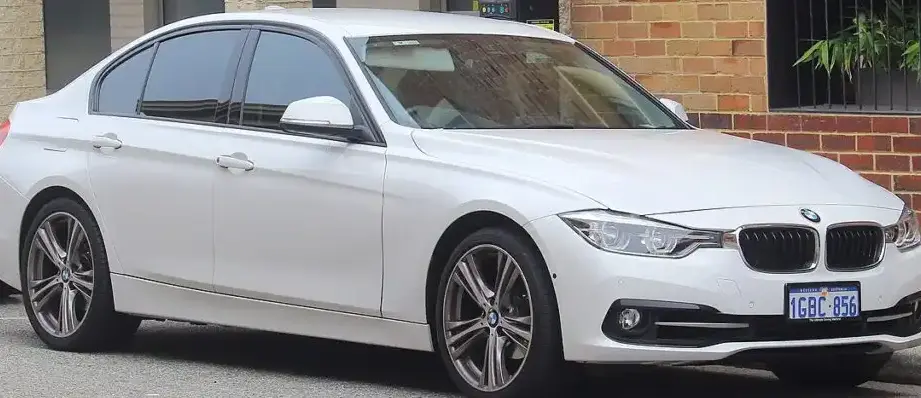
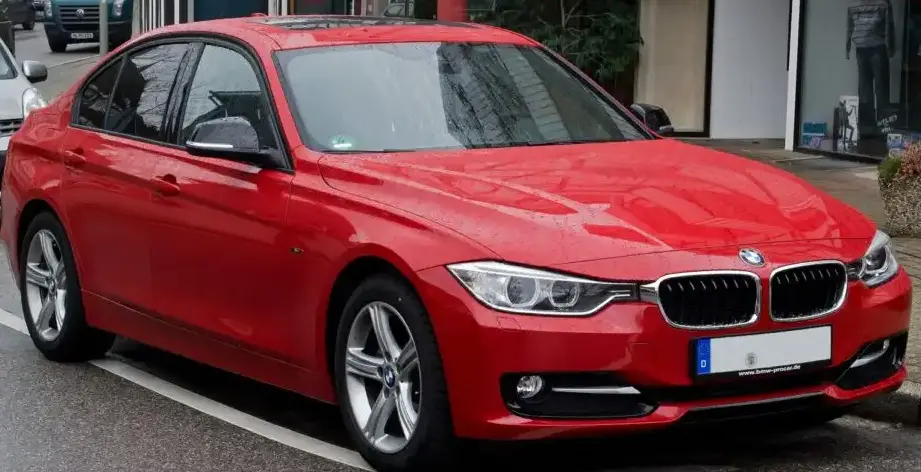
The BMW 3 Series Sedan (F30) 330d Steptronic, produced from 2012 to 2015, represented a significant offering in the premium compact executive car segment. Positioned as a mid-to-high range variant within the F30 generation (2012-2019), it combined a potent diesel engine with a smooth-shifting eight-speed automatic transmission. This configuration aimed to deliver a balance of performance, efficiency, and comfort, appealing to drivers seeking a refined and capable daily driver. The F30 3 Series, as a whole, was BMW’s sixth generation of the iconic 3 Series, built on the BMW New Highs platform, and was a crucial model for maintaining BMW’s reputation for driving dynamics and build quality.
Powertrain & Engine Architecture
The heart of the 330d Steptronic was the N57D30A, a 3.0-liter inline-six diesel engine. This engine was a cornerstone of BMW’s diesel offerings during this period, known for its refinement and strong performance. It featured a common-rail direct injection system, delivering fuel at extremely high pressure for optimized combustion. The N57D30A also employed a twin-turbocharger setup – a smaller turbo for quick response at low engine speeds and a larger turbo for sustained power at higher RPMs. An intercooler further cooled the intake air, increasing density and boosting efficiency. The engine produced 258 horsepower at 4,000 rpm and a substantial 560 Nm (413 lb-ft) of torque between 2,000 and 2,750 rpm. Paired with this engine was BMW’s ZF 8HP80 eight-speed automatic transmission, renowned for its smooth and quick shifts. This transmission offered both automatic and manual shift modes, allowing drivers to tailor the driving experience.
Driving Characteristics
The 330d Steptronic offered a compelling driving experience. The abundant torque from the diesel engine provided strong acceleration in everyday driving situations, with the 0-60 mph sprint taking around 5.3 seconds. The eight-speed automatic transmission was well-matched to the engine’s characteristics, providing seamless gear changes and contributing to a relaxed cruising experience. While not as overtly sporty as the gasoline-powered 335i, the 330d offered a more than adequate level of performance for most drivers. The gear ratios were tuned for both fuel efficiency and responsiveness, with lower gears providing quick acceleration and higher gears optimizing fuel economy on the highway. Compared to the manual transmission versions of the 330d, the Steptronic offered greater convenience, particularly in urban traffic.
Equipment & Trim Levels
The 330d Steptronic typically came well-equipped, reflecting its position in the mid-to-upper range of the F30 lineup. Standard features included automatic climate control, a multi-function steering wheel, power-adjustable front seats, and a BMW Professional radio system. Interior upholstery was typically a combination of cloth and leatherette, with full leather options available as an upgrade. Optional extras included a navigation system, a premium sound system, heated seats, a sunroof, and various driver assistance systems such as lane departure warning and adaptive cruise control. Trim levels could vary slightly depending on the market, but generally, the 330d Steptronic offered a comfortable and well-appointed interior.
Chassis & Braking
The F30 330d featured a sophisticated chassis design. It utilized an independent coil spring suspension at the front and an independent multi-link suspension at the rear, providing a good balance of ride comfort and handling precision. The steering was a rack-and-pinion system with electric power assistance, offering precise and responsive steering feel. Braking duties were handled by ventilated disc brakes on all four wheels, providing ample stopping power. ABS (Anti-lock Braking System) was standard, enhancing safety and stability during hard braking. The suspension tuning was generally geared towards comfort, but the 330d still offered a reasonably sporty driving experience.
Market Reception & Comparison
The 330d Steptronic was generally well-received by automotive critics. It was praised for its refined engine, smooth transmission, and comfortable ride. Fuel economy was a significant selling point, with the 330d achieving around 48 US mpg on the combined cycle. Compared to the 328i (gasoline), the 330d offered superior fuel economy and torque, but slightly less outright horsepower. Compared to the more powerful 335i, the 330d provided a more economical and relaxed driving experience. Reliability was generally good, although some owners reported issues with the diesel particulate filter (DPF) and turbocharger over the long term.
Legacy
The BMW F30 330d Steptronic remains a popular choice in the used car market. The N57D30A engine is known for its durability, provided it has been properly maintained. Regular servicing, including oil changes and DPF regeneration, is crucial for long-term reliability. The ZF 8HP80 transmission is also highly regarded for its robustness. While modern cars offer more advanced technology and features, the F30 330d continues to provide a compelling combination of performance, efficiency, and driving enjoyment, making it a desirable option for those seeking a well-rounded and reliable premium sedan.