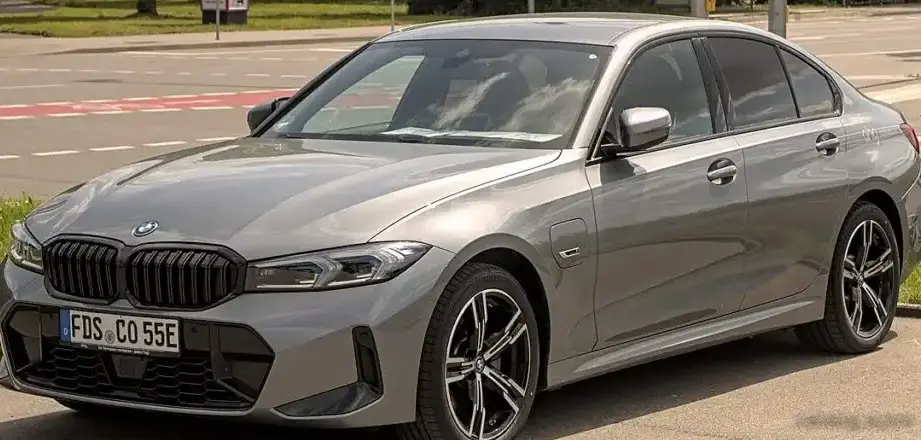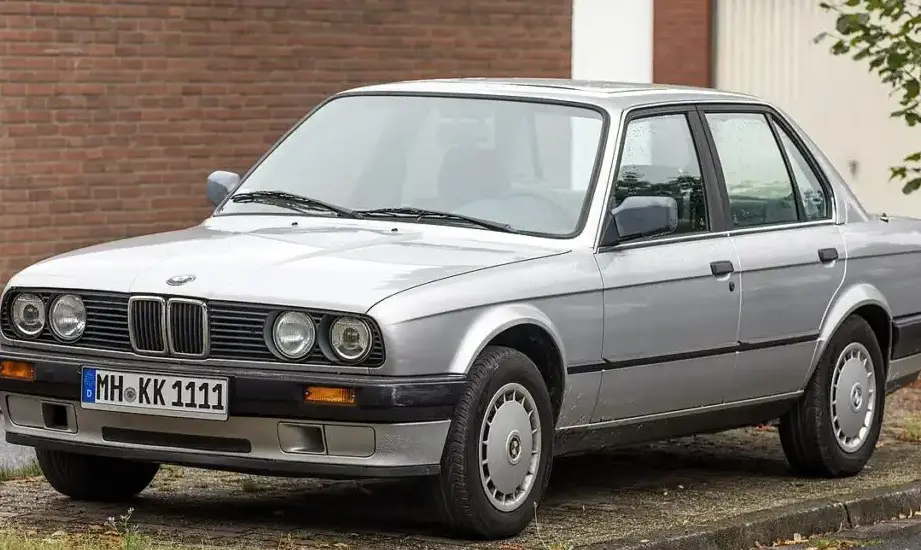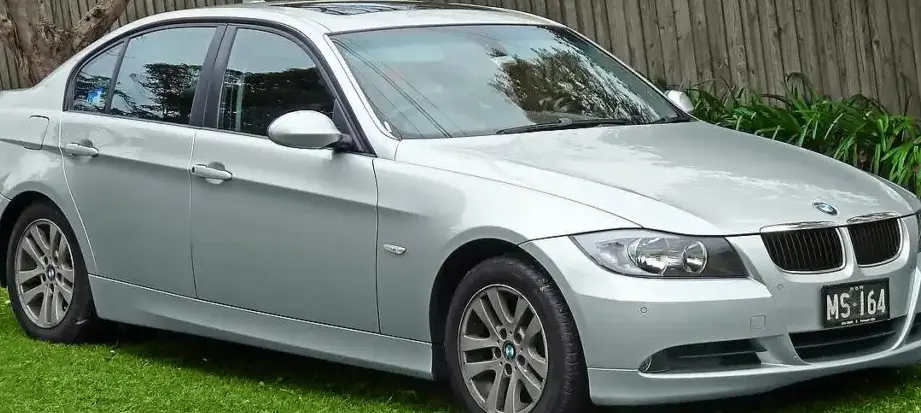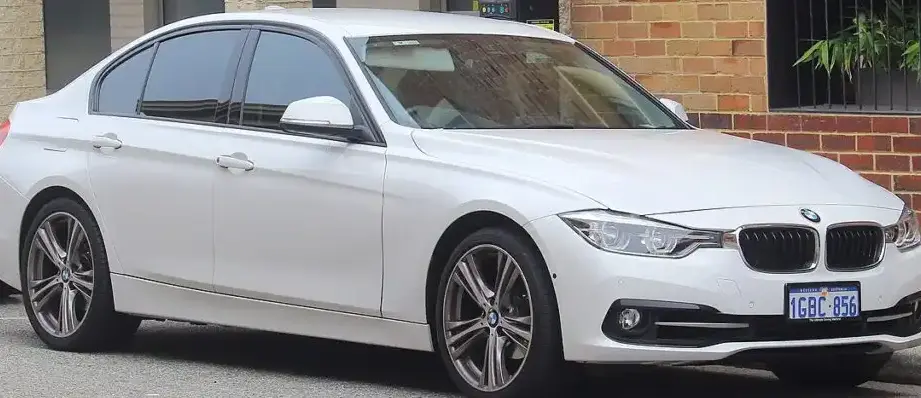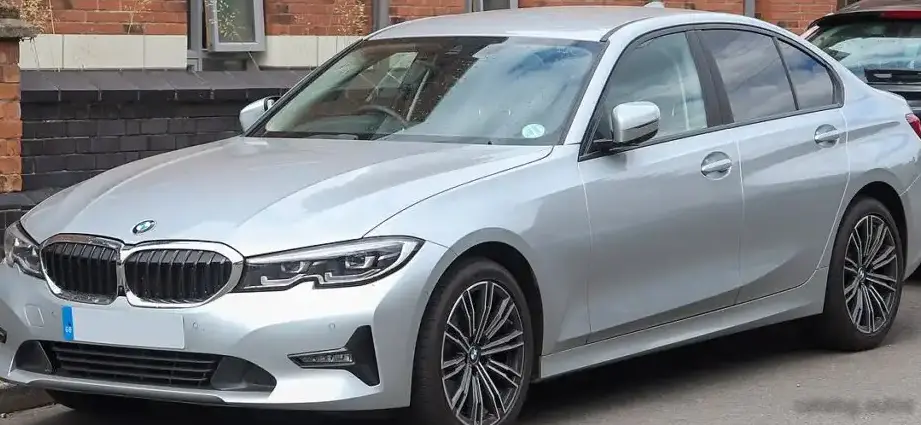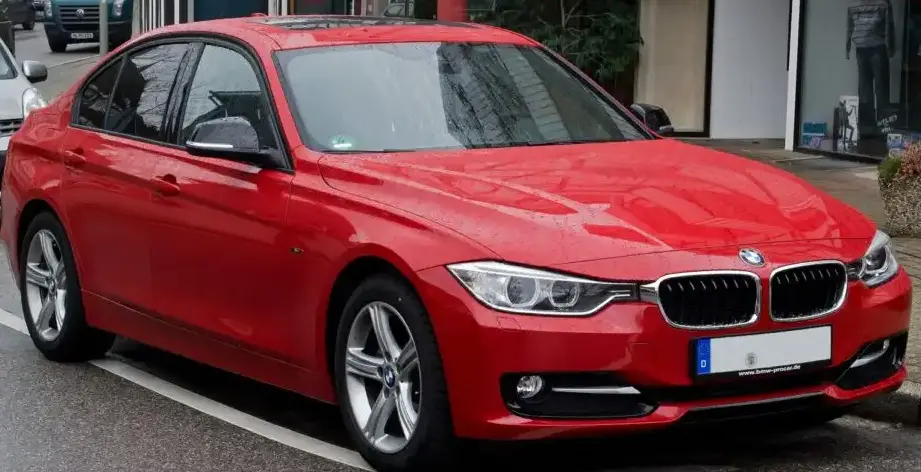
The BMW 3 Series Sedan (F30) 335d xDrive Steptronic, produced from July 2013 to June 2015, represents a high-performance diesel variant within the sixth generation (F30) of BMW’s iconic 3 Series. Positioned as a premium offering, it combined a potent inline-six diesel engine with BMW’s xDrive all-wheel-drive system and an eight-speed Steptronic automatic transmission. This model aimed to deliver a blend of performance, efficiency, and all-weather capability, appealing to buyers seeking a refined and capable executive sedan. It sat towards the top end of the F30 3 Series range, below the M3 but above the lower-powered 320d and 328i models.
Technical Specifications
| Brand | BMW |
| Model | 3 Series |
| Generation | 3 Series Sedan (F30) |
| Type | 335d (313 Hp) xDrive Steptronic |
| Start of production | July, 2013 |
| End of production | June, 2015 |
| Powertrain Architecture | Internal Combustion engine |
| Body type | Sedan |
| Seats | 5 |
| Doors | 4 |
| Fuel consumption (urban) | 6.4 l/100 km (36.8 US mpg, 44.1 UK mpg, 15.6 km/l) |
| Fuel consumption (extra urban) | 4.9 l/100 km (48 US mpg, 57.6 UK mpg, 20.4 km/l) |
| Fuel consumption (combined) | 5.4 l/100 km (43.6 US mpg, 52.3 UK mpg, 18.5 km/l) |
| CO2 emissions | 143 g/km |
| Fuel Type | Diesel |
| Acceleration 0 – 100 km/h | 4.8 sec |
| Acceleration 0 – 62 mph | 4.8 sec |
| Acceleration 0 – 60 mph | 4.6 sec |
| Maximum speed | 250 km/h (155.34 mph) – Electronically limited |
| Emission standard | Euro 5 |
| Weight-to-power ratio | 5.2 kg/Hp, 192 Hp/tonne |
| Weight-to-torque ratio | 2.6 kg/Nm, 386.5 Nm/tonne |
| Power | 313 Hp @ 4400 rpm |
| Power per litre | 104.6 Hp/l |
| Torque | 630 Nm @ 1500-2500 rpm (464.66 lb.-ft. @ 1500-2500 rpm) |
| Engine layout | Front, Longitudinal |
| Engine Model/Code | N57D30B |
| Engine displacement | 2993 cm3 (182.64 cu. in.) |
| Number of cylinders | 6 |
| Engine configuration | Inline |
| Cylinder Bore | 84 mm (3.31 in.) |
| Piston Stroke | 90 mm (3.54 in.) |
| Compression ratio | 16.5:1 |
| Number of valves per cylinder | 4 |
| Fuel injection system | Diesel Commonrail |
| Engine aspiration | Twin-Turbo, Intercooler |
| Valvetrain | DOHC |
| Engine oil capacity | 6.5 l (6.87 US qt | 5.72 UK qt) |
| Coolant capacity | 7.2 l (7.61 US qt | 6.34 UK qt) |
| Kerb Weight | 1630 kg (3593.53 lbs.) |
| Max. weight | 2170 kg (4784.03 lbs.) |
| Max load | 540 kg (1190.5 lbs.) |
| Trunk (boot) space (minimum) | 480 l (16.95 cu. ft.) |
| Fuel tank capacity | 57 l (15.06 US gal | 12.54 UK gal) |
| Max. roof load | 75 kg (165.35 lbs.) |
| Permitted trailer load (with brakes) | 1800 kg (3968.32 lbs.) |
| Permitted trailer load (without brakes) | 750 kg (1653.47 lbs.) |
| Permitted towbar download | 75 kg (165.35 lbs.) |
| Length | 4624 mm (182.05 in.) |
| Width | 1811 mm (71.3 in.) |
| Width including mirrors | 2031 mm (79.96 in.) |
| Height | 1434 mm (56.46 in.) |
| Wheelbase | 2810 mm (110.63 in.) |
| Front track | 1531 mm (60.28 in.) |
| Rear track | 1570 mm (61.81 in.) |
| Front overhang | 776 mm (30.55 in.) |
| Rear overhang | 1038 mm (40.87 in.) |
| Ride height (ground clearance) | 145 mm (5.71 in.) |
| Drag coefficient (Cd) | 0.30 |
| Minimum turning circle | 11.7 m (38.39 ft.) |
| Drivetrain Architecture | All wheel drive (4×4). Internal Combustion engine. |
| Number of gears | 8 |
| Gearbox type | Automatic transmission Steptronic |
| Front suspension | Spring Strut, Transverse stabilizer |
| Rear suspension | Independent multi-link spring suspension with stabilizer |
| Front brakes | Ventilated discs |
| Rear brakes | Ventilated discs |
| Assisting systems | ABS (Anti-lock braking system) |
| Steering type | Steering rack and pinion |
| Power steering | Electric Steering |
| Front tire size | 225/50 R17; 225/45 R18; 225/40 R19; 225/35 R20 |
| Rear tire size | 225/50 R17; 225/45 R18; 255/40 R18; 255/35 R19; 255/30 R20 |
| Front wheel rim size | 7.5J x 17; 8J x 18; 8J x 19; 8J x 20 |
| Rear wheel rim size | 7.5J x 17; 8J x 18; 8.5J x 18; 8.5J x 19; 8.5J x 20 |
INTRODUCTION
The BMW 335d xDrive Steptronic, built on the F30 platform, was a key component of BMW’s strategy to offer a compelling diesel alternative in the premium compact executive segment. The F30 generation, launched in 2011, represented a significant evolution for the 3 Series, incorporating advancements in efficiency, technology, and driving dynamics. The 335d specifically targeted customers who desired strong performance and fuel economy, particularly those covering long distances or frequently encountering challenging weather conditions. Its xDrive all-wheel-drive system provided enhanced traction and stability, making it a popular choice in regions with inclement weather.
Powertrain & Engine Architecture
At the heart of the 335d was the N57D30B inline-six diesel engine, a powerplant renowned for its refinement and power delivery. This 3.0-liter engine featured common-rail direct injection, a twin-turbocharger setup (one low-pressure and one high-pressure turbo), and an intercooler. The twin-turbo configuration was crucial for mitigating turbo lag and providing a broad, flat torque curve. The engine produced 313 horsepower at 4400 rpm and a substantial 630 Nm (464.66 lb.-ft.) of torque between 1500 and 2500 rpm. The eight-speed Steptronic automatic transmission, a hallmark of BMW’s engineering, offered smooth and rapid gear changes, contributing to both performance and efficiency. This transmission featured adaptive shift programs, allowing it to adjust to the driver’s style and road conditions. The engine also incorporated a particulate filter and a Start & Stop system to further reduce emissions.
Driving Characteristics
The 335d xDrive Steptronic delivered a distinctly refined driving experience. The abundant torque available from low engine speeds provided effortless acceleration in everyday driving situations. The xDrive all-wheel-drive system ensured excellent traction, particularly when exiting corners or accelerating on slippery surfaces. While not as overtly sporty as the 335i or M3, the 335d offered a confident and composed ride. The eight-speed automatic transmission was well-matched to the engine’s characteristics, providing seamless gear changes and contributing to a relaxed cruising experience. Compared to the six-speed manual transmission available on some 3 Series models, the Steptronic offered convenience and efficiency, though some enthusiasts preferred the greater driver engagement of the manual.
Equipment & Trim Levels
The 335d xDrive Steptronic typically came well-equipped as standard. Interior features included premium upholstery (often leather), automatic climate control, a multi-function steering wheel, and BMW’s iDrive infotainment system. Optional extras were plentiful, including navigation, a premium sound system, heated seats, a sunroof, and various driver assistance systems such as lane departure warning and adaptive cruise control. Trim levels could vary depending on the market, but generally, the 335d was positioned as a higher-end model, offering a more luxurious and feature-rich experience than the base 320d.
Chassis & Braking
The F30 3 Series featured a sophisticated chassis design. The 335d xDrive utilized a spring strut front suspension with a transverse stabilizer and an independent multi-link rear suspension, also with a stabilizer bar. This setup provided a good balance between ride comfort and handling precision. Braking duties were handled by ventilated discs on all four wheels, providing ample stopping power. The ABS (Anti-lock braking system) was standard, enhancing safety and control during emergency braking situations. The xDrive system’s intelligent torque distribution further contributed to stability and braking performance.
Market Reception & Comparison
The 335d xDrive Steptronic was generally well-received by automotive critics. It was praised for its powerful and refined engine, excellent fuel economy, and all-weather capability. Compared to the gasoline-powered 335i, the 335d offered comparable performance with significantly better fuel efficiency. However, the 335i was often favored by drivers prioritizing a more engaging driving experience and the characteristic sound of a gasoline engine. Against other diesel-powered competitors, such as the Audi A4 TDI and Mercedes-Benz C-Class CDI, the 335d consistently ranked highly in terms of performance and driving dynamics. Reliability was generally good, although diesel particulate filter issues could occasionally arise with infrequent long-distance driving.
Legacy
The N57D30B engine, found in the 335d, has proven to be a robust and reliable powerplant when properly maintained. Today, used examples of the F30 335d xDrive Steptronic represent a compelling value proposition for buyers seeking a high-performance, fuel-efficient, and well-equipped executive sedan. While modern gasoline engines have narrowed the gap in fuel economy, the 335d continues to offer a unique combination of attributes that make it a desirable choice in the used car market. Regular maintenance, including timely servicing of the diesel particulate filter, is crucial for ensuring the long-term reliability of this powertrain.