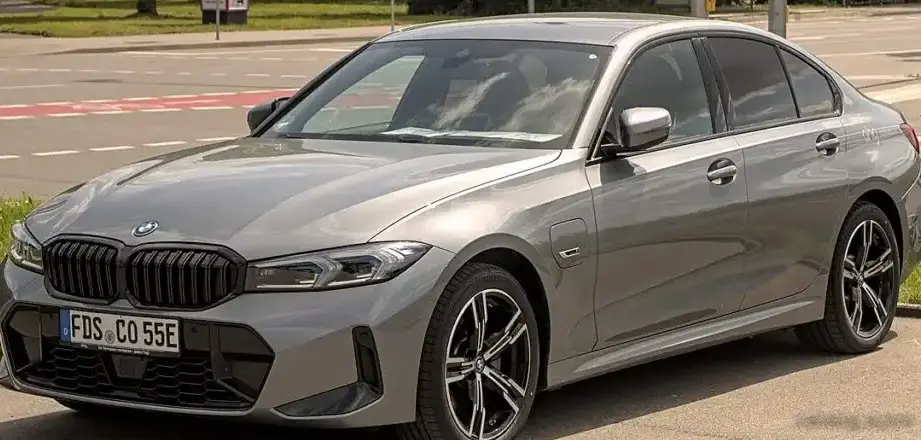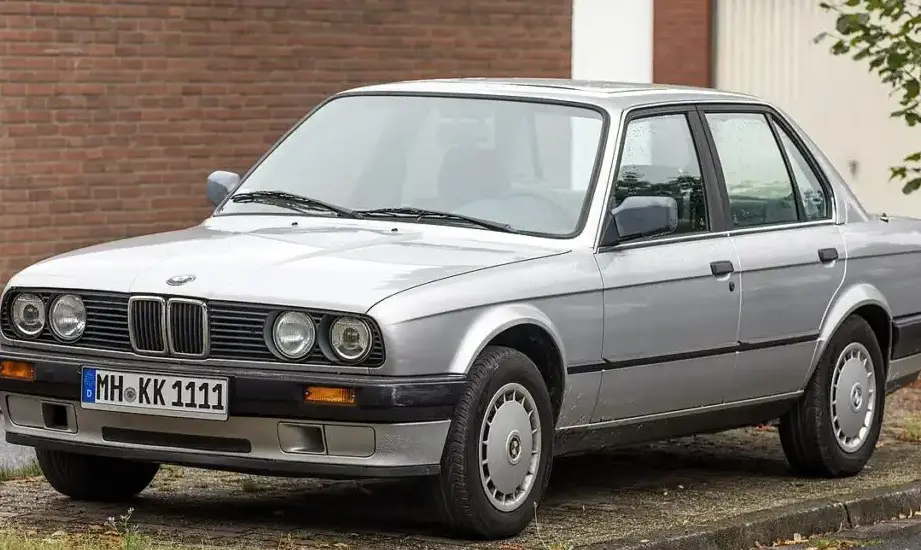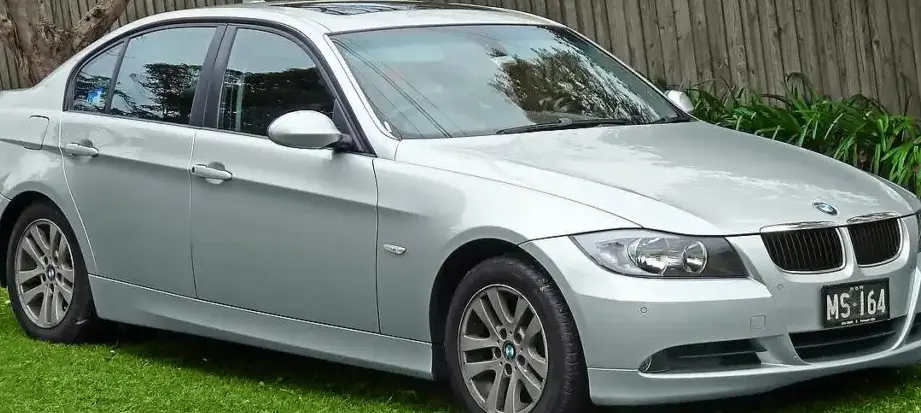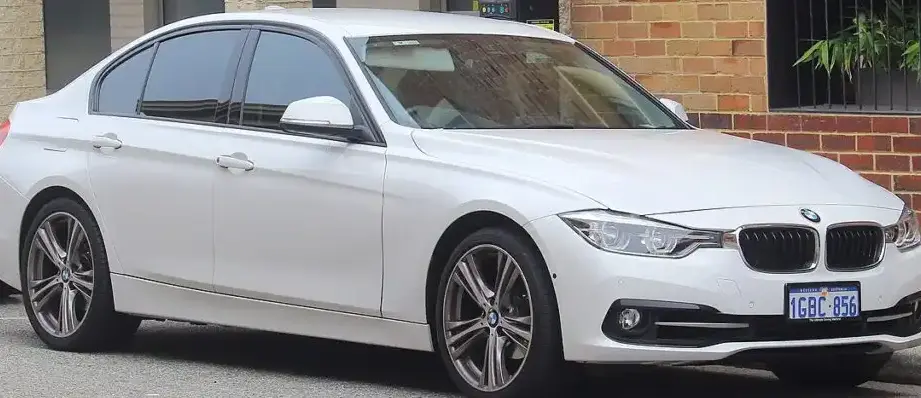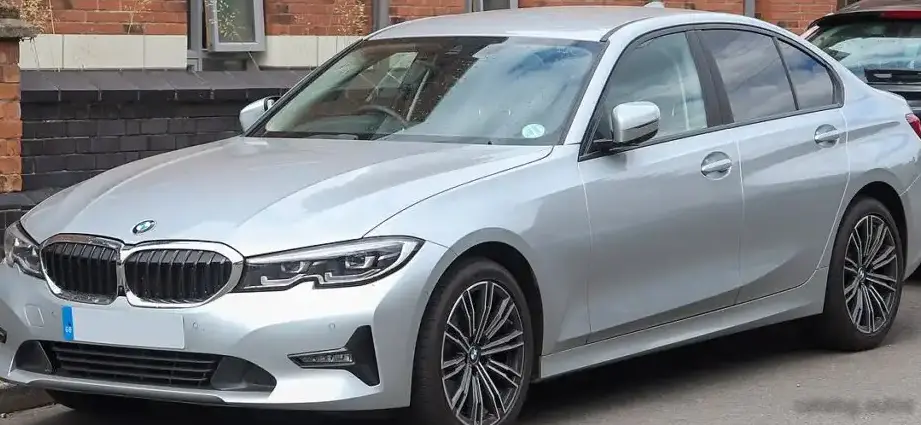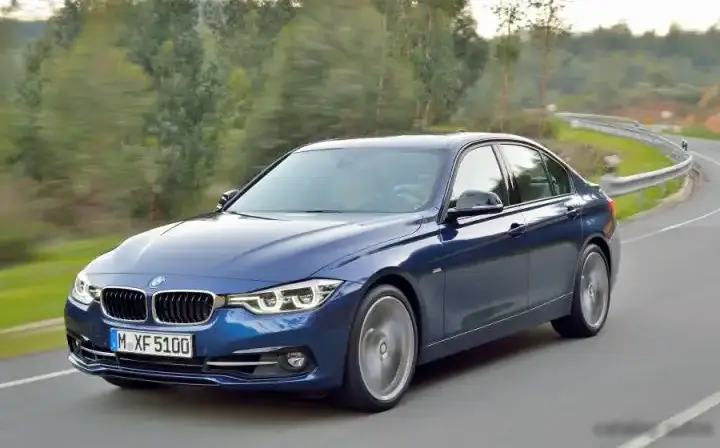
The BMW 320d EfficientDynamics Edition, produced between 2015 and 2018 as part of the F30 LCI (Life Cycle Impulse) facelift of the sixth-generation 3 Series, represented a focus on fuel efficiency within the popular executive sedan range. This variant, powered by a 2.0-liter turbocharged diesel engine producing 163 horsepower, was paired exclusively with an 8-speed Steptronic automatic transmission. Positioned as a mid-range offering, it aimed to balance reasonable performance with optimized fuel economy, appealing to drivers prioritizing cost-effectiveness and comfort. The F30 3 Series, overall, was a critical and commercial success for BMW, continuing the lineage of a sports sedan known for its balanced handling and refined driving experience.
Technical Specifications
| Brand | BMW |
| Model | 3 Series |
| Generation | 3 Series Sedan (F30 LCI, Facelift 2015) |
| Type (Engine) | 320d (163 Hp) Steptronic Efficient Dynamics Edition |
| Start of production | 2015 |
| End of production | 2018 |
| Powertrain Architecture | Internal Combustion engine |
| Body type | Sedan |
| Seats | 5 |
| Doors | 4 |
| Fuel consumption (economy) – urban (NEDC) | 4.6-5 l/100 km (51.1 – 47 US mpg, 61.4 – 56.5 UK mpg, 21.7 – 20 km/l) |
| Fuel consumption (economy) – extra urban (NEDC) | 3.3-3.6 l/100 km (71.3 – 65.3 US mpg, 85.6 – 78.5 UK mpg, 30.3 – 27.8 km/l) |
| Fuel consumption (economy) – combined (NEDC) | 3.8-4.1 l/100 km (61.9 – 57.4 US mpg, 74.3 – 68.9 UK mpg, 26.3 – 24.4 km/l) |
| CO2 emissions (NEDC) | 99-109 g/km |
| Fuel Type | Diesel |
| Acceleration 0 – 100 km/h | 7.8 sec |
| Acceleration 0 – 62 mph | 7.8 sec |
| Acceleration 0 – 60 mph | 7.4 sec |
| Maximum speed | 225 km/h (139.81 mph) |
| Emission standard | Euro 6 |
| Weight-to-power ratio | 8.8 kg/Hp, 114 Hp/tonne |
| Weight-to-torque ratio | 3.6 kg/Nm, 279.7 Nm/tonne |
| Power | 163 Hp @ 4000 rpm |
| Power per litre | 81.7 Hp/l |
| Torque | 400 Nm @ 1750-2250 rpm (295.02 lb.-ft. @ 1750-2250 rpm) |
| Engine layout | Front, Longitudinal |
| Engine Model/Code | B47D20A |
| Engine displacement | 1995 cm3 (121.74 cu. in.) |
| Number of cylinders | 4 |
| Engine configuration | Inline |
| Cylinder Bore | 84 mm (3.31 in.) |
| Piston Stroke | 90 mm (3.54 in.) |
| Compression ratio | 16.5:1 |
| Number of valves per cylinder | 4 |
| Fuel injection system | Diesel Commonrail |
| Engine aspiration | Twin-power turbo, Intercooler |
| Valvetrain | DOHC |
| Engine oil capacity | 5 l (5.28 US qt | 4.4 UK qt) |
| Coolant | 7 l (7.4 US qt | 6.16 UK qt) |
| Kerb Weight | 1430 kg (3152.61 lbs.) |
| Max. weight | 1980 kg (4365.15 lbs.) |
| Max load | 550 kg (1212.54 lbs.) |
| Trunk (boot) space – minimum | 480 l (16.95 cu. ft.) |
| Fuel tank capacity | 57 l (15.06 US gal | 12.54 UK gal) |
| Max. roof load | 75 kg (165.35 lbs.) |
| Permitted trailer load with brakes (8%) | 1800 kg (3968.32 lbs.) |
| Permitted trailer load with brakes (12%) | 1800 kg (3968.32 lbs.) |
| Permitted trailer load without brakes | 745 kg (1642.44 lbs.) |
| Length | 4633 mm (182.4 in.) |
| Width | 1811 mm (71.3 in.) |
| Width including mirrors | 2031 mm (79.96 in.) |
| Height | 1416 mm (55.75 in.) |
| Wheelbase | 2810 mm (110.63 in.) |
| Front track | 1543 mm (60.75 in.) |
| Rear (Back) track | 1586 mm (62.44 in.) |
| Front overhang | 779 mm (30.67 in.) |
| Rear overhang | 1044 mm (41.1 in.) |
| Ride height (ground clearance) | 127 mm (5 in.) |
| Drag coefficient (Cd) | 0.24 |
| Minimum turning circle (turning diameter) | 11.3 m (37.07 ft.) |
| Drivetrain Architecture | The Internal combustion engine (ICE) drives the rear wheels of the vehicle. |
| Drive wheel | Rear wheel drive |
| Number of gears and type of gearbox | 8 gears, automatic transmission Steptronic |
| Front suspension | Spring Strut, Transverse stabilizer |
| Rear suspension | Independent multi-link spring suspension with stabilizer |
| Front brakes | Ventilated discs |
| Rear brakes | Ventilated discs |
| Assisting systems | ABS (Anti-lock braking system) |
| Steering type | Steering rack and pinion |
| Power steering | Electric Steering |
| Tires size | Front wheel tires: 205/60 R16; 225/55 R16; 225/50 R17; 225/45 R18; 225/40 R19Rear wheel tires: 205/60 R16; 225/55 R16; 225/50 R17; 225/45 R18; 255/40 R18; 255/35 R19 |
| Wheel rims size | Front wheel rims: 7J x 16; 7.5J x 16; 7.5J x 17; 8J x 18; 8J x 19Rear wheel rims: 7J x 16; 7.5J x 16; 7.5J x 17; 8J x 18; 8.5J x 18; 8.5J x 19 |
INTRODUCTION
The BMW 320d EfficientDynamics Edition, launched in 2015 as part of the F30 3 Series facelift, was designed to maximize fuel efficiency without sacrificing the core driving experience BMW is known for. It slotted into the 3 Series lineup as an attractive option for drivers seeking lower running costs, particularly in European markets where diesel fuel was prevalent and subject to favorable taxation. The “EfficientDynamics” designation signified a suite of technologies aimed at reducing emissions and improving fuel economy. Built on the 3HX0/A3 platform, this variant offered a compelling blend of practicality, comfort, and efficiency in a premium package.
Powertrain & Engine Architecture
At the heart of the 320d EfficientDynamics Edition lies the BMW B47D20A, a 2.0-liter inline-four cylinder diesel engine. This engine utilizes a second-generation common rail direct injection system, capable of delivering fuel at pressures up to 2,000 bar for optimized combustion. A twin-scroll turbocharger with variable geometry turbine (VGT) technology provides a broad torque curve and responsive performance. The engine also features intercooling to further enhance efficiency. The B47 engine is known for its relatively quiet operation and refined power delivery. Paired exclusively with the 8-speed Steptronic automatic transmission, the 320d benefits from close gear ratios that keep the engine operating within its optimal power band. The Steptronic transmission offers both automatic shifting and manual control via steering wheel-mounted paddles or the gear selector. The transmission’s programming is tuned for fuel efficiency, prioritizing higher gears whenever possible.
Driving Characteristics
The 163 horsepower and 400 Nm (295 lb-ft) of torque produced by the 320d EfficientDynamics Edition provide adequate, though not exhilarating, performance. Acceleration from 0-60 mph takes approximately 7.4 seconds. The engine’s peak torque is available from 1750-2250 rpm, resulting in strong mid-range acceleration, making it well-suited for everyday driving and highway cruising. Compared to the more powerful 328i or 335i models, the 320d feels less urgent, but the 8-speed automatic transmission does a good job of maximizing the available power. The automatic transmission’s shift points are generally smooth and well-timed, contributing to a comfortable driving experience. Compared to a manual transmission equipped 320d, the automatic offers greater convenience, particularly in urban traffic, but may slightly diminish fuel economy in some driving conditions.
Equipment & Trim Levels
The EfficientDynamics Edition typically came standard with features focused on enhancing fuel economy and comfort. These included aerodynamic enhancements such as active grille shutters and optimized underbody panels to reduce drag. Inside, the standard equipment included cloth upholstery, automatic climate control, a BMW Radio Professional audio system, and iDrive infotainment system with a 6.5-inch display. Optional extras included leather upholstery, a larger iDrive screen, navigation system, parking sensors, and a variety of driver assistance systems such as lane departure warning and collision warning. The interior design was typical of the F30 3 Series, characterized by a driver-focused layout and high-quality materials.
Chassis & Braking
The 320d EfficientDynamics Edition utilized the standard F30 3 Series chassis, featuring a MacPherson strut front suspension and a multi-link rear suspension. The suspension was tuned for a balance of comfort and handling. The EfficientDynamics Edition often featured slightly stiffer suspension settings compared to base models to improve handling without compromising ride quality. Braking duties were handled by ventilated disc brakes on all four wheels. ABS (Anti-lock Braking System) and electronic stability control were standard safety features. The car’s relatively low weight, at around 1430 kg (3152.61 lbs), contributed to its agile handling characteristics.
Market Reception & Comparison
The 320d EfficientDynamics Edition was generally well-received by automotive critics, who praised its fuel economy and comfortable ride. It was often seen as a sensible choice for drivers prioritizing practicality and cost-effectiveness. Compared to the 320i gasoline variant, the 320d offered significantly better fuel economy, particularly in long-distance driving. However, the 320i provided quicker acceleration and a more responsive engine. The 320d also compared favorably to other diesel-powered competitors in the executive sedan segment, such as the Audi A4 TDI and Mercedes-Benz C220d, offering a similar blend of performance, efficiency, and refinement. Reliability was generally good, although some owners reported issues with the diesel particulate filter (DPF) system, particularly on vehicles primarily used for short trips.
Legacy
The B47 engine, found in the 320d EfficientDynamics Edition, proved to be a reliable and durable powertrain when properly maintained. The 8-speed Steptronic automatic transmission also demonstrated good long-term reliability. Today, used examples of the F30 320d are readily available and represent a relatively affordable entry point into BMW ownership. The car’s fuel efficiency and relatively low maintenance costs continue to make it an attractive option for budget-conscious buyers. However, potential buyers should be aware of the potential for DPF issues and ensure that the vehicle has been regularly serviced according to BMW’s recommended maintenance schedule. The F30 3 Series, and the 320d EfficientDynamics Edition in particular, remains a popular and well-regarded vehicle in the used car market.