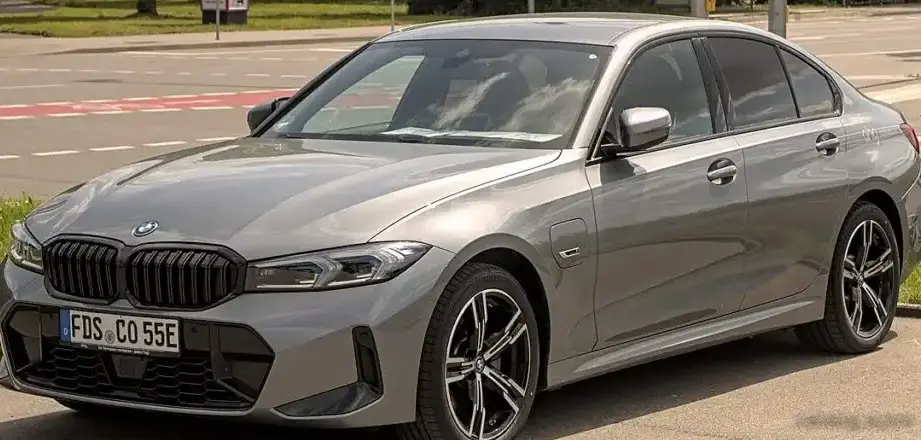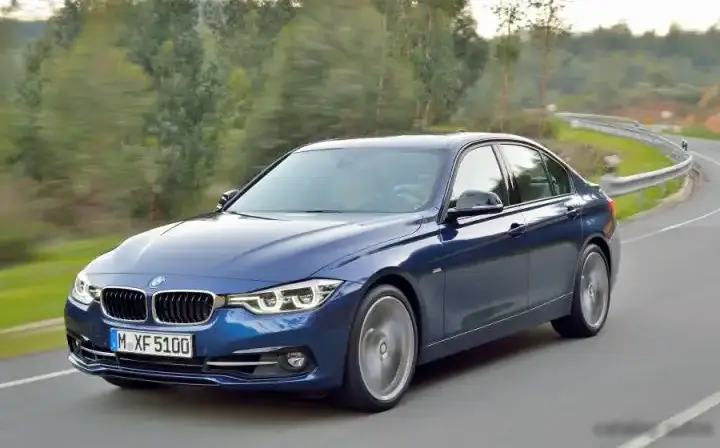
The BMW 3 Series Sedan (F30 LCI), specifically the 320d xDrive Steptronic variant, represents a significant iteration of BMW’s long-running and highly successful compact executive car. Produced from 2015 to 2018, this model is part of the F30 generation’s Life Cycle Impulse (LCI) – commonly referred to as a facelift – which brought styling updates, revised engine options, and enhanced technology. The 320d xDrive Steptronic occupied a crucial position in the 3 Series lineup, offering a balance of fuel efficiency, performance, and all-weather capability through its xDrive all-wheel-drive system. It was aimed at buyers seeking a premium sedan experience without the higher price tag of the more powerful 330i or 340i models.
Technical Specifications
| Brand | BMW |
| Model | 3 Series |
| Generation | 3 Series Sedan (F30 LCI, Facelift 2015) |
| Type (Engine) | 320d (190 Hp) xDrive Steptronic |
| Start of production | 2015 |
| End of production | 2018 |
| Powertrain Architecture | Internal Combustion engine |
| Body type | Sedan |
| Seats | 5 |
| Doors | 4 |
| Fuel consumption (urban) | 5.5-5.1 l/100 km (42.8 – 46.1 US mpg) |
| Fuel consumption (extra urban) | 4.2-3.8 l/100 km (56 – 61.9 US mpg) |
| Fuel consumption (combined) | 4.7-4.3 l/100 km (50 – 54.7 US mpg) |
| CO2 emissions | 123-112 g/km |
| Fuel Type | Diesel |
| Acceleration 0 – 100 km/h | 7.3 sec |
| Acceleration 0 – 62 mph | 7.3 sec |
| Acceleration 0 – 60 mph | 6.9 sec |
| Maximum speed | 228 km/h (141.67 mph) |
| Emission standard | Euro 6 |
| Weight-to-power ratio | 8.1 kg/Hp, 123.8 Hp/tonne |
| Weight-to-torque ratio | 3.8 kg/Nm, 260.6 Nm/tonne |
| Power | 190 Hp @ 4000 rpm |
| Torque | 400 Nm @ 1750-2500 rpm (295.02 lb.-ft. @ 1750-2500 rpm) |
| Engine layout | Front, Longitudinal |
| Engine Model/Code | B47D20 |
| Engine displacement | 1995 cm3 (121.74 cu. in.) |
| Number of cylinders | 4 |
| Engine configuration | Inline |
| Cylinder Bore | 84 mm (3.31 in.) |
| Piston Stroke | 90 mm (3.54 in.) |
| Compression ratio | 16.5:1 |
| Number of valves per cylinder | 4 |
| Fuel injection system | Diesel Commonrail |
| Engine aspiration | Twin-power turbo, Intercooler |
| Engine oil capacity | 5 l (5.28 US qt | 4.4 UK qt) |
| Coolant | 7 l (7.4 US qt | 6.16 UK qt) |
| Kerb Weight | 1535 kg (3384.1 lbs.) |
| Max. weight | 2110 kg (4651.75 lbs.) |
| Max load | 575 kg (1267.66 lbs.) |
| Trunk (boot) space – minimum | 480 l (16.95 cu. ft.) |
| Fuel tank capacity | 57 l (15.06 US gal | 12.54 UK gal) |
| Max. roof load | 75 kg (165.35 lbs.) |
| Permitted trailer load with brakes (12%) | 1800 kg (3968.32 lbs.) |
| Permitted trailer load without brakes | 750 kg (1653.47 lbs.) |
| Permitted towbar download | 75 kg (165.35 lbs.) |
| Length | 4633 mm (182.4 in.) |
| Width | 1811 mm (71.3 in.) |
| Height | 1434 mm (56.46 in.) |
| Wheelbase | 2810 mm (110.63 in.) |
| Front track | 1542 mm (60.71 in.) |
| Rear (Back) track | 1582 mm (62.28 in.) |
| Ride height (ground clearance) | 145 mm (5.71 in.) |
| Drag coefficient (Cd) | 0.27 |
| Minimum turning circle (turning diameter) | 11.7 m (38.39 ft.) |
| Drive wheel | All wheel drive (4×4) |
| Number of gears and type of gearbox | 8 gears, automatic transmission Steptronic |
| Front suspension | Independent coil spring |
| Rear suspension | Independent multi-link suspension |
| Front brakes | Ventilated discs |
| Rear brakes | Ventilated discs |
INTRODUCTION
The F30 3 Series LCI 320d xDrive Steptronic was introduced as part of a mid-cycle refresh for BMW’s popular 3 Series. The LCI brought subtle but important changes to the exterior styling, including revised headlights and taillights, a more prominent kidney grille, and updated interior trim. However, the most significant updates were under the hood, with the introduction of the B47 engine family. This 320d variant combined a 2.0-liter turbocharged diesel engine with BMW’s xDrive all-wheel-drive system and an eight-speed Steptronic automatic transmission. This configuration aimed to deliver a refined driving experience, good fuel economy, and enhanced traction in various weather conditions. It was positioned as a practical and efficient option within the 3 Series range, appealing to buyers who prioritized comfort and usability over outright performance.
Powertrain & Engine Architecture
At the heart of the 320d xDrive Steptronic lies the BMW B47D20 engine, a 2.0-liter inline-four cylinder diesel. This engine is a significant departure from its predecessor, the N47, featuring a redesigned combustion chamber, improved turbocharging technology, and a more robust engine block. The B47 utilizes a common-rail direct fuel injection system, operating at pressures up to 2,000 bar, for precise fuel delivery and optimized combustion. The engine is equipped with a single twin-scroll turbocharger with variable geometry turbine (VGT) technology, enhancing responsiveness and minimizing turbo lag. The eight-speed Steptronic automatic transmission is a key component of the powertrain, offering smooth and quick gear changes. This transmission features a torque converter and allows for both fully automatic operation and manual gear selection via steering wheel-mounted paddles or the gear selector. The xDrive all-wheel-drive system employs a multi-plate clutch to distribute torque between the front and rear axles, providing optimal traction and stability.
Driving Characteristics
The 320d xDrive Steptronic delivers a comfortable and refined driving experience. While not as overtly sporty as the gasoline-powered 330i or 340i models, the 320d offers ample power and torque for everyday driving situations. The 400 Nm (295 lb-ft) of torque available from 1750-2500 rpm provides strong acceleration in most scenarios. The eight-speed automatic transmission is well-tuned, offering seamless gear changes and contributing to the car’s overall smoothness. The xDrive system provides enhanced grip, particularly in wet or slippery conditions, inspiring confidence. Compared to the manual transmission versions of the 320d, the Steptronic automatic offers greater convenience, especially in urban traffic. However, some enthusiasts may find the automatic transmission slightly less engaging than the manual. The gear ratios are optimized for fuel efficiency, but also provide sufficient acceleration for highway overtaking.
Equipment & Trim Levels
The 320d xDrive Steptronic typically came equipped with a generous array of standard features. These included automatic climate control, a BMW iDrive infotainment system with a 6.5-inch display screen (later upgraded to 8.8 inches), power-adjustable front seats, and a leather-wrapped steering wheel. Safety features such as ABS, stability control, and multiple airbags were standard. Optional extras included features like a premium sound system, navigation system, heated seats, a sunroof, and various driver assistance systems such as lane departure warning and adaptive cruise control. Interior upholstery options typically included cloth or leather, with a range of color choices available. Trim levels varied depending on the market, but generally included Sport Line, Luxury Line, and M Sport packages, each offering unique styling cues and additional features.
Chassis & Braking
The F30 3 Series features a sophisticated chassis design. The front suspension utilizes MacPherson struts, while the rear suspension employs a multi-link setup. This configuration provides a good balance of ride comfort and handling precision. The 320d xDrive Steptronic is equipped with ventilated disc brakes on all four wheels, providing ample stopping power. The xDrive system’s torque distribution also contributes to enhanced braking stability. The steering is electrically assisted, offering precise and responsive control. The suspension tuning is generally geared towards comfort, but the optional Sport Line or M Sport packages offer a firmer, more dynamic ride.
Market Reception & Comparison
The 320d xDrive Steptronic was generally well-received by automotive critics. It was praised for its fuel efficiency, comfortable ride, and refined driving experience. The xDrive system was particularly appreciated for its ability to provide enhanced traction in challenging weather conditions. Compared to the rear-wheel-drive 320d, the xDrive version offered greater all-weather capability, but at a slight cost in terms of weight and fuel economy. Compared to the more powerful 330i and 340i models, the 320d offered a more affordable entry point into the 3 Series range, while still providing a premium driving experience. Its fuel economy was significantly better than the gasoline-powered variants, making it an attractive option for drivers who prioritize efficiency.
Legacy
The B47 engine, found in the 320d xDrive Steptronic, has proven to be a relatively reliable powertrain. While early versions of the N47 engine (the B47’s predecessor) were known for timing chain issues, the B47 addressed many of these concerns with a redesigned chain and improved lubrication system. However, regular maintenance, including oil changes and timing chain inspections, is still crucial for long-term reliability. On the used car market, the F30 320d xDrive Steptronic remains a popular choice, offering a good balance of value, fuel efficiency, and practicality. Its reputation for reliability and its comfortable driving experience continue to make it a desirable option for buyers seeking a premium compact executive car.