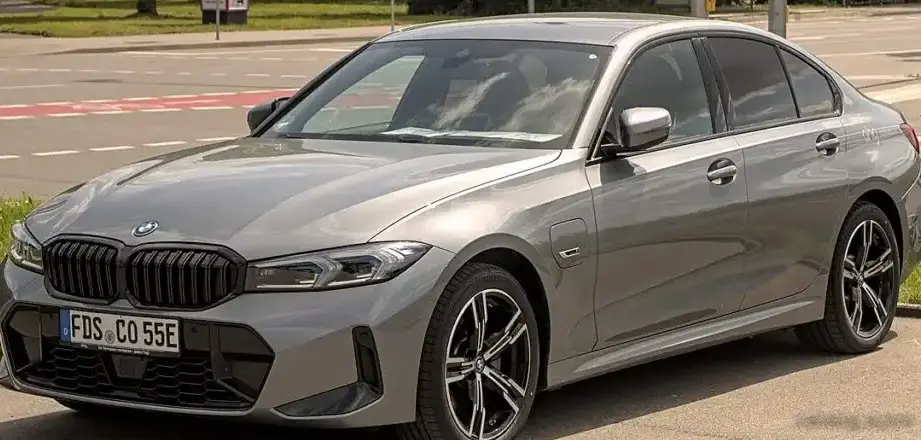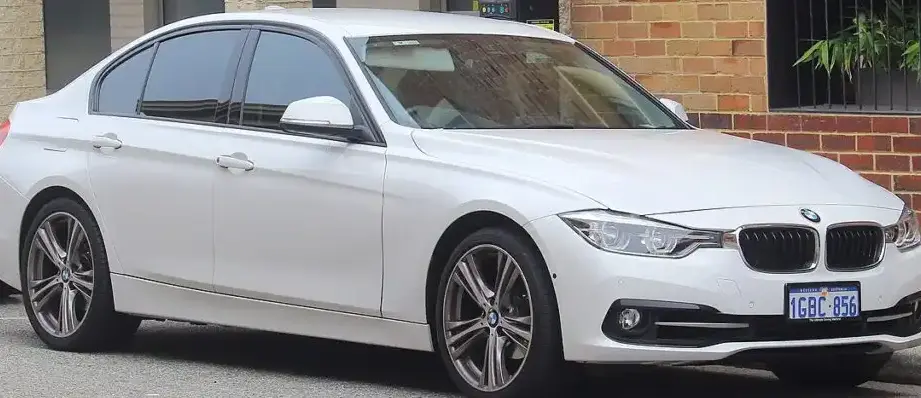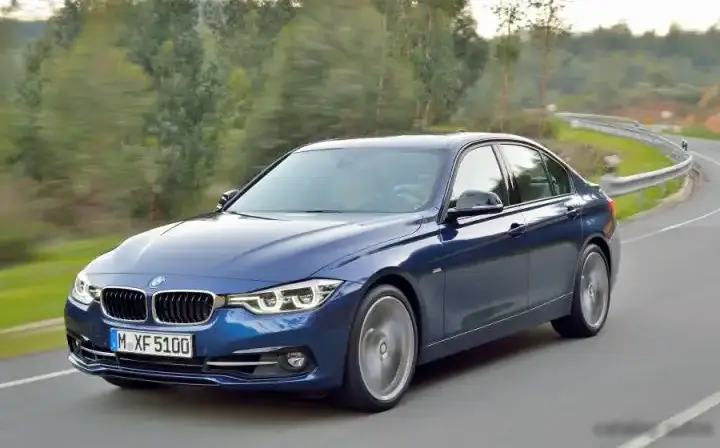
The BMW 3 Series Sedan (F30 LCI), specifically the 330d variant with the Steptronic automatic transmission, represents a significant iteration of BMW’s long-running and highly successful 3 Series. Introduced with the Life Cycle Impulse (LCI) facelift in 2015 and continuing through 2018, this model aimed to refine the F30 generation with updated styling, enhanced technology, and improved efficiency. The 330d, positioned as a mid-to-upper range offering, provided a compelling blend of performance and economy, appealing to drivers seeking a premium sedan experience. It sat above the 320d and 328i models in terms of power and torque, while remaining below the more performance-focused M3.
Technical Specifications
| Brand | BMW |
| Model | 3 Series |
| Generation | 3 Series Sedan (F30 LCI, Facelift 2015) |
| Type (Engine) | 330d (258 Hp) Steptronic |
| Start of production | 2015 |
| End of production | 2018 |
| Powertrain Architecture | Internal Combustion engine |
| Body type | Sedan |
| Seats | 5 |
| Doors | 4 |
| Fuel consumption (urban) | 6.0-5.8 l/100 km (39.2 – 40.6 US mpg) |
| Fuel consumption (extra urban) | 4.6-4.3 l/100 km (51.1 – 54.7 US mpg) |
| Fuel consumption (combined) | 5.0-4.9 l/100 km (47 – 48 US mpg) |
| CO2 emissions | 131-129 g/km |
| Fuel Type | Diesel |
| Acceleration 0 – 100 km/h | 5.6 sec |
| Acceleration 0 – 62 mph | 5.6 sec |
| Acceleration 0 – 60 mph | 5.3 sec |
| Maximum speed | 250 km/h (155.34 mph) |
| Emission standard | Euro 6 |
| Weight-to-power ratio | 6 kg/Hp, 167.5 Hp/tonne |
| Weight-to-torque ratio | 2.8 kg/Nm, 363.6 Nm/tonne |
| Power | 258 Hp @ 4000 rpm |
| Torque | 560 Nm @ 1500-3000 rpm (413.03 lb.-ft.) |
| Engine layout | Front, Longitudinal |
| Engine Model/Code | N57D30A |
| Engine displacement | 2993 cm3 (182.64 cu. in.) |
| Number of cylinders | 6 |
| Engine configuration | Inline |
| Cylinder Bore | 84 mm (3.31 in.) |
| Piston Stroke | 90 mm (3.54 in.) |
| Compression ratio | 16.5:1 |
| Number of valves per cylinder | 4 |
| Fuel injection system | Diesel Commonrail |
| Engine aspiration | Twin-power turbo, Intercooler |
| Engine oil capacity | 6.5 l (6.87 US qt | 5.72 UK qt) |
| Coolant | 7.2 l (7.61 US qt | 6.34 UK qt) |
| Kerb Weight | 1540 kg (3395.12 lbs.) |
| Max. weight | 2090 kg (4607.66 lbs.) |
| Max load | 550 kg (1212.54 lbs.) |
| Trunk (boot) space – minimum | 480 l (16.95 cu. ft.) |
| Fuel tank capacity | 57 l (15.06 US gal | 12.54 UK gal) |
| Max. roof load | 75 kg (165.35 lbs.) |
| Permitted trailer load with brakes (12%) | 1800 kg (3968.32 lbs.) |
| Permitted trailer load without brakes | 750 kg (1653.47 lbs.) |
| Permitted towbar download | 75 kg (165.35 lbs.) |
| Length | 4633 mm (182.4 in.) |
| Width | 1811 mm (71.3 in.) |
| Height | 1429 mm (56.26 in.) |
| Wheelbase | 2810 mm (110.63 in.) |
| Front track | 1531 mm (60.28 in.) |
| Rear (Back) track | 1572 mm (61.89 in.) |
| Ride height (ground clearance) | 140 mm (5.51 in.) |
| Drag coefficient (Cd) | 0.28 |
| Minimum turning circle (turning diameter) | 11.3 m (37.07 ft.) |
| Drivetrain Architecture | Rear wheel drive |
| Number of gears and type of gearbox | 8 gears, automatic transmission Steptronic |
| Front suspension | Independent coil spring |
| Rear suspension | Independent multi-link suspension |
| Front brakes | Ventilated discs |
| Rear brakes | Ventilated discs |
Powertrain & Engine Architecture
The heart of the 330d LCI is the N57D30A, a 3.0-liter inline-six cylinder diesel engine. This engine is a product of BMW’s extensive diesel engine development program, known for its refinement and efficiency. The N57 family of engines utilizes a common rail direct injection system, delivering fuel at extremely high pressures for optimized combustion. The 330d specifically benefits from a twin-turbocharger setup – a smaller turbo for quick response at low engine speeds and a larger turbo for sustained power at higher RPMs. An intercooler further enhances performance by cooling the compressed intake air. The engine produces 258 horsepower at 4,000 rpm and a substantial 560 Nm (413 lb-ft) of torque between 1,500 and 3,000 rpm. This broad torque curve is a hallmark of the N57 engine. Paired with the engine is the ZF 8HP80 eight-speed automatic transmission, marketed by BMW as “Steptronic.” This transmission is renowned for its smooth shifts, quick response, and efficiency. It features a torque converter lockup clutch that engages in most gears, minimizing slippage and improving fuel economy.
Driving Characteristics
The 330d Steptronic offers a compelling driving experience characterized by strong acceleration and relaxed cruising. The abundant low-end torque from the N57 engine makes it exceptionally easy to drive in everyday situations, with minimal need for downshifting. The Steptronic transmission contributes to this ease of use, providing seamless gear changes. While not as overtly sporty as the 335i or M3, the 330d delivers a 0-60 mph time of around 5.3 seconds, making it a genuinely quick sedan. Compared to the 320d, the 330d offers a significant performance upgrade, while the 330d’s automatic transmission provides a more relaxed driving experience than the available six-speed manual. The gear ratios in the 8HP80 are well-spaced, optimizing both acceleration and fuel efficiency. In typical driving conditions, the transmission is nearly imperceptible, but drivers can also utilize paddle shifters or the sport mode selector for more engaging control.
Equipment & Trim Levels
The 330d LCI typically came well-equipped, reflecting its position in the 3 Series lineup. Standard features included leather upholstery, automatic climate control, a BMW iDrive infotainment system with a central display screen, and a suite of safety features like ABS, stability control, and multiple airbags. The LCI facelift brought updated iDrive software and improved connectivity options. Optional extras were plentiful, including a premium sound system, navigation, adaptive cruise control, a head-up display, and various interior trim options. Sport Line, Luxury Line, and M Sport packages were available, each adding unique styling cues and equipment upgrades. The Sport Line focused on a more dynamic appearance, while the Luxury Line emphasized comfort and elegance. The M Sport package offered the most aggressive styling and performance enhancements, including a sport-tuned suspension and aerodynamic body kit.
Chassis & Braking
The F30 3 Series utilizes a sophisticated chassis design featuring an independent suspension at all four corners. The front suspension employs coil springs and struts, while the rear suspension utilizes a multi-link setup. This configuration provides a good balance between ride comfort and handling precision. The 330d typically featured slightly stiffer springs and dampers compared to the lower-powered models to manage the increased weight and power. Braking duties are handled by ventilated disc brakes at all four corners, providing ample stopping power. ABS (Anti-lock Braking System) and stability control are standard features, enhancing safety and control. The steering system is a rack-and-pinion setup with electric power assistance, offering precise and responsive steering feel.
Market Reception & Comparison
The 330d LCI was generally well-received by automotive critics. It was praised for its refined engine, smooth transmission, and comfortable ride. The fuel economy was also a significant selling point, particularly in Europe where diesel engines are more popular. Compared to its gasoline-powered siblings, the 330d offered superior fuel efficiency and a broader torque curve, making it a more practical choice for long-distance driving. However, some critics noted that the diesel engine lacked the responsiveness and sound of the gasoline engines. Against competitors like the Audi A4 TDI and Mercedes-Benz C300 CDI, the 330d held its own, offering a compelling combination of performance, luxury, and efficiency.
Legacy
The N57D30A engine, found in the 330d LCI, has proven to be a remarkably durable and reliable powertrain. While diesel engines are subject to stricter emissions regulations and have faced some negative publicity, the N57 remains a popular choice among enthusiasts. Properly maintained examples continue to command reasonable prices in the used car market. The ZF 8HP80 transmission is also known for its longevity and reliability. The F30 3 Series, and the 330d variant in particular, represents a high point in BMW’s engineering prowess, offering a refined and engaging driving experience that continues to appeal to drivers today.