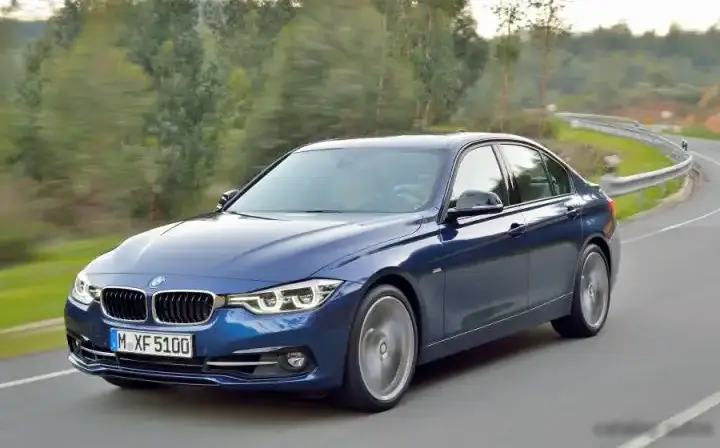
The BMW 3 Series Sedan (F30 LCI), specifically the 340i variant produced from 2015 to 2018, represents a significant evolution of BMW’s iconic sports sedan. Introduced as part of the Life Cycle Impulse (LCI) refresh of the F30 generation, the 340i replaced the 335i, bringing with it a new engine and updated styling. This model aimed to balance performance, luxury, and efficiency, solidifying the 3 Series’ position as a benchmark in the compact executive car segment. The 340i occupied the upper-mid-range of the F30 lineup, positioned below the more performance-focused M3 but above the 320i and 330i models.
Technical Specifications
| Brand | BMW |
| Model | 3 Series |
| Generation | 3 Series Sedan (F30 LCI, Facelift 2015) |
| Type (Engine) | 340i (326 Hp) |
| Start of production | 2015 |
| End of production | 2018 |
| Powertrain Architecture | Internal Combustion engine |
| Body type | Sedan |
| Seats | 5 |
| Doors | 4 |
| Fuel consumption (urban) | 10.4-10.0 l/100 km (22.6 – 23.5 US mpg) |
| Fuel consumption (extra urban) | 6.1-5.9 l/100 km (38.6 – 39.9 US mpg) |
| Fuel consumption (combined) | 7.7-7.4 l/100 km (30.5 – 31.8 US mpg) |
| CO2 emissions | 179-172 g/km |
| Fuel Type | Petrol (Gasoline) |
| Acceleration 0 – 100 km/h | 5.2 sec |
| Acceleration 0 – 62 mph | 5.2 sec |
| Acceleration 0 – 60 mph | 4.9 sec |
| Maximum speed | 250 km/h (155.34 mph) |
| Emission standard | Euro 6 |
| Weight-to-power ratio | 4.7 kg/Hp |
| Weight-to-torque ratio | 3.4 kg/Nm |
| Power | 326 Hp @ 5500-6500 rpm |
| Torque | 450 Nm @ 1380-5000 rpm (331.9 lb.-ft. @ 1380-5000 rpm) |
| Engine layout | Front, Longitudinal |
| Engine Model/Code | B58B30A |
| Engine displacement | 2998 cm3 (182.95 cu. in.) |
| Number of cylinders | 6 |
| Cylinder Bore | 82 mm (3.23 in.) |
| Piston Stroke | 94.6 mm (3.72 in.) |
| Compression ratio | 11:1 |
| Number of valves per cylinder | 4 |
| Fuel injection system | Direct injection |
| Engine aspiration | Twin-power turbo, Intercooler |
| Engine oil capacity | 6.5 l (6.87 US qt | 5.72 UK qt) |
| Coolant | 7.8 l (8.24 US qt | 6.86 UK qt) |
| Kerb Weight | 1530 kg (3373.07 lbs.) |
| Max. weight | 2090 kg (4607.66 lbs.) |
| Max load | 560 kg (1234.59 lbs.) |
| Trunk (boot) space – minimum | 480 l (16.95 cu. ft.) |
| Fuel tank capacity | 60 l (15.85 US gal | 13.2 UK gal) |
| Max. roof load | 75 kg (165.35 lbs.) |
| Permitted trailer load with brakes (12%) | 1800 kg (3968.32 lbs.) |
| Permitted trailer load without brakes | 750 kg (1653.47 lbs.) |
| Permitted towbar download | 75 kg (165.35 lbs.) |
| Length | 4633 mm (182.4 in.) |
| Width | 1811 mm (71.3 in.) |
| Height | 1429 mm (56.26 in.) |
| Wheelbase | 2810 mm (110.63 in.) |
| Front track | 1531 mm (60.28 in.) |
| Rear (Back) track | 1572 mm (61.89 in.) |
| Ride height (ground clearance) | 140 mm (5.51 in.) |
| Drag coefficient (Cd) | 0.29 |
| Minimum turning circle (turning diameter) | 11.3 m (37.07 ft.) |
| Drivetrain Architecture | Rear wheel drive |
| Drive wheel | Rear wheel drive |
| Number of gears and type of gearbox | 6 gears, manual transmission |
| Front suspension | Independent coil spring |
| Rear suspension | Independent multi-link suspension |
| Front brakes | Ventilated discs |
| Rear brakes | Ventilated discs |
| Assisting systems | ABS (Anti-lock braking system) |
| Steering type | Steering rack and pinion |
| Power steering | Electric Steering |
| Tires size | 225/50 R17 94W |
| Wheel rims size | 7.5J x 17 |
INTRODUCTION
The F30 LCI 340i marked a departure from the previous 335i, primarily through the adoption of the B58B30A inline-six engine. This engine, a member of BMW’s modular engine family, offered improved efficiency and increased power output. The LCI update also brought subtle styling revisions, including redesigned headlights and taillights, as well as interior enhancements. The 340i was designed to appeal to drivers seeking a blend of performance and refinement, offering a more engaging driving experience than the four-cylinder 320i and 330i models, while remaining more accessible than the track-focused M3.
Powertrain & Engine Architecture
At the heart of the 340i lies the B58B30A 3.0-liter inline-six engine. This engine utilizes direct injection, a single twin-scroll turbocharger, and BMW’s Valvetronic variable valve timing and variable valve lift technology. The B58 engine is known for its smooth power delivery and responsiveness. The engine produces 326 horsepower at 5500-6500 rpm and 450 Nm (331.9 lb-ft) of torque between 1380 and 5000 rpm. The 340i was typically paired with either a six-speed manual transmission or an eight-speed automatic transmission (ZF 8HP). The eight-speed automatic, in particular, was praised for its quick and seamless shifts, contributing to both performance and fuel efficiency. The engine’s longitudinal mounting and rear-wheel-drive configuration are hallmarks of BMW’s traditional sports sedan layout.
Driving Characteristics
The 340i delivers a refined yet engaging driving experience. The B58 engine provides ample power for both everyday driving and spirited performance. The 0-60 mph acceleration time of around 4.9 seconds (with the automatic transmission) is indicative of its capabilities. The automatic transmission’s gear ratios are optimized for both acceleration and fuel economy, providing smooth transitions between gears. Compared to the manual transmission, the automatic offers slightly quicker acceleration due to its faster shift times. The 340i’s suspension, while firm enough to provide good body control, is not overly harsh, making it comfortable for daily commuting. The steering is precise and well-weighted, offering good feedback to the driver.
Equipment & Trim Levels
The 340i came standard with a comprehensive list of features, including leather upholstery, power-adjustable front seats, a premium sound system, and BMW’s iDrive infotainment system with a central display screen. Optional extras included a head-up display, navigation system, adaptive cruise control, and a sunroof. Interior trim options ranged from wood veneers to aluminum accents, allowing buyers to personalize the cabin to their preferences. The standard dashboard configuration featured analog gauges with a digital display screen integrated into the instrument cluster.
Chassis & Braking
The F30 340i utilizes a MacPherson strut front suspension and a multi-link rear suspension. This setup provides a good balance of ride comfort and handling precision. The chassis is constructed from a combination of high-strength steel and aluminum to minimize weight and maximize rigidity. The braking system consists of ventilated disc brakes on all four wheels, providing ample stopping power. Anti-lock braking system (ABS) and electronic stability control (ESC) are standard features, enhancing safety and control. The 340i typically featured larger brake rotors and calipers compared to the lower-trim models.
Market Reception & Comparison
The 340i was generally well-received by automotive critics, who praised its powerful engine, refined handling, and comfortable interior. It was often compared favorably to its rivals, such as the Audi A4 and Mercedes-Benz C-Class. Compared to the 335i it replaced, the 340i offered improved fuel economy and a more responsive engine. The 320i and 330i models, while more affordable, lacked the performance and overall driving experience of the 340i. The 340i’s fuel economy, averaging around 30-32 mpg combined, was considered respectable for a performance sedan of its class.
Legacy
The B58 engine used in the 340i has proven to be a reliable and durable powerplant. The engine is known for its longevity and relatively low maintenance requirements. On the used car market, the F30 340i remains a popular choice among enthusiasts seeking a well-rounded sports sedan. Its combination of performance, luxury, and reliability has ensured its continued desirability. While some maintenance items, such as oil leaks and cooling system components, may require attention as the car ages, the B58 engine is generally considered to be a robust and dependable unit, contributing to the 340i’s lasting appeal.