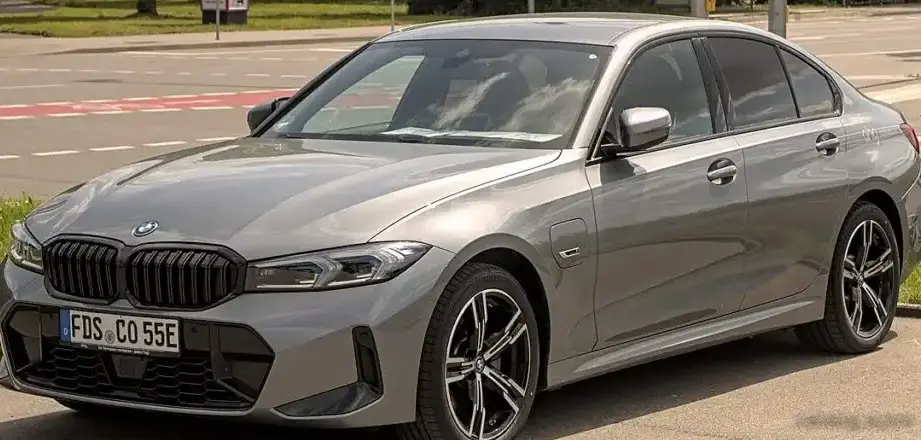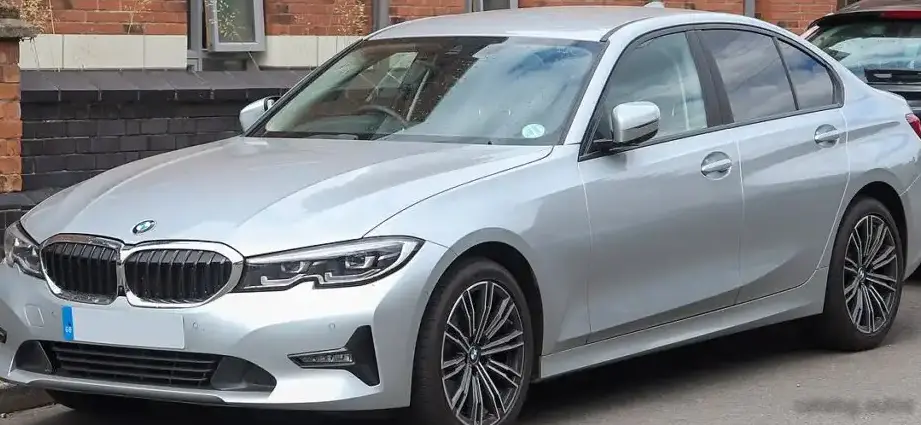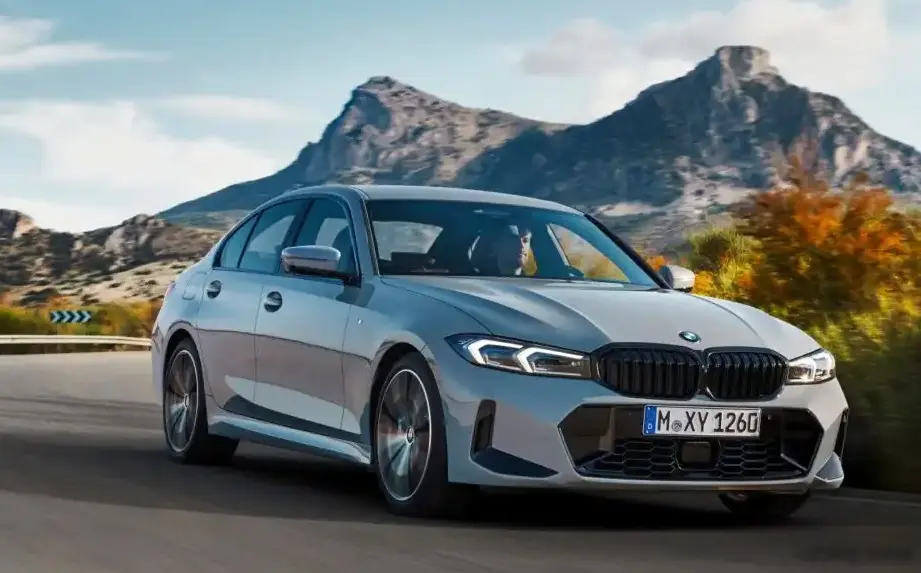
The BMW 3 Series Sedan (G20 LCI), specifically the 320e variant introduced with the 2022 facelift, represents BMW’s entry point into the plug-in hybrid (PHEV) drivetrain within the popular 3 Series range. Production commenced in July 2022, and it’s positioned as an efficiency-focused model, appealing to buyers seeking reduced emissions and the benefits of electric driving alongside the performance expected from the 3 Series. The 320e is built on the G20 platform, a significant redesign of the 3 Series lineage, and aims to balance fuel economy with a premium driving experience. This variant offers a combined system output of 204 horsepower, utilizing a 1.5-liter turbocharged inline-four engine paired with an electric motor and a Steptronic 8-speed automatic transmission.
Technical Specifications
| Brand | BMW |
| Model | 3 Series |
| Generation | 3 Series Sedan (G20 LCI, facelift 2022) |
| Type (Engine) | 320e (204 Hp) Plug-in Hybrid Steptronic |
| Start of production | July, 2022 |
| Powertrain Architecture | PHEV (Plug-in Hybrid Electric Vehicle) |
| Body type | Sedan |
| Seats | 5 |
| Doors | 4 |
| Combined fuel consumption (WLTP) | 1.3-1.8 l/100 km (180.9 – 130.7 US mpg, 217.3 – 156.9 UK mpg, 76.9 – 55.6 km/l) |
| CO2 emissions (WLTP) | 29-40 g/km |
| Fuel Type | Petrol / electricity |
| Acceleration 0 – 100 km/h | 7.6 sec |
| Acceleration 0 – 62 mph | 7.6 sec |
| Acceleration 0 – 60 mph | 7.2 sec |
| Maximum speed | 225 km/h (139.81 mph) |
| Emission standard | Euro 6d |
| Weight-to-power ratio | 8.7 kg/Hp, 115.3 Hp/tonne |
| Weight-to-torque ratio | 5.1 kg/Nm, 197.7 Nm/tonne |
| Gross battery capacity | 12 kWh |
| Battery voltage | 354 V |
| Battery technology | Lithium-ion (Li-Ion) |
| Battery location | Under the rear seats |
| Recuperation output | 20 kW |
| All-electric range (WLTP) | 54-62 km (33.55 – 38.53 mi) |
| Average Energy consumption (WLTP) | 15.8-17.7 kWh/100 km (25.43 – 28.49 kWh/100 mi, 133 – 118 MPGe, 6.3 – 5.6 km/kWh, 3.9 – 3.5 mi/kWh) |
| Max speed (electric) | 140 km/h (86.99 mph) |
| Electric motor power | 109 Hp @ 3140 rpm (195.45 lb.-ft. @ 100-2500 rpm) |
| Electric motor Torque | 265 Nm @ 100-2500 rpm |
| Electric motor location | Between the combustion engine and the transmission |
| System power | 204 Hp |
| System torque | 350 Nm (258.15 lb.-ft.) |
| Power | 163 Hp @ 5000-6500 rpm (81.6 Hp/l) |
| Torque | 300 Nm @ 1350-3700 rpm (221.27 lb.-ft. @ 1350-3700 rpm) |
| Engine layout | Front, Longitudinal |
| Engine Model/Code | B48B20A |
| Engine displacement | 1998 cm3 (121.93 cu. in.) |
| Number of cylinders | 4 |
| Engine configuration | Inline |
| Cylinder Bore | 82 mm (3.23 in.) |
| Piston Stroke | 94.6 mm (3.72 in.) |
| Compression ratio | 11:1 |
| Number of valves per cylinder | 4 |
| Fuel injection system | Direct injection |
| Engine aspiration | Twin-power turbo, Intercooler |
| Valvetrain | DOHC |
| Engine oil capacity | 5.25 l (5.55 US qt | 4.62 UK qt) |
| Kerb Weight | 1770 kg (3902.18 lbs.) |
| Max. weight | 2290 kg (5048.59 lbs.) |
| Max load | 520 kg (1146.4 lbs.) |
| Trunk (boot) space – minimum | 375 l (13.24 cu. ft.) |
| Fuel tank capacity | 40 l (10.57 US gal | 8.8 UK gal) |
| Max. roof load | 75 kg (165.35 lbs.) |
| Permitted trailer load with brakes (12%) | 1500 kg (3306.93 lbs.) |
| Permitted trailer load without brakes | 750 kg (1653.47 lbs.) |
| Permitted towbar download | 75 kg (165.35 lbs.) |
| Length | 4713 mm (185.55 in.) |
| Width | 1827 mm (71.93 in.) |
| Height | 1444 mm (56.85 in.) |
| Wheelbase | 2851 mm (112.24 in.) |
| Front track | 1573 mm (61.93 in.) |
| Rear (Back) track | 1568 mm (61.73 in.) |
| Ride height (ground clearance) | 147 mm (5.79 in.) |
| Drag coefficient (Cd) | 0.25 |
| Minimum turning circle (turning diameter) | 11.4 m (37.4 ft.) |
| Drivetrain Architecture | The Internal combustion engine (ICE) and electric motor drive the rear wheels of the car with the ability to work in full electric or mixed mode. |
| Drive wheel | Rear wheel drive |
| Number of gears and type of gearbox | 8 gears, automatic transmission Steptronic |
| Front suspension | Independent, type McPherson with coil spring and anti-roll bar |
| Rear suspension | Independent multi-link spring suspension with stabilizer |
| Front brakes | Ventilated discs |
| Rear brakes | Ventilated discs |
Powertrain & Engine Architecture
The 320e’s powertrain centers around the BMW B48B20A 2.0-liter turbocharged inline-four cylinder engine. This engine, a member of the modular B-series engine family, utilizes direct fuel injection and a twin-scroll turbocharger to deliver 163 horsepower and 300 Nm (221 lb-ft) of torque. The electric motor, integrated between the engine and the 8-speed Steptronic automatic transmission, contributes an additional 109 horsepower and 265 Nm (195 lb-ft) of torque. The combined system output is 204 horsepower and 350 Nm (258 lb-ft). The 12 kWh lithium-ion battery pack is positioned under the rear seats, minimizing impact on cabin space. The Steptronic transmission is a torque-converter automatic, optimized for smooth shifts and efficiency, and features Sport and manual shift modes. The engine employs BMW’s Valvetronic variable valve timing and Double-VANOS variable camshaft timing for optimized performance and fuel economy.
Driving Characteristics
The 320e offers a distinct driving experience compared to its gasoline-only counterparts. In electric mode, it provides near-silent acceleration and a range of 54-62 kilometers (33.55-38.53 miles) on the WLTP cycle. Switching to hybrid mode allows the engine and electric motor to work in tandem, delivering brisk acceleration – 0-60 mph in approximately 7.2 seconds. The Steptronic transmission provides smooth and responsive gear changes. Compared to the 330i, the 320e offers less outright power, but the instant torque from the electric motor provides a noticeable boost in responsiveness at lower speeds. The added weight of the battery pack (approximately 150 kg) is noticeable in cornering, resulting in slightly less agile handling than lighter 3 Series models. However, the lower center of gravity helps to mitigate this effect.
Equipment & Trim Levels
The 320e typically comes well-equipped, reflecting its position as a premium offering. Standard features generally include BMW’s Live Cockpit Plus (digital instrument cluster and infotainment system), automatic climate control, power-adjustable seats, and a suite of driver-assistance systems like lane departure warning and forward collision warning. Interior upholstery is typically a combination of cloth and synthetic leather, with optional upgrades to genuine leather available. Exterior styling cues include “e” badging and a charging port located on the front fender. Optional extras include a sunroof, premium sound system, head-up display, and adaptive suspension.
Chassis & Braking
The 320e utilizes the standard 3 Series chassis, featuring a McPherson strut front suspension and a multi-link rear suspension. Suspension tuning is slightly revised to accommodate the added weight of the battery pack. The braking system consists of ventilated disc brakes on all four wheels. ABS (Anti-lock Braking System) and electronic stability control are standard features. The steering system is an electric power-assisted rack-and-pinion setup, providing precise and responsive steering feel. The 320e typically features the same stabilizer bar thicknesses as other 3 Series models, ensuring a balanced handling characteristic.
Market Reception & Comparison
The 320e was generally well-received by automotive critics, praised for its fuel efficiency, smooth electric driving experience, and comfortable ride. However, some reviewers noted that the combined power output wasn’t as exhilarating as higher-performance 3 Series models like the 330i. Compared to the 330e (a more powerful plug-in hybrid), the 320e offers a more affordable entry point into the PHEV market. Against the gasoline-powered 320i, the 320e provides significantly better fuel economy and the ability to drive in all-electric mode, but at a higher initial cost. Reliability reports have been generally positive, with no major issues specific to the 320e powertrain reported.
Legacy
The BMW 320e represents a significant step in BMW’s electrification strategy. While still relatively new to the market, the B48 engine and Steptronic transmission have proven to be reliable in other BMW applications. The long-term durability of the battery pack remains to be seen, but BMW offers an eight-year/100,000-mile warranty on the battery. As the used car market matures, the 320e is expected to hold its value well, particularly among buyers seeking a fuel-efficient and environmentally friendly luxury sedan. Its blend of performance, efficiency, and technology positions it as a compelling option in the plug-in hybrid segment.