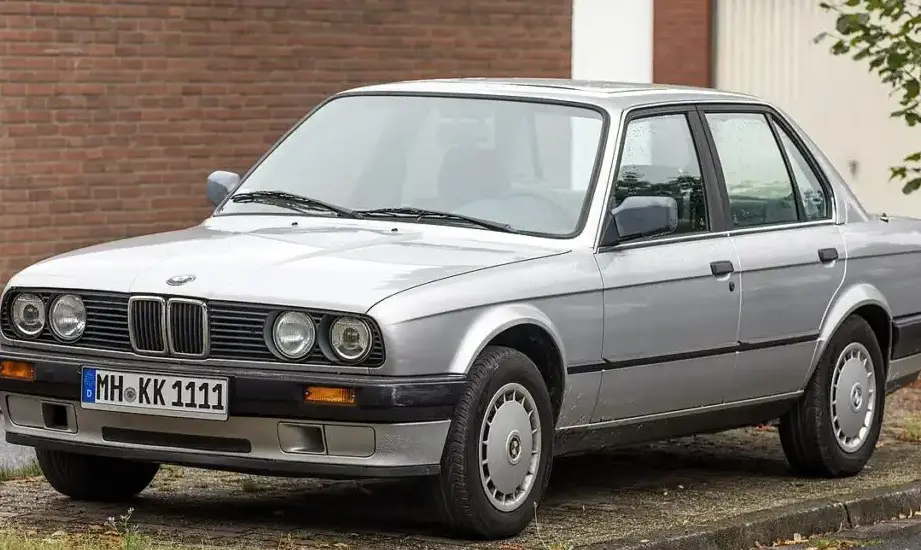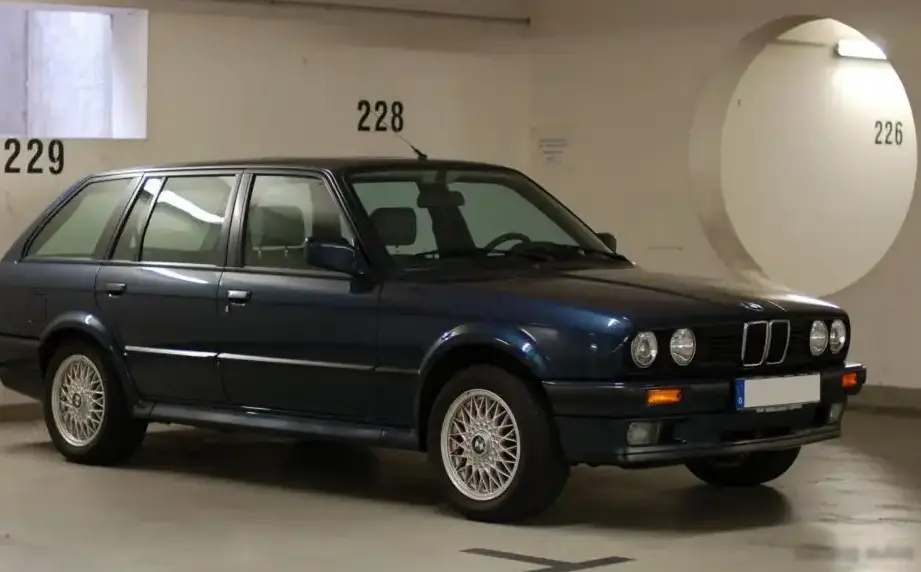
The BMW 3 Series Touring (E30) 318i, produced from 1989 to 1994, represents BMW’s foray into the compact executive touring car segment. This variant, powered by the M40B18 engine, was a key component of the E30 facelift models (introduced in 1987), offering a practical and relatively affordable entry point into the BMW brand. Positioned as a mid-range offering within the E30 Touring lineup, it sat below the more powerful 325i models and above the base 316i, appealing to buyers seeking a balance of performance, economy, and versatility. The E30 Touring, in general, was BMW’s response to growing demand for a wagon version of their popular 3 Series, primarily aimed at the European market where estate cars held significant appeal.
Technical Specifications
| Brand | BMW |
| Model | 3 Series |
| Generation | 3 Series Touring (E30, facelift 1987) |
| Type (Engine) | 318i (113 Hp) |
| Start of production | 1989 |
| End of production | 1994 |
| Powertrain Architecture | Internal Combustion engine |
| Body type | Station wagon (estate) |
| Seats | 5 |
| Doors | 5 |
| Fuel consumption (urban) | 10.3 l/100 km (22.8 US mpg, 27.4 UK mpg, 9.7 km/l) |
| Fuel consumption (extra urban) | 6.7 l/100 km (35.1 US mpg, 42.2 UK mpg, 14.9 km/l) |
| Fuel consumption (combined) | 8.6 l/100 km (27.4 US mpg, 32.8 UK mpg, 11.6 km/l) |
| Fuel Type | Petrol (Gasoline) |
| Acceleration 0 – 100 km/h | 11.7 sec |
| Acceleration 0 – 62 mph | 11.7 sec |
| Acceleration 0 – 60 mph | 11.1 sec |
| Maximum speed | 188 km/h (116.82 mph) |
| Weight-to-power ratio | 10.4 kg/Hp, 95.8 Hp/tonne |
| Weight-to-torque ratio | 7.3 kg/Nm, 137.3 Nm/tonne |
| Power | 113 Hp @ 5500 rpm |
| Power per litre | 62.9 Hp/l |
| Torque | 162 Nm @ 4250 rpm (119.49 lb.-ft. @ 4250 rpm) |
| Engine layout | Front, Longitudinal |
| Engine Model/Code | M40B18 |
| Engine displacement | 1796 cm3 (109.6 cu. in.) |
| Number of cylinders | 4 |
| Engine configuration | Inline |
| Cylinder Bore | 84 mm (3.31 in.) |
| Piston Stroke | 81 mm (3.19 in.) |
| Compression ratio | 8.8:1 |
| Number of valves per cylinder | 2 |
| Fuel injection system | Multi-port manifold injection |
| Engine aspiration | Naturally aspirated engine |
| Engine oil capacity | 4 l (4.23 US qt | 3.52 UK qt) |
| Coolant capacity | 6 l (6.34 US qt | 5.28 UK qt) |
| Kerb Weight | 1180 kg (2601.45 lbs.) |
| Max. weight | 1660 kg (3659.67 lbs.) |
| Max load | 480 kg (1058.22 lbs.) |
| Trunk (boot) space – minimum | 370 l (13.07 cu. ft.) |
| Trunk (boot) space – maximum | 1125 l (39.73 cu. ft.) |
| Fuel tank capacity | 62 l (16.38 US gal | 13.64 UK gal) |
| Length | 4325 mm (170.28 in.) |
| Width | 1645 mm (64.76 in.) |
| Height | 1380 mm (54.33 in.) |
| Wheelbase | 2570 mm (101.18 in.) |
| Front track | 1405 mm (55.31 in.) |
| Rear track | 1415 mm (55.71 in.) |
| Drivetrain Architecture | Rear wheel drive |
| Number of gears | 5 gears, manual transmission |
| Front suspension | Coil spring |
| Rear suspension | Coil spring |
| Front brakes | Disc |
| Rear brakes | Drum |
| Assisting systems | ABS (Anti-lock braking system) |
| Power steering | Hydraulic Steering |
| Tires size | 195/65 R14 |
| Wheel rims size | 14 |
Powertrain & Engine Architecture
The heart of the 318i Touring is the M40B18, a 1.8-liter inline-four cylinder engine. This engine, part of BMW’s M40 family, featured a cast iron block and an aluminum cylinder head. It utilized Bosch Motronic fuel injection, a system that precisely controlled fuel delivery based on engine speed, load, and other parameters. The M40B18 employed a single overhead camshaft (SOHC) design with two valves per cylinder. This configuration, while not as sophisticated as dual overhead cam designs, offered a good balance of performance and reliability. The engine’s 8.8:1 compression ratio was a compromise between performance and the fuel quality available in various markets. The five-speed manual transmission was the standard offering, providing a direct connection between the engine and the rear wheels. The transmission featured a relatively wide spread of gear ratios, optimized for both fuel efficiency and spirited driving.
Driving Characteristics
The 318i Touring, with its 113 horsepower and 162 Nm (119 lb-ft) of torque, offered a respectable, though not exhilarating, driving experience. Acceleration from 0 to 60 mph took around 11.1 seconds, and top speed was approximately 117 mph. Compared to the 325i Touring, which boasted significantly more power, the 318i felt noticeably less responsive, particularly during overtaking maneuvers. However, the 318i’s lighter weight and well-tuned suspension provided a comfortable and balanced ride. The manual transmission offered precise shifts and allowed drivers to make the most of the engine’s power band. The rear-wheel-drive layout contributed to the car’s engaging handling characteristics, although traction could be a concern in wet or slippery conditions.
Equipment & Trim Levels
The 318i Touring typically came equipped with a reasonable level of standard features. Interior upholstery was usually cloth, with options for leather available at extra cost. Standard equipment included power windows, central locking, and a basic stereo system. Optional extras included a sunroof, air conditioning, and upgraded audio systems. The dashboard layout was typical of the E30, with a straightforward design and easy-to-read gauges. Trim levels were relatively simple, with most variations coming from the addition of optional packages.
Chassis & Braking
The E30 Touring utilized a MacPherson strut front suspension and a semi-trailing arm rear suspension. This setup provided a good balance of ride comfort and handling precision. The 318i Touring featured disc brakes on the front wheels and drum brakes on the rear. While adequate for normal driving, the rear drum brakes were a point of criticism compared to the all-disc brake setup found on higher-spec models. Anti-lock braking system (ABS) was available as an option, enhancing safety by preventing wheel lockup during hard braking. Hydraulic power steering was standard, providing a light and responsive steering feel.
Market Reception & Comparison
The 318i Touring was generally well-received by automotive critics as a practical and well-built estate car. It was praised for its comfortable ride, engaging handling, and relatively fuel-efficient engine. However, some critics noted that the engine lacked the punch of the 325i models. Compared to the 325i Touring, the 318i offered a more affordable entry point into the BMW touring car market, appealing to buyers who prioritized practicality and economy over outright performance. The 318i also proved to be more reliable than the more complex and stressed 325i, making it a popular choice for those seeking a dependable family car.
Legacy
The E30 318i Touring has developed a strong following among BMW enthusiasts. The M40B18 engine is known for its durability and relatively simple maintenance requirements. While not a high-performance machine, the 318i Touring offers a classic BMW driving experience in a practical and versatile package. Today, well-maintained examples are sought after by collectors and enthusiasts, and command reasonable prices in the used car market. The E30 Touring, in general, is considered a landmark vehicle in BMW’s history, establishing the brand’s reputation for building high-quality and engaging touring cars.