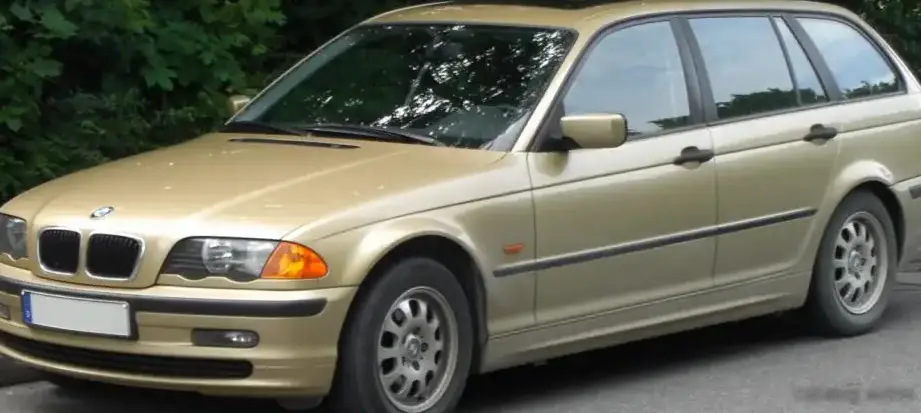
The BMW 3 Series Touring (E46) 320d, produced from 2000 to 2001, represented BMW’s entry into the diesel-powered wagon market within the popular E46 generation. Positioned as a fuel-efficient and practical alternative to its gasoline-powered siblings, the 320d Touring offered a blend of BMW’s renowned driving dynamics with the economy benefits of a diesel engine. It was a key model in Europe, where diesel engines held a significant market share, and aimed to appeal to buyers needing space and practicality without sacrificing the BMW brand experience. This variant utilized the M47D20 engine, producing 136 horsepower, and was typically paired with a five-speed manual transmission, though automatic options were available.
Technical Specifications
| Brand | BMW |
| Model | 3 Series |
| Generation | 3 Series Touring (E46) |
| Type (Engine) | 320d (136 Hp) |
| Start of production | 2000 |
| End of production | 2001 |
| Powertrain Architecture | Internal Combustion engine |
| Body type | Station wagon (estate) |
| Seats | 5 |
| Doors | 5 |
| Fuel consumption (economy) – urban | 7.7 l/100 km (30.5 US mpg) |
| Fuel consumption (economy) – extra urban | 4.8 l/100 km (49 US mpg) |
| Fuel Type | Diesel |
| Acceleration 0 – 100 km/h | 10.1 sec |
| Acceleration 0 – 62 mph | 10.1 sec |
| Acceleration 0 – 60 mph | 9.6 sec |
| Maximum speed | 207 km/h (128.62 mph) |
| Weight-to-power ratio | 10.7 kg/Hp |
| Weight-to-torque ratio | 5.2 kg/Nm |
| Power | 136 Hp @ 4000 rpm |
| Torque | 280 Nm @ 1750 rpm (206.52 lb.-ft. @ 1750 rpm) |
| Engine layout | Front, Longitudinal |
| Engine Model/Code | M47D20 |
| Engine displacement | 1951 cm3 (119.06 cu. in.) |
| Number of cylinders | 4 |
| Engine configuration | Inline |
| Cylinder Bore | 84 mm (3.31 in.) |
| Piston Stroke | 88 mm (3.46 in.) |
| Compression ratio | 19:1 |
| Number of valves per cylinder | 4 |
| Fuel injection system | Diesel Commonrail |
| Engine aspiration | Turbocharger, Intercooler |
| Valvetrain | OHC |
| Engine oil capacity | 5 l (5.28 US qt | 4.4 UK qt) |
| Coolant | 7 l (7.4 US qt | 6.16 UK qt) |
| Kerb Weight | 1460 kg (3218.75 lbs.) |
| Max. weight | 1960 kg (4321.06 lbs.) |
| Max load | 500 kg (1102.31 lbs.) |
| Trunk (boot) space – minimum | 435 l (15.36 cu. ft.) |
| Trunk (boot) space – maximum | 1345 l (47.5 cu. ft.) |
| Fuel tank capacity | 63 l (16.64 US gal | 13.86 UK gal) |
| Length | 4478 mm (176.3 in.) |
| Width | 1739 mm (68.46 in.) |
| Height | 1409 mm (55.47 in.) |
| Wheelbase | 2725 mm (107.28 in.) |
| Front track | 1471 mm (57.91 in.) |
| Rear (Back) track | 1478 mm (58.19 in.) |
| Drivetrain Architecture | Rear wheel drive |
| Number of gears | 5 |
| Type of gearbox | Manual transmission |
| Front suspension | Coil spring |
| Rear suspension | Coil spring |
| Front brakes | Disc |
| Rear brakes | Disc |
| Assisting systems | ABS (Anti-lock braking system) |
| Steering type | Steering rack and pinion |
| Power steering | Hydraulic Steering |
| Tires size | 205/55 R16 |
| Wheel rims size | 16 |
Powertrain & Engine Architecture
The heart of the 320d Touring was the M47D20, a 2.0-liter inline-four cylinder diesel engine. This engine was a significant step forward for BMW, utilizing common rail direct injection technology. This system allowed for more precise fuel delivery, resulting in improved efficiency, reduced emissions, and quieter operation compared to older diesel designs. The M47D20 featured a single overhead camshaft (OHC) operating four valves per cylinder. A turbocharger with an intercooler was employed to boost power output, delivering 136 horsepower at 4000 rpm and a healthy 280 Nm (206.52 lb-ft) of torque at a low 1750 rpm. The five-speed manual transmission was the most common pairing, offering a balance of performance and fuel economy. A six-speed automatic transmission was also available, though it slightly impacted fuel consumption and acceleration.
Driving Characteristics
The 320d Touring, with its 136 hp and 280 Nm of torque, provided a distinctly different driving experience compared to the higher-powered 330i models. While not a sports car, the 320d offered ample torque for everyday driving and comfortable cruising. The turbocharger provided a noticeable boost in power, making overtaking maneuvers relatively effortless. The five-speed manual transmission was well-matched to the engine, allowing drivers to keep the engine in its optimal power band. Compared to the 330i, acceleration was noticeably slower (0-60 mph in around 9.6 seconds), but the 320d excelled in fuel economy, achieving upwards of 49 mpg on the highway. The rear-wheel-drive configuration, a hallmark of BMW, contributed to the car’s balanced handling and engaging driving dynamics.
Equipment & Trim Levels
The 320d Touring typically came with a respectable level of standard equipment. This included power windows, central locking, air conditioning, and an AM/FM radio. Interior upholstery was generally cloth, though leather options were available. Trim levels varied depending on the market, but common options included sport seats, a sunroof, and upgraded audio systems. The Touring body style itself added to the practicality, with a spacious cargo area that could be expanded by folding down the rear seats. Optional extras often included parking sensors, heated seats, and automatic climate control.
Chassis & Braking
The E46 3 Series Touring utilized a MacPherson strut front suspension and a multi-link rear suspension, providing a comfortable yet controlled ride. The 320d Touring, being a diesel variant, often featured slightly heavier-duty suspension components to cope with the engine’s weight. Braking systems consisted of ventilated disc brakes on all four wheels, providing adequate stopping power. Anti-lock Braking System (ABS) was standard, enhancing safety. Stabilizer bars were fitted front and rear to reduce body roll during cornering.
Market Reception & Comparison
The 320d Touring was generally well-received by automotive critics, particularly in Europe. It was praised for its fuel efficiency, comfortable ride, and practical wagon body style. Critics noted that while it lacked the outright performance of the 330i, it offered a compelling alternative for buyers prioritizing economy and practicality. Compared to other diesel wagons of the time, the 320d Touring stood out for its refined engine, engaging driving dynamics, and premium interior. The 330i, with its six-cylinder engine, offered significantly more power but at the cost of fuel economy. The 318i, while more affordable, lacked the torque and refinement of the 320d.
Legacy
The M47D20 engine, found in the 320d Touring, proved to be a relatively reliable powertrain. While common rail diesel engines can be susceptible to issues with fuel injectors and the high-pressure fuel pump, the M47D20 generally held up well with proper maintenance. Today, the E46 320d Touring represents a relatively affordable entry point into BMW ownership. Well-maintained examples are still sought after by enthusiasts who appreciate their blend of practicality, fuel efficiency, and BMW driving dynamics. However, potential buyers should be aware of the age-related issues common to all E46 models, such as cooling system components and suspension wear. The 320d Touring remains a testament to BMW’s ability to create a compelling and versatile vehicle that appeals to a wide range of drivers.