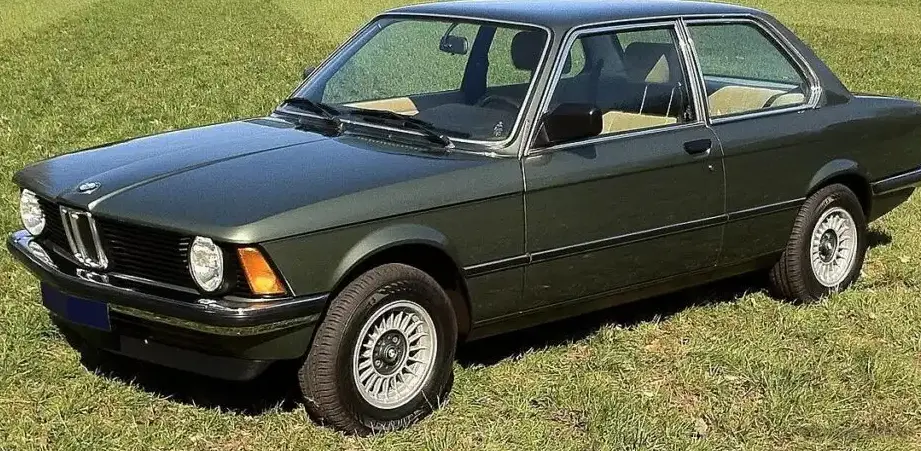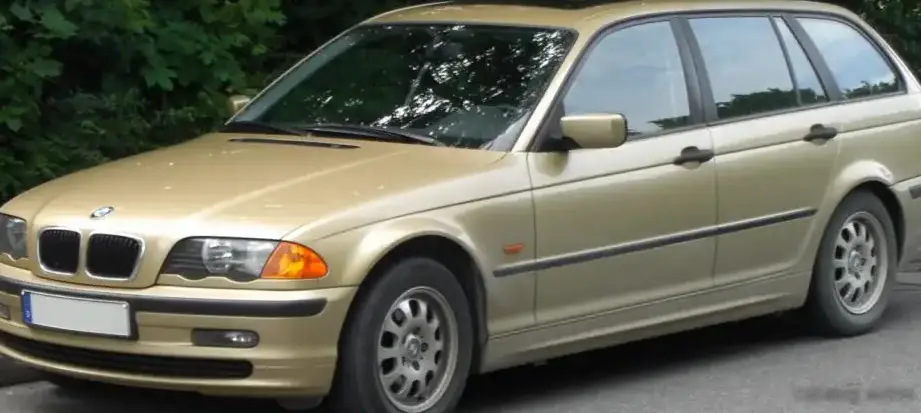
The BMW 3 Series Touring (E46) 330d, produced from 1999 to 2001, represented a significant offering in the premium compact executive estate car segment. Positioned as a diesel-powered variant within the broader E46 3 Series Touring range, it catered to European buyers seeking a blend of practicality, performance, and fuel efficiency. This model utilized BMW’s advanced diesel technology of the time, offering a compelling alternative to petrol-powered options and establishing a foothold for diesel engines in the traditionally gasoline-focused 3 Series lineup. The 330d was a mid-to-high trim level, offering more performance than the 320d but at a lower price point than the petrol 330i.
Technical Specifications
| Brand | BMW |
| Model | 3 Series |
| Generation | 3 Series Touring (E46) |
| Type (Engine) | 330d (184 Hp) |
| Start of production | 1999 |
| End of production | 2001 |
| Powertrain Architecture | Internal Combustion engine |
| Body type | Station wagon (estate) |
| Seats | 5 |
| Doors | 5 |
| Fuel consumption (economy) – urban | 9.5 l/100 km (24.8 US mpg) |
| Fuel consumption (economy) – extra urban | 5.6 l/100 km (42 US mpg) |
| Fuel Type | Diesel |
| Acceleration 0 – 100 km/h | 7.9 sec |
| Acceleration 0 – 62 mph | 7.9 sec |
| Acceleration 0 – 60 mph | 7.5 sec |
| Maximum speed | 225 km/h (139.81 mph) |
| Emission standard | Euro 3 |
| Weight-to-power ratio | 8.6 kg/Hp |
| Weight-to-torque ratio | 6.5 kg/Nm |
| Power | 184 Hp @ 4000 rpm |
| Torque | 245 Nm @ 3500 rpm (180.7 lb.-ft. @ 3500 rpm) |
| Engine layout | Front, Longitudinal |
| Engine Model/Code | M57D30 |
| Engine displacement | 2926 cm3 (178.56 cu. in.) |
| Number of cylinders | 6 |
| Engine configuration | Inline |
| Cylinder Bore | 84 mm (3.31 in.) |
| Piston Stroke | 88 mm (3.46 in.) |
| Compression ratio | 19:1 |
| Number of valves per cylinder | 4 |
| Fuel injection system | Diesel Commonrail |
| Engine aspiration | Turbocharger, Intercooler |
| Valvetrain | DOHC |
| Engine oil capacity | 6.8 l (7.19 US qt | 5.98 UK qt) |
| Coolant | 10.2 l (10.78 US qt | 8.97 UK qt) |
| Kerb Weight | 1590 kg (3505.35 lbs.) |
| Max. weight | 2130 kg (4695.85 lbs.) |
| Max load | 540 kg (1190.5 lbs.) |
| Trunk (boot) space – minimum | 435 l (15.36 cu. ft.) |
| Trunk (boot) space – maximum | 1345 l (47.5 cu. ft.) |
| Fuel tank capacity | 63 l (16.64 US gal | 13.86 UK gal) |
| Length | 4478 mm (176.3 in.) |
| Width | 1739 mm (68.46 in.) |
| Height | 1409 mm (55.47 in.) |
| Wheelbase | 2725 mm (107.28 in.) |
| Front track | 1471 mm (57.91 in.) |
| Rear (Back) track | 1483 mm (58.39 in.) |
| Drivetrain Architecture | Rear wheel drive |
| Number of gears and type of gearbox | 5 gears, manual transmission |
| Front suspension | Wishbone |
| Rear suspension | Coil spring |
| Front brakes | Ventilated discs |
| Rear brakes | Disc |
| Assisting systems | ABS (Anti-lock braking system) |
| Steering type | Steering rack and pinion |
| Power steering | Hydraulic Steering |
| Tires size | 205/50R17 |
| Wheel rims size | 7J x 17 |
INTRODUCTION
The E46 330d Touring, launched in 1999, was a key component of BMW’s strategy to broaden the appeal of the 3 Series. The E46 generation, built on the 1HX0/A3 platform, was known for its refined handling and build quality. Adding a diesel estate to the range allowed BMW to tap into the growing European market for practical, fuel-efficient vehicles. The 330d Touring offered a compelling package for families and individuals needing ample cargo space without sacrificing the driving experience associated with the BMW brand. It was positioned above the 320d Touring in terms of performance and equipment, but below the petrol-powered 330i Touring.
Powertrain & Engine Architecture
At the heart of the 330d Touring lay the M57D30, a 2.9-liter inline-six diesel engine. This engine was a significant step forward in diesel technology for BMW, featuring common rail direct injection and a variable geometry turbocharger. The common rail system, operating at extremely high pressures, allowed for precise fuel metering and improved combustion efficiency. The turbocharger, with its adjustable vanes, minimized turbo lag and provided a broad torque curve. The engine produced 184 horsepower at 4000 rpm and 245 Nm (180.7 lb-ft) of torque at 3500 rpm. The engine utilized a double overhead camshaft (DOHC) valvetrain with four valves per cylinder, contributing to its strong performance. The 330d was initially offered with a 5-speed manual transmission, providing direct control over the engine’s power. A 5-speed automatic transmission was also available, offering convenience, though at the expense of some performance and fuel economy.
Driving Characteristics
The 330d Touring, even with the manual transmission, offered a surprisingly engaging driving experience. The high torque output of the M57D30 meant strong acceleration in everyday driving situations, with ample power for overtaking and highway cruising. The 5-speed manual gearbox was well-matched to the engine’s characteristics, providing precise shifts and allowing the driver to exploit the engine’s powerband. The automatic transmission, while smooth, felt less responsive and resulted in slightly slower acceleration times. The E46’s renowned chassis, with its well-tuned suspension, provided a comfortable yet controlled ride. The rear-wheel-drive layout contributed to the car’s balanced handling, making it enjoyable to drive on winding roads. Compared to the 320d Touring, the 330d offered noticeably more power and a more refined driving experience. However, it didn’t quite match the responsiveness of the petrol-powered 330i Touring.
Equipment & Trim Levels
The 330d Touring typically came well-equipped, reflecting its position as a mid-to-high trim level. Standard features included air conditioning, power windows, central locking, and an upgraded stereo system. Interior upholstery was typically cloth, with leather options available as an upgrade. Dashboard trim could be specified in wood or metallic finishes. Optional extras included a sunroof, heated seats, automatic climate control, and BMW’s navigation system. The Touring model, by its nature, offered a spacious cargo area, making it ideal for families or those needing to transport large items. The rear seats could be folded down to further increase cargo capacity.
Chassis & Braking
The E46 330d Touring utilized a MacPherson strut front suspension and a multi-link rear suspension, providing a good balance of comfort and handling. The suspension was tuned to provide a stable and controlled ride, even when the car was fully loaded. Braking duties were handled by ventilated discs at the front and solid discs at the rear. Anti-lock braking system (ABS) was standard, enhancing safety and control during emergency braking. The steering was a rack-and-pinion system with hydraulic power assistance, providing precise and responsive steering feel.
Market Reception & Comparison
The 330d Touring was generally well-received by automotive critics. It was praised for its strong performance, fuel efficiency, and practicality. Critics noted that the diesel engine was surprisingly refined and offered a level of performance comparable to many petrol engines. Compared to the 320d Touring, the 330d offered a significant performance upgrade, making it a more appealing option for drivers who prioritized power and responsiveness. However, the 330d was more expensive than the 320d, and its fuel economy, while still good, was slightly lower. Against competitors like the Audi A4 Avant and Volvo V70, the 330d Touring offered a more engaging driving experience and a more premium interior.
Legacy
The M57D30 engine proved to be a robust and reliable powerplant, and many 330d Tourings have remained on the road for many years. While diesel engines are subject to higher maintenance costs than petrol engines, the M57D30 is generally considered to be a durable unit. On the used car market, the E46 330d Touring remains a popular choice for those seeking a practical, fuel-efficient, and enjoyable-to-drive estate car. Its combination of performance, practicality, and BMW’s renowned build quality has ensured its enduring appeal.