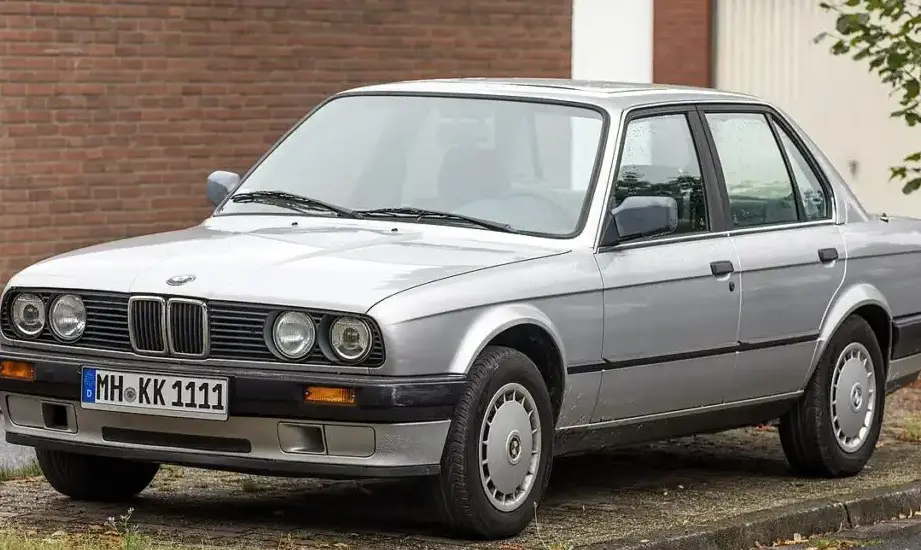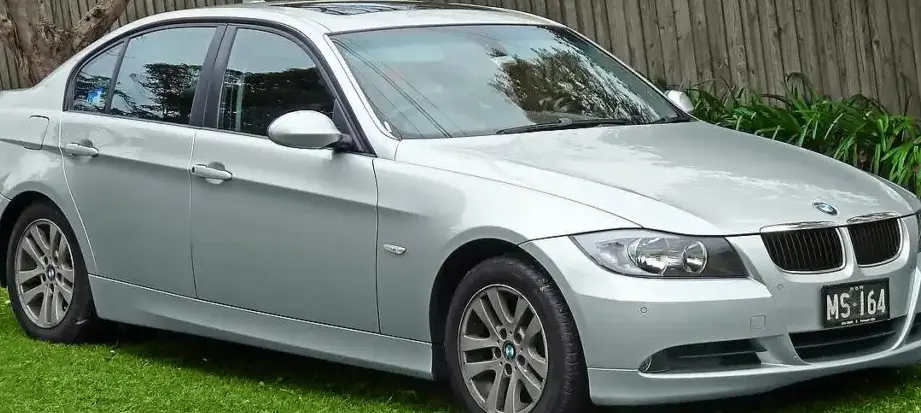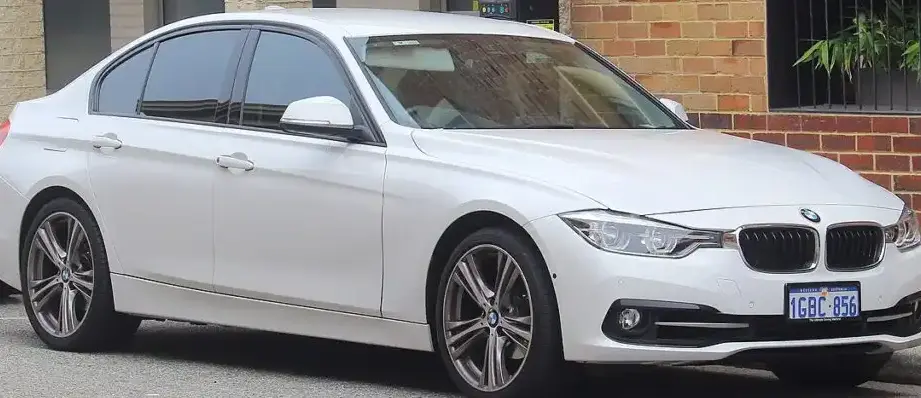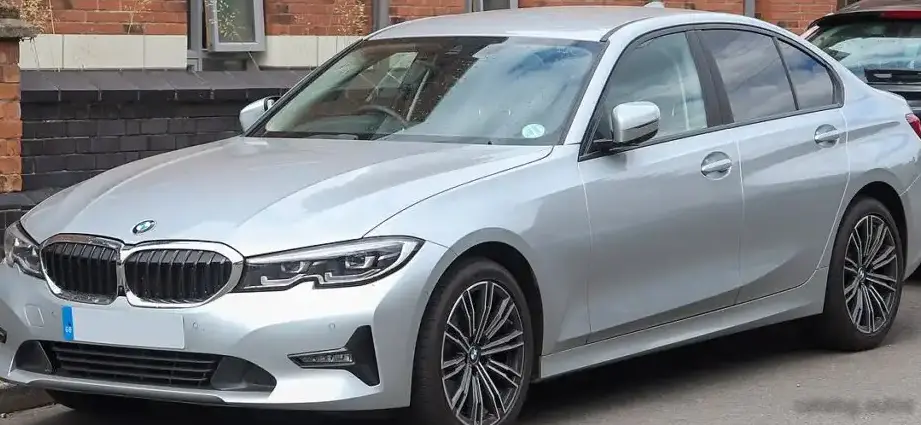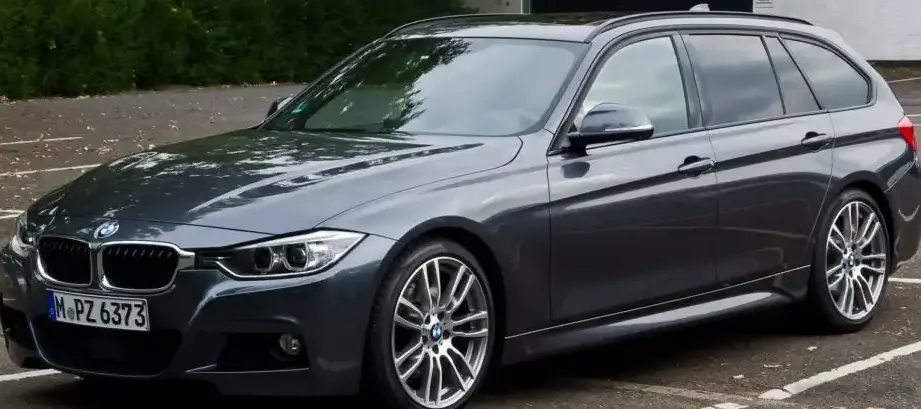
The BMW 3 Series Touring (F31) 320d Steptronic, produced from 2012 to 2015, represents BMW’s entry into the premium compact executive wagon segment. Positioned as a practical and efficient alternative to the 3 Series sedan, the F31 generation – internally designated as the F31 – offered a blend of driving dynamics, spaciousness, and fuel economy. The 320d Steptronic variant, powered by a 2.0-liter turbocharged diesel engine and an eight-speed automatic transmission, served as a popular choice for buyers prioritizing comfort and usability over outright performance. It occupied the lower-mid range of the F31 lineup, sitting below the more powerful 328i and 335i models, and above the base 320i.
Technical Specifications
| Brand | BMW |
| Model | 3 Series |
| Generation | 3 Series Touring (F31) |
| Type (Engine) | 320d (184 Hp) Steptronic |
| Start of production | 2012 |
| End of production | 2015 |
| Powertrain Architecture | Internal Combustion engine |
| Body type | Station wagon (estate) |
| Seats | 5 |
| Doors | 5 |
| Fuel consumption (urban) | 5.9 l/100 km (39.9 US mpg, 47.9 UK mpg, 16.9 km/l) |
| Fuel consumption (extra urban) | 3.9 l/100 km (60.3 US mpg, 72.4 UK mpg, 25.6 km/l) |
| Fuel consumption (combined) | 4.6 l/100 km (51.1 US mpg, 61.4 UK mpg, 21.7 km/l) |
| CO2 emissions | 122 g/km |
| Fuel Type | Diesel |
| Acceleration 0 – 100 km/h | 7.6 sec |
| Acceleration 0 – 62 mph | 7.6 sec |
| Acceleration 0 – 60 mph | 7.2 sec |
| Maximum speed | 226 km/h (140.43 mph) |
| Emission standard | Euro 5 |
| Weight-to-power ratio | 8.2 kg/Hp, 122.7 Hp/tonne |
| Weight-to-torque ratio | 3.9 kg/Nm, 253.3 Nm/tonne |
| Power | 184 Hp @ 4000 rpm |
| Torque | 380 Nm @ 1750-2750 rpm (280.27 lb.-ft. @ 1750-2750 rpm) |
| Engine layout | Front, Longitudinal |
| Engine Model/Code | N47D20C |
| Engine displacement | 1995 cm3 (121.74 cu. in.) |
| Number of cylinders | 4 |
| Engine configuration | Inline |
| Cylinder Bore | 84 mm (3.31 in.) |
| Piston Stroke | 90 mm (3.54 in.) |
| Compression ratio | 16.5:1 |
| Number of valves per cylinder | 4 |
| Fuel injection system | Diesel Commonrail |
| Engine aspiration | Twin-power turbo, Intercooler |
| Engine oil capacity | 5.2 l (5.49 US qt | 4.58 UK qt) |
| Coolant | 7 l (7.4 US qt | 6.16 UK qt) |
| Kerb Weight | 1500 kg (3306.93 lbs.) |
| Max. weight | 2050 kg (4519.48 lbs.) |
| Max load | 550 kg (1212.54 lbs.) |
| Trunk (boot) space – minimum | 495 l (17.48 cu. ft.) |
| Trunk (boot) space – maximum | 1500 l (52.97 cu. ft.) |
| Fuel tank capacity | 57 l (15.06 US gal | 12.54 UK gal) |
| Max. roof load | 75 kg (165.35 lbs.) |
| Permitted trailer load with brakes (12%) | 1600 kg (3527.4 lbs.) |
| Permitted trailer load without brakes | 745 kg (1642.44 lbs.) |
| Permitted towbar download | 75 kg (165.35 lbs.) |
| Length | 4624 mm (182.05 in.) |
| Width | 1811 mm (71.3 in.) |
| Height | 1429 mm (56.26 in.) |
| Wheelbase | 2810 mm (110.63 in.) |
| Front track | 1543 mm (60.75 in.) |
| Rear (Back) track | 1583 mm (62.32 in.) |
| Ride height (ground clearance) | 140 mm (5.51 in.) |
| Drag coefficient (Cd) | 0.31 |
| Minimum turning circle (turning diameter) | 11.3 m (37.07 ft.) |
| Drivetrain Architecture | The Internal combustion engine (ICE) drives the rear wheels of the vehicle. |
| Drive wheel | Rear wheel drive |
| Number of gears and type of gearbox | 8 gears, automatic transmission |
| Front suspension | Independent coil spring |
| Rear suspension | Independent multi-link suspension |
| Front brakes | Ventilated discs |
| Rear brakes | Ventilated discs |
| Assisting systems | ABS (Anti-lock braking system) |
| Steering type | Steering rack and pinion |
| Power steering | Electric Steering |
| Tires size | 205/60 R16 92W |
| Wheel rims size | 7J x 16 |
INTRODUCTION
The F31 320d Steptronic was a key model in BMW’s strategy to offer a practical and efficient touring (wagon) variant of its popular 3 Series. Built on the F30 3 Series platform, the F31 offered increased cargo capacity compared to the sedan, making it a popular choice for families and those requiring versatile load-carrying capabilities. The 320d variant, with its refined diesel engine and smooth-shifting eight-speed automatic, was designed to deliver a balance of performance and fuel economy, appealing to a broad range of buyers. This specific configuration was available throughout the F31’s production run, from 2012 to 2015, and became a common sight on European roads.
Powertrain & Engine Architecture
At the heart of the 320d Steptronic lies the N47D20C engine, a 2.0-liter inline-four cylinder diesel engine. This engine is a member of BMW’s highly regarded N47 family, known for its efficiency and relatively high power output for its size. The N47D20C utilizes a second-generation common rail direct injection system, delivering fuel at pressures up to 1800 bar for optimized combustion. A single twin-scroll turbocharger, coupled with an intercooler, provides forced induction, boosting power and torque. The engine also features variable valve timing (VANOS) and variable turbine geometry (VTG) on the turbocharger to further enhance performance and efficiency. The eight-speed automatic transmission (8HP45) is a crucial component of this powertrain. It offers smooth and quick gear changes, contributing to both fuel economy and driving comfort. The transmission features a torque converter lock-up clutch that engages in most gears, minimizing slippage and improving efficiency. Gear ratios are optimized for both acceleration and highway cruising.
Driving Characteristics
The 320d Steptronic delivers a comfortable and refined driving experience. While not as overtly sporty as the higher-powered 3 Series variants, it provides ample power for everyday driving and long-distance journeys. The 380 Nm (280 lb-ft) of torque, available from 1750-2750 rpm, provides strong acceleration in most situations. The eight-speed automatic transmission contributes to a relaxed driving experience, seamlessly shifting gears and keeping the engine in its optimal power band. Compared to the six-speed manual transmission available on other 320d models, the Steptronic offers smoother shifts and reduced driver fatigue. However, the manual transmission provides a more engaging driving experience for enthusiasts. Acceleration from 0-60 mph takes approximately 7.2 seconds, which is respectable for a diesel-powered wagon. The rear-wheel-drive configuration provides balanced handling, although it can be less forgiving in slippery conditions compared to all-wheel-drive variants.
Equipment & Trim Levels
The 320d Steptronic typically came equipped with a generous level of standard features. These included automatic climate control, a BMW Professional radio system with iDrive controller, power-adjustable front seats, and a leather-wrapped steering wheel. Safety features such as ABS, stability control, and multiple airbags were also standard. Optional extras included features like navigation system, upgraded audio systems (Harman Kardon), sunroof, heated seats, and parking sensors. Interior upholstery was typically cloth, but leather options were available. Trim levels varied depending on the market, but generally included Sport Line, Luxury Line, and Modern Line packages, each offering unique styling cues and additional features.
Chassis & Braking
The F31 320d Steptronic utilizes a MacPherson strut front suspension and a multi-link rear suspension. This setup provides a good balance of ride comfort and handling precision. The suspension is tuned to prioritize comfort, but still offers a reasonably engaging driving experience. Braking duties are handled by ventilated disc brakes on all four wheels. ABS (Anti-lock Braking System) and electronic stability control are standard features, enhancing safety and control. The F31’s chassis is relatively lightweight, contributing to its agility and fuel efficiency. The weight distribution is close to 50/50, further enhancing handling balance.
Market Reception & Comparison
The F31 320d Steptronic was generally well-received by automotive critics. It was praised for its fuel efficiency, comfortable ride, and spacious interior. Critics noted that while it wasn’t the most exciting car to drive, it offered a compelling combination of practicality and refinement. Compared to the 328i and 335i variants, the 320d offered significantly better fuel economy, but at the expense of outright performance. The 320d also proved to be more reliable than some of the more complex higher-powered models. Against competitors like the Audi A4 Avant and Mercedes-Benz C-Class Estate, the 320d Steptronic held its own, offering a similar level of quality and refinement.
Legacy
The N47 engine family, including the N47D20C found in the 320d Steptronic, has proven to be generally reliable, although early versions were known for timing chain issues. Proper maintenance, including regular oil changes and timing chain inspections, is crucial for long-term reliability. Today, used F31 320d Steptronic models represent a good value proposition for buyers seeking a practical and efficient premium wagon. They are readily available on the used car market and offer a comfortable and refined driving experience. The combination of BMW’s build quality, the efficient diesel engine, and the smooth-shifting automatic transmission ensures that these cars continue to provide reliable transportation for years to come.