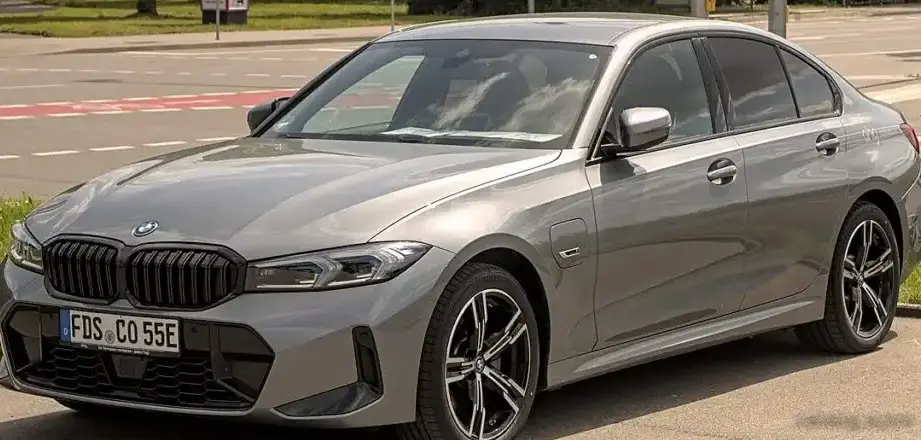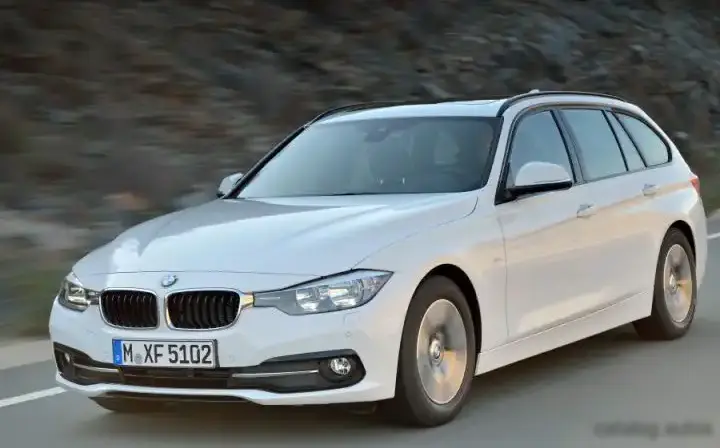
The BMW 3 Series Touring (F31 LCI), specifically the 320d Efficient Dynamics Edition producing 163 horsepower, represents a significant iteration of BMW’s popular compact executive wagon. Introduced with the Life Cycle Impulse (LCI) facelift in 2015 and continuing through 2019, this variant aimed to balance practicality, fuel efficiency, and the driving experience synonymous with the 3 Series. Positioned as a mid-range offering within the F31 Touring lineup, it catered to buyers seeking lower running costs without sacrificing the core BMW attributes. The F31 chassis itself is based on the F30 sedan, extending the wheelbase and adding the versatility of a wagon body style.
Technical Specifications
| Brand | BMW |
| Model | 3 Series |
| Generation | 3 Series Touring (F31 LCI, Facelift 2015) |
| Type (Engine) | 320d (163 Hp) Efficient Dynamics Edition |
| Start of production | 2015 |
| End of production | 2019 |
| Powertrain Architecture | Internal Combustion engine |
| Body type | Station wagon (estate) |
| Seats | 5 |
| Doors | 5 |
| Fuel consumption (urban) | 5.5-5.0 l/100 km (42.8 – 47 US mpg) |
| Fuel consumption (extra urban) | 3.9-3.6 l/100 km (60.3 – 65.3 US mpg) |
| Fuel consumption (combined) | 4.5-4.1 l/100 km (52.3 – 57.4 US mpg) |
| CO2 emissions | 118-107 g/km |
| Fuel Type | Diesel |
| Acceleration 0 – 100 km/h | 8.2 sec |
| Acceleration 0 – 62 mph | 8.2 sec |
| Acceleration 0 – 60 mph | 7.8 sec |
| Maximum speed | 222 km/h (137.94 mph) |
| Emission standard | Euro 6 |
| Weight-to-power ratio | 9.2 kg/Hp, 108.7 Hp/tonne |
| Weight-to-torque ratio | 3.8 kg/Nm, 266.7 Nm/tonne |
| Power | 163 Hp @ 4000 rpm |
| Torque | 400 Nm @ 1750-2250 rpm (295.02 lb.-ft. @ 1750-2250 rpm) |
| Engine layout | Front, Longitudinal |
| Engine Model/Code | B47D20 |
| Engine displacement | 1995 cm3 (121.74 cu. in.) |
| Number of cylinders | 4 |
| Engine configuration | Inline |
| Cylinder Bore | 84 mm (3.31 in.) |
| Piston Stroke | 90 mm (3.54 in.) |
| Compression ratio | 16.5:1 |
| Number of valves per cylinder | 4 |
| Fuel injection system | Diesel Commonrail |
| Engine aspiration | Twin-power turbo, Intercooler |
| Engine oil capacity | 5 l (5.28 US qt | 4.4 UK qt) |
| Coolant | 7 l (7.4 US qt | 6.16 UK qt) |
| Kerb Weight | 1500 kg (3306.93 lbs.) |
| Max. weight | 2050 kg (4519.48 lbs.) |
| Max load | 550 kg (1212.54 lbs.) |
| Trunk (boot) space – minimum | 495 l (17.48 cu. ft.) |
| Trunk (boot) space – maximum | 1500 l (52.97 cu. ft.) |
| Fuel tank capacity | 57 l (15.06 US gal | 12.54 UK gal) |
| Max. roof load | 75 kg (165.35 lbs.) |
| Length | 4633 mm (182.4 in.) |
| Width | 1811 mm (71.3 in.) |
| Height | 1416 mm (55.75 in.) |
| Wheelbase | 2810 mm (110.63 in.) |
| Front track | 1543 mm (60.75 in.) |
| Rear (Back) track | 1586 mm (62.44 in.) |
| Ride height (ground clearance) | 127 mm (5 in.) |
| Drag coefficient (Cd) | 0.28 |
| Minimum turning circle | 11.3 m (37.07 ft.) |
| Drivetrain Architecture | Rear wheel drive |
| Number of gears | 6 |
| Type of gearbox | Manual transmission |
| Front suspension | Independent coil spring |
| Rear suspension | Independent multi-link suspension |
| Front brakes | Ventilated discs |
| Rear brakes | Ventilated discs |
| Assisting systems | ABS (Anti-lock braking system) |
| Steering type | Steering rack and pinion |
| Power steering | Electric Steering |
| Tires size | 205/60 R16 92W |
| Wheel rims size | 7.0J x 16 |
Powertrain & Engine Architecture
The heart of the 320d Efficient Dynamics Edition is the BMW B47D20, a 2.0-liter inline four-cylinder diesel engine. This engine is a member of BMW’s modular engine family, known for its compact design and advanced technology. The B47 utilizes a second-generation common rail direct injection system, capable of delivering fuel at pressures up to 2,000 bar, optimizing combustion efficiency and reducing emissions. A single twin-scroll turbocharger with variable geometry turbine (VGT) technology provides a broad torque curve and responsive performance. The engine also incorporates an intercooler to further enhance intake air density. The “Efficient Dynamics” designation signifies specific optimizations for fuel economy, including engine mapping tweaks, aerodynamic enhancements, and lightweight components. The 6-speed manual transmission was standard, offering precise shifts and contributing to the car’s overall efficiency.
Driving Characteristics
The 163 horsepower and 400 Nm (295 lb-ft) of torque delivered by the B47 engine provide adequate performance for everyday driving. While not overtly sporty, the 320d Touring offers a respectable 0-60 mph time of around 7.8 seconds. The engine’s peak torque is available from 1750-2250 rpm, resulting in strong mid-range acceleration, making it well-suited for overtaking maneuvers and highway cruising. Compared to the more powerful 328i or 335i variants, the 320d prioritizes fuel economy over outright speed. The manual transmission, while engaging, has relatively long gearing to further enhance efficiency. The rear-wheel-drive configuration contributes to the BMW’s characteristic balanced handling, although traction can be limited in slippery conditions.
Equipment & Trim Levels
The 320d Efficient Dynamics Edition typically came equipped with a solid base of standard features. These included automatic climate control, a BMW Radio Professional audio system, power windows and mirrors, and a multi-function steering wheel. Upholstery was generally cloth, though leather options were available. The “Efficient Dynamics” package often included unique aerodynamic elements, such as a rear spoiler and optimized underbody panels, to reduce drag. Optional extras included navigation systems, upgraded audio systems, parking sensors, and a panoramic sunroof. Interior trim options ranged from basic matte finishes to more luxurious wood or aluminum accents.
Chassis & Braking
The F31 Touring utilizes a sophisticated chassis design featuring independent suspension all around. The front suspension employs MacPherson struts, while the rear utilizes a multi-link setup. This configuration provides a good balance of ride comfort and handling precision. The 320d typically featured ventilated disc brakes on all four wheels, providing ample stopping power. Anti-lock Braking System (ABS) and Electronic Stability Control (ESC) were standard safety features. Stabilizer bars were fitted front and rear to minimize body roll during cornering. The suspension tuning was generally geared towards comfort, but still offered a reasonably engaging driving experience.
Market Reception & Comparison
The 320d Efficient Dynamics Edition was well-received by critics for its impressive fuel economy and comfortable ride. It was often praised as a practical and sensible choice for buyers prioritizing running costs. Compared to the higher-output 328i and 335i models, the 320d offered significantly better fuel efficiency, though at the expense of performance. The 320d also represented a more affordable entry point into the 3 Series Touring range. Reliability was generally good, although some owners reported issues with the diesel particulate filter (DPF) system, particularly on vehicles primarily used for short trips.
Legacy
The B47 engine, found in the 320d Efficient Dynamics Edition, has proven to be a relatively robust and reliable powertrain. While the DPF system can be a potential weak point, regular maintenance and proper driving habits can mitigate this risk. On the used car market, these models represent a good value proposition, offering a blend of practicality, efficiency, and the BMW driving experience. The F31 Touring, in general, remains a popular choice for buyers seeking a versatile and well-built wagon. The 320d Efficient Dynamics Edition continues to be a sought-after variant for those prioritizing fuel economy and lower running costs.