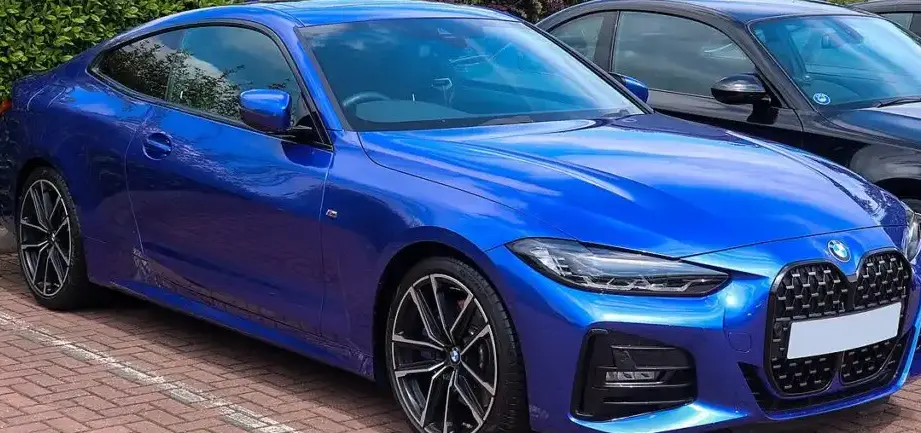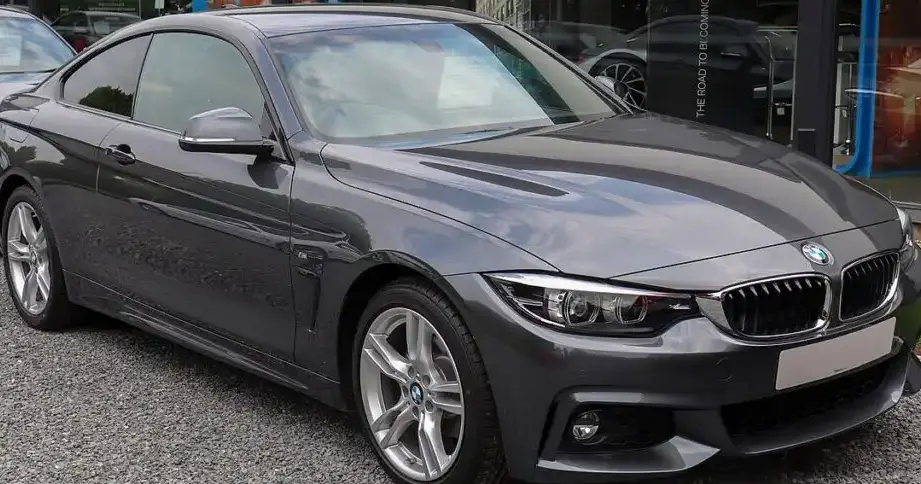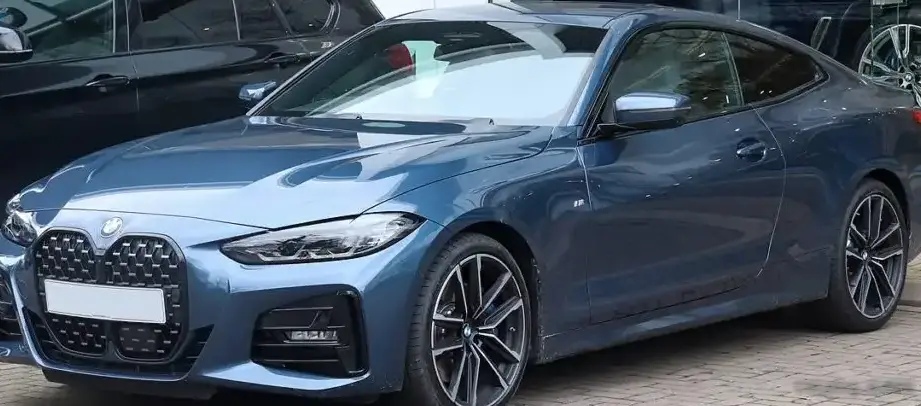
The BMW 4 Series Convertible (F33) 425d Steptronic, produced from March 2016 to February 2017, represents a compelling blend of performance and efficiency within the broader 4 Series lineup. Positioned as a mid-range offering, it catered to buyers seeking a refined open-top experience with a diesel engine. This variant utilized BMW’s then-current turbocharged diesel technology paired with an eight-speed automatic transmission, aiming to deliver a balance between spirited driving and respectable fuel economy. The F33 generation, launched in 2013, was BMW’s replacement for the 3 Series Convertible, adopting the even-numbered designation to signify its distinct character and positioning within the BMW range.
Technical Specifications
| Brand | BMW |
| Model | 4 Series |
| Generation | 4 Series Convertible (F33) |
| Type (Engine) | 425d (224 Hp) Steptronic |
| Start of production | March, 2016 |
| End of production | February, 2017 |
| Powertrain Architecture | Internal Combustion engine |
| Body type | Cabriolet |
| Seats | 4 |
| Doors | 2 |
| Fuel consumption (economy) – urban (NEDC) | 5.5-5.9 l/100 km (42.8 – 39.9 US mpg, 51.4 – 47.9 UK mpg, 18.2 – 16.9 km/l) |
| Fuel consumption (economy) – extra urban (NEDC) | 4.4-4.7 l/100 km (53.5 – 50 US mpg, 64.2 – 60.1 UK mpg, 22.7 – 21.3 km/l) |
| Fuel consumption (economy) – combined (NEDC) | 4.8-4.1 l/100 km (49 – 57.4 US mpg, 58.9 – 68.9 UK mpg, 20.8 – 24.4 km/l) |
| CO2 emissions (NEDC) | 127-135 g/km |
| Fuel Type | Diesel |
| Acceleration 0 – 100 km/h | 6.7 sec |
| Acceleration 0 – 62 mph | 6.7 sec |
| Acceleration 0 – 60 mph | 6.4 sec |
| Maximum speed | 241 km/h (149.75 mph) |
| Emission standard | Euro 6 |
| Weight-to-power ratio | 7.8 kg/Hp, 128.4 Hp/tonne |
| Weight-to-torque ratio | 3.9 kg/Nm, 257.9 Nm/tonne |
| Power | 224 Hp @ 4400 rpm |
| Power per litre | 112.3 Hp/l |
| Torque | 450 Nm @ 1500-3000 rpm (331.9 lb.-ft. @ 1500-3000 rpm) |
| Engine layout | Front, Longitudinal |
| Engine Model/Code | B47D20B |
| Engine displacement | 1995 cm3 (121.74 cu. in.) |
| Number of cylinders | 4 |
| Engine configuration | Inline |
| Cylinder Bore | 84 mm (3.31 in.) |
| Piston Stroke | 90 mm (3.54 in.) |
| Compression ratio | 16.5:1 |
| Number of valves per cylinder | 4 |
| Fuel injection system | Diesel Commonrail |
| Engine aspiration | Twin-power turbo, Intercooler |
| Valvetrain | DOHC |
| Engine oil capacity | 5 l (5.28 US qt | 4.4 UK qt) |
| Coolant | 7 l (7.4 US qt | 6.16 UK qt) |
| Kerb Weight | 1745 kg (3847.07 lbs.) |
| Max. weight | 2240 kg (4938.35 lbs.) |
| Max load | 495 kg (1091.29 lbs.) |
| Trunk (boot) space – minimum | 370 l (13.07 cu. ft.) |
| Fuel tank capacity | 57 l (15.06 US gal | 12.54 UK gal) |
| Permitted trailer load with brakes (12%) | 1800 kg (3968.32 lbs.) |
| Permitted trailer load without brakes | 750 kg (1653.47 lbs.) |
| Permitted towbar download | 75 kg (165.35 lbs.) |
| Length | 4638 mm (182.6 in.) |
| Width | 1825 mm (71.85 in.) |
| Width including mirrors | 2017 mm (79.41 in.) |
| Height | 1384 mm (54.49 in.) |
| Wheelbase | 2810 mm (110.63 in.) |
| Front track | 1545 mm (60.83 in.) |
| Rear (Back) track | 1594 mm (62.76 in.) |
| Front overhang | 787 mm (30.98 in.) |
| Rear overhang | 1041 mm (40.98 in.) |
| Ride height (ground clearance) | 130 mm (5.12 in.) |
| Drag coefficient (Cd) | 0.29 |
| Minimum turning circle (turning diameter) | 11.3 m (37.07 ft.) |
| Drivetrain Architecture | The Internal combustion engine (ICE) drives the rear wheels of the vehicle. |
| Drive wheel | Rear wheel drive |
| Number of gears and type of gearbox | 8 gears, automatic transmission Steptronic |
| Front suspension | Spring Strut, Transverse stabilizer |
| Rear suspension | Independent multi-link spring suspension with stabilizer |
| Front brakes | Ventilated discs |
| Rear brakes | Ventilated discs |
| Assisting systems | ABS (Anti-lock braking system) |
| Steering type | Steering rack and pinion |
| Power steering | Electric Steering |
| Tires size | Front wheel tires: 225/50 R17; 225/45 R18; 225/40 R19Rear wheel tires: 225/50 R17; 225/45 R18; 255/40 R18; 255/35 R19 |
| Wheel rims size | Front wheel rims: 7.5J x 17; 8J x 18; 8J x 19Rear wheel rims: 7.5J x 17; 8J x 18; 8.5J x 18; 8.5J x 19 |
INTRODUCTION
The BMW 425d Convertible Steptronic, introduced in 2016, was a key component of the F33 4 Series range. It aimed to provide a more economical and accessible entry point into the premium convertible market, without sacrificing the BMW driving experience. This model year saw a mid-cycle refresh for the F33, including minor styling updates and improvements to the interior. The 425d specifically targeted buyers who desired a comfortable and stylish open-top car for long-distance cruising, prioritizing fuel efficiency and refinement over outright performance. It occupied a space between the entry-level 420d and the more powerful 430d and 440i models.
Powertrain & Engine Architecture
At the heart of the 425d lies BMW’s B47D20B 2.0-liter inline-four diesel engine. This engine is a member of BMW’s modular engine family, known for its efficiency and refinement. The B47 utilizes a common-rail direct injection system, delivering fuel at extremely high pressures for optimized combustion. A twin-scroll turbocharger with variable geometry turbine (VGT) technology provides a broad torque curve and minimizes turbo lag. The engine also features an intercooler to further enhance performance. The 425d is paired with BMW’s eight-speed Steptronic automatic transmission, which offers smooth and quick shifts. This transmission is known for its adaptability, offering both fully automatic operation and manual control via steering wheel-mounted paddles or the gear selector. The transmission’s gear ratios are tuned to maximize fuel efficiency and provide adequate acceleration.
Driving Characteristics
The 425d Steptronic delivers a comfortable and refined driving experience. While not as overtly sporty as some of its gasoline-powered siblings, it offers ample power for everyday driving and highway cruising. The 450 Nm (331.9 lb-ft) of torque, available from 1500-3000 rpm, provides strong acceleration in most situations. The eight-speed automatic transmission contributes to a relaxed driving experience, seamlessly shifting gears to keep the engine in its optimal power band. Compared to the manual transmission versions, the Steptronic offers greater convenience, particularly in urban traffic. However, some enthusiasts might find the automatic slightly less engaging than the manual. Against the higher-output 430d and 440i models, the 425d feels noticeably less powerful, with a 0-60 mph time of around 6.4 seconds compared to the 440i’s sub-5 second sprint.
Equipment & Trim Levels
The 425d Convertible typically came well-equipped, reflecting its position as a mid-range offering. Standard features included leather upholstery, automatic climate control, a BMW iDrive infotainment system with a 6.5-inch display, and automatic headlights. Optional extras were plentiful, allowing buyers to personalize their vehicles. Popular options included a larger iDrive display, navigation system, Harman Kardon premium sound system, heated seats, and a wind deflector to reduce turbulence in the cabin when the roof is down. Interior trim options ranged from basic cloth to more luxurious leather and wood combinations. The convertible top was a fully automatic, retractable hardtop, providing a secure and insulated cabin when closed.
Chassis & Braking
The F33 4 Series Convertible utilized a sophisticated chassis design to balance handling and comfort. The front suspension featured MacPherson struts with a transverse stabilizer bar, while the rear employed a multi-link independent suspension, also with a stabilizer bar. This setup provided a good balance between ride quality and handling precision. The 425d was equipped with ventilated disc brakes on all four wheels, providing ample stopping power. ABS (Anti-lock Braking System) and electronic stability control were standard safety features. The steering system was an electric power-assisted rack and pinion system, offering precise and responsive steering feel.
Market Reception & Comparison
The 425d Convertible was generally well-received by automotive critics. It was praised for its fuel efficiency, comfortable ride, and refined interior. However, some reviewers noted that the diesel engine lacked the sporty character of the gasoline engines. Compared to the 420d, the 425d offered a noticeable performance upgrade, while remaining more affordable than the 430d and 440i. Fuel economy was a key selling point, with the 425d achieving combined fuel consumption figures of around 4.8-4.1 l/100 km (49-57.4 US mpg). Reliability was generally good, although, like all modern diesel engines, the 425d’s emissions control systems (particularly the diesel particulate filter) required careful maintenance.
Legacy
The BMW 425d Convertible (F33) remains a popular choice in the used car market. Its combination of style, comfort, and fuel efficiency continues to appeal to buyers seeking a premium open-top experience. The B47 engine, while known for its complexity, has proven to be relatively durable when properly maintained. However, potential buyers should be aware of the potential for issues with the diesel particulate filter and the turbocharger. Overall, the 425d Steptronic represents a well-rounded and capable convertible that offers a compelling alternative to its more expensive and performance-focused siblings.