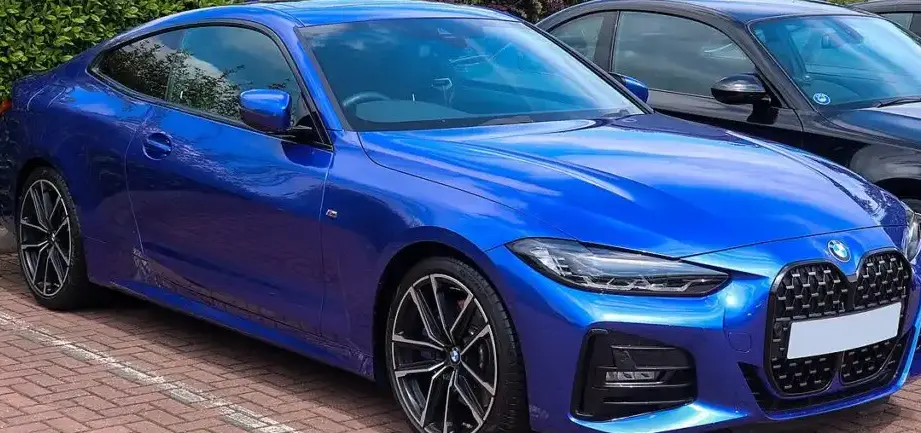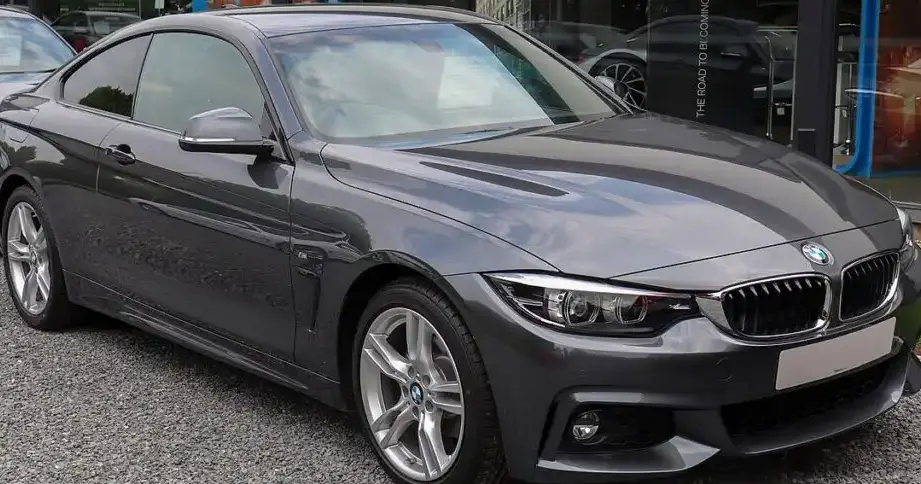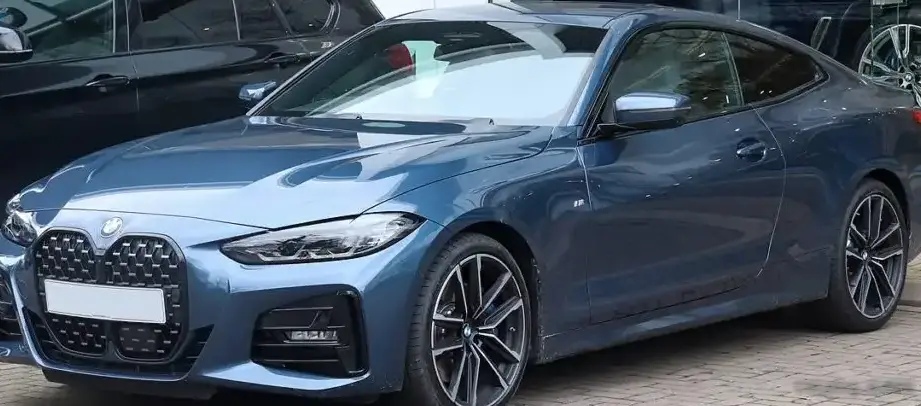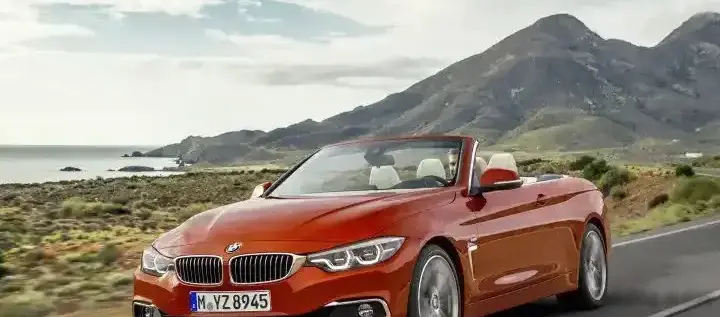
The BMW 4 Series Convertible (F33), specifically the 420d variant with the Steptronic automatic transmission, was produced from 2017 to 2020 as part of the F33 LCI (Life Cycle Impulse, or facelift) generation. This model occupied a mid-range position within the 4 Series Convertible lineup, offering a balance between performance, fuel efficiency, and comfort. It aimed to appeal to buyers seeking a premium open-top experience without the higher costs associated with the more powerful 430d or 440i models. The F33 generation, built on the BMW F30 platform, represented a departure from the previous 3 Series Convertible, adopting a more distinct identity and a focus on sporty driving dynamics.
Technical Specifications
| Brand | BMW |
| Model | 4 Series |
| Generation | 4 Series Convertible (F33, facelift 2017) |
| Type (Engine) | 420d (190 Hp) Steptronic |
| Start of production | 2017 |
| End of production | 2020 |
| Powertrain Architecture | Internal Combustion engine |
| Body type | Cabriolet |
| Seats | 4 |
| Doors | 2 |
| Fuel consumption (urban) | 5.2-5.6 l/100 km (45.2 – 42 US mpg, 54.3 – 50.4 UK mpg, 19.2 – 17.9 km/l) |
| Fuel consumption (extra urban) | 3.9-4.2 l/100 km (60.3 – 56 US mpg, 72.4 – 67.3 UK mpg, 25.6 – 23.8 km/l) |
| Fuel consumption (combined) | 4.4-4.7 l/100 km (53.5 – 50 US mpg, 64.2 – 60.1 UK mpg, 22.7 – 21.3 km/l) |
| CO2 emissions | 116-124 g/km |
| Fuel Type | Diesel |
| Acceleration 0 – 100 km/h | 8 sec |
| Acceleration 0 – 62 mph | 8 sec |
| Acceleration 0 – 60 mph | 7.6 sec |
| Maximum speed | 228 km/h (141.67 mph) |
| Emission standard | Euro 6 |
| Weight-to-power ratio | 9 kg/Hp, 110.8 Hp/tonne |
| Weight-to-torque ratio | 4.3 kg/Nm, 233.2 Nm/tonne |
| Power | 190 Hp @ 4000 rpm |
| Torque | 400 Nm @ 1750-2500 rpm (295.02 lb.-ft. @ 1750-2500 rpm) |
| Engine layout | Front, Longitudinal |
| Engine Model/Code | B47D20A |
| Engine displacement | 1995 cm3 (121.74 cu. in.) |
| Number of cylinders | 4 |
| Engine configuration | Inline |
| Cylinder Bore | 84 mm (3.31 in.) |
| Piston Stroke | 90 mm (3.54 in.) |
| Compression ratio | 16.5:1 |
| Number of valves per cylinder | 4 |
| Fuel injection system | Diesel Commonrail |
| Engine aspiration | Twin-power turbo, Intercooler |
| Engine oil capacity | 5 l (5.28 US qt | 4.4 UK qt) |
| Coolant | 7 l (7.4 US qt | 6.16 UK qt) |
| Kerb Weight | 1715 kg (3780.93 lbs.) |
| Max. weight | 2185 kg (4817.1 lbs.) |
| Max load | 470 kg (1036.17 lbs.) |
| Trunk (boot) space – minimum | 370 l (13.07 cu. ft.) |
| Fuel tank capacity | 57 l (15.06 US gal | 12.54 UK gal) |
| Permitted trailer load with brakes (12%) | 1600 kg (3527.4 lbs.) |
| Permitted trailer load without brakes | 745 kg (1642.44 lbs.) |
| Permitted towbar download | 75 kg (165.35 lbs.) |
| Length | 4640 mm (182.68 in.) |
| Width | 1825 mm (71.85 in.) |
| Height | 1384 mm (54.49 in.) |
| Wheelbase | 2810 mm (110.63 in.) |
| Front track | 1544 mm (60.79 in.) |
| Rear (Back) track | 1593 mm (62.72 in.) |
| Ride height (ground clearance) | 130 mm (5.12 in.) |
| Drag coefficient (Cd) | 0.28 |
| Minimum turning circle (turning diameter) | 11.3 m (37.07 ft.) |
| Drivetrain Architecture | The Internal combustion engine (ICE) drives the rear wheels of the vehicle. |
| Drive wheel | Rear wheel drive |
| Number of gears and type of gearbox | 8 gears, automatic transmission Steptronic |
| Front suspension | Independent coil spring |
| Rear suspension | Independent multi-link suspension |
| Front brakes | Ventilated discs |
| Rear brakes | Ventilated discs |
| Assisting systems | ABS (Anti-lock braking system) |
| Steering type | Steering rack and pinion |
| Power steering | Electric Steering |
| Tires size | 225/50 R17; 225/45 R18; 255/40 R18; 225/40 R19; 255/35 R19 |
| Wheel rims size | 7.5J x 17; 8J x 18; 8.5J x 18; 8J x 19; 8.5J x 19 |
Powertrain & Engine Architecture
The 420d Convertible utilized BMW’s B47D20A 2.0-liter inline-four diesel engine. This engine is a member of the modular BMW engine family, known for its efficiency and refinement. The B47 featured a single turbocharger with variable geometry turbine (VGT) technology, along with direct common-rail fuel injection operating at pressures up to 2,000 bar. This high-pressure injection system contributed to improved combustion efficiency and reduced emissions. The engine also incorporated BMW’s TwinPower Turbo technology, although in this application, it primarily referred to the VGT turbocharger rather than a twin-turbo setup. The Steptronic 8-speed automatic transmission was standard, offering smooth and relatively quick shifts. This transmission was known for its adaptability, adjusting shift points based on driving style and road conditions.
Driving Characteristics
The 420d Steptronic offered a comfortable and refined driving experience. While not overtly sporty, the 190 hp and 400 Nm of torque provided adequate performance for everyday driving and cruising. Acceleration from 0-60 mph took around 7.6 seconds, and the car felt responsive in most situations. The automatic transmission, while smooth, could sometimes feel hesitant during quick downshifts. Compared to the more powerful 430d or 440i models, the 420d lacked the outright punch for spirited driving. However, it offered significantly better fuel economy, making it a more practical choice for those prioritizing efficiency. The rear-wheel-drive configuration contributed to balanced handling, although it wasn’t as engaging as the available xDrive all-wheel-drive system.
Equipment & Trim Levels
The 420d Convertible typically came standard with features such as leather upholstery, automatic climate control, a BMW iDrive infotainment system with a 6.5-inch display, and parking sensors. Optional extras included a larger iDrive screen, navigation, a Harman Kardon sound system, heated seats, and a wind deflector to reduce turbulence in the cabin when the roof was down. Trim levels varied depending on the market, but generally, buyers could choose from Sport, Luxury, and M Sport packages, each adding unique styling and equipment enhancements. The Sport package typically included sport seats, sport suspension, and unique alloy wheels, while the Luxury package focused on premium interior materials and trim.
Chassis & Braking
The F33 4 Series Convertible featured a sophisticated chassis designed to balance comfort and handling. The front suspension utilized independent coil springs, while the rear employed an independent multi-link setup. This configuration provided a good level of ride quality and stability. The 420d typically came equipped with ventilated disc brakes on all four wheels, providing ample stopping power. ABS (Anti-lock Braking System) was standard, along with electronic stability control and traction control. The steering system was an electric power-assisted rack and pinion, offering precise and responsive steering feel.
Market Reception & Comparison
The 420d Convertible was generally well-received by automotive critics as a practical and efficient option within the 4 Series range. It was praised for its comfortable ride, refined engine, and good fuel economy. However, some reviewers noted that the engine lacked the excitement of the more powerful variants. Compared to the 430d, the 420d offered a lower price point but sacrificed performance. Against competitors like the Audi A5 Cabriolet and Mercedes-Benz C-Class Cabriolet, the 420d held its own in terms of driving dynamics and interior quality.
Legacy
The B47 engine, used in the 420d, has proven to be a relatively reliable powertrain, although some early models experienced issues with the timing chain. Regular maintenance, including oil changes and timing chain inspections, is crucial for long-term reliability. On the used car market, the 420d Convertible represents a good value proposition for buyers seeking a premium open-top experience without breaking the bank. Its combination of style, comfort, and fuel efficiency continues to make it an appealing choice.