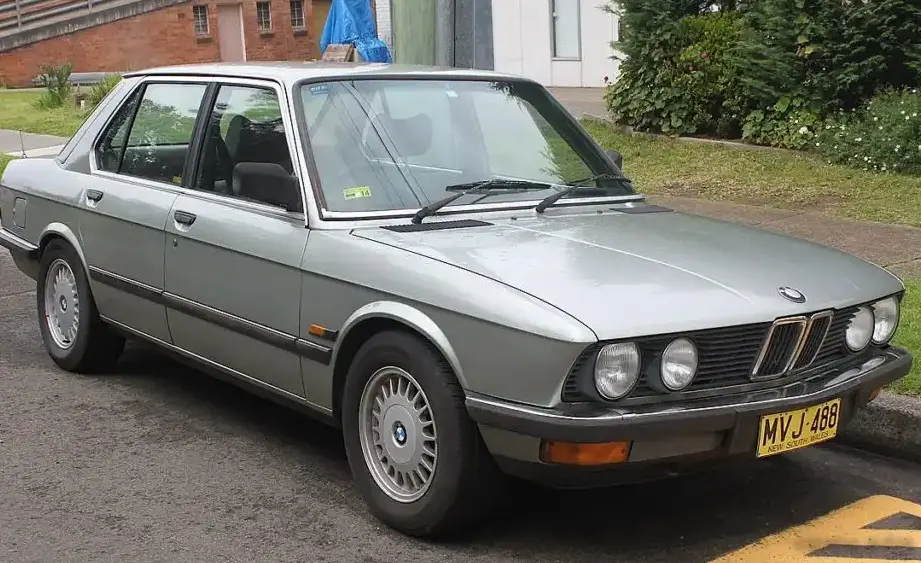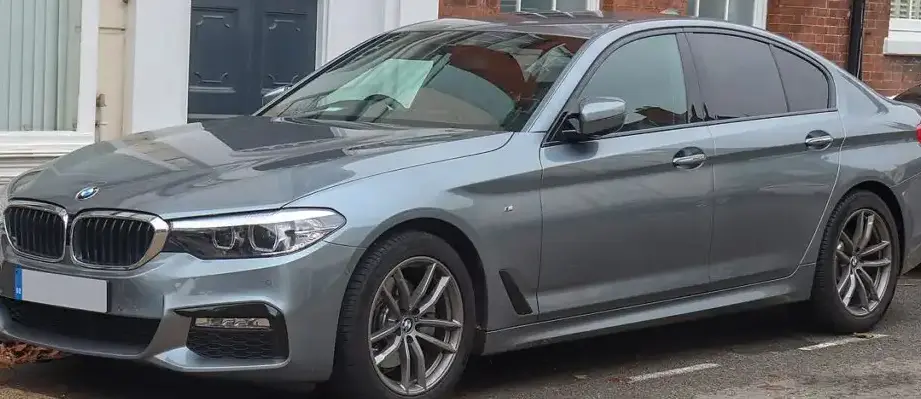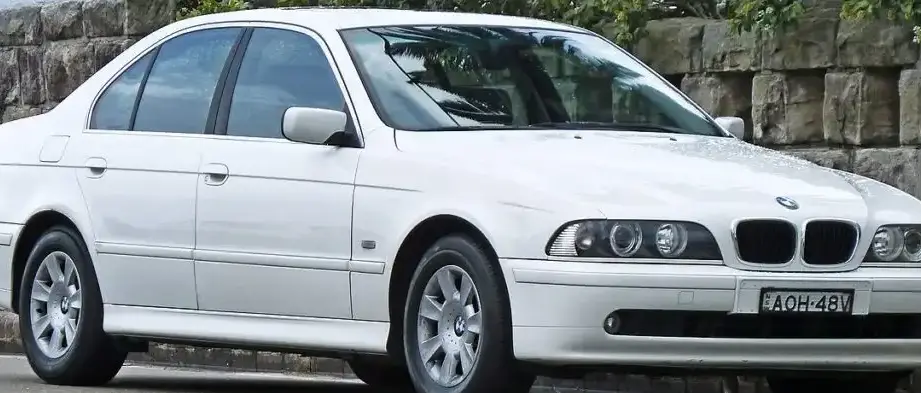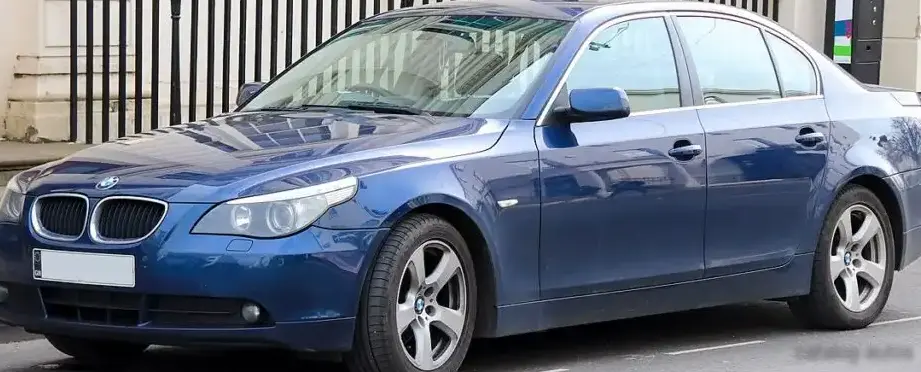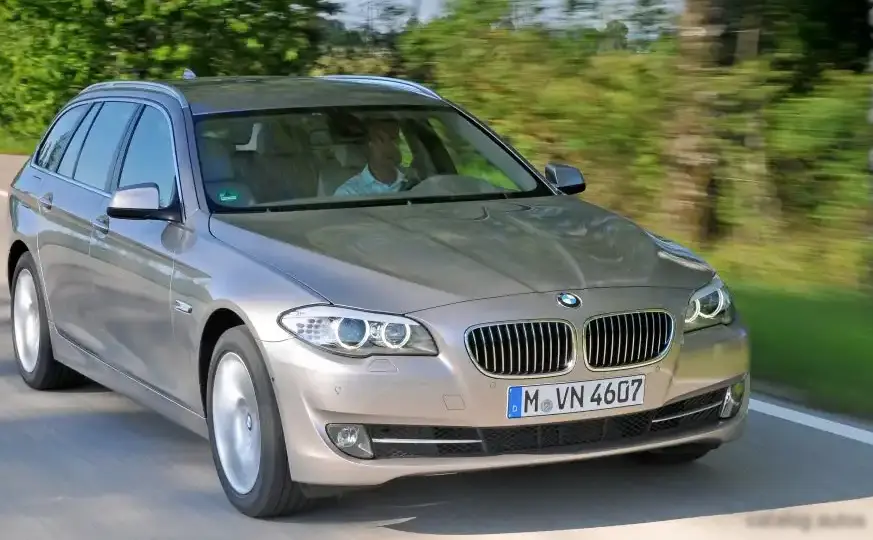
The BMW 5 Series Touring (F11) 530d, produced from 2010 to 2011, represents BMW’s offering in the premium, mid-size executive wagon segment. Part of the F11 generation of the 5 Series Touring, this variant combined a powerful diesel engine with a practical, spacious body style. It was positioned as a sophisticated alternative to traditional sedans, appealing to buyers who desired both performance and utility. The F11 chassis, based on BMW’s then-current platform strategy, aimed to deliver a refined driving experience coupled with advanced technology.
Technical Specifications
| Brand | BMW |
| Model | 5 Series |
| Generation | 5 Series Touring (F11) |
| Type (Engine) | 530d (245 Hp) |
| Start of production | 2010 |
| End of production | 2011 |
| Powertrain Architecture | Internal Combustion engine |
| Body type | Station wagon (estate) |
| Seats | 5 |
| Doors | 5 |
| Fuel consumption (economy) – urban | 8.1 l/100 km (29 US mpg, 34.9 UK mpg, 12.3 km/l) |
| Fuel consumption (economy) – extra urban | 5.3 l/100 km (44.4 US mpg, 53.3 UK mpg, 18.9 km/l) |
| Fuel consumption (economy) – combined | 6.4 l/100 km (36.8 US mpg, 44.1 UK mpg, 15.6 km/l) |
| CO2 emissions | 169 g/km |
| Fuel Type | Diesel |
| Acceleration 0 – 100 km/h | 6.4 sec |
| Acceleration 0 – 62 mph | 6.4 sec |
| Acceleration 0 – 60 mph | 6.1 sec |
| Maximum speed | 243 km/h (150.99 mph) |
| Emission standard | Euro 5 |
| Weight-to-power ratio | 7.3 kg/Hp, 136.1 Hp/tonne |
| Weight-to-torque ratio | 3.3 kg/Nm, 300 Nm/tonne |
| Power | 245 Hp @ 4000 rpm |
| Power per litre | 81.9 Hp/l |
| Torque | 540 Nm @ 1750-3000 rpm (398.28 lb.-ft. @ 1750-3000 rpm) |
| Engine layout | Front, Longitudinal |
| Engine Model/Code | N57D30A |
| Engine displacement | 2993 cm3 (182.64 cu. in.) |
| Number of cylinders | 6 |
| Engine configuration | Inline |
| Cylinder Bore | 84 mm (3.31 in.) |
| Piston Stroke | 90 mm (3.54 in.) |
| Compression ratio | 16.5:1 |
| Number of valves per cylinder | 4 |
| Fuel injection system | Diesel Commonrail |
| Engine aspiration | Turbocharger, Intercooler |
| Engine oil capacity | 6.5 l (6.87 US qt | 5.72 UK qt) |
| Coolant | 10 l (10.57 US qt | 8.8 UK qt) |
| Kerb Weight | 1800 kg (3968.32 lbs.) |
| Max. weight | 2450 kg (5401.33 lbs.) |
| Max load | 650 kg (1433 lbs.) |
| Trunk (boot) space – minimum | 560 l (19.78 cu. ft.) |
| Trunk (boot) space – maximum | 1670 l (58.98 cu. ft.) |
| Fuel tank capacity | 70 l (18.49 US gal | 15.4 UK gal) |
| Max. roof load | 100 kg (220.46 lbs.) |
| Permitted trailer load with brakes (12%) | 2000 kg (4409.25 lbs.) |
| Permitted trailer load without brakes | 750 kg (1653.47 lbs.) |
| Permitted towbar download | 90 kg (198.42 lbs.) |
| Length | 4907 mm (193.19 in.) |
| Width | 1860 mm (73.23 in.) |
| Height | 1462 mm (57.56 in.) |
| Wheelbase | 2968 mm (116.85 in.) |
| Front track | 1600 mm (62.99 in.) |
| Rear (Back) track | 1626 mm (64.02 in.) |
| Ride height (ground clearance) | 141 mm (5.55 in.) |
| Drag coefficient (Cd) | 0.31 |
| Minimum turning circle (turning diameter) | 11.95 m (39.21 ft.) |
| Drivetrain Architecture | The Internal combustion engine (ICE) drives the rear wheels of the vehicle. |
| Drive wheel | Rear wheel drive |
| Number of gears and type of gearbox | 6 gears, manual transmission |
| Front suspension | Double wishbone |
| Rear suspension | Independent multi-link suspension |
| Front brakes | Ventilated discs |
| Rear brakes | Ventilated discs |
| Assisting systems | ABS (Anti-lock braking system) |
| Steering type | Steering rack and pinion |
| Power steering | Electric Steering |
| Tires size | 225/55 R17 97W |
| Wheel rims size | 8J x 17 |
Powertrain & Engine Architecture
The heart of the 530d Touring was the N57D30A, a 3.0-liter inline-six diesel engine. This engine was a cornerstone of BMW’s diesel lineup, known for its blend of performance and efficiency. The N57 featured common-rail direct injection, delivering fuel at extremely high pressure for optimized combustion. A variable geometry turbocharger (VGT) and intercooler further enhanced power output and responsiveness. The engine produced 245 horsepower at 4000 rpm and a substantial 540 Nm (398 lb-ft) of torque between 1750 and 3000 rpm. This broad torque curve provided strong acceleration in various driving situations. The 6-speed manual transmission was standard, offering precise shifts and driver engagement. While an 8-speed automatic transmission was available as an option on some markets, the 6-speed manual was common.
Driving Characteristics
The 530d Touring with the manual transmission offered a balanced driving experience. Acceleration from 0 to 60 mph took approximately 6.1 seconds, making it a genuinely quick wagon. The engine’s torque allowed for effortless overtaking and comfortable cruising. The manual gearbox, while engaging, required more driver involvement than the optional automatic. Compared to the higher-performance 535i or 550i models, the 530d prioritized fuel efficiency and usability over outright speed. The 530d also offered a more economical alternative to the 525d or 530i gasoline variants, particularly for drivers covering long distances.
Equipment & Trim Levels
The 530d Touring typically came well-equipped, reflecting its position as a premium vehicle. Standard features included leather upholstery, automatic climate control, a multi-function steering wheel, and a BMW Professional radio system. Optional extras included navigation, upgraded sound systems, parking sensors, and a panoramic sunroof. Trim levels varied by market, but generally offered packages that added features like sport seats, wood trim, and advanced driver-assistance systems. The interior design emphasized functionality and luxury, with a focus on high-quality materials and ergonomic design.
Chassis & Braking
The F11 5 Series Touring featured a sophisticated chassis designed for both comfort and handling. The front suspension utilized a double wishbone setup, while the rear employed an independent multi-link system. This configuration provided a smooth ride and precise control. Ventilated disc brakes were fitted on all four wheels, providing ample stopping power. Anti-lock braking system (ABS) and electronic stability control (ESC) were standard safety features. The suspension tuning was geared towards a balance between comfort and sporty handling, making it suitable for both daily commuting and spirited driving.
Market Reception & Comparison
The 530d Touring was generally well-received by automotive critics. It was praised for its powerful and efficient engine, spacious interior, and refined driving experience. Compared to other wagons in its class, such as the Audi A6 Avant and Mercedes-Benz E-Class Estate, the 530d offered a compelling combination of performance, luxury, and practicality. Fuel economy was a key selling point, with the 530d achieving around 36.8 US mpg in combined driving. Reliability was generally good, although some owners reported issues with the diesel particulate filter (DPF) and turbocharger over the long term.
Legacy
The N57D30A engine proved to be a durable and reliable powerplant, and many examples are still on the road today. The F11 530d Touring remains a popular choice in the used car market, particularly for buyers seeking a practical and refined wagon with good fuel economy. While maintenance costs can be higher than for some other brands, the 530d’s robust construction and readily available parts supply ensure that it can be kept running for many years. The F11 generation, and the 530d variant specifically, helped solidify BMW’s reputation for building high-quality, driver-focused wagons.