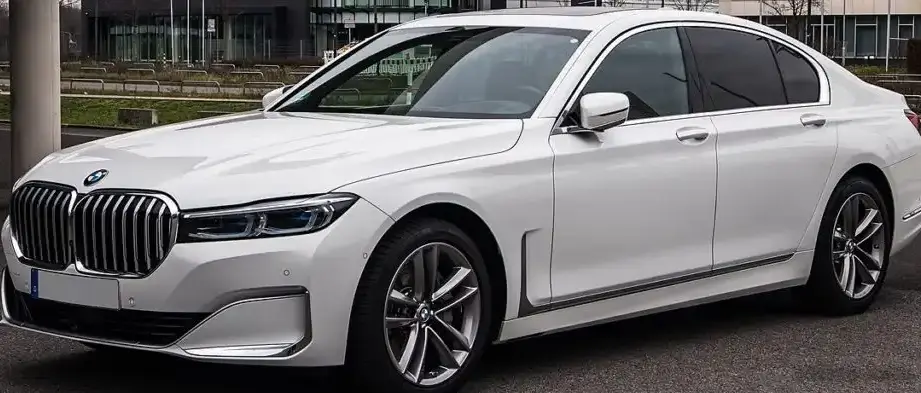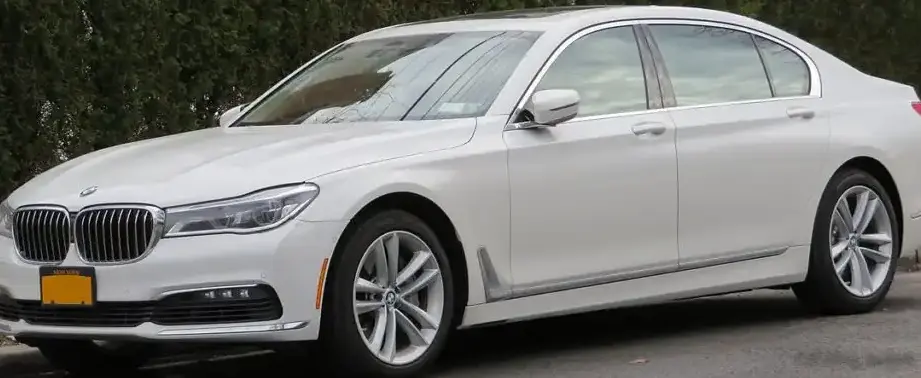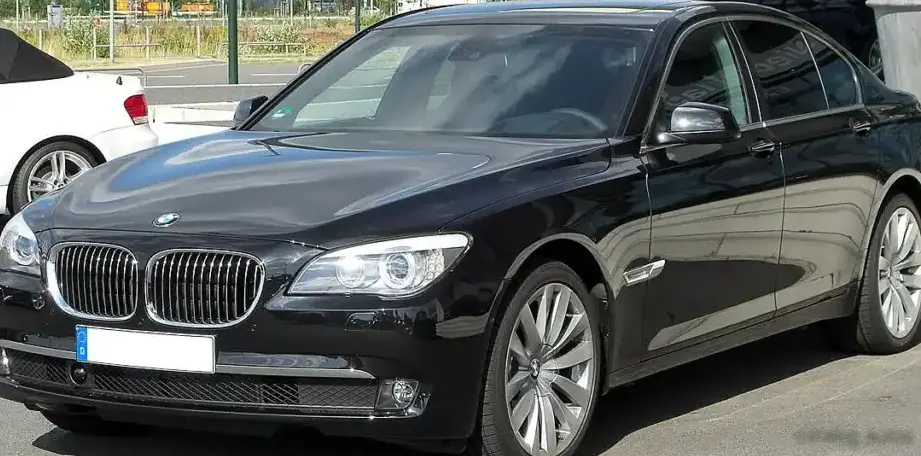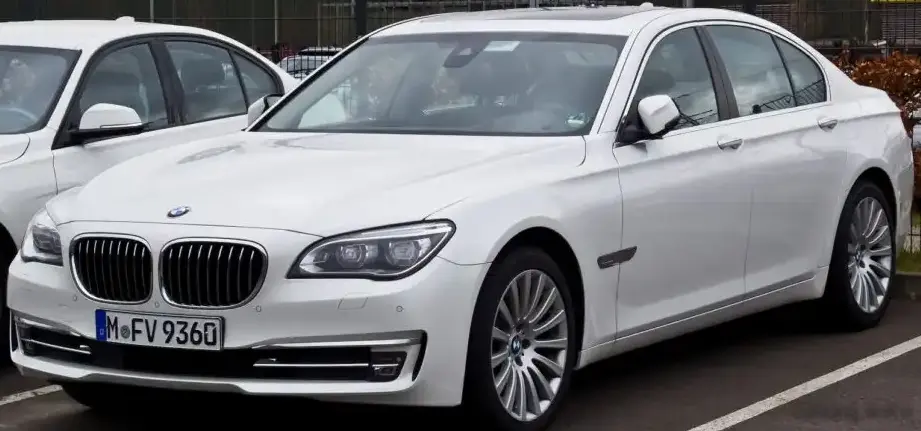
The BMW 740d, part of the F01 LCI (Life Cycle Impulse) facelift of the 7 Series, was produced from 2012 to 2015. This variant represented a key offering in BMW’s flagship sedan lineup, positioned as a blend of performance and efficiency thanks to its turbocharged diesel engine. The F01 LCI brought styling updates and technological enhancements to the 7 Series, solidifying its position as a competitor to the Mercedes-Benz S-Class and Audi A8. The 740d, with its 313 horsepower diesel engine and Steptronic automatic transmission, aimed to appeal to buyers seeking a luxurious and capable grand tourer with improved fuel economy compared to its gasoline-powered siblings.
Technical Specifications
| Brand | BMW |
| Model | 7 Series |
| Generation | 7 Series (F01 LCI, facelift 2012) |
| Type (Engine) | 740d (313 Hp) Steptronic |
| Start of production | 2012 |
| End of production | 2015 |
| Powertrain Architecture | Internal Combustion engine |
| Body type | Sedan |
| Seats | 5 |
| Doors | 4 |
| Fuel consumption (urban) | 6.9 l/100 km (34.1 US mpg, 40.9 UK mpg, 14.5 km/l) |
| Fuel consumption (extra urban) | 4.9 l/100 km (48 US mpg, 57.6 UK mpg, 20.4 km/l) |
| Fuel consumption (combined) | 5.7 l/100 km (41.3 US mpg, 49.6 UK mpg, 17.5 km/l) |
| Fuel Type | Diesel |
| Acceleration 0 – 100 km/h | 5.5 sec |
| Acceleration 0 – 62 mph | 5.5 sec |
| Acceleration 0 – 60 mph | 5.2 sec |
| Maximum speed | 250 km/h (155.34 mph) |
| Weight-to-power ratio | 6.2 kg/Hp, 161.3 Hp/tonne |
| Weight-to-torque ratio | 3.1 kg/Nm, 324.7 Nm/tonne |
| Power | 313 Hp @ 4300 rpm |
| Power per litre | 104.6 Hp/l |
| Torque | 630 Nm @ 1500 rpm (464.66 lb.-ft. @ 1500 rpm) |
| Engine layout | Front, Longitudinal |
| Engine Model/Code | N57D30B |
| Engine displacement | 2993 cm3 (182.64 cu. in.) |
| Number of cylinders | 6 |
| Engine configuration | Inline |
| Cylinder Bore | 84 mm (3.31 in.) |
| Piston Stroke | 90 mm (3.54 in.) |
| Compression ratio | 16.5:1 |
| Number of valves per cylinder | 4 |
| Fuel injection system | Diesel Commonrail |
| Engine aspiration | Turbocharger, Intercooler |
| Engine oil capacity | 6.5 l (6.87 US qt | 5.72 UK qt) |
| Coolant | 8.9 l (9.4 US qt | 7.83 UK qt) |
| Kerb Weight | 1940 kg (4276.97 lbs.) |
| Max. weight | 2515 kg (5544.63 lbs.) |
| Max load | 575 kg (1267.66 lbs.) |
| Fuel tank capacity | 80 l (21.13 US gal | 17.6 UK gal) |
| Length | 5079 mm (199.96 in.) |
| Width | 1902 mm (74.88 in.) |
| Height | 1471 mm (57.91 in.) |
| Wheelbase | 3070 mm (120.87 in.) |
| Front track | 1611 mm (63.43 in.) |
| Rear track | 1650 mm (64.96 in.) |
| Drivetrain Architecture | Rear wheel drive |
| Number of gears | 8 |
| Gearbox type | automatic transmission Steptronic |
| Front brakes | Ventilated discs |
| Rear brakes | Ventilated discs |
| Tires size | 245/50 R18 100Y |
| Wheel rims size | 8J x 18 |
Powertrain & Engine Architecture
The heart of the 740d is the N57D30B, a 3.0-liter inline-six diesel engine. This engine is a member of BMW’s highly regarded N57 family, known for its robust construction and sophisticated technology. The N57D30B utilizes a common rail direct injection system, delivering fuel at extremely high pressures for optimized combustion. A variable geometry turbocharger (VGT) with intercooling further enhances performance and efficiency. The engine also features four valves per cylinder and a sophisticated engine management system. The “D30B” designation indicates a power output of approximately 300 horsepower, though in the 740d, it was tuned to 313 hp. The engine’s torque output of 630 Nm (464.66 lb-ft) is available from a low 1500 rpm, providing strong acceleration and effortless cruising. Paired with the engine is an 8-speed Steptronic automatic transmission, offering smooth and responsive gear changes. This transmission contributes to both performance and fuel efficiency, with closely spaced gear ratios optimized for the engine’s torque curve.
Driving Characteristics
The 740d delivers a distinctly different driving experience compared to its gasoline-powered counterparts. While not as explosively quick as the 750i, the 740d offers a substantial amount of torque, resulting in strong acceleration in everyday driving situations. The 0-60 mph time of around 5.2 seconds is respectable for a large luxury sedan. The Steptronic transmission is well-tuned, providing seamless shifts and contributing to a relaxed driving experience. The engine is remarkably quiet and refined for a diesel, with minimal vibration and noise intrusion into the cabin. The long gearing, typical of a grand tourer, prioritizes fuel efficiency at highway speeds. Compared to the 730d, the 740d offered a significant performance upgrade, while still maintaining excellent fuel economy. The 740d also provided a more refined and powerful alternative to the 730i, appealing to drivers who preferred the characteristics of a diesel engine.
Equipment & Trim Levels
The 740d typically came well-equipped, reflecting its position as a luxury vehicle. Standard features included leather upholstery, power-adjustable heated front seats, a premium sound system, a navigation system, and a comprehensive suite of safety features. The LCI facelift brought updated interior trim options and improved infotainment systems. Optional extras included features like massaging seats, a rear-seat entertainment system, adaptive cruise control, and a head-up display. The interior design emphasized luxury and comfort, with high-quality materials and meticulous attention to detail. The dashboard layout was clean and modern, with intuitive controls and a user-friendly interface.
Chassis & Braking
The F01 7 Series featured a sophisticated chassis designed to provide a comfortable and controlled ride. The 740d utilized a double-wishbone front suspension and an integral-arm rear suspension. Air suspension was standard, providing adjustable ride height and damping. The braking system consisted of ventilated discs on all four wheels, providing ample stopping power. Anti-lock brakes (ABS), electronic stability control (ESC), and traction control were standard safety features. The steering system was a rack-and-pinion setup with power assistance, offering precise and responsive handling.
Market Reception & Comparison
The 740d was generally well-received by automotive critics. It was praised for its blend of performance, efficiency, and luxury. The diesel engine was noted for its refinement and strong torque output. Fuel economy was a significant selling point, particularly in Europe where diesel fuel was more prevalent and often less expensive than gasoline. Compared to the 750i, the 740d offered a more economical option without sacrificing too much performance. Against competitors like the Mercedes-Benz S350 CDI and Audi A8 3.0 TDI, the 740d held its own, offering a compelling combination of features and driving dynamics.
Legacy
The N57 engine family, including the N57D30B found in the 740d, has proven to be remarkably reliable. While diesel engines can be susceptible to issues with the diesel particulate filter (DPF) and fuel injectors, the N57 has generally demonstrated good longevity with proper maintenance. Today, used 740d models represent a relatively affordable entry point into the luxury sedan segment. They continue to appeal to buyers seeking a comfortable, capable, and fuel-efficient grand tourer. The 740d’s combination of performance, efficiency, and refinement has cemented its place as a desirable and well-regarded vehicle in the used car market.