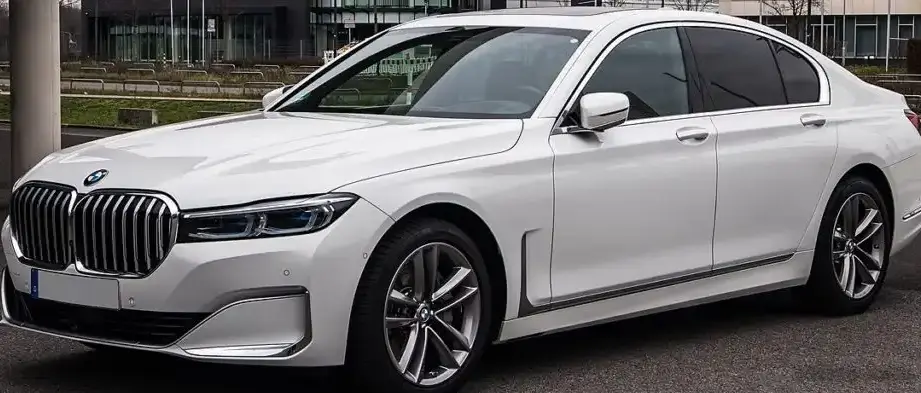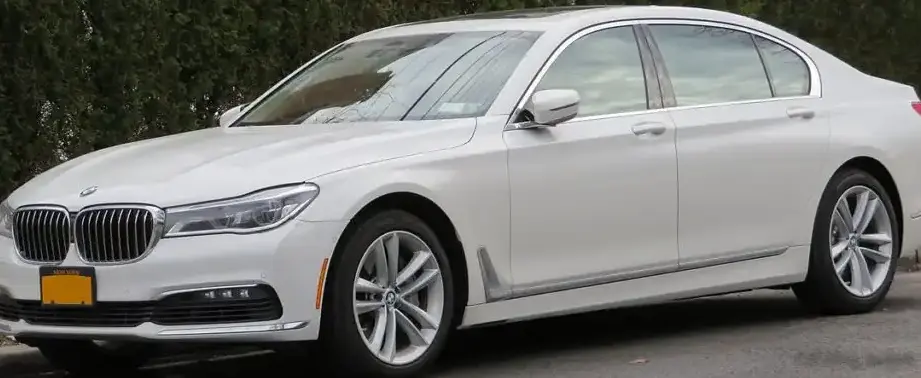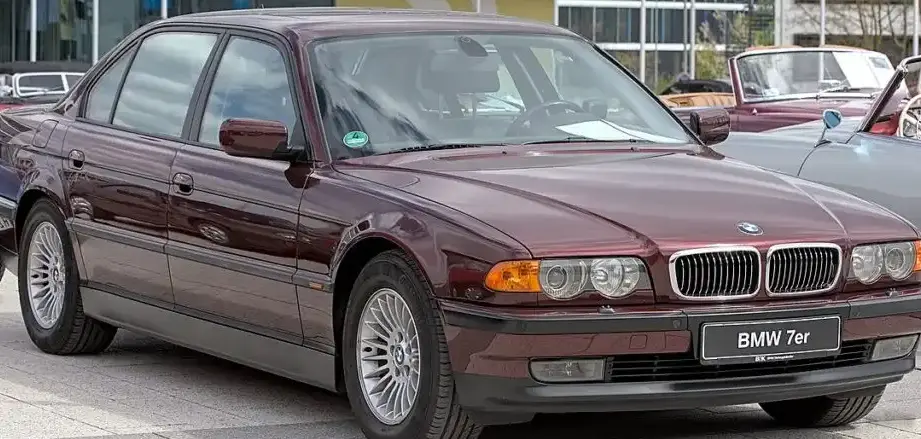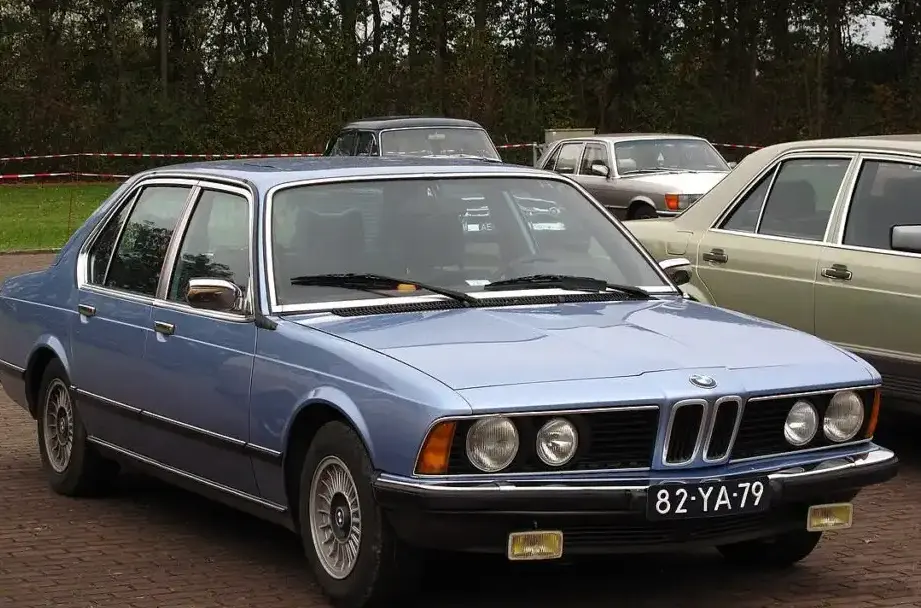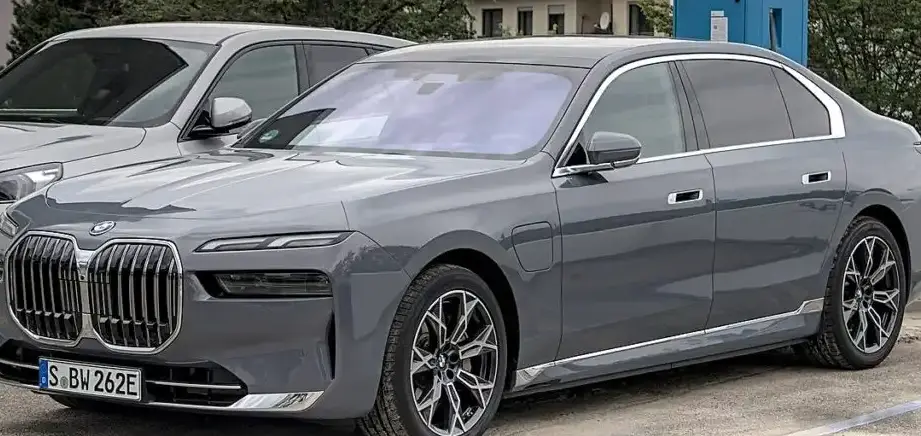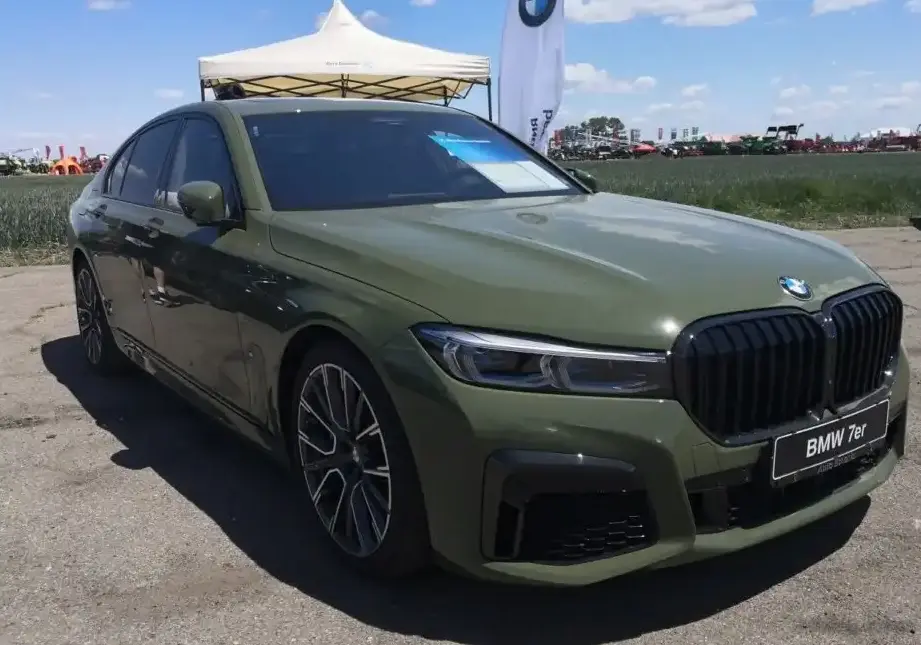
The BMW 745e, part of the G11 LCI (Life Cycle Impulse) facelift of the 7 Series, represents BMW’s foray into plug-in hybrid technology within its flagship sedan range. Production spanned from January 2019 to 2022, positioning the 745e as a technologically advanced and fuel-efficient alternative to the traditional gasoline-powered 7 Series models. This variant aimed to appeal to buyers seeking luxury, performance, and reduced emissions, particularly in markets with stringent environmental regulations and incentives for electric vehicle adoption. The 745e combined a 3.0-liter inline-six engine with an electric motor, offering a blend of power and efficiency not previously available in the 7 Series lineup.
Technical Specifications
| Brand | BMW |
| Model | 7 Series |
| Generation | 7 Series (G11 LCI, facelift 2019) |
| Type (Engine) | 745e (394 Hp) Plug-in Hybrid Steptronic |
| Start of production | January, 2019 |
| End of production | 2022 |
| Powertrain Architecture | PHEV (Plug-in Hybrid Electric Vehicle) |
| Body type | Sedan |
| Seats | 5 |
| Doors | 4 |
| Fuel consumption (economy) – combined | 2.1-2.3 l/100 km (112 – 102.3 US mpg, 134.5 – 122.8 UK mpg, 47.6 – 43.5 km/l) |
| CO2 emissions | 48-52 g/km |
| Fuel Type | Petrol / electricity |
| Acceleration 0 – 100 km/h | 5.2 sec |
| Acceleration 0 – 62 mph | 5.2 sec |
| Acceleration 0 – 60 mph | 4.9 sec |
| Maximum speed | 250 km/h (155.34 mph) |
| Emission standard | Euro 6d-TEMP |
| Weight-to-power ratio | 5.1 kg/Hp, 197.5 Hp/tonne |
| Weight-to-torque ratio | 3.3 kg/Nm, 300.8 Nm/tonne |
| Gross battery capacity | 12 kWh |
| Battery voltage | 355 V |
| Battery technology | Lithium-ion (Li-Ion) |
| Battery location | Below the floor, under the rear seats |
| Recuperation output | 20 kW |
| All-electric range | 54-58 km (33.55 – 36.04 mi) |
| Average Energy consumption | 15.1-15.6 kWh/100 km (24.3 – 25.11 kWh/100 mi, 139 – 134 MPGe, 6.6 – 6.4 km/kWh, 4.1 – 4 mi/kWh) |
| Max speed (electric) | 140 km/h (86.99 mph) |
| Electric motor power | 113 Hp @ 3170 rpm (195.45 lb.-ft. @ 0-2700 rpm) |
| Electric motor torque | 265 Nm @ 0-2700 rpm |
| Electric motor location | Between the combustion engine and the transmission |
| System power | 394 Hp |
| System torque | 600 Nm (442.54 lb.-ft.) |
| Power | 286 Hp @ 5000-6000 rpm |
| Torque | 450 Nm @ 1500-3500 rpm (331.9 lb.-ft. @ 1500-3500 rpm) |
| Engine layout | Front, Longitudinal |
| Engine Model/Code | B58B30C |
| Engine displacement | 2998 cm3 (182.95 cu. in.) |
| Number of cylinders | 6 |
| Engine configuration | Inline |
| Cylinder Bore | 82 mm (3.23 in.) |
| Piston Stroke | 94.6 mm (3.72 in.) |
| Compression ratio | 11:1 |
| Number of valves per cylinder | 4 |
| Fuel injection system | Direct injection |
| Engine aspiration | Twin-power turbo, Intercooler |
| Valvetrain | VALVETRONIC |
| Engine oil capacity | 6.5 l (6.87 US qt | 5.72 UK qt) |
| Coolant | 6.2 l (6.55 US qt | 5.46 UK qt) |
| Kerb Weight | 1995 kg (4398.22 lbs.) |
| Max. weight | 2655 kg (5853.27 lbs.) |
| Max load | 660 kg (1455.05 lbs.) |
| Trunk (boot) space – minimum | 420 l (14.83 cu. ft.) |
| Fuel tank capacity | 46 l (12.15 US gal | 10.12 UK gal) |
| Max. roof load | 100 kg (220.46 lbs.) |
| Length | 5120 mm (201.57 in.) |
| Width | 1902 mm (74.88 in.) |
| Width including mirrors | 2169 mm (85.39 in.) |
| Height | 1467 mm (57.76 in.) |
| Wheelbase | 3070 mm (120.87 in.) |
| Front track | 1611 mm (63.43 in.) |
| Rear (Back) track | 1640 mm (64.57 in.) |
| Front overhang | 902 mm (35.51 in.) |
| Rear overhang | 1148 mm (45.2 in.) |
| Ride height (ground clearance) | 135 mm (5.31 in.) |
| Drag coefficient (Cd) | 0.27 |
| Minimum turning circle | 12.3 m (40.35 ft.) |
| Drivetrain Architecture | The Internal combustion engine (ICE) and electric motor drive the rear wheels of the car with the ability to work in full electric or mixed mode. |
| Drive wheel | Rear wheel drive |
| Number of gears and type of gearbox | 8 gears, automatic transmission Steptronic |
| Front suspension | Double wishbone, Air suspension |
| Rear suspension | Independent multi-link suspension, Air suspension |
| Front brakes | Ventilated discs |
| Rear brakes | Ventilated discs |
| Assisting systems | ABS (Anti-lock braking system) |
| Steering type | Steering rack and pinion |
| Power steering | Electric Steering |
| Tires size | 245/50 R18 |
| Wheel rims size | 8J x 18 |
Powertrain & Engine Architecture
At the heart of the 745e lies BMW’s B58B30C 3.0-liter inline-six engine, a member of the modular B-series engine family. This engine utilizes direct injection and a twin-scroll turbocharger with intercooling, producing 286 horsepower and 450 Nm (331.9 lb-ft) of torque. The engine’s VALVETRONIC system allows for precise control of valve lift and timing, optimizing efficiency and responsiveness. Integrated with the engine is an 83 kW (113 hp) electric motor, powered by a 12 kWh lithium-ion battery pack located under the rear seats. This configuration allows for an all-electric range of 54-58 km (33.55 – 36.04 mi) under the NEDC cycle. The electric motor delivers 265 Nm (195.45 lb-ft) of torque, available instantly, contributing to brisk acceleration. The combined system output reaches 394 hp and 600 Nm (442.54 lb-ft) of torque. Power is delivered to the rear wheels via an eight-speed Steptronic automatic transmission, specifically tuned to work seamlessly with both the combustion engine and the electric motor. The transmission features optimized gear ratios for both fuel efficiency and performance.
Driving Characteristics
The 745e offers a distinct driving experience compared to its gasoline-only counterparts. In electric mode, the car provides near-silent acceleration and a smooth, refined ride. The instant torque from the electric motor provides responsive performance in urban environments. When the battery is depleted or when more power is demanded, the gasoline engine seamlessly kicks in, providing a combined output that delivers strong acceleration – 0 to 60 mph in approximately 4.9 seconds. While not as overtly sporty as the 750i, the 745e offers ample power for confident highway cruising and overtaking. The Steptronic transmission provides smooth and precise shifts, and the hybrid system intelligently manages power delivery to optimize efficiency. Compared to the 740i, the 745e offers similar overall performance but with the added benefit of electric-only driving and significantly improved fuel economy. It differs from the 750i in terms of outright power and performance, but provides a more environmentally friendly alternative.
Equipment & Trim Levels
The 745e typically came well-equipped, reflecting its position as a premium model. Standard features included BMW’s iDrive infotainment system with a large touchscreen display, premium leather upholstery, power-adjustable seats with memory function, a panoramic sunroof, and a comprehensive suite of driver-assistance systems, such as lane departure warning, forward collision warning, and automatic emergency braking. Optional extras included upgraded audio systems (such as Bowers & Wilkins), rear-seat entertainment systems, massaging seats, and various cosmetic enhancements. The interior trim generally featured high-quality materials and a sophisticated design, emphasizing luxury and comfort. The 745e often included unique badging and interior accents to distinguish it from other 7 Series models.
Chassis & Braking
The 745e utilizes a sophisticated chassis setup, featuring double-wishbone front suspension and an independent multi-link rear suspension, both incorporating air suspension. This system provides a comfortable ride quality and allows for adjustable ride height. The air suspension also contributes to improved stability and handling. Braking duties are handled by ventilated disc brakes on all four wheels, providing ample stopping power. The car is equipped with ABS (Anti-lock Braking System), electronic stability control, and other advanced braking assistance systems. The added weight of the battery pack is partially offset by the optimized weight distribution, contributing to balanced handling characteristics.
Market Reception & Comparison
The BMW 745e was generally well-received by automotive critics, who praised its blend of luxury, performance, and fuel efficiency. Reviewers noted the seamless integration of the electric motor and gasoline engine, as well as the car’s comfortable ride and refined interior. However, some critics pointed to the reduced trunk space due to the battery pack and the slightly higher price compared to the gasoline-only models. In terms of fuel economy, the 745e significantly outperformed its gasoline-powered siblings, offering a combined fuel consumption of 2.1-2.3 l/100 km. Compared to the 740i, the 745e offered a compelling alternative for buyers prioritizing fuel efficiency and electric-only driving capability. Against the 750i, it represented a more environmentally conscious choice, albeit with slightly less overall performance.
Legacy
The BMW 745e represents an important step in BMW’s electrification strategy. While early plug-in hybrid systems sometimes faced reliability concerns, the B58 engine and the 745e’s powertrain have proven relatively robust. On the used car market, the 745e holds its value reasonably well, particularly among buyers seeking a luxury sedan with low running costs and environmental benefits. The battery pack’s longevity is a key consideration for potential buyers, but with proper maintenance and charging habits, the battery can provide many years of reliable service. The 745e paved the way for BMW’s subsequent plug-in hybrid and fully electric models, demonstrating the brand’s commitment to sustainable mobility.