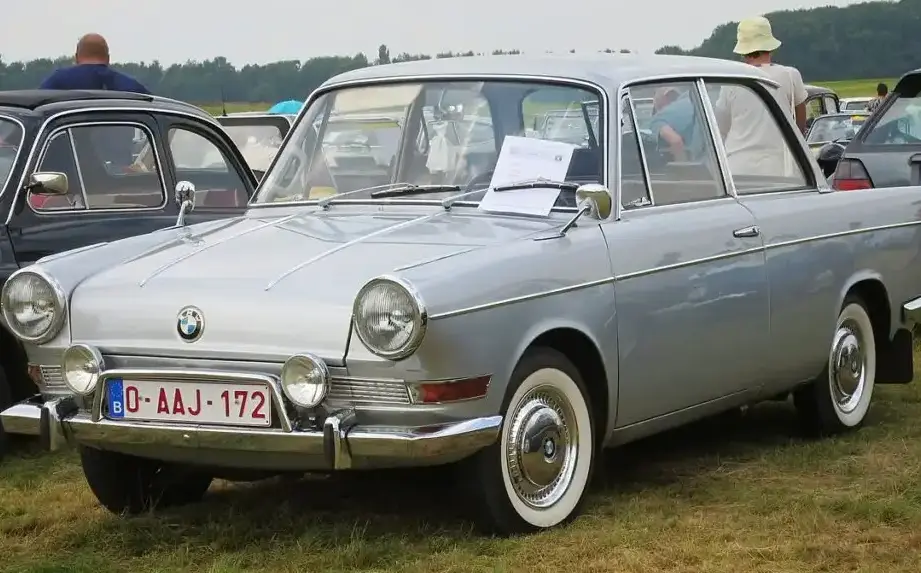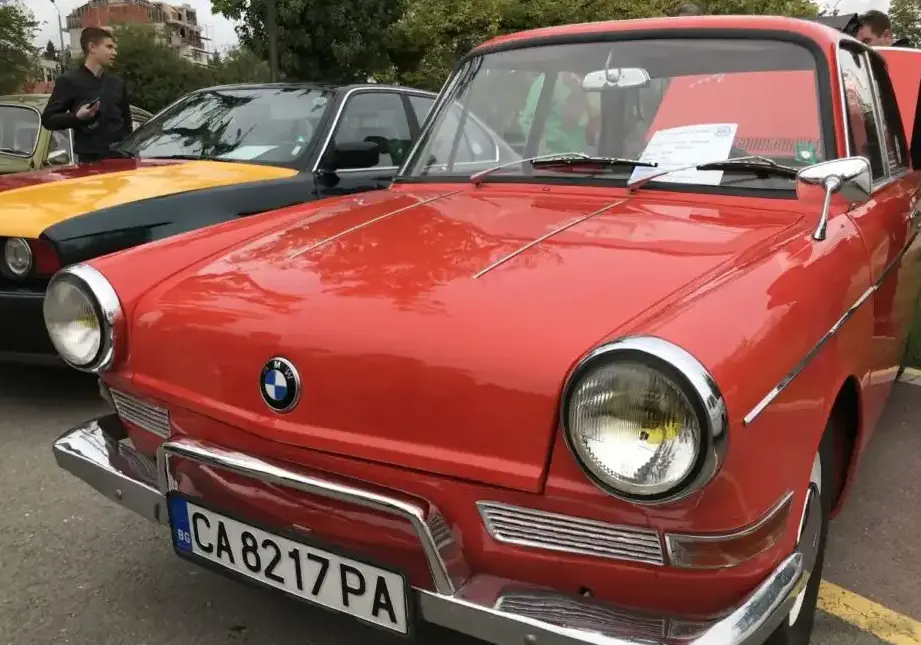
The BMW 700 LS Luxus 0.7, producing 30 horsepower, was a pivotal model in BMW’s post-war recovery. Produced between 1962 and 1965, it represented a crucial step in preventing the Bavarian automaker from potential financial ruin. This variant, often simply referred to as the 700, was the final iteration of the 700 series, and the ‘Luxus’ designation denoted a slightly more refined trim level. It occupied the entry-level position within the 700 range, offering a more accessible price point than the higher-specification models, and was built on the BMW 700 platform.
Technical Specifications
| Brand | BMW |
| Model | 700 |
| Generation | 700 LS |
| Type (Engine) | Luxus 0.7 (30 Hp) |
| Start of production | 1962 |
| End of production | 1965 |
| Powertrain Architecture | Internal Combustion engine |
| Body type | Sedan |
| Seats | 4 |
| Doors | 2 |
| Fuel consumption (combined) | 5.9 l/100 km (39.9 US mpg, 47.9 UK mpg, 16.9 km/l) |
| Fuel Type | Petrol (Gasoline) |
| Maximum speed | 120 km/h (74.56 mph) |
| Weight-to-power ratio | 22.7 kg/Hp, 44.1 Hp/tonne |
| Weight-to-torque ratio | 13.6 kg/Nm, 73.5 Nm/tonne |
| Power | 30 Hp @ 5000 rpm |
| Power per litre | 43 Hp/l |
| Torque | 50 Nm @ 3400 rpm (36.88 lb.-ft. @ 3400 rpm) |
| Engine layout | Rear, Longitudinal |
| Engine displacement | 697 cm3 (42.53 cu. in.) |
| Number of cylinders | 2 |
| Engine configuration | Boxer |
| Cylinder Bore | 78 mm (3.07 in.) |
| Piston Stroke | 73 mm (2.87 in.) |
| Compression ratio | 7.5:1 |
| Number of valves per cylinder | 2 |
| Fuel injection system | Carburettor |
| Engine aspiration | Naturally aspirated engine |
| Valvetrain | SOHC |
| Engine oil capacity | 2 l (2.11 US qt | 1.76 UK qt) |
| Kerb Weight | 680 kg (1499.14 lbs.) |
| Max. weight | 1050 kg (2314.85 lbs.) |
| Max load | 370 kg (815.71 lbs.) |
| Fuel tank capacity | 28 l (7.4 US gal | 6.16 UK gal) |
| Length | 3860 mm (151.97 in.) |
| Width | 1480 mm (58.27 in.) |
| Height | 1360 mm (53.54 in.) |
| Wheelbase | 2280 mm (89.76 in.) |
| Front track | 1270 mm (50 in.) |
| Rear (Back) track | 1200 mm (47.24 in.) |
| Minimum turning circle | 9.8 m (32.15 ft.) |
| Drivetrain Architecture | The Internal combustion engine (ICE) drives the rear wheels of the vehicle. |
| Drive wheel | Rear wheel drive |
| Number of gears and type of gearbox | 4 gears, manual transmission |
| Front suspension | Trailing arm |
| Rear suspension | Trailing arm |
| Front brakes | Drum |
| Rear brakes | Drum |
| Steering type | Steering rack and pinion |
| Power steering | Hydraulic Steering |
Powertrain & Engine Architecture
The heart of the 700 LS Luxus was its 697cc, two-cylinder boxer engine. This engine, designated with various codes depending on the year, was a significant engineering achievement for its time. The boxer configuration, with horizontally opposed cylinders, provided a low center of gravity, contributing to the car’s handling. The engine utilized a single Solex carburetor for fuel delivery and a single overhead camshaft (SOHC) operated the two valves per cylinder. While 30 horsepower seems modest by modern standards, it was a respectable figure for an engine of this displacement in the early 1960s. The engine was mounted longitudinally in the rear of the vehicle, driving the rear wheels through a four-speed manual transmission. This rear-engine, rear-wheel-drive layout was common for smaller European cars of the era, offering advantages in packaging and winter traction.
Driving Characteristics
The 700 LS Luxus 0.7 offered a unique driving experience. The small engine required frequent gear changes to maintain momentum, especially when climbing hills or overtaking. The four-speed manual transmission was relatively light and precise, but the limited power meant that spirited driving demanded careful planning. Compared to the later 700 models with larger engines, the 0.7-liter version felt significantly slower. However, its lightweight construction and nimble handling made it enjoyable to drive on winding roads. The rear-engine layout contributed to a distinctive feel, with noticeable rear weight bias. Fuel economy was a strong point, with the 700 achieving around 39.9 US mpg under normal driving conditions.
Equipment & Trim Levels
The ‘Luxus’ trim level offered a slightly more comfortable and refined interior compared to the base 700. Standard features included cloth upholstery, a basic instrument panel, and a heater. The dashboard was relatively simple, focusing on essential information. Optional extras included a radio, whitewall tires, and upgraded interior trim. The interior space was limited, reflecting the car’s small overall dimensions. The 700 was designed as a practical and affordable car, so luxury features were kept to a minimum.
Chassis & Braking
The 700 LS Luxus featured a simple but effective chassis design. The suspension utilized trailing arms at both the front and rear, providing a comfortable ride on most road surfaces. The car’s relatively light weight helped to mitigate the limitations of the trailing arm suspension. Braking was provided by drum brakes on all four wheels. While adequate for the car’s performance, the drum brakes lacked the stopping power of disc brakes, which were becoming increasingly common on larger and more expensive cars. The steering was a rack and pinion system, offering precise and responsive handling. Hydraulic steering assist was available as an option, making the car easier to maneuver at low speeds.
Market Reception & Comparison
The BMW 700 LS Luxus 0.7 was generally well-received by critics, particularly for its innovative engine design and surprisingly good handling. However, its limited power and small size were also noted. Compared to other small cars of the era, such as the Volkswagen Beetle, the 700 offered a more sophisticated driving experience and a higher level of refinement. However, it was also more expensive than the Beetle, limiting its appeal to a broader market. The 700’s fuel economy was competitive with other cars in its class, and its reliability was generally good, although maintenance could be challenging due to the rear-engine layout.
Legacy
The BMW 700 played a vital role in saving BMW from bankruptcy in the early 1960s. It provided the financial stability that allowed the company to develop new models and expand its product line. While the 700 itself is no longer in production, it remains a popular classic car among enthusiasts. The 0.7-liter engine, while not known for its longevity, is relatively simple to maintain, and parts are still available. Today, the 700 LS Luxus 0.7 is valued for its historical significance, its unique engineering, and its charming character. Well-maintained examples command a premium in the used car market, representing a piece of BMW’s rich heritage.