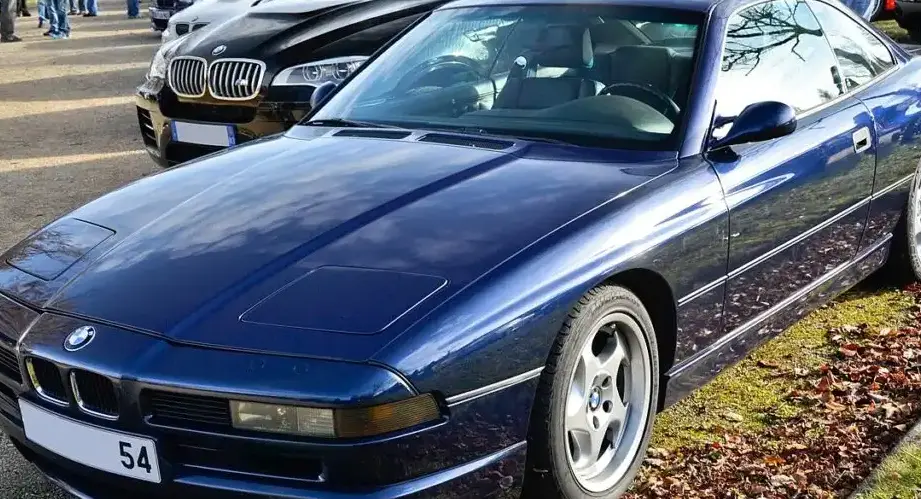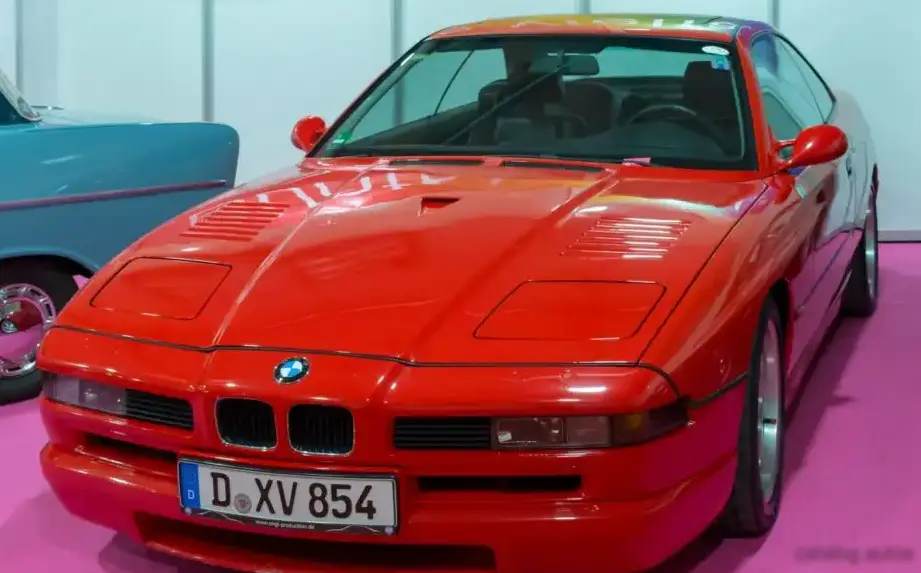
The BMW 8 Series (E31) 850i, produced from 1989 to 1992, represented BMW’s ambitious foray into the high-performance luxury coupe market. Positioned as the flagship of the E31 generation, the 850i was intended to be a technological showcase and a grand tourer capable of long-distance comfort and exhilarating performance. It was the initial launch model for the E31 platform, preceding the 840Ci and 850CSi variants. The 850i aimed to compete with grand tourers from brands like Mercedes-Benz and Jaguar, offering a blend of sophisticated engineering and luxurious appointments.
Technical Specifications
| Brand | BMW |
| Model | 8 Series |
| Generation | 8 Series (E31) |
| Type (Engine) | 850i (300 Hp) |
| Start of production | 1989 |
| End of production | 1992 |
| Powertrain Architecture | Internal Combustion engine |
| Body type | Coupe |
| Seats | 4 |
| Doors | 2 |
| Fuel consumption (economy) – urban | 19.8 l/100 km (11.9 US mpg, 14.3 UK mpg, 5.1 km/l) |
| Fuel consumption (economy) – extra urban | 8.8 l/100 km (26.7 US mpg, 32.1 UK mpg, 11.4 km/l) |
| Fuel consumption (economy) – combined | 10.4 l/100 km (22.6 US mpg, 27.2 UK mpg, 9.6 km/l) |
| Fuel Type | Petrol (Gasoline) |
| Acceleration 0 – 100 km/h | 6.8 sec |
| Acceleration 0 – 62 mph | 6.8 sec |
| Acceleration 0 – 60 mph | 6.5 sec |
| Maximum speed | 250 km/h (155.34 mph) |
| Weight-to-power ratio | 6 kg/Hp, 167.6 Hp/tonne |
| Weight-to-torque ratio | 4 kg/Nm, 251.4 Nm/tonne |
| Power | 300 Hp @ 5200 rpm |
| Power per litre | 60.1 Hp/l |
| Torque | 450 Nm @ 4100 rpm (331.9 lb.-ft. @ 4100 rpm) |
| Engine layout | Front, Longitudinal |
| Engine Model/Code | M70B50 |
| Engine displacement | 4988 cm3 (304.39 cu. in.) |
| Number of cylinders | 12 |
| Engine configuration | V-engine |
| Cylinder Bore | 84 mm (3.31 in.) |
| Piston Stroke | 75 mm (2.95 in.) |
| Compression ratio | 8.8:1 |
| Number of valves per cylinder | 4 |
| Fuel injection system | Multi-port manifold injection |
| Engine aspiration | Naturally aspirated engine |
| Engine oil capacity | 7.5 l (7.93 US qt | 6.6 UK qt) |
| Coolant | 13 l (13.74 US qt | 11.44 UK qt) |
| Kerb Weight | 1790 kg (3946.27 lbs.) |
| Max. weight | 2190 kg (4828.12 lbs.) |
| Max load | 400 kg (881.85 lbs.) |
| Trunk (boot) space – minimum | 360 l (12.71 cu. ft.) |
| Fuel tank capacity | 90 l (23.78 US gal | 19.8 UK gal) |
| Length | 4780 mm (188.19 in.) |
| Width | 1855 mm (73.03 in.) |
| Height | 1340 mm (52.76 in.) |
| Wheelbase | 2684 mm (105.67 in.) |
| Front track | 1554 mm (61.18 in.) |
| Rear (Back) track | 1562 mm (61.5 in.) |
| Ride height (ground clearance) | 140 mm (5.51 in.) |
| Drag coefficient (Cd) | 0.29 |
| Minimum turning circle (turning diameter) | 11.5 m (37.73 ft.) |
| Drivetrain Architecture | The Internal combustion engine (ICE) drives the rear wheels of the vehicle. |
| Drive wheel | Rear wheel drive |
| Number of gears and type of gearbox | 6 gears, manual transmission |
| Front brakes | Ventilated discs |
| Rear brakes | Disc |
| Assisting systems | ABS (Anti-lock braking system) |
| Steering type | Steering rack and pinion |
| Power steering | Hydraulic Steering |
| Tires size | 235/50 ZR 16 |
| Wheel rims size | 16 |
Powertrain & Engine Architecture
The heart of the 850i is the M70B50, a 5.0-liter (4988cc) naturally aspirated V12 engine. This engine, a cornerstone of BMW’s engineering prowess at the time, featured a 60-degree V-angle and employed aluminum alloy construction for both the cylinder block and cylinder heads. The M70 utilized a Bosch Motronic engine management system controlling multi-port fuel injection. The valvetrain consisted of four valves per cylinder, operated by double overhead camshafts. The 850i was initially offered exclusively with a 6-speed manual transmission, providing a direct connection between the engine and the rear wheels. This transmission was chosen to handle the substantial torque output of the V12. The engine’s design prioritized smooth power delivery and refinement over outright peak horsepower, making it well-suited for high-speed cruising.
Driving Characteristics
The 850i with the 6-speed manual transmission offered a compelling driving experience. Acceleration from 0-60 mph was achieved in approximately 6.5 seconds, and it could reach a governed top speed of 155 mph. The V12 engine provided a broad torque curve, delivering ample power throughout the rev range. The manual gearbox allowed for precise control, enhancing the driving engagement. While not as overtly sporty as some contemporary coupes, the 850i excelled in providing a comfortable and refined grand touring experience. The long wheelbase and sophisticated suspension contributed to a stable and composed ride, even at high speeds.
Equipment & Trim Levels
The 850i was generously equipped with luxury features as standard. Interior appointments included leather upholstery, power-adjustable seats with memory function, climate control, and a high-end sound system. The dashboard featured a clean and elegant design, with wood trim accents. Optional extras included a sunroof, upgraded sound systems, and various customization options for interior materials and colors. The 850i aimed to provide a luxurious and comfortable environment for both driver and passengers.
Chassis & Braking
The E31 chassis was a sophisticated design featuring independent suspension all around. The front suspension utilized MacPherson struts, while the rear employed a multi-link setup. This configuration provided a good balance between ride comfort and handling precision. The 850i was equipped with ventilated disc brakes on all four wheels, along with an Anti-lock Braking System (ABS) as standard. The braking system provided ample stopping power and stability. The steering was a rack-and-pinion system with hydraulic power assistance, offering precise and responsive steering feel.
Market Reception & Comparison
The BMW 850i was initially well-received by automotive critics, who praised its luxurious interior, powerful engine, and refined driving experience. However, its high price tag and complex engineering contributed to relatively low sales figures. Compared to the later 840Ci, the 850i offered significantly more performance due to its larger V12 engine. The 850i’s fuel economy was relatively poor, reflecting the demands of the V12 engine. Reliability was generally good, but the complex systems required diligent maintenance.
Legacy
The BMW E31 850i remains a sought-after classic car today, appreciated for its elegant design, powerful engine, and technological innovation. The M70 V12 engine is known for its durability when properly maintained, although parts availability can be a challenge. The 850i represents a significant chapter in BMW’s history, showcasing the company’s commitment to engineering excellence and luxury. Well-maintained examples command high prices in the used car market, appealing to collectors and enthusiasts who appreciate its unique blend of performance and refinement.