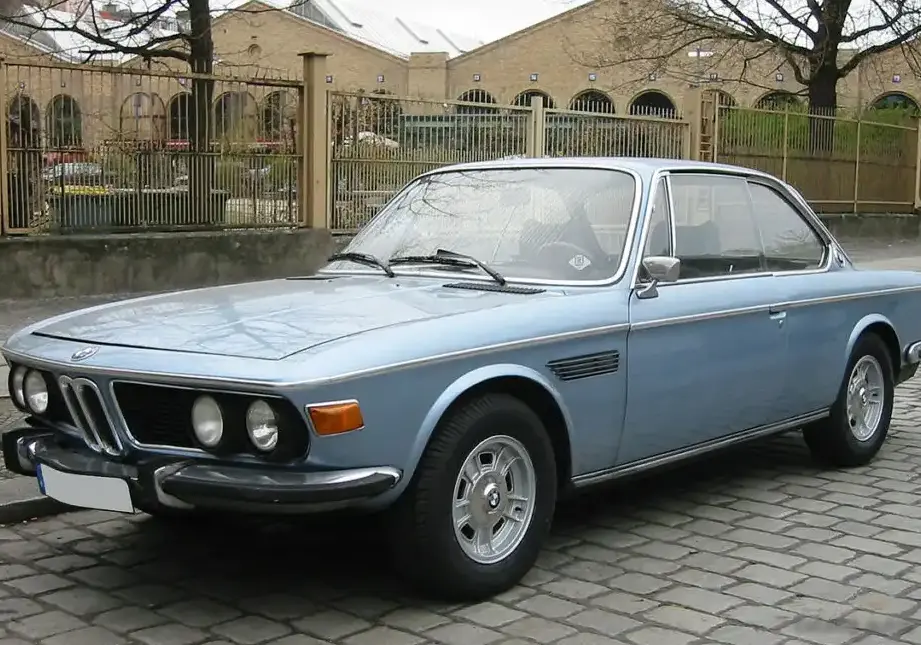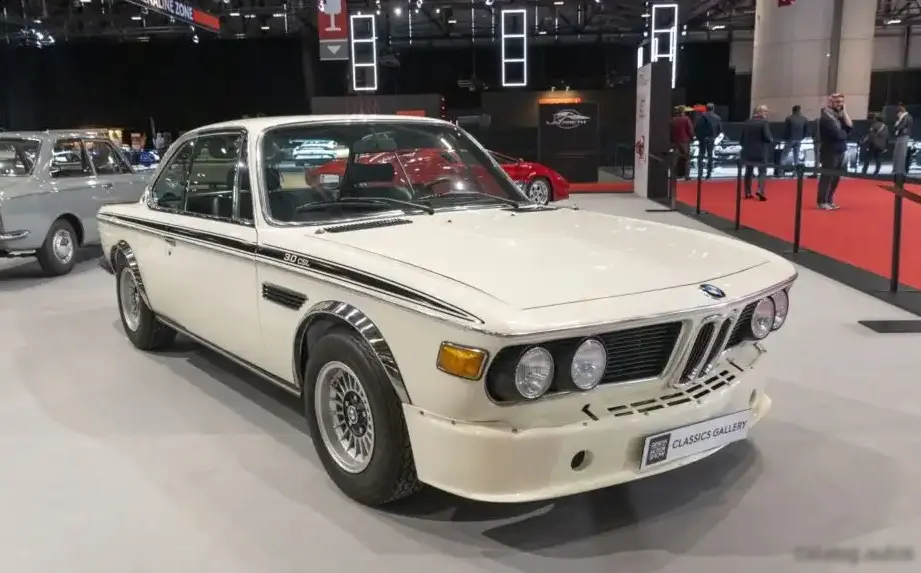
The BMW E9 3.0CS, produced between April 1971 and October 1975, represents a pivotal moment in BMW’s history, solidifying its reputation for building sophisticated, performance-oriented grand tourers. Positioned as the flagship coupe within the E9 generation (internally known as the New Six series), the 3.0CS offered a blend of luxury, performance, and distinctive styling. It was a direct successor to the earlier 2800CS and 3.0C models, and served as a precursor to the later 6-Series coupes. The “CS” designation stood for “Coupé Sport,” emphasizing its sporting intentions. This model was primarily aimed at the North American and European markets, where demand for refined, high-performance coupes was strong.
Technical Specifications
| Brand | BMW |
| Model | E9 |
| Generation | E9 |
| Type (Engine) | 3.0CS (180 Hp) |
| Start of production | April, 1971 |
| End of production | October, 1975 |
| Powertrain Architecture | Internal Combustion engine |
| Body type | Coupe |
| Seats | 4 |
| Doors | 2 |
| Fuel consumption (economy) – extra urban | 8.5 l/100 km (27.7 US mpg, 33.2 UK mpg, 11.8 km/l) |
| Fuel consumption (economy) – combined | 11.2 l/100 km (21 US mpg, 25.2 UK mpg, 8.9 km/l) |
| Fuel Type | Petrol (Gasoline) |
| Acceleration 0 – 100 km/h | 8.2 sec |
| Acceleration 0 – 62 mph | 8.2 sec |
| Acceleration 0 – 60 mph | 7.8 sec |
| Maximum speed | 213 km/h (132.35 mph) |
| Weight-to-power ratio | 7.8 kg/Hp, 128.6 Hp/tonne |
| Weight-to-torque ratio | 5.4 kg/Nm, 185.7 Nm/tonne |
| Power | 180 Hp @ 6000 rpm |
| Power per litre | 60.3 Hp/l |
| Torque | 260 Nm @ 3700 rpm (191.77 lb.-ft. @ 3700 rpm) |
| Engine layout | Front, Longitudinal |
| Engine Model/Code | M30B30V |
| Engine displacement | 2985 cm3 (182.16 cu. in.) |
| Number of cylinders | 6 |
| Engine configuration | Inline |
| Cylinder Bore | 89 mm (3.5 in.) |
| Piston Stroke | 80 mm (3.15 in.) |
| Compression ratio | 9:1 |
| Number of valves per cylinder | 2 |
| Fuel injection system | Carburettor |
| Engine aspiration | Naturally aspirated engine |
| Valvetrain | SOHC |
| Engine oil capacity | 5.75 l (6.08 US qt, 5.06 UK qt) |
| Coolant | 12 l (12.68 US qt, 10.56 UK qt) |
| Kerb Weight | 1400 kg (3086.47 lbs.) |
| Max. weight | 1790 kg (3946.27 lbs.) |
| Max load | 390 kg (859.8 lbs.) |
| Trunk (boot) space – minimum | 450 l (15.89 cu. ft.) |
| Fuel tank capacity | 72 l (19.02 US gal, 15.84 UK gal) |
| Max. roof load | 75 kg (165.35 lbs.) |
| Permitted trailer load with brakes (12%) | 1300 kg (2866.01 lbs.) |
| Permitted trailer load without brakes | 650 kg (1433 lbs.) |
| Length | 4660 mm (183.46 in.) |
| Width | 1670 mm (65.75 in.) |
| Height | 1370 mm (53.94 in.) |
| Wheelbase | 2625 mm (103.35 in.) |
| Front track | 1446 mm (56.93 in.) |
| Rear (Back) track | 1402 mm (55.2 in.) |
| Minimum turning circle (turning diameter) | 10.5 m (34.45 ft.) |
| Drivetrain Architecture | The Internal combustion engine (ICE) drives the rear wheels of the vehicle. |
| Drive wheel | Rear wheel drive |
| Number of gears and type of gearbox | 4 gears, manual transmission |
| Front suspension | Double wishbone, Transverse stabilizer |
| Rear suspension | Independent coil spring, Trailing arm |
| Front brakes | Ventilated discs, 272 mm |
| Rear brakes | Ventilated discs, 272 mm |
| Steering type | Cone worm with recirculation balls |
| Power steering | Hydraulic Steering |
| Tires size | 195/75 R14 |
| Wheel rims size | 6J x 14 |
Powertrain & Engine Architecture
The heart of the 3.0CS is the M30B30V, a 2.985-liter (182.16 cubic inches) inline-six engine. This engine, a hallmark of BMW engineering during the era, featured a single overhead camshaft (SOHC) valvetrain operating two valves per cylinder. Unlike later BMW engines that embraced fuel injection, the 3.0CS utilized twin Solex 40 PHH carburetors, a design choice reflecting the technology prevalent at the time. The engine produced 180 horsepower at 6000 rpm and 260 Nm (191.77 lb-ft) of torque at 3700 rpm. The engine’s longitudinal front-mounted layout, coupled with rear-wheel drive, provided a classic sports car configuration. The standard transmission was a four-speed manual, although a three-speed automatic transmission was also offered, impacting performance and driving experience.
Driving Characteristics
The 3.0CS with the manual transmission offered a rewarding driving experience, characterized by smooth power delivery and responsive handling. The 180 hp engine provided ample power for spirited driving, with a 0-60 mph time of around 7.8 seconds and a top speed of 132.35 mph. The four-speed manual gearbox allowed drivers to fully exploit the engine’s torque curve. The automatic transmission, while offering convenience, noticeably dulled the car’s performance. Acceleration was slower, and the overall driving experience felt less engaging. The suspension, featuring double wishbones at the front and an independent coil spring setup at the rear, provided a comfortable ride while maintaining good handling characteristics. The steering, utilizing a cone worm and recirculation balls system with hydraulic assistance, offered a good balance of feel and ease of use.
Equipment & Trim Levels
The 3.0CS was well-equipped for its time, offering a level of luxury and refinement that set it apart from many competitors. Standard features included comfortable cloth upholstery, wood trim on the dashboard and door panels, and a comprehensive instrument cluster. Power steering and disc brakes on all four wheels were also standard. Optional extras included leather upholstery, air conditioning, a sunroof, and a more sophisticated sound system. The interior design was characterized by a clean, functional layout, emphasizing driver comfort and control. The “CS” trim level generally represented a higher level of equipment compared to the base “C” models.
Chassis & Braking
The E9 3.0CS utilized a robust chassis construction, featuring a monocoque body shell. The suspension system, as mentioned previously, employed double wishbones at the front and an independent coil spring setup with trailing arms at the rear. Braking duties were handled by ventilated disc brakes on all four wheels, providing excellent stopping power for the era. The car’s weight distribution was relatively balanced, contributing to its neutral handling characteristics. A transverse stabilizer bar was fitted at both the front and rear to reduce body roll during cornering.
Market Reception & Comparison
The BMW E9 3.0CS was generally well-received by automotive critics and enthusiasts. It was praised for its elegant styling, refined interior, and strong performance. Compared to its siblings, such as the earlier 2800CS and the later 3.0C, the 3.0CS offered a noticeable improvement in performance and refinement. The automatic transmission version, while popular with some buyers, was often criticized for detracting from the car’s sporting character. Fuel economy, at 21 US mpg combined, was typical for a performance coupe of the time. Reliability was generally good, although maintenance could be expensive due to the complexity of the engine and the availability of parts.
Legacy
The BMW E9 3.0CS remains a highly sought-after classic car today. Its elegant design, strong performance, and historical significance have made it a favorite among collectors and enthusiasts. The M30 engine, while carbureted in this iteration, proved to be a durable and reliable powerplant. Well-maintained examples command high prices in the used car market. The E9 3.0CS paved the way for future generations of BMW coupes, establishing the brand’s reputation for building sophisticated and engaging grand tourers. Finding original parts can be a challenge, but a dedicated network of suppliers and enthusiasts ensures that these classic BMWs can be kept on the road for years to come.