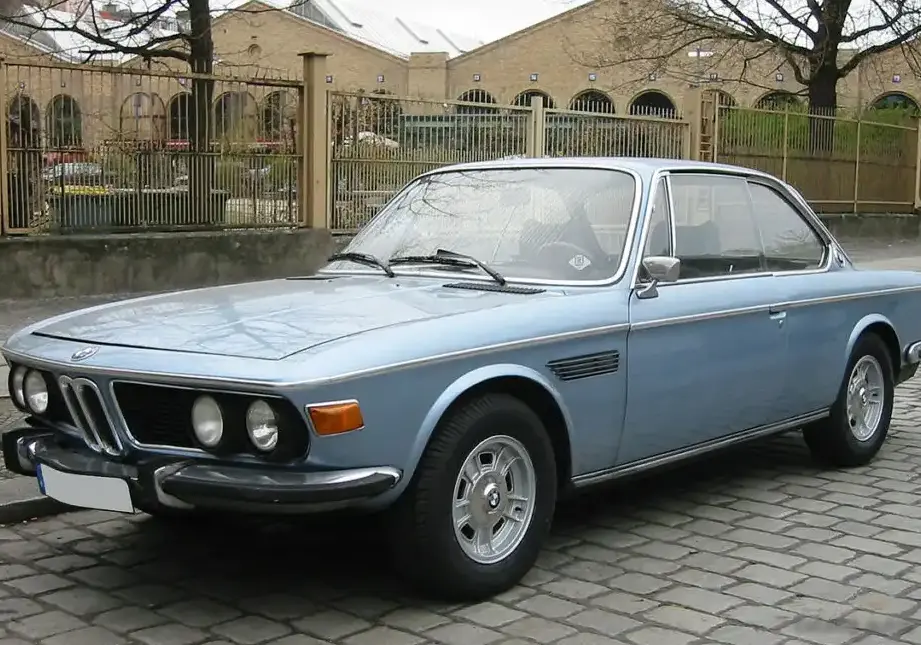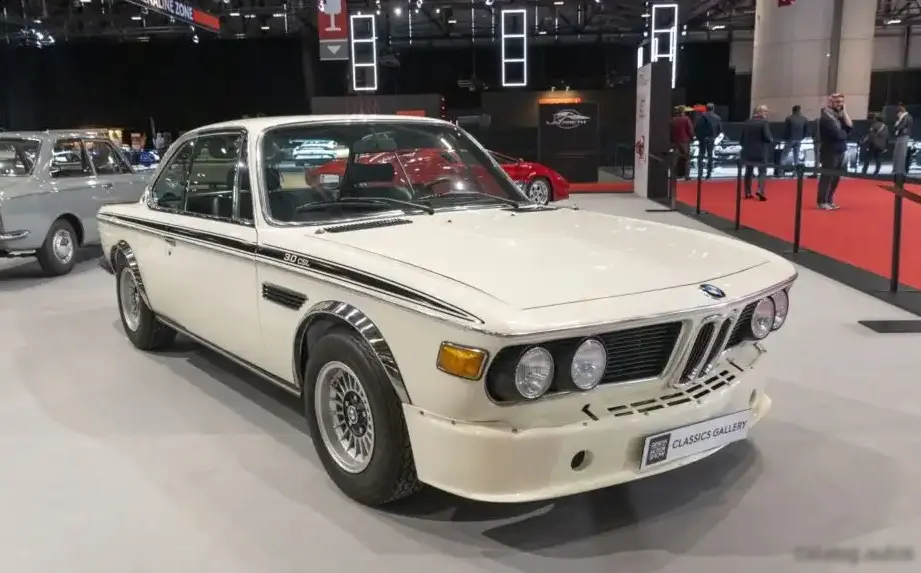
The BMW E9 3.0CSi, produced between April 1971 and October 1975, represents a pivotal point in BMW’s transition towards becoming a globally recognized luxury performance brand. Part of the E9 generation (1968-1975), the 3.0CSi was the top-of-the-line coupe offering, distinguished by its fuel injection system and increased power output compared to its carbureted siblings. It served as a flagship model, showcasing BMW’s engineering prowess and design aesthetic during a period of significant automotive evolution. The “CSi” designation signified “Coupe Sport Injection,” highlighting the key features that set it apart. It was built upon the New Class platform, which provided a solid foundation for BMW’s future success.
Technical Specifications
| Brand | BMW |
| Model | E9 |
| Generation | E9 |
| Type (Engine) | 3.0CSi (200 Hp) |
| Start of production | April, 1971 |
| End of production | October, 1975 |
| Powertrain Architecture | Internal Combustion engine |
| Body type | Coupe |
| Seats | 4 |
| Doors | 2 |
| Fuel consumption (economy) – extra urban | 8.7 l/100 km (27 US mpg, 32.5 UK mpg, 11.5 km/l) |
| Fuel consumption (economy) – combined | 10.9 l/100 km (21.6 US mpg, 25.9 UK mpg, 9.2 km/l) |
| Fuel Type | Petrol (Gasoline) |
| Acceleration 0 – 100 km/h | 7.7 sec |
| Acceleration 0 – 62 mph | 7.7 sec |
| Acceleration 0 – 60 mph | 7.3 sec |
| Maximum speed | 220 km/h (136.7 mph) |
| Weight-to-power ratio | 7.1 kg/Hp, 140.8 Hp/tonne |
| Weight-to-torque ratio | 5.1 kg/Nm, 195.1 Nm/tonne |
| Power | 200 Hp @ 5500 rpm |
| Power per litre | 67 Hp/l |
| Torque | 277 Nm @ 4300 rpm (204.3 lb.-ft. @ 4300 rpm) |
| Engine layout | Front, Longitudinal |
| Engine Model/Code | M30B30 |
| Engine displacement | 2985 cm3 (182.16 cu. in.) |
| Number of cylinders | 6 |
| Engine configuration | Inline |
| Cylinder Bore | 89 mm (3.5 in.) |
| Piston Stroke | 80 mm (3.15 in.) |
| Compression ratio | 9.5:1 |
| Number of valves per cylinder | 2 |
| Fuel injection system | Multi-port manifold injection |
| Engine aspiration | Naturally aspirated engine |
| Valvetrain | SOHC |
| Engine oil capacity | 5.75 l (6.08 US qt, 5.06 UK qt) |
| Coolant | 12 l (12.68 US qt, 10.56 UK qt) |
| Kerb Weight | 1420 kg (3130.56 lbs.) |
| Max. weight | 1790 kg (3946.27 lbs.) |
| Max load | 370 kg (815.71 lbs.) |
| Trunk (boot) space – minimum | 450 l (15.89 cu. ft.) |
| Fuel tank capacity | 72 l (19.02 US gal, 15.84 UK gal) |
| Max. roof load | 75 kg (165.35 lbs.) |
| Permitted trailer load with brakes (12%) | 1300 kg (2866.01 lbs.) |
| Permitted trailer load without brakes | 650 kg (1433 lbs.) |
| Length | 4660 mm (183.46 in.) |
| Width | 1670 mm (65.75 in.) |
| Height | 1370 mm (53.94 in.) |
| Wheelbase | 2625 mm (103.35 in.) |
| Front track | 1446 mm (56.93 in.) |
| Rear (Back) track | 1402 mm (55.2 in.) |
| Minimum turning circle | 10.5 m (34.45 ft.) |
| Drivetrain Architecture | Rear wheel drive |
| Drive wheel | Rear wheel drive |
| Number of gears and type of gearbox | 4 gears, manual transmission |
| Front suspension | Double wishbone, Transverse stabilizer |
| Rear suspension | Independent coil spring, Trailing arm |
| Front brakes | Ventilated discs, 272 mm |
| Rear brakes | Ventilated discs, 272 mm |
| Steering type | Cone worm with recirculation balls |
| Power steering | Hydraulic Steering |
| Tires size | 195/75 R14 |
| Wheel rims size | 6J x 14 |
Powertrain & Engine Architecture
The heart of the 3.0CSi is the M30B30 engine, a 3.0-liter inline-six cylinder powerplant. This engine represented a significant upgrade over the earlier carbureted 3.0CS models. The “B” in the engine code denotes “Benzine” (gasoline), and the “30” signifies the displacement in liters. The M30 engine family is renowned for its smoothness, durability, and tunability. The 3.0CSi utilized Bosch D-Jetronic fuel injection, a sophisticated system for its time, which improved fuel efficiency and reduced emissions compared to carburetors. The engine features a single overhead camshaft (SOHC) operating two valves per cylinder. The engine’s robust construction and relatively low compression ratio (9.5:1) contributed to its longevity. Power was delivered to the rear wheels through a standard four-speed manual transmission, although a three-speed automatic transmission was offered as an option. The automatic transmission, while offering convenience, did impact acceleration and fuel economy.
Driving Characteristics
The 3.0CSi with the manual transmission offered a refined and engaging driving experience. The 200 horsepower and 204 lb-ft of torque provided ample power for spirited driving, with a 0-60 mph time of around 7.3 seconds. The engine’s torque curve was relatively flat, providing good acceleration across a wide range of engine speeds. The automatic transmission version, while comfortable, noticeably dulled performance. Gear ratios were optimized for both cruising and acceleration, but the automatic’s shift points weren’t always ideal for maximizing performance. The car’s handling was balanced and predictable, thanks to its well-tuned suspension and rear-wheel-drive layout. The steering, while not power-assisted in all models, was precise and provided good feedback.
Equipment & Trim Levels
The 3.0CSi was a well-equipped vehicle for its era. Standard features included power-assisted brakes, a comprehensive instrument panel, and comfortable seating for four. Interior upholstery was typically cloth, but leather was available as an option. Optional extras included air conditioning, a sunroof, power windows, and a premium sound system. The dashboard layout was clean and functional, with a focus on providing the driver with essential information. Trim levels were relatively simple, with most variations stemming from the selection of optional equipment.
Chassis & Braking
The E9 chassis featured a robust unibody construction. The front suspension utilized a double wishbone design with a transverse stabilizer bar, while the rear suspension employed an independent coil spring setup with trailing arms. This suspension configuration provided a comfortable ride and good handling characteristics. Braking duties were handled by ventilated disc brakes on all four wheels, providing ample stopping power. The steering system was a cone worm with recirculation balls, offering precise control. The 3.0CSi’s relatively low weight (around 3130 lbs) contributed to its agile handling.
Market Reception & Comparison
The 3.0CSi was well-received by automotive critics and enthusiasts alike. It was praised for its performance, handling, and luxurious interior. Compared to the carbureted 3.0CS, the 3.0CSi offered a noticeable improvement in power and refinement. The automatic transmission version was often criticized for its impact on performance, with many enthusiasts preferring the manual gearbox. Fuel economy, while not exceptional, was reasonable for a vehicle of its size and performance. The 3.0CSi competed with other grand touring coupes from manufacturers such as Mercedes-Benz and Porsche.
Legacy
The BMW E9 3.0CSi remains a highly sought-after classic car today. The M30 engine is known for its durability and reliability, and well-maintained examples can still provide years of enjoyable driving. The car’s timeless design and engaging driving dynamics have cemented its place in automotive history. Original, unrestored 3.0CSi models are becoming increasingly rare and valuable. The 3.0CSi paved the way for future generations of BMW coupes, establishing the brand’s reputation for building high-performance, luxurious automobiles. The automatic transmission versions, while less desirable to purists, offer a more accessible entry point into E9 ownership.