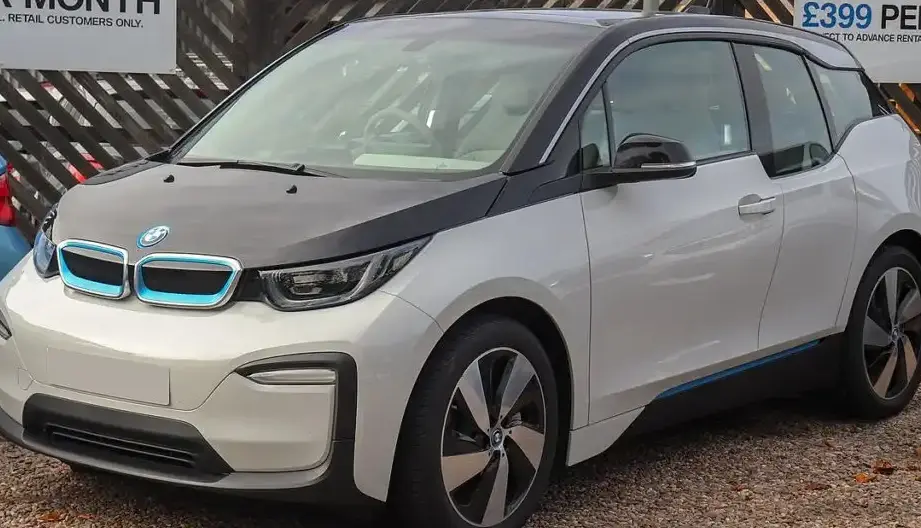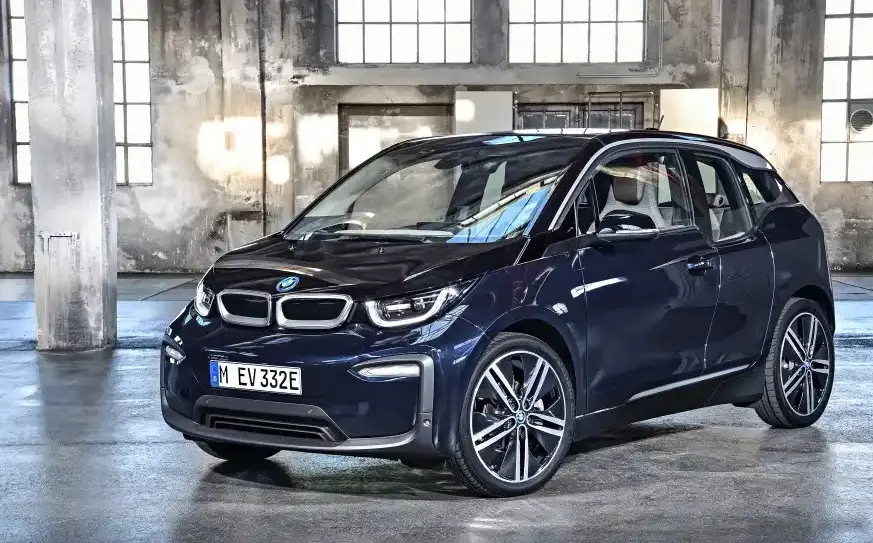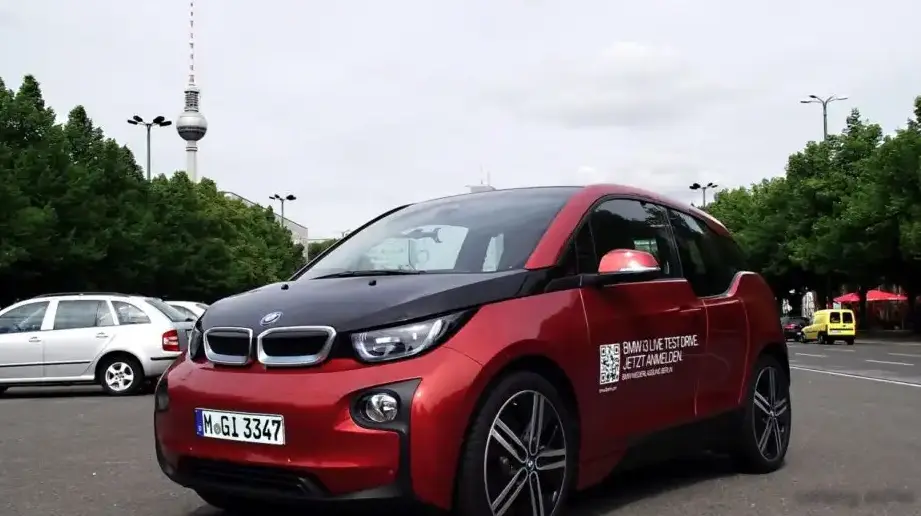
The BMW i3 (L01) 22 kWh with Range Extender, produced from 2013 to 2017, represents a pivotal moment in BMW’s foray into electric vehicle technology. Positioned as a premium, urban-focused electric vehicle, the i3 aimed to redefine sustainable mobility. This particular variant, equipped with the 22 kWh battery and a small gasoline engine as a range extender, offered a compromise between pure electric driving and the reassurance of extended range. It was a key model within the i3 lineup, bridging the gap between the fully electric version and the later, larger-battery options. The i3 L01 was built on BMW’s dedicated electric vehicle platform, utilizing carbon fiber reinforced plastic (CFRP) in its construction to minimize weight and maximize efficiency.
Technical Specifications
| Brand | BMW |
| Model | i3 |
| Generation | i3 (L01) |
| Type (Engine) | 22 kWh (170 Hp) Range Extender |
| Start of production | 2013 |
| End of production | 2017 |
| Powertrain Architecture | PHEV (Plug-in Hybrid Electric Vehicle) |
| Body type | Hatchback |
| Seats | 4 |
| Doors | 5 |
| Fuel consumption (economy) – combined (NEDC) | 0.6 l/100 km (392 US mpg, 470.8 UK mpg, 166.7 km/l) |
| CO2 emissions (NEDC) | 13 g/km |
| Fuel Type | Petrol / electricity |
| Acceleration 0 – 100 km/h | 7.9 sec |
| Acceleration 0 – 62 mph | 7.9 sec |
| Acceleration 0 – 60 mph | 7.5 sec |
| Maximum speed | 150 km/h (93.21 mph) |
| Emission standard | Euro 6 |
| Weight-to-power ratio | 7.7 kg/Hp, 129.3 Hp/tonne |
| Weight-to-torque ratio | 5.3 kg/Nm, 190.1 Nm/tonne |
| Gross battery capacity | 22 kWh |
| Net (usable) battery capacity | 18.8 kWh |
| Battery voltage | 360 V |
| Battery technology | Lithium-ion (Li-Ion) |
| Battery weight | 230 kg (507.06 lbs) |
| Battery location | Below the floor |
| Recuperation output | 50 kW |
| All-electric range (NEDC) | 170 km (105.63 mi) |
| Average Energy consumption (NEDC) | 13.5 kWh/100 km (21.73 kWh/100 mi, 155 MPGe, 7.4 km/kWh, 4.6 mi/kWh) |
| Electric motor power | 170 Hp |
| Electric motor Torque | 250 Nm @ 0 rpm (184.39 lb.-ft.) |
| Electric motor model/code | IB1P23M0 |
| Maximum revolutions of the electric motor | 11400 rpm |
| Electric motor location | Rear axle, Transverse |
| Electric motor type | Synchronous |
| System power | 170 Hp |
| System torque | 250 Nm (184.39 lb.-ft.) |
| Power (ICE) | 38 Hp @ 5000 rpm |
| Torque (ICE) | 56 Nm @ 4500 rpm (41.3 lb.-ft. @ 4500 rpm) |
| Engine layout | Rear, Transverse |
| Engine Model/Code | W20K06U0 |
| Engine displacement | 647 cm3 (39.48 cu. in.) |
| Number of cylinders | 2 |
| Engine configuration | Inline |
| Cylinder Bore | 79 mm (3.11 in.) |
| Piston Stroke | 66 mm (2.6 in.) |
| Compression ratio | 10.6:1 |
| Number of valves per cylinder | 4 |
| Engine oil capacity | 2.6 l (2.75 US qt | 2.29 UK qt) |
| Kerb Weight | 1315 kg (2899.08 lbs) |
| Max. weight | 1730 kg (3814 lbs) |
| Max load | 415 kg (914.92 lbs) |
| Trunk (boot) space – minimum | 260 l (9.18 cu. ft.) |
| Trunk (boot) space – maximum | 1100 l (38.85 cu. ft.) |
| Fuel tank capacity | 9 l (2.38 US gal | 1.98 UK gal) |
| Length | 3999 mm (157.44 in.) |
| Width | 1775 mm (69.88 in.) |
| Height | 1578 mm (62.13 in.) |
| Wheelbase | 2570 mm (101.18 in.) |
| Front track | 1571 mm (61.85 in.) |
| Rear (Back) track | 1576 mm (62.05 in.) |
| Front overhang | 707 mm (27.83 in.) |
| Rear overhang | 722 mm (28.43 in.) |
| Ride height (ground clearance) | 140 mm (5.51 in.) |
| Drag coefficient (Cd) | 0.30 |
| Minimum turning circle | 9.86 m (32.35 ft.) |
| Drivetrain Architecture | The Internal combustion engine (ICE) drives the generator only, with no mechanical connection to the drive. An electric motor drives the rear wheels. |
| Drive wheel | Rear wheel drive |
| Front suspension | Independent type McPherson |
| Rear suspension | Independent multi-link suspension |
| Front brakes | Ventilated discs |
| Rear brakes | Ventilated discs |
| Assisting systems | ABS (Anti-lock braking system) |
| Steering type | Steering rack and pinion |
| Power steering | Electric Steering |
| Tires size | Front wheel tires: 155/70 R19Rear wheel tires: 175/65 R19 |
| Wheel rims size | Front wheel rims: 5J x 19Rear wheel rims: 5.5J x 19 |
INTRODUCTION
The BMW i3 (L01) 22 kWh Range Extender, launched in 2013, was a groundbreaking vehicle for the German automaker. It represented BMW’s first mass-produced electric vehicle and a bold step towards sustainable transportation. Built on the UKL platform (later designated as the L01), the i3 distinguished itself through its innovative use of lightweight materials, particularly carbon fiber reinforced plastic (CFRP) for the passenger cell, and its unconventional design. The 22 kWh battery pack provided an all-electric range of approximately 105 miles (170 km) under the New European Driving Cycle (NEDC) standards. The range extender, a small 647cc two-cylinder gasoline engine, wasn’t designed to drive the wheels directly; instead, it powered a generator to extend the electric range, effectively functioning as a mobile power source. This configuration allowed drivers to mitigate range anxiety and enjoy longer journeys.
Powertrain & Engine Architecture
The i3 22 kWh Range Extender’s powertrain is a complex interplay between electric and internal combustion components. The core of the system is a rear-mounted electric motor, designated IB1P23M0, producing 170 horsepower and 250 Nm (184 lb-ft) of torque. This synchronous electric motor delivers instant torque, providing brisk acceleration. The 22 kWh lithium-ion battery pack, located low in the vehicle’s floor, provides the primary energy source. When the battery charge depletes, the 647cc two-cylinder gasoline engine (W20K06U0) kicks in. This engine, derived from a BMW motorcycle engine, produces 38 horsepower and 56 Nm (41 lb-ft) of torque. It’s coupled to a generator, not a traditional transmission, and its sole purpose is to recharge the battery while driving. The i3 doesn’t have a conventional multi-gear automatic transmission; instead, it utilizes a single-speed gearbox for the electric motor. The engine’s fuel injection system is direct injection, contributing to its efficiency.
Driving Characteristics
The driving experience in the i3 22 kWh Range Extender is unique. In all-electric mode, the car offers near-silent operation and instant torque, resulting in quick acceleration, achieving 0-60 mph in around 7.5 seconds. The single-speed gearbox provides smooth, linear acceleration, although it lacks the gear changes found in traditional automatic transmissions. When the range extender engages, the engine’s sound is noticeable, but it’s relatively subdued. The transition between electric and range extender modes is generally seamless. The car’s lightweight construction and rear-wheel drive configuration contribute to agile handling. However, the narrow tires (155/70 R19 front, 175/65 R19 rear) prioritize efficiency over ultimate grip. The regenerative braking system is strong, allowing for one-pedal driving in many situations, further enhancing efficiency.
Equipment & Trim Levels
The i3 22 kWh Range Extender typically came standard with a comprehensive suite of features, reflecting its premium positioning. Standard equipment included automatic climate control, a 6.5-inch infotainment screen with BMW’s iDrive system, Bluetooth connectivity, and a suite of safety features like ABS, stability control, and multiple airbags. Interior upholstery was typically a combination of recycled materials and high-quality fabrics. Optional extras included larger infotainment screens, premium audio systems, parking assist features, and various interior trim upgrades. The i3’s interior design was minimalist and modern, emphasizing sustainability and functionality. Trim levels were relatively limited, with the range extender option being the primary differentiator.
Chassis & Braking
The i3’s chassis is a key element of its innovative design. The CFRP passenger cell is exceptionally lightweight and rigid, contributing to the car’s overall agility. The front suspension utilizes an independent McPherson strut setup, while the rear features an independent multi-link suspension. This configuration provides a comfortable ride and precise handling. The i3 22 kWh Range Extender is equipped with ventilated disc brakes on all four wheels, providing adequate stopping power. The ABS (Anti-lock Braking System) is standard, enhancing safety. The car’s relatively low weight helps to reduce braking distances. The electric power steering provides light and precise steering feel.
Market Reception & Comparison
The BMW i3 22 kWh Range Extender received generally positive reviews from critics. It was praised for its innovative design, efficient powertrain, and engaging driving experience. However, some critics noted the limited range of the 22 kWh battery and the relatively small trunk space. Compared to the fully electric i3, the range extender version offered greater peace of mind for drivers concerned about range anxiety. Compared to other plug-in hybrids of the time, the i3 stood out due to its unique construction and focus on sustainability. Fuel economy was excellent, with the car achieving around 392 mpg in combined driving according to NEDC standards. Reliability was generally good, although some owners reported minor issues with the range extender engine.
Legacy
The BMW i3 22 kWh Range Extender played a significant role in popularizing electric vehicles and demonstrating BMW’s commitment to sustainable mobility. While the 22 kWh battery has been superseded by larger capacity options, the i3 remains a desirable used car, particularly for urban commuters. The powertrain, while not without its quirks, has proven to be relatively reliable. The i3’s innovative use of materials and its forward-thinking design continue to influence the automotive industry today. The car’s legacy extends beyond its technical specifications; it represents a bold vision for the future of transportation.