Technical Specifications
| Brand | BMW |
| Model | i3 |
| Generation | i3 (L01, facelift 2017) |
| Type (Engine) | 33.2 kWh (170 Hp) Range Extender |
| Start of production | November, 2017 |
| End of production | November, 2018 |
| Powertrain Architecture | PHEV (Plug-in Hybrid Electric Vehicle) |
| Body type | Hatchback |
| Seats | 4 |
| Doors | 5 |
| Fuel consumption (economy) – combined (NEDC) | 0.6 l/100 km (392 US mpg, 470.8 UK mpg, 166.7 km/l) |
| CO2 emissions (NEDC) | 13-14 g/km |
| Fuel Type | Petrol / electricity |
| Acceleration 0 – 100 km/h | 8.1 sec |
| Acceleration 0 – 62 mph | 8.1 sec |
| Acceleration 0 – 60 mph | 7.7 sec |
| Maximum speed | 150 km/h (93.21 mph) |
| Emission standard | Euro 6 |
| Weight-to-power ratio | 8 kg/Hp, 124.5 Hp/tonne |
| Weight-to-torque ratio | 5.5 kg/Nm, 183.2 Nm/tonne |
| Gross battery capacity | 33.2 kWh |
| Net (usable) battery capacity | 27.2 kWh |
| Battery voltage | 353 V |
| Battery technology | Lithium-ion (Li-Ion) |
| Battery weight | 270 kg (595.25 lbs.) |
| Battery location | Below the floor |
| Recuperation output | 50 kW |
| All-electric range (WLTP) | 190-200 km (118.06 – 124.27 mi) |
| All-electric range (NEDC) | 225-235 km (139.81 – 146.02 mi) |
| Average Energy consumption (NEDC) | 11.5-11.9 kWh/100 km (18.51 – 19.15 kWh/100 mi, 182 – 176 MPGe, 8.7 – 8.4 km/kWh, 5.4 – 5.2 mi/kWh) |
| Electric motor power | 170 Hp @ 4800 rpm |
| Electric motor Torque | 250 Nm @ 0 rpm (184.39 lb.-ft.) |
| Electric motor model/code | IB1P23M0 |
| Maximum revolutions of the electric motor | 12000 rpm |
| Electric motor location | Rear axle, Transverse |
| System power | 170 Hp @ 4800 rpm |
| System torque | 250 Nm (184.39 lb.-ft.) |
| Internal combustion engine Power | 38 Hp @ 5000 rpm |
| Power per litre | 58.7 Hp/l |
| Internal combustion engine Torque | 56 Nm @ 4500 rpm (41.3 lb.-ft. @ 4500 rpm) |
| Engine layout | Rear, Transverse |
| Engine Model/Code | W20K06U0 |
| Engine displacement | 647 cm3 (39.48 cu. in.) |
| Number of cylinders | 2 |
| Engine configuration | Inline |
| Cylinder Bore | 79 mm (3.11 in.) |
| Piston Stroke | 66 mm (2.6 in.) |
| Compression ratio | 10.6:1 |
| Number of valves per cylinder | 4 |
| Engine oil capacity | 2.6 l (2.75 US qt | 2.29 UK qt) |
| Kerb Weight | 1365 kg (3009.31 lbs.) |
| Max. weight | 1760 kg (3880.14 lbs.) |
| Max load | 395 kg (870.83 lbs.) |
| Trunk (boot) space – minimum | 260 l (9.18 cu. ft.) |
| Trunk (boot) space – maximum | 1100 l (38.85 cu. ft.) |
| Fuel tank capacity | 9 l (2.38 US gal | 1.98 UK gal) |
| Length | 4011 mm (157.91 in.) |
| Width | 1775 mm (69.88 in.) |
| Height | 1598 mm (62.91 in.) |
| Wheelbase | 2570 mm (101.18 in.) |
| Front overhang | 715 mm (28.15 in.) |
| Rear overhang | 726 mm (28.58 in.) |
| Ride height (ground clearance) | 139 mm (5.47 in.) |
| Drag coefficient (Cd) | 0.30 |
| Minimum turning circle (turning diameter) | 9.86 m (32.35 ft.) |
| Drivetrain Architecture | The Internal combustion engine (ICE) drives the generator only, with no mechanical connection to the drive. An electric motor drives the rear wheels. |
| Drive wheel | Rear wheel drive |
| Number of gears and type of gearbox | 1 gears, automatic transmission |
| Front suspension | Independent type McPherson |
| Rear suspension | Independent multi-link suspension |
| Front brakes | Ventilated discs |
| Rear brakes | Ventilated discs |
| Assisting systems | ABS (Anti-lock braking system) |
| Steering type | Steering rack and pinion |
| Power steering | Electric Steering |
| Tires size | Front wheel tires: 155/70 R19; 155/60 R20 Rear wheel tires: 175/60 R19; 175/55 R20 |
| Wheel rims size | Front wheel rims: 5J x 19; 5J x 20 Rear wheel rims: 5.5J x 19; 5.5J x 20 |
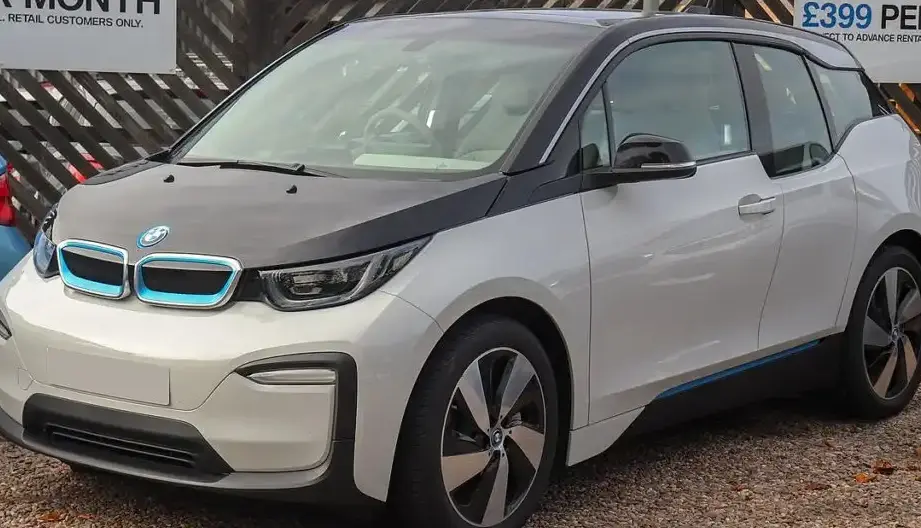
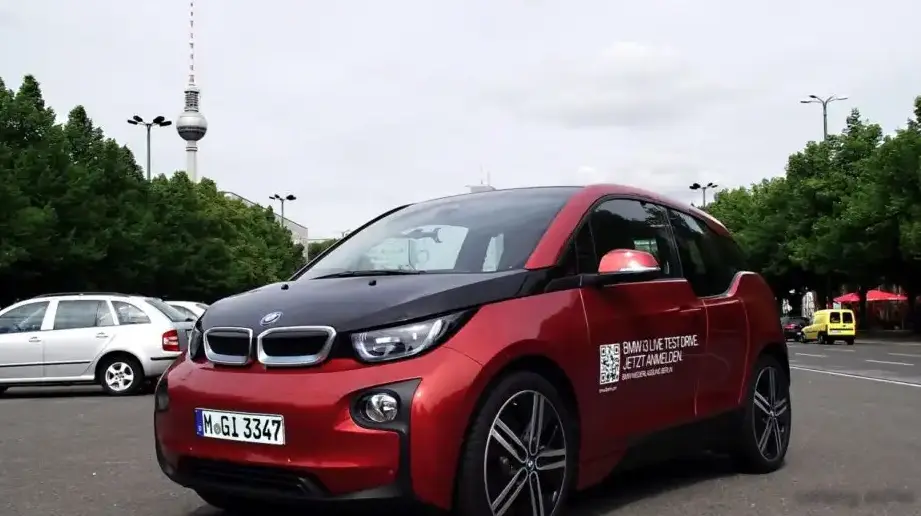
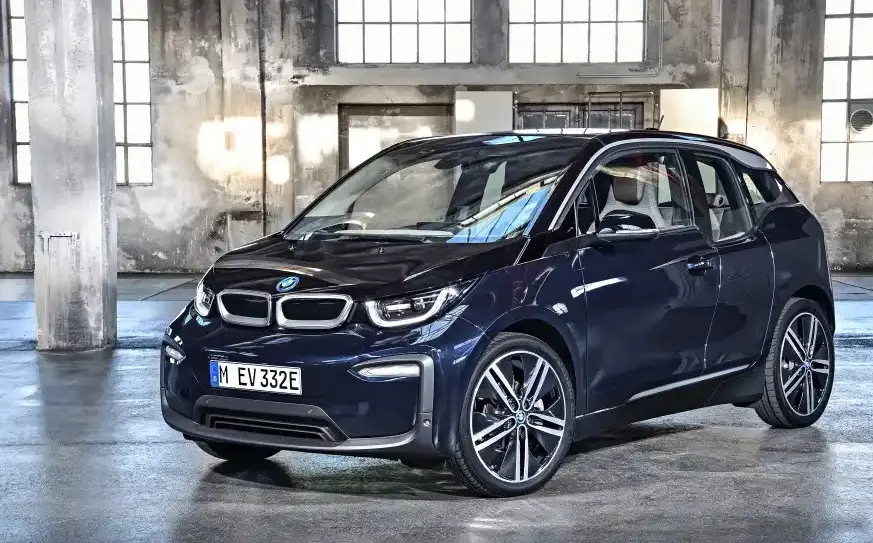
The 2017-2018 BMW i3 with the 33.2 kWh battery and range extender was a pivotal model in BMW’s electric vehicle strategy. Positioned as a premium urban commuter vehicle, it offered a unique blend of electric driving with the reassurance of a gasoline-powered range extender. This configuration aimed to address the limitations of early EV range, making electric mobility more accessible to a wider audience. The facelifted model, introduced in 2017, brought improvements to the battery capacity, increasing the all-electric range, and subtle design updates. It built upon the innovative carbon fiber reinforced plastic (CFRP) passenger cell and aluminum chassis of the original i3, maintaining its lightweight construction and distinctive styling.
Powertrain & Engine Architecture
The i3’s powertrain is a sophisticated series hybrid system. The core of the vehicle is a rear-mounted electric motor, designated IB1P23M0, producing 170 horsepower and 250 Nm (184 lb-ft) of torque. This electric motor is paired with a single-speed automatic transmission. The range extender isn’t designed to directly drive the wheels; instead, it powers a generator, which in turn charges the battery, extending the vehicle’s range. The engine itself is a small, 647cc two-cylinder gasoline engine (W20K06U0) producing 38 horsepower and 56 Nm (41 lb-ft) of torque. This engine utilizes direct fuel injection and a relatively high compression ratio of 10.6:1. The fuel injection system is designed for efficiency and low emissions, crucial for meeting Euro 6 standards. The electric motor draws power from a 33.2 kWh (gross) / 27.2 kWh (net) lithium-ion battery pack located under the floor of the vehicle.
Driving Characteristics
The i3 33.2 kWh with range extender offers a unique driving experience. In all-electric mode, the vehicle provides instant torque and brisk acceleration, reaching 0-60 mph in approximately 7.7 seconds. The single-speed transmission provides seamless acceleration, although it lacks the gear changes found in traditional automatic transmissions. When the battery depletes, the range extender seamlessly kicks in, providing enough power to maintain speed and charge the battery. The engine’s operation is noticeable, but relatively quiet. Compared to the pure electric i3, the range extender version offers significantly more flexibility for longer journeys. However, it does add weight, slightly impacting handling and efficiency when operating solely on electric power. Compared to higher-performance i3 variants, this model prioritizes efficiency and range over outright speed.
Equipment & Trim Levels
The i3 with the 33.2 kWh battery and range extender typically came well-equipped, reflecting its premium positioning. Standard features included automatic climate control, a 6.5-inch infotainment system with navigation, BMW ConnectedDrive services, and a suite of safety features like automatic emergency braking and lane departure warning. Interior upholstery was typically a combination of cloth and Sensatec (BMW’s synthetic leather). Optional extras included larger infotainment screens, premium Harman Kardon audio systems, leather upholstery, parking assist, and adaptive cruise control. Trim levels varied slightly by market, but generally offered packages that bundled popular options together.
Chassis & Braking
The i3’s chassis is a key element of its design. The use of CFRP for the passenger cell results in a remarkably lightweight vehicle, contributing to its agility and efficiency. The front suspension utilizes an independent McPherson strut design, while the rear features an independent multi-link setup. This configuration provides a comfortable ride and responsive handling. Braking is handled by ventilated disc brakes on all four wheels, providing ample stopping power. The i3 also incorporates regenerative braking, which helps to recapture energy during deceleration, further enhancing efficiency. ABS (Anti-lock Braking System) is standard.
Market Reception & Comparison
The i3 with the range extender received generally positive reviews from critics. It was praised for its innovative design, efficient powertrain, and engaging driving experience. However, some critics noted the relatively small trunk space and the unconventional rear-hinged doors. Compared to the pure electric i3, the range extender version offered greater peace of mind for drivers concerned about range anxiety. Compared to other plug-in hybrid vehicles of the time, the i3 stood out for its unique styling and focus on sustainability. Fuel economy was excellent, with a combined figure of 0.6 l/100 km (392 US mpg) and low CO2 emissions of 13-14 g/km.
Legacy
The BMW i3 with the 33.2 kWh battery and range extender played a crucial role in establishing BMW as a leader in electric vehicle technology. While the i3 has since been discontinued, it remains a popular choice in the used car market, particularly among those seeking a unique and environmentally friendly vehicle. The powertrain has proven to be relatively reliable, with the electric motor and battery pack generally holding up well over time. The range extender engine, being small and relatively simple, is also known for its durability. However, as with any electric vehicle, battery health is a key consideration when purchasing a used i3. The i3’s innovative use of materials and its focus on sustainability continue to influence BMW’s electric vehicle development today.