
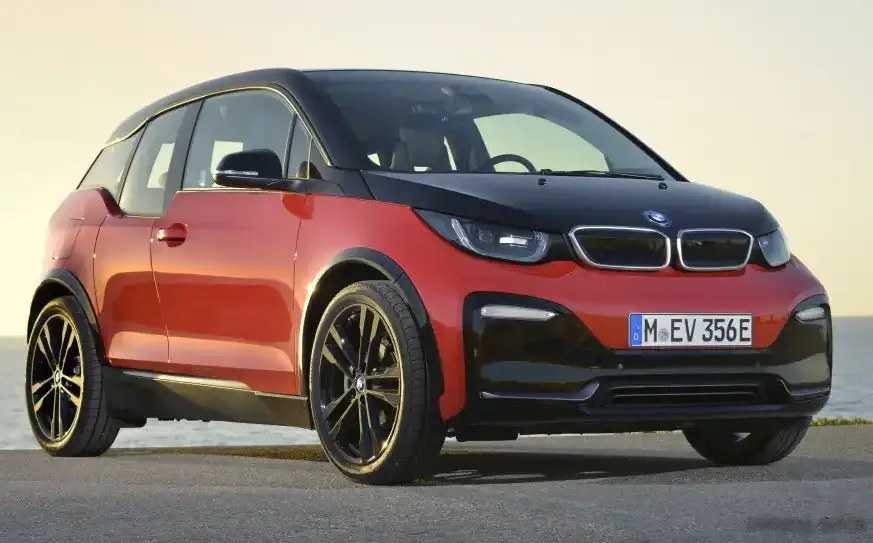
The BMW i3s (L01) with the 32.2 kWh battery and range extender, produced from November 2017 to November 2018, represents a significant iteration of BMW’s foray into electric vehicle technology. Positioned as a performance-oriented variant within the i3 lineup, the ‘s’ designation denoted a sportier driving experience compared to the standard i3. This model aimed to address range anxiety – a common concern for early EV adopters – by incorporating a small gasoline engine acting as a generator to extend the all-electric range. It primarily targeted urban drivers seeking a premium, eco-conscious vehicle with a degree of flexibility for longer journeys. The i3s, built on the carbon fiber reinforced plastic (CFRP) driven LifeModule architecture, was a key component of BMW’s ‘Project i’ – an initiative to develop innovative and sustainable mobility solutions.
Technical Specifications
| Brand | BMW |
| Model | i3 |
| Generation | i3s (l01) |
| Type (Engine) | 32.2 kWh (184 Hp) Range Extender |
| Start of production | November, 2017 |
| End of production | November, 2018 |
| Powertrain Architecture | PHEV (Plug-in Hybrid Electric Vehicle) |
| Body type | Hatchback |
| Seats | 4 |
| Doors | 5 |
| Fuel consumption (economy) – combined (NEDC) | 0.7 l/100 km (336 US mpg, 403.5 UK mpg, 142.9 km/l) |
| CO2 emissions (NEDC) | 14 g/km |
| Fuel Type | Petrol / electricity |
| Acceleration 0 – 100 km/h | 7.7 sec |
| Acceleration 0 – 62 mph | 7.7 sec |
| Acceleration 0 – 60 mph | 7.3 sec |
| Maximum speed | 160 km/h (99.42 mph) |
| Emission standard | Euro 6 |
| Weight-to-power ratio | 7.5 kg/Hp, 132.9 Hp/tonne |
| Weight-to-torque ratio | 5.1 kg/Nm, 194.9 Nm/tonne |
| Gross battery capacity | 32.2 kWh |
| Net (usable) battery capacity | 27.2 kWh |
| Battery voltage | 353 V |
| Battery technology | Lithium-ion (Li-Ion) |
| Battery weight | 270 kg (595.25 lbs.) |
| Battery location | Below the floor |
| Recuperation output | 50 kW |
| All-electric range (WLTP) | 185-195 km (114.95 – 121.17 mi) |
| All-electric range (NEDC) | 220 km (136.7 mi) |
| Average Energy consumption (NEDC) | 12.5 kWh/100 km (20.12 kWh/100 mi, 168 MPGe, 8 km/kWh, 5 mi/kWh) |
| Electric motor power | 184 Hp @ 4800 rpm |
| Electric motor Torque | 270 Nm @ 0 rpm (199.14 lb.-ft.) |
| Electric motor model/code | IB1P23M0 |
| Electric motor location | Rear axle, Transverse |
| System power | 184 Hp @ 4800 rpm |
| System torque | 270 Nm (199.14 lb.-ft.) |
| Internal combustion engine Power | 38 Hp @ 5000 rpm |
| Power per litre | 58.7 Hp/l |
| Internal combustion engine Torque | 56 Nm @ 4500 rpm (41.3 lb.-ft. @ 4500 rpm) |
| Engine layout | Rear, Transverse |
| Engine Model/Code | W20K06U0 |
| Engine displacement | 647 cm3 (39.48 cu. in.) |
| Number of cylinders | 2 |
| Engine configuration | Inline |
| Cylinder Bore | 79 mm (3.11 in.) |
| Piston Stroke | 66 mm (2.6 in.) |
| Compression ratio | 10.6:1 |
| Number of valves per cylinder | 4 |
| Engine oil capacity | 2.6 l (2.75 US qt | 2.29 UK qt) |
| Kerb Weight | 1385 kg (3053.4 lbs.) |
| Max. weight | 1780 kg (3924.23 lbs.) |
| Max load | 395 kg (870.83 lbs.) |
| Trunk (boot) space – minimum | 260 l (9.18 cu. ft.) |
| Trunk (boot) space – maximum | 1100 l (38.85 cu. ft.) |
| Fuel tank capacity | 9 l (2.38 US gal | 1.98 UK gal) |
| Length | 4006 mm (157.72 in.) |
| Width | 1791 mm (70.51 in.) |
| Width including mirrors | 2039 mm (80.28 in.) |
| Height | 1590 mm (62.6 in.) |
| Wheelbase | 2570 mm (101.18 in.) |
| Front track | 1592 mm (62.68 in.) |
| Rear (Back) track | 1586 mm (62.44 in.) |
| Front overhang | 714 mm (28.11 in.) |
| Rear overhang | 722 mm (28.43 in.) |
| Ride height (ground clearance) | 131 mm (5.16 in.) |
| Drag coefficient (Cd) | 0.33 |
| Minimum turning circle (turning diameter) | 10.31 m (33.83 ft.) |
| Drivetrain Architecture | The Internal combustion engine (ICE) drives the generator only, with no mechanical connection to the drive. An electric motor drives the rear wheels. |
| Drive wheel | Rear wheel drive |
| Number of gears and type of gearbox | 1 gears, automatic transmission |
| Front suspension | Independent type McPherson |
| Rear suspension | Independent multi-link suspension |
| Front brakes | Ventilated discs |
| Rear brakes | Ventilated discs |
| Assisting systems | ABS (Anti-lock braking system) |
| Steering type | Steering rack and pinion |
| Power steering | Electric Steering |
| Tires size | Front wheel tires: 175/55 R20Rear wheel tires: 195/50 R20 |
| Wheel rims size | Front wheel rims: 5.5J x 20Rear wheel rims: 6J x 20 |
Powertrain & Engine Architecture
The i3s’s powertrain is a sophisticated hybrid system. The core of the vehicle is a rear-mounted electric motor, producing 184 horsepower and 270 Nm (199 lb-ft) of torque. This motor, designated IB1P23M0, delivers instant torque, providing brisk acceleration. The range extender is a 647cc two-cylinder gasoline engine (W20K06U0) that doesn’t directly drive the wheels. Instead, it powers a generator, replenishing the battery charge while on the move. This engine produces 38 horsepower and 56 Nm (41 lb-ft) of torque. The engine utilizes direct fuel injection and a relatively high compression ratio of 10.6:1. The single-speed automatic transmission is integral to the electric motor, providing seamless power delivery. The battery pack, utilizing lithium-ion technology, has a gross capacity of 32.2 kWh, with a usable capacity of 27.2 kWh.
Driving Characteristics
The i3s, even with the range extender, prioritizes electric driving. In typical urban conditions, the gasoline engine rarely engages, offering a near-silent and emission-free experience. The instant torque of the electric motor provides lively acceleration, with 0-60 mph achieved in approximately 7.3 seconds. The single-speed transmission means there’s no gear shifting, contributing to a smooth and effortless driving experience. Compared to the standard i3, the ‘s’ model features a wider track and stiffer suspension, resulting in improved handling and cornering stability. While the range extender adds weight, the overall impact on driving dynamics is minimal. The regenerative braking system is highly effective, capturing kinetic energy during deceleration and feeding it back into the battery, further enhancing efficiency.
Equipment & Trim Levels
The i3s typically came well-equipped, reflecting its premium positioning. Standard features included automatic climate control, a 10.25-inch infotainment screen with navigation, and a suite of safety features like automatic emergency braking and lane departure warning. Interior upholstery was typically a combination of recycled materials and high-quality fabrics. Optional extras included leather upholstery, a sunroof, and a Harman Kardon sound system. The i3s also featured unique styling cues, such as wider fenders and a sportier suspension setup, differentiating it from the standard i3.
Chassis & Braking
The i3s’s chassis is a defining feature, utilizing a CFRP passenger cell mounted on an aluminum drive module. This construction results in a remarkably lightweight vehicle, contributing to its agility and efficiency. The front suspension employs a McPherson strut design, while the rear features a multi-link setup. Both ends benefit from stabilizer bars to reduce body roll. Braking is handled by ventilated disc brakes on all four wheels, providing ample stopping power. The electric power steering offers precise and responsive control.
Market Reception & Comparison
The i3s received generally positive reviews, praised for its innovative design, engaging driving dynamics, and eco-friendly credentials. Critics noted the limited range of the all-electric mode, but the range extender alleviated this concern for many drivers. Compared to the standard i3, the ‘s’ model was seen as a more compelling option for those seeking a sportier and more refined driving experience. Against competitors like the Nissan Leaf and Volkswagen e-Golf, the i3s stood out with its unique construction and premium interior. Fuel economy, when utilizing both electric and gasoline power, was excellent, and the i3s qualified for various government incentives.
Legacy
The BMW i3s, while discontinued in 2018, remains a significant vehicle in the history of electric mobility. Its CFRP construction and innovative powertrain demonstrated BMW’s commitment to sustainable transportation. The i3s has proven to be a relatively reliable vehicle, with the electric motor and battery pack exhibiting good longevity. The range extender engine, while small, is generally robust and requires minimal maintenance. On the used car market, the i3s holds its value reasonably well, appealing to environmentally conscious buyers seeking a unique and technologically advanced vehicle.
