
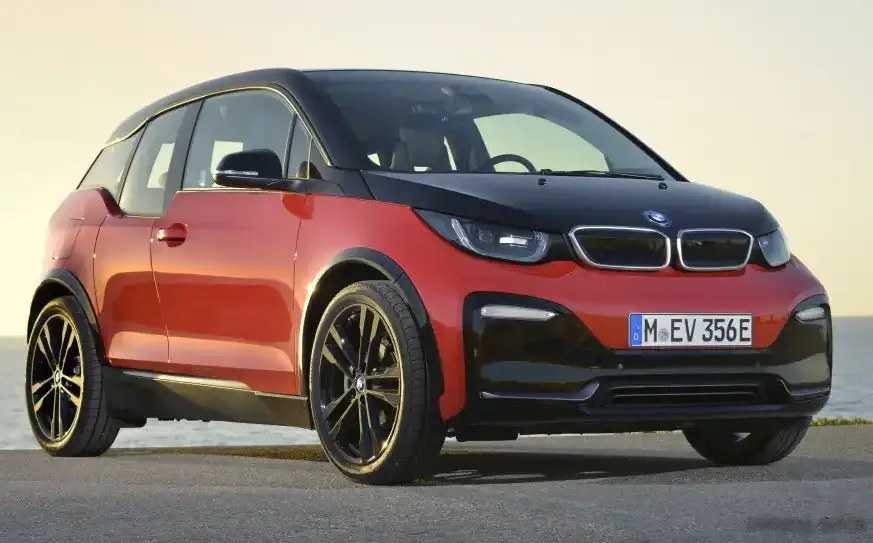
The BMW i3s (L01), specifically the 33.2 kWh variant producing 184 horsepower, represents a significant step in BMW’s early foray into fully electric vehicles. Introduced in November 2017 and continuing through November 2018, the i3s was positioned as the performance-oriented version of the i3, offering increased power and a more dynamic driving experience. It’s built upon the carbon fiber reinforced plastic (CFRP) Life Module and aluminum Drive Module architecture, a core element of the i3’s innovative design. The i3s aimed to address criticisms of the standard i3’s somewhat leisurely acceleration, appealing to drivers seeking a more engaging electric driving experience.
Technical Specifications
| Brand | BMW |
| Model | i3 |
| Generation | i3s (l01) |
| Type (Engine) | 33.2 kWh (184 Hp) |
| Start of production | November, 2017 |
| End of production | November, 2018 |
| Powertrain Architecture | BEV (Electric Vehicle) |
| Body type | Hatchback |
| Seats | 4 |
| Doors | 5 |
| Fuel Type | Electricity |
| Acceleration 0 – 100 km/h | 6.9 sec |
| Acceleration 0 – 62 mph | 6.9 sec |
| Acceleration 0 – 60 mph | 6.6 sec |
| Maximum speed | 160 km/h (99.42 mph) |
| Weight-to-power ratio | 6.9 kg/Hp, 145.5 Hp/tonne |
| Weight-to-torque ratio | 4.7 kg/Nm, 213.4 Nm/tonne |
| Gross battery capacity | 33.2 kWh |
| Net (usable) battery capacity | 27.2 kWh |
| Battery voltage | 353 V |
| Battery technology | Lithium-ion (Li-Ion) |
| Battery weight | 270 kg (595.25 lbs) |
| Battery location | Below the floor |
| Recuperation output | 50 kW |
| All-electric range (WLTP) | 235-245 km (146.02 – 152.24 mi) |
| All-electric range (NEDC) | 280 km (173.98 mi) |
| Average Energy consumption (NEDC) | 14.3 kWh/100 km (23.01 kWh/100 mi) |
| Average Energy consumption (NEDC) | 146 MPGe, 7 km/kWh, 4.3 mi/kWh |
| Electric motor power | 184 Hp @ 4800 rpm |
| Electric motor Torque | 270 Nm @ 0 rpm (199.14 lb.-ft.) |
| Electric motor model/code | IB1P23M0 |
| Electric motor location | Rear axle, Transverse |
| Electric motor type | Synchronous |
| System power | 184 Hp @ 4800 rpm |
| System torque | 270 Nm (199.14 lb.-ft.) |
| Kerb Weight | 1265 kg (2788.85 lbs) |
| Max. weight | 1700 kg (3747.86 lbs) |
| Max load | 435 kg (959.01 lbs) |
| Trunk (boot) space – minimum | 260 l (9.18 cu. ft.) |
| Trunk (boot) space – maximum | 1100 l (38.85 cu. ft.) |
| Length | 4006 mm (157.72 in) |
| Width | 1791 mm (70.51 in) |
| Width including mirrors | 2039 mm (80.28 in) |
| Height | 1590 mm (62.6 in) |
| Wheelbase | 2570 mm (101.18 in) |
| Front track | 1592 mm (62.68 in) |
| Rear (Back) track | 1586 mm (62.44 in) |
| Front overhang | 714 mm (28.11 in) |
| Rear overhang | 722 mm (28.43 in) |
| Ride height (ground clearance) | 131 mm (5.16 in) |
| Drag coefficient (Cd) | 0.32 |
| Minimum turning circle | 10.31 m (33.83 ft) |
| Drivetrain Architecture | One electric motor drives the rear wheels |
| Drive wheel | Rear wheel drive |
| Number of gears | 1, automatic transmission |
| Front suspension | Independent type McPherson |
| Rear suspension | Independent multi-link suspension |
| Front brakes | Ventilated discs |
| Rear brakes | Ventilated discs |
| Assisting systems | ABS (Anti-lock braking system) |
| Steering type | Steering rack and pinion |
| Power steering | Electric Steering |
| Front wheel tires | 175/55 R20 |
| Rear wheel tires | 195/50 R20 |
| Front wheel rims | 5.5J x 20 |
| Rear wheel rims | 6J x 20 |
Powertrain & Engine Architecture
The i3s utilizes a single electric motor, designated IB1P23M0, driving the rear wheels. This motor produces 184 horsepower at 4800 rpm and 270 Nm (199 lb-ft) of torque, available instantly from 0 rpm – a characteristic of electric motors. The motor is a synchronous design, known for its efficiency and smooth operation. Power is delivered through a single-speed automatic transmission, simplifying the driving experience. The 33.2 kWh lithium-ion battery pack is located low in the vehicle’s floor, contributing to a low center of gravity and improved handling. The battery pack operates at 353 volts. The i3s also features regenerative braking, capable of recuperating up to 50 kW of energy, extending range and reducing brake wear.
Driving Characteristics
The i3s, with its increased power output compared to the standard i3, offers noticeably quicker acceleration. The 0-60 mph time of approximately 6.6 seconds is a significant improvement. The rear-wheel-drive configuration contributes to a more engaging driving experience, although it requires some adjustment for drivers accustomed to front-wheel-drive vehicles. The single-speed transmission provides seamless acceleration, but lacks the gear changes that some drivers might prefer for a more traditional feel. The low center of gravity, thanks to the battery placement, results in minimal body roll and confident cornering. The steering is precise and well-weighted, providing good feedback to the driver.
Equipment & Trim Levels
The i3s generally came well-equipped, reflecting its position as the higher-performance variant. Standard features included automatic climate control, a 10.2-inch infotainment screen with navigation, and BMW’s ConnectedDrive services. Interior upholstery was typically a combination of cloth and sustainable materials, reflecting BMW’s commitment to eco-friendliness. Optional extras included leather upholstery, a sunroof, and advanced driver-assistance systems such as adaptive cruise control and parking assist. The i3s also featured unique exterior styling cues, including wider fenders and a sport-tuned suspension, differentiating it from the standard i3.
Chassis & Braking
The i3s utilizes an independent McPherson strut suspension at the front and an independent multi-link suspension at the rear. The suspension was specifically tuned for the i3s to provide a firmer ride and improved handling. Brakes are ventilated discs on all four wheels, providing ample stopping power. The i3s includes ABS (Anti-lock Braking System) as standard. The lightweight construction of the i3s, thanks to the CFRP Life Module, contributes to its agility and efficiency. The electric steering system provides precise and responsive steering feel.
Market Reception & Comparison
The i3s was generally well-received by critics, who praised its unique design, engaging driving experience, and commitment to sustainability. However, some criticized its limited range and relatively high price compared to other electric vehicles. Compared to the standard i3, the i3s offered a more dynamic driving experience and a sportier appearance. Compared to other EVs of the time, the i3s stood out for its innovative construction and focus on urban mobility. Fuel economy, measured in MPGe, was around 146, and energy consumption was approximately 14.3 kWh per 100 kilometers.
Legacy
The BMW i3s, while not a mainstream success in terms of sales volume, played a crucial role in establishing BMW as a leader in electric vehicle technology. The i3’s innovative use of CFRP and its focus on sustainable materials paved the way for future BMW electric vehicles. The powertrain, while relatively small by today’s standards, proved to be reliable in many cases. On the used car market, the i3s remains a relatively affordable entry point into the world of electric vehicles, appealing to buyers seeking a unique and eco-friendly transportation option. Battery degradation is a common concern with older EVs, and potential buyers should have the battery health assessed before purchasing.
