
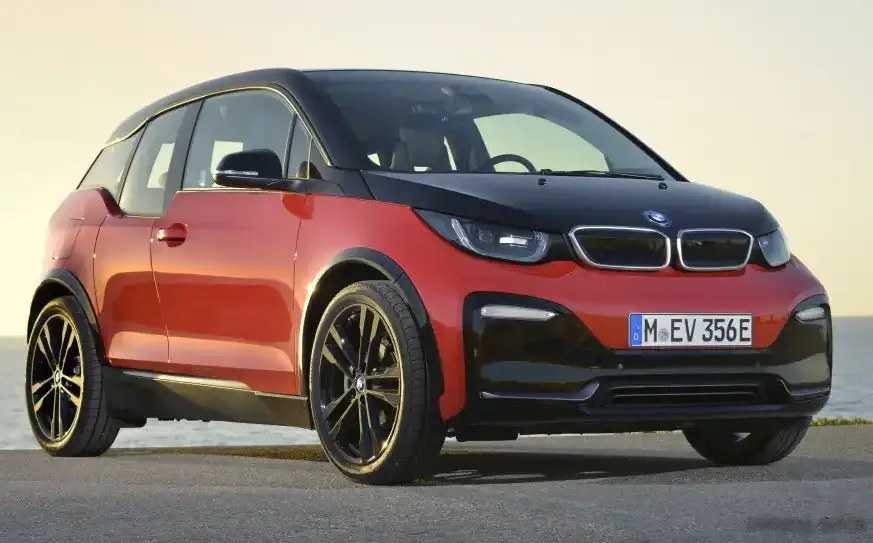
The BMW i3s (L01) with the 42.2 kWh battery pack, producing 184 horsepower, represents a significant evolution in BMW’s foray into electric vehicles. Introduced in November 2018 and continuing through July 2022, the i3s was positioned as the performance-oriented variant of the i3, offering increased power and a more dynamic driving experience compared to the standard i3 model. It’s built on the dedicated electric vehicle platform, designed from the ground up to maximize interior space and minimize weight, and falls within the broader i3 (l01) generation, which debuted in 2013. The i3s aimed to broaden the appeal of electric vehicles by demonstrating that they could be both environmentally conscious and engaging to drive.
Technical Specifications
| Brand | BMW |
| Model | i3 |
| Generation | i3s (l01) |
| Type (Engine) | 42.2 kWh (184 Hp) |
| Start of production | November, 2018 |
| End of production | July, 2022 |
| Powertrain Architecture | BEV (Electric Vehicle) |
| Body type | Hatchback |
| Seats | 4 |
| Doors | 5 |
| Fuel Type | Electricity |
| Acceleration 0 – 100 km/h | 6.9 sec |
| Acceleration 0 – 62 mph | 6.9 sec |
| Acceleration 0 – 60 mph | 6.6 sec |
| Maximum speed | 160 km/h (99.42 mph) |
| Weight-to-power ratio | 7 kg/Hp, 142.6 Hp/tonne |
| Weight-to-torque ratio | 4.8 kg/Nm, 209.3 Nm/tonne |
| Gross battery capacity | 42.2 kWh |
| Net (usable) battery capacity | 37.9 kWh |
| Battery voltage | 352 V |
| Battery technology | Lithium-ion (Li-Ion) |
| Battery location | Below the floor |
| Recuperation output | 50 kW |
| All-electric range (WLTP) | 270-285 km (167.77 – 177.09 mi) |
| All-electric range (NEDC, WLTP equivalent) | 330-345 km (205.05 – 214.37 mi) |
| Average Energy consumption (NEDC, WLTP equivalent) | 14-14.6 kWh/100 km (22.53 – 23.5 kWh/100 mi) |
| MPGe | 150 – 143 |
| km/kWh | 7.1 – 6.8 |
| mi/kWh | 4.4 – 4.3 |
| Electric motor power | 184 Hp @ 4800 rpm |
| Electric motor Torque | 270 Nm @ 0 rpm (199.14 lb.-ft.) |
| Electric motor model/code | IB1P23M0 |
| Electric motor location | Rear axle, Transverse |
| Electric motor type | Synchronous |
| System power | 184 Hp @ 4800 rpm |
| System torque | 270 Nm (199.14 lb.-ft.) |
| Kerb Weight | 1290 kg (2843.96 lbs.) |
| Max. weight | 1730 kg (3814 lbs.) |
| Max load | 440 kg (970.03 lbs.) |
| Trunk (boot) space – minimum | 260 l (9.18 cu. ft.) |
| Trunk (boot) space – maximum | 1100 l (38.85 cu. ft.) |
| Length | 4006 mm (157.72 in.) |
| Width | 1791 mm (70.51 in.) |
| Height | 1590 mm (62.6 in.) |
| Wheelbase | 2570 mm (101.18 in.) |
| Front track | 1592 mm (62.68 in.) |
| Rear (Back) track | 1578 mm (62.13 in.) |
| Front overhang | 714 mm (28.11 in.) |
| Rear overhang | 722 mm (28.43 in.) |
| Ride height (ground clearance) | 131 mm (5.16 in.) |
| Drag coefficient (Cd) | 0.30 |
| Minimum turning circle | 10.31 m (33.83 ft.) |
| Drivetrain Architecture | One electric motor drives the rear wheels. |
| Drive wheel | Rear wheel drive |
| Number of gears | 1 |
| Gearbox type | Automatic transmission |
| Front suspension | Independent type McPherson |
| Rear suspension | Independent multi-link suspension |
| Front brakes | Ventilated discs |
| Rear brakes | Ventilated discs |
| Assisting systems | ABS (Anti-lock braking system) |
| Steering type | Steering rack and pinion |
| Power steering | Electric Steering |
| Front tires | 175/55 R20 |
| Rear tires | 195/50 R20 |
| Front wheel rims | 5.5J x 20 |
| Rear wheel rims | 6J x 20 |
Powertrain & Engine Architecture
The i3s is powered by a single electric motor, designated IB1P23M0, located transversely on the rear axle, making it a rear-wheel-drive vehicle. This motor produces 184 horsepower at 4800 rpm and 270 Nm (199.14 lb.-ft.) of torque, available instantly from 0 rpm – a characteristic of electric motors. The 42.2 kWh lithium-ion battery pack is mounted low in the vehicle’s floor, contributing to a low center of gravity and improved handling. The battery utilizes a 352V system. The i3s features a single-speed automatic transmission, simplifying the driving experience and maximizing efficiency. The recuperation system, capable of up to 50 kW of regenerative braking, helps to recapture energy during deceleration, extending the vehicle’s range.
Driving Characteristics
The i3s offers a noticeably more engaging driving experience than the standard i3. The increased power output and sport-tuned suspension provide quicker acceleration – 0 to 60 mph in approximately 6.6 seconds – and more responsive handling. The single-speed transmission delivers smooth, linear acceleration, while the rear-wheel-drive configuration contributes to a balanced feel. While not a sports car, the i3s provides a surprisingly agile and fun-to-drive experience for an electric hatchback. Compared to the standard i3, the i3s has a slightly stiffer suspension and a lower ride height, further enhancing its handling characteristics. The instant torque of the electric motor provides brisk acceleration in urban environments.
Equipment & Trim Levels
The i3s typically came well-equipped, reflecting its position as the premium variant. Standard features included automatic climate control, a 10.25-inch infotainment screen with navigation, BMW’s ConnectedDrive services, and a suite of safety features like automatic emergency braking and lane departure warning. Interior upholstery was typically a combination of cloth and sustainable materials, reflecting BMW’s commitment to eco-friendliness. Optional extras included leather upholstery, a premium sound system, and parking assist features. The i3s also featured unique styling cues, such as a more aggressive front bumper and wider wheel arches, differentiating it from the standard i3.
Chassis & Braking
The i3s utilizes a lightweight chassis constructed from carbon fiber reinforced plastic (CFRP) for the passenger cell, paired with an aluminum drive module. This construction significantly reduces weight, contributing to the vehicle’s efficiency and agility. The front suspension features an independent McPherson strut design, while the rear utilizes an independent multi-link setup. Both front and rear brakes are ventilated discs, providing ample stopping power. The i3s is equipped with ABS (Anti-lock Braking System) and electric power steering for enhanced safety and control.
Market Reception & Comparison
The BMW i3s was generally well-received by critics, who praised its unique design, engaging driving dynamics, and commitment to sustainability. However, some criticized its limited range compared to newer electric vehicles and its relatively high price point. Compared to the standard i3, the i3s offered a more compelling driving experience but came at a higher cost. Against competitors like the Nissan Leaf and Chevrolet Bolt, the i3s stood out with its premium build quality, distinctive styling, and rear-wheel-drive configuration. Fuel economy, measured in MPGe, ranged from 143 to 150, and energy consumption was between 14 and 14.6 kWh per 100 km.
Legacy
The BMW i3s, while discontinued in 2022, remains a significant vehicle in the history of electric vehicles. It demonstrated that electric cars could be stylish, fun to drive, and environmentally responsible. The i3’s innovative use of materials, such as CFRP, and its focus on sustainable manufacturing practices paved the way for future BMW electric vehicles. On the used car market, the i3s holds its value relatively well, particularly well-maintained examples. The powertrain has proven to be generally reliable, with the primary concerns revolving around battery degradation over time, a common issue with early electric vehicles. The i3s continues to appeal to environmentally conscious buyers seeking a unique and engaging electric driving experience.
