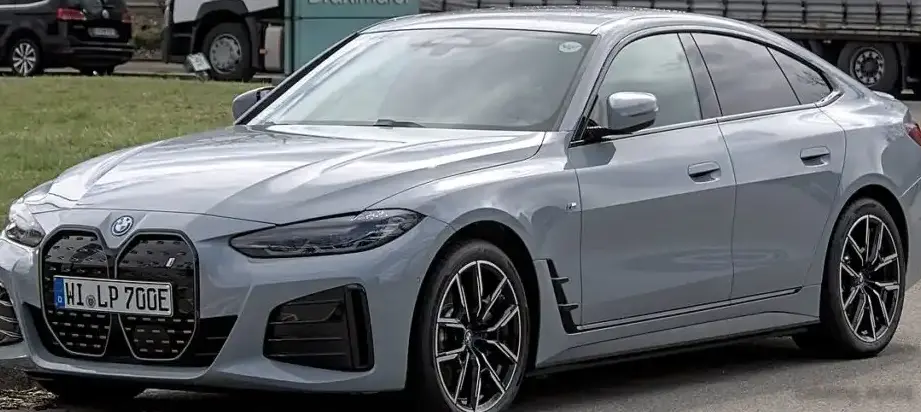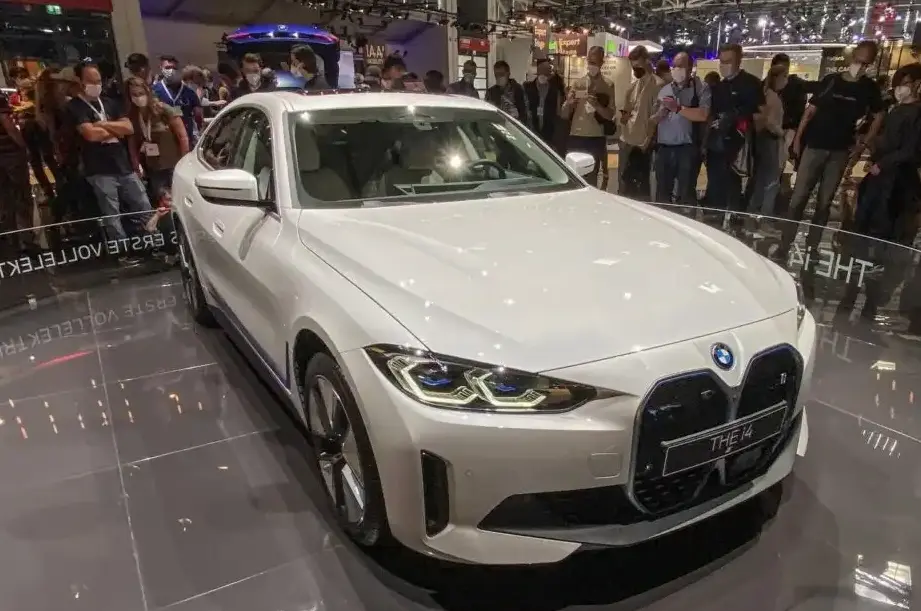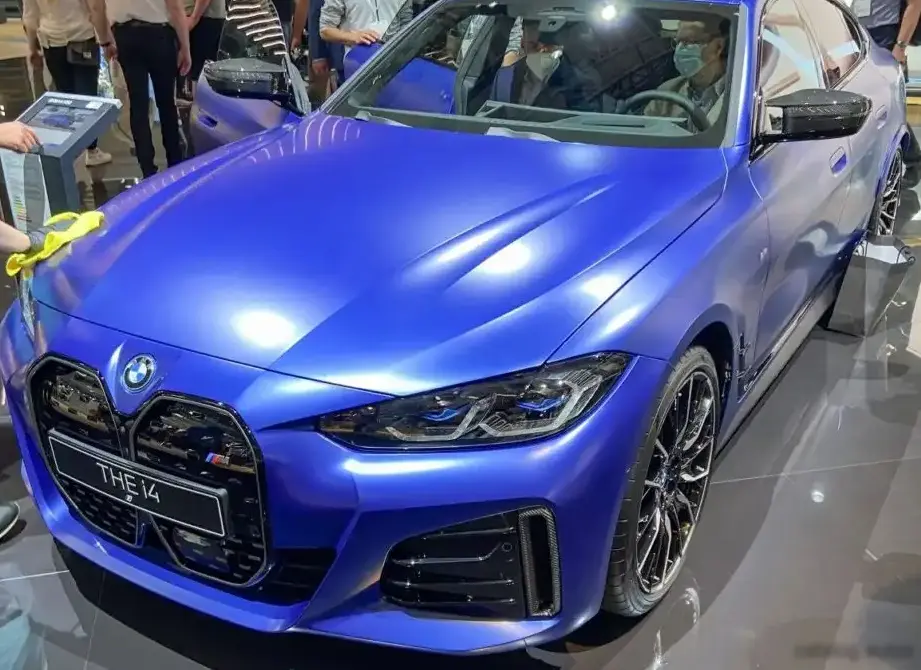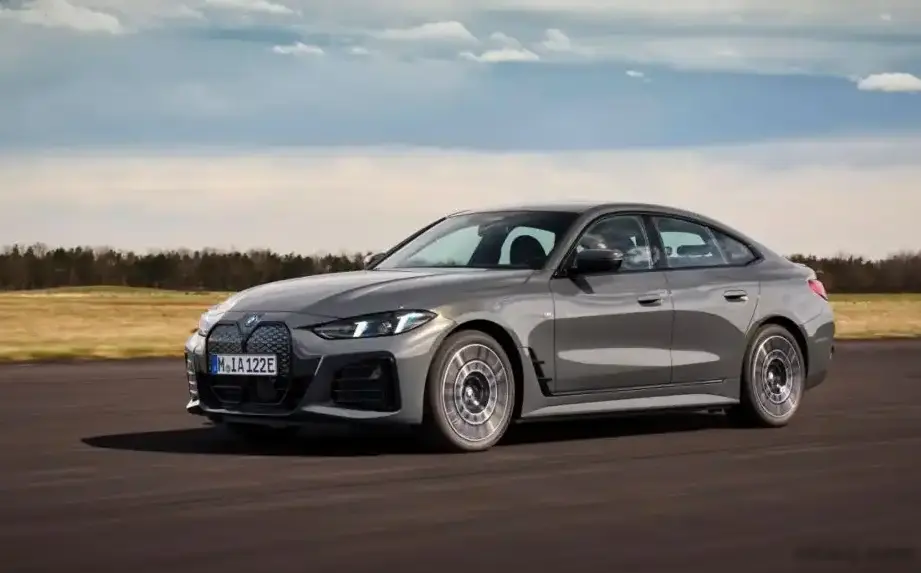
The BMW i4 xDrive40 (G26 LCI), introduced in July 2024 as part of the i4’s facelift, represents BMW’s continued push into the electric vehicle market. This variant, boasting an 83.9 kWh battery and dual electric motors producing a combined 401 horsepower, slots into the mid-range of the i4 lineup, offering a balance between performance, range, and price. The “LCI” designation signifies a Life Cycle Impulse, BMW’s term for a significant mid-cycle refresh, bringing updated styling and technology to the i4 platform. It builds upon the foundation of the original i4, which debuted in 2021, aiming to refine the electric Gran Coupe experience.
Technical Specifications
| Brand | BMW |
| Model | i4 |
| Generation | i4 (G26 LCI, facelift 2024) |
| Type (Engine) | 83.9 kWh (401 Hp) xDrive40 |
| Start of production | July, 2024 |
| Powertrain Architecture | BEV (Electric Vehicle) |
| Body type | Coupe |
| Seats | 5 |
| Doors | 5 |
| Fuel Type | Electricity |
| Acceleration 0 – 100 km/h | 5.1 sec |
| Acceleration 0 – 62 mph | 5.1 sec |
| Acceleration 0 – 60 mph | 4.8 sec |
| Maximum speed | 200 km/h (124.27 mph) |
| Weight-to-power ratio | 5.4 kg/Hp, 183.5 Hp/tonne |
| Weight-to-torque ratio | 3.6 kg/Nm, 274.6 Nm/tonne |
| Gross battery capacity | 83.9 kWh |
| Net (usable) battery capacity | 81.3 kWh |
| Battery voltage | 398.5 V |
| Battery technology | Lithium-ion (Li-Ion) |
| Battery weight | 550 kg (1212.54 lbs) |
| Battery location | Below the floor |
| All-electric range (WLTP) | 459-546 km (285.21 – 339.27 mi) |
| Average Energy consumption (WLTP) | 16.7-19.8 kWh/100 km (26.88 – 31.87 kWh/100 mi) |
| Electric motor power (Rear) | 313 Hp @ 8000-17000 rpm |
| Electric motor Torque (Rear) | 400 Nm @ 0-5000 rpm (295.02 lb.-ft. @ 0-5000 rpm) |
| Electric motor location (Rear) | Rear axle, Transverse |
| Electric motor type (Rear) | Synchronous |
| Electric motor power (Front) | 258 Hp @ 8000-17000 rpm |
| Electric motor Torque (Front) | 330 Nm @ 0-5000 rpm (243.4 lb.-ft. @ 0-5000 rpm) |
| Electric motor location (Front) | Front axle, Transverse |
| Electric motor type (Front) | Synchronous |
| System power | 401 Hp |
| System torque | 600 Nm (442.54 lb.-ft.) |
| Kerb Weight | 2185 kg (4817.1 lbs) |
| Max. weight | 2740 kg (6040.67 lbs) |
| Max load | 555 kg (1223.57 lbs) |
| Trunk (boot) space – minimum | 470 l (16.6 cu. ft.) |
| Trunk (boot) space – maximum | 1290 l (45.56 cu. ft.) |
| Max. roof load | 75 kg (165.35 lbs) |
| Permitted trailer load with brakes (12%) | 1600 kg (3527.4 lbs) |
| Permitted trailer load without brakes | 750 kg (1653.47 lbs) |
| Permitted towbar download | 75 kg (165.35 lbs) |
| Length | 4783 mm (188.31 in) |
| Width | 1852 mm (72.91 in) |
| Width including mirrors | 2073 mm (81.61 in) |
| Height | 1448 mm (57.01 in) |
| Wheelbase | 2856 mm (112.44 in) |
| Front track | 1601 mm (63.03 in) |
| Rear (Back) track | 1630 mm (64.17 in) |
| Front overhang | 862 mm (33.94 in) |
| Rear overhang | 1065 mm (41.93 in) |
| Ride height (ground clearance) | 125 mm (4.92 in) |
| Drag coefficient (Cd) | 0.24 |
| Minimum turning circle (turning diameter) | 12.5 m (41.01 ft) |
| Drivetrain Architecture | One electric motor drives the front wheels, one electric motor drives the rear wheels. |
| Drive wheel | All wheel drive (4×4) |
| Number of gears and type of gearbox | 1 gears, automatic transmission |
| Front suspension | Spring Strut, Transverse stabilizer |
| Rear suspension | Independent multi-link suspension, Air suspension, Transverse stabilizer |
| Front brakes | Ventilated discs |
| Rear brakes | Ventilated discs |
| Assisting systems | ABS (Anti-lock braking system) |
| Steering type | Steering rack and pinion |
| Power steering | Electric Steering |
| Tires size | Front wheel tires: 245/45 R18 Rear wheel tires: 255/45 R18 |
| Wheel rims size | Front wheel rims: 8.5J x 18 Rear wheel rims: 9J x 18 |
Powertrain & Engine Architecture
The i4 xDrive40 utilizes BMW’s fifth-generation eDrive technology. It features dual electric motors – one powering the front axle and one powering the rear – providing all-wheel drive capability. Each motor is a synchronous electric motor, known for its high efficiency and power density. The rear motor produces 313 hp and 400 Nm (295 lb-ft) of torque, while the front motor delivers 258 hp and 330 Nm (243 lb-ft) of torque, resulting in a combined system output of 401 hp and 600 Nm (442 lb-ft). The 83.9 kWh battery pack, located under the vehicle floor, employs lithium-ion technology and provides a usable capacity of 81.3 kWh. The battery operates at a high voltage of 398.5V, enabling fast charging capabilities. The car supports DC fast charging at up to 180 kW, allowing for a significant charge in a relatively short period. The single-speed automatic transmission is inherent to electric vehicle drivetrains, providing seamless acceleration.
Driving Characteristics
The i4 xDrive40 delivers brisk acceleration, achieving 0-60 mph in approximately 4.8 seconds. The dual-motor setup provides instant torque, resulting in strong off-the-line performance. Compared to the rear-wheel-drive i4 eDrive40, the xDrive40 offers enhanced traction, particularly in inclement weather. While not as overtly sporty as some performance-focused EVs, the i4 xDrive40 provides a refined and comfortable driving experience. The low center of gravity, thanks to the battery pack’s placement, contributes to stable handling. The single-speed transmission offers smooth and linear power delivery, without the gear changes associated with internal combustion engines. The regenerative braking system allows for adjustable levels of deceleration, enhancing efficiency and providing a one-pedal driving experience.
Equipment & Trim Levels
The i4 xDrive40 typically comes standard with a comprehensive suite of features, including BMW’s iDrive 8 infotainment system with a curved display encompassing a 12.3-inch digital instrument cluster and a 14.9-inch central touchscreen. Standard interior appointments include Sensatec upholstery (a synthetic leather alternative), power-adjustable front seats, and a premium sound system. Available options include genuine leather upholstery, a head-up display, a panoramic sunroof, and advanced driver-assistance systems such as adaptive cruise control and lane-keeping assist. The LCI update brought subtle interior refinements, including updated materials and trim options.
Chassis & Braking
The i4 xDrive40 features a sophisticated chassis design. The front suspension utilizes a spring strut setup with a transverse stabilizer, while the rear suspension employs an independent multi-link configuration with air suspension and a transverse stabilizer. The air suspension provides adjustable ride height and damping, enhancing both comfort and handling. Braking duties are handled by ventilated disc brakes on all four wheels, providing ample stopping power. The anti-lock braking system (ABS) is standard, along with electronic stability control and traction control systems.
Market Reception & Comparison
The i4 xDrive40 has been generally well-received by automotive critics, praised for its blend of performance, range, and practicality. Compared to the i4 eDrive40 (rear-wheel drive), the xDrive40 offers superior traction and acceleration, albeit with a slightly reduced range due to the added weight and complexity of the dual-motor system. Against competitors such as the Tesla Model 3 Performance and the Polestar 2 Dual Motor, the i4 xDrive40 is often lauded for its more refined interior and more traditional BMW driving dynamics. Fuel economy, expressed as MPGe, ranges from 106-125, and energy consumption is between 16.7-19.8 kWh per 100km.
Legacy
The BMW i4 xDrive40 represents a significant step in BMW’s electrification strategy. The fifth-generation eDrive technology employed in this model is expected to be highly reliable, with BMW’s reputation for engineering quality. The battery pack is covered by an eight-year/100,000-mile warranty, providing peace of mind for owners. As a relatively new model, long-term reliability data is still emerging, but early indications suggest that the i4 is a well-built and dependable electric vehicle. On the used car market, the i4 xDrive40 is expected to hold its value well, given its desirable combination of performance, range, and brand prestige.